Enter your details and we will send the requested document to your inbox.





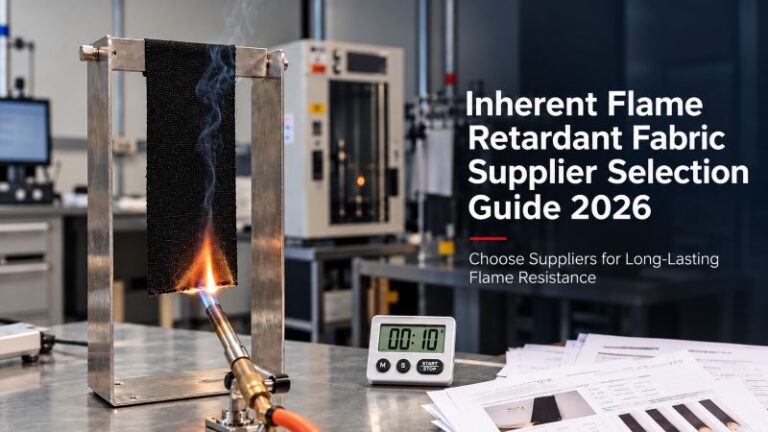
Flame-retardant wool fabrics refer to wool fabric textiles that are either specially treated or inherently possess flame-retardant properties. These fabrics retain the natural advantages of wool fabric, such as warmth, breathability, moisture absorption, and comfort, while also offering excellent fire-resistant characteristics. When exposed to a fire source, they delay combustion, rapidly char, and self-extinguish upon removal from the flame.
In scenarios like hotels, transportation, and industrial protective gear, the choice of flame-retardant fabrics directly impacts safety and compliance. While it is widely known that flame-retardant materials can slow burning in fires, few realize the fundamental differences between naturally flame-retardant wool fabric and chemically treated flame-retardant fabrics. Flame retardant wool fabric’s unique advantages makes it superior in fire resistance, durability, and environmental sustainability.
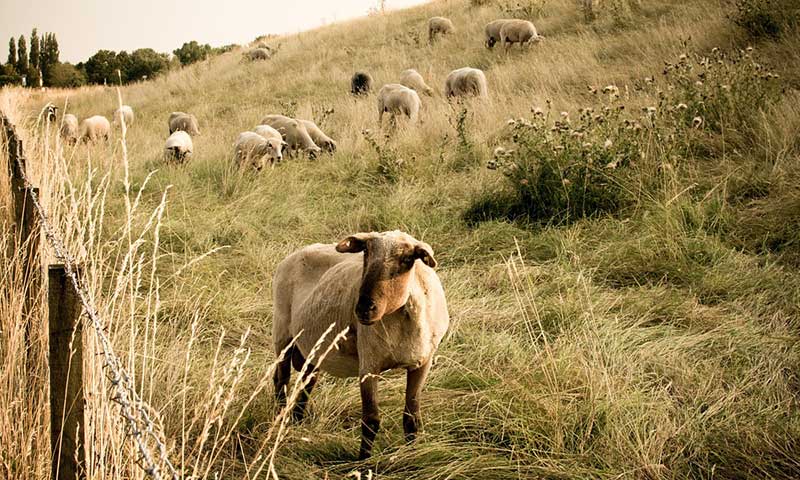
Wool fabric fibers contain approximately 14–16% nitrogen, significantly higher than cotton or polyester. Nitrogen promotes carbonization during combustion, quickly forming an insulating char layer that prevents flame spread.
Additionally, wool fabric’s natural moisture content reaches 16–18%, more than double that of cotton and far exceeding polyester’s 0.4%, which means flames must first expend significant energy to evaporate the moisture in wool fabric, delaying ignition.
Consequently, wool fabric’s ignition temperature ranges between 560–600°C, while cotton ignites at 255–400°C, and polyester begins to melt at around 450°C.
| Material | Nitrogen Content (%) | Moisture Content (%) | Ignition Temperature (°C) |
| Wool | 14–16 | 16–18 | 560–600 |
| Cotton | Lower | 7–8 | 255–400 |
| Polyester | Lower | 0.4 | 450 (melting) |
Wool fabric self-extinguishes after burning, unlike polyester, which produces molten drips, or cotton, which rapidly spreads flames. Its limiting oxygen index (LOI) is typically 25–26%, compared to 18% for cotton and 20–21% for polyester.
With air’s oxygen concentration at 21%, cotton and polyester burn easily, while wool fabric is near the self-extinguishing threshold, making sustained combustion difficult.
Fire-related injuries often stem from smoke. Wool fabric combustion primarily releases water vapor and minimal sulfur dioxide, with a smoke density typically below 200 Ds/m².
In contrast, many polyester fabrics treated with halogen-based flame retardants produce smoke densities exceeding 500 Ds/m² and may release harmful substances like hydrogen chloride. This makes wool fabric ideal for enclosed spaces such as airplanes, subways, and theaters.
You can check video that show the flame retardant wool fabric property:
Beyond fire resistance, wool fabric offers superior comfort and usability:
Chemically treated flame-retardant textiles use coatings or chemicals to achieve fire resistance. However, uneven application causes performance to fade over time, with some fabrics losing effectiveness after 20 washes. Even durable treatments on cotton often fail after 50 washes.
Worse, certain flame retardants pose health risks, as halogen-based agents release toxic gases during combustion.
Additionally, chemical treatments increase wastewater and chemical emissions, making it challenging to meet environmental standards like OEKO-TEX, GOTS, or REACH.
Curtains, carpets, and upholstery often need to meet standards like NFPA 701 and BS 5852. Wool fabric naturally complies without additional treatment, and BEGOODTEX’s flame-retardant wool fabric has been widely adopted in hotels and convention centers.
Aircraft seats must meet FAR 25.853, train interiors comply with EN 45545, and automotive interiors adhere to FMVSS 302. Wool fabrics not only meet these standards but are increasingly preferred due to their low-toxicity smoke.
In high-risk industries like metallurgy, oil, electricity, and firefighting, flame-retardant wool fabric garments combine breathability, anti-static properties, and oil resistance, offering a solution that balances safety and comfort.
Wool fabric’s natural flame-retardant properties meet NFPA, BS, and EN standards without chemical treatments. In contrast, chemically treated fabrics depend on additional processes, with performance varying by batch and re-inspection.
Durable flame-retardant wool fabric properties are inherent and remain stable even after 50+ washes, unlike chemically treated fabrics, which often lose effectiveness after 20 washes. Even “durable” treated cotton struggles to maintain performance over time, frequently failing re-inspections.
As a natural protein fiber, wool fabric easily meets green certifications like OEKO-TEX, GOTS, and EU Ecolabel, posing no harm to humans and aligning with global green procurement trends. Chemically treated fabrics, however, often face restrictions under REACH due to halogen or other regulated substances, increasing compliance costs and limiting use in markets like Europe.
Overall, naturally flame-retardant wool fabric surpasses chemically treated fabrics in compliance stability, durability, and environmental trends, making it the preferred choice for high-end hotels, rail projects, and international protective brands.
Wool fabric’s flame-retardant performance remains stable through washing and extended use, ensuring consistent compliance during re-inspections. Chemically treated fabrics, however, risk non-compliance due to performance degradation. From a lifecycle cost perspective, wool fabric’s durability and stability result in lower total ownership costs.
Technical tests confirm this:
For buyers, these metrics translate to lower replacement frequency, reduced maintenance costs, and consistent compliance. In other words, naturally flame-retardant wool fabric is not just a safe choice but a cost-effective one.
As a professional supplier, BEGOODTEX offers flame-retardant wool fabrics with additional features like waterproofing, antibacterial properties, anti-static performance, and thermal insulation, providing tailored solutions. Our supply chain and service advantages are data-backed:
These technical and supply chain metrics position BEGOODTEX as not just a fabric supplier but a strategic partner for global projects.
Flame-retardant wool fabrics, with their inherent safety, durability, and environmental advantages, are a superior alternative to chemically treated flame-retardant textiles. For businesses seeking long-term compliance and sustainable value, wool fabric is not just a material but a strategic solution.
Trusted brands like BEGOODTEX offer customizable flame-retardant wool fabrics with features like waterproofing, while wool fabric mark-certified suppliers ensure compliance with global standards. Kvadrat is a great choice for premium interiors. Choose brands with OEKO-TEX or GOTS certifications and a strong industry reputation.
For hotels, wool fabric curtains or upholstery (300–600 g/m²) meeting NFPA 701 or BS 5852 are ideal. In transportation, wool fabric seat covers complying with FAR 25.853 or EN 45545 ensure safety. For industrial gear, wool fabric-blend clothing with anti-static properties meeting EN ISO 11612 is recommended. Always match products to your project’s fire safety standards.
Consider the application’s compliance needs, like NFPA 701 for hotels or FAR 25.853 for aviation. Prioritize durable fabrics like wool fabric, which resists over 50 washes, and eco-friendly options with certifications like OEKO-TEX. For wearables, ensure comfort and breathability. wool fabric’s longevity makes it cost-effective despite a higher initial cost.