
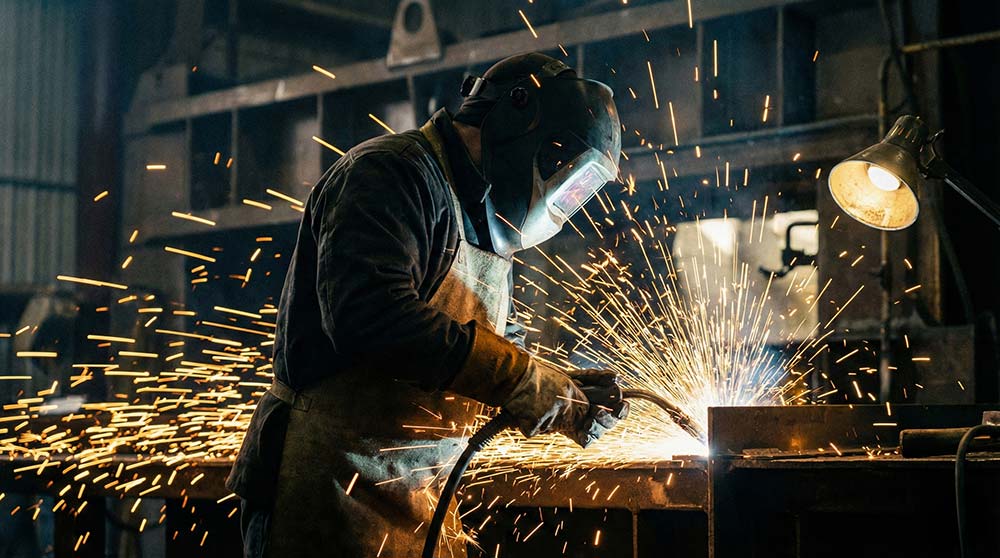
In the fields of metal processing and heavy industry, welders face unique and high-risk safety threats: molten metal spatter, intense radiant heat, and the risk of electric shock. Standard fire-retardant workwear often fails to provide adequate protection for these specific scenarios. EN ISO 11611:2015 stands as the globally recognized standard for “Protective clothing for use in welding and allied processes,” providing a clear baseline for procurement and safety compliance.
This article provides an in-depth analysis of the technical requirements of EN ISO 11611, details the critical differences between Class 1 and Class 2, and offers scientific advice on selecting the right protective fabrics.
What is the EN ISO 11611 Standard?
EN ISO 11611 specifies minimum basic safety requirements and test methods for protective clothing (including hoods, aprons, sleeves, and gaiters) designed to protect the wearer’s body during welding and allied processes. It replaces the older EN 470-1 standard.
The standard is designed to ensure protection against four core risks:
- Molten Metal Spatter: Prevents high-temperature metal droplets from burning through the fabric.
- Limited Flame Spread: Prevents the garment from igniting upon contact with sparks or small flames.
- Radiant Heat: Minimizes the transfer of intense heat generated by an electric arc.
- Accidental Electrical Contact: Minimizes the risk of electric shock by short-term, accidental contact with live electrical conductors at voltages up to approximately 100 V d.c. in normal conditions of welding.
Procurement Alert: A fabric certified only for EN ISO 11612 (General Heat & Flame) does not automatically comply with EN ISO 11611. The welding standard has unique, mandatory requirements for “Impact of Spatter” and “Electrical Resistance.”
Core Analysis: The Difference Between Class 1 and Class 2
EN ISO 11611 divides protective performance into two distinct classes based on the hazardous nature of the welding process: Class 1 (Lower Risk) and Class 2 (Higher Risk). Understanding this distinction is the key to selecting the correct PPE.
Class 1: Light Welding Techniques
Definition: Protection against less hazardous welding techniques and situations, causing lower levels of spatter and radiant heat.
- Typical Processes: Gas welding, TIG welding, MIG welding (low current), Micro plasma welding, Soldering/Brazing.
- Fabric Requirements:
- Impact of Spatter: Withstand at least 15 drops of molten metal with a temperature rise on the back of less than 40K.
- Radiant Heat Transfer (RHTI 24): ≥ 7 seconds.
- Recommendation: Typically 300gsm FR Cotton fabrics, balancing lightweight comfort with sufficient protection.
Class 2: Heavy Welding Techniques
Definition: Protection against more hazardous welding techniques and situations, causing higher levels of spatter and radiant heat.
- Typical Processes: MMA welding (basic or cellulose electrode), MAG welding (CO2 or mixed gases), Plasma cutting, Gouging, Oxygen cutting.
- Fabric Requirements:
- Impact of Spatter: Withstand at least 25 drops of molten metal without burn-through.
- Radiant Heat Transfer (RHTI 24): ≥ 16 seconds (Significantly higher requirement than Class 1).
- Recommendation: Requires heavy-weight fabrics (usually 400gsm+) or high-performance blends (e.g., High-density CVC FR, Aramid) to achieve a denser physical barrier.
Quick Comparison: Class 1 vs. Class 2
| Test Indicator | Class 1 (Light) | Class 2 (Heavy) |
|---|---|---|
| Molten Metal Drops (ISO 9150) | ≥ 15 Drops | ≥ 25 Drops |
| Radiant Heat RHTI 24 (ISO 6942) | ≥ 7 Seconds | ≥ 16 Seconds |
| Tear Strength (ISO 13937-2) | ≥ 15N | ≥ 20N |
| Typical Scenario | TIG, Gas Welding | MAG, MMA, Cutting |
Key Test Indicators and Technical Requirements
To achieve EN ISO 11611 certification, fabrics and garments must pass a series of rigorous laboratory tests.
1. Impact of Spatter (ISO 9150)
This is the most critical test for welding clothing. Drops of molten metal are directed at a vertically oriented test specimen. The test measures how many drops are required to raise the temperature sensor behind the fabric by 40K. A higher number of drops indicates better insulation and resistance to burn-through.
2. Limited Flame Spread (ISO 15025)
Similar to EN ISO 11612, the fabric must pass Surface Ignition (A1) or Edge Ignition (A2) tests. Upon removal of the flame, the material must show:
- No continued burning
- No molten debris (to prevent secondary injuries)
- No hole formation
3. Electrical Resistance
This is unique to welding gear. The fabric assembly is tested under a potential of 100V ± 5V. It must demonstrate sufficient electrical resistance (typically > 10⁵ Ω) to prevent the welder from electric shock in case of accidental contact with the electrode or conductive surfaces. Note: This is not protection against high-voltage work.
Garment Design Specifications
Passing fabric tests is not enough. EN ISO 11611 imposes strict mandatory requirements on garment design to prevent molten metal from becoming trapped.
- Pockets: External pockets must have flaps. The flaps must be at least 10mm wider than the pocket opening on each side (except for side pockets below the hip). This prevents sparks from entering the pocket.
- No Trapping Points: Garments must not have turn-ups (cuffs) or folds that face upwards, as these could catch molten metal spatter.
- Concealed Fasteners: All metal zippers, buttons, or studs must be completely covered by a placket. They must not be exposed to the outside to prevent heat transfer or electrical shorting.
- Velcro: Only flame-retardant velcro is permitted.
How to Select the Correct Welding Fabric
Choosing the right fabric type for different welding environments is essential for balancing cost, comfort, and safety. Here are general recommendations based on the standards:
- For Class 1 (TIG/Light Welding): Recommend FR Cotton
Typically, 300-350gsm FR Cotton fabrics are chosen. These provide essential flame resistance while offering the breathability and moisture-wicking properties of cotton, making them ideal for summer or indoor light welding. - For Class 2 (MAG/Cutting/Heavy Industry): Recommend High-Density CVC or Blends
To withstand heavy spatter, we recommend 400gsm+ CVC (Cotton/Polyester blend) high-density Satin fabrics. The smooth surface of a Satin weave allows molten droplets to slide off quickly, preventing adhesion and burn-through, while meeting the high Class 2 requirement for radiant heat (RHTI 24 ≥ 16s). - For Extreme Durability: Recommend Aramid (Inherent FR)
For environments with severe mechanical wear or risks of arc flash, Aramid (IIIA) inherent FR fabrics are the best choice. They fully comply with Class 2, offer superior tear strength, and possess permanent flame resistance that outlasts treated cotton.
EN ISO 11611 vs. EN ISO 11612: The Critical Differences
EN ISO 11611 and EN ISO 11612 are often mentioned together, but their focus is entirely different. Simply put: EN ISO 11611 is “Job-Specific” (Welders), while EN ISO 11612 is “Hazard-Specific” (Heat & Flame).
1. Core Differences Table
| Dimension | EN ISO 11611 (Welding) | EN ISO 11612 (General Heat) |
|---|---|---|
| Primary Goal | Protects welders from risks specific to welding processes. | Protects industrial workers from contact with heat and flame. |
| Unique Requirements | Must provide Electrical Insulation; Specific Spatter Classes (1/2). | No electrical requirement; Detailed heat coding (A-F). |
| Test Focus | Focus on Molten Metal Drops and Radiant Heat. | Focus on Convective (B), Radiant (C), Contact (F) heat, etc. |
| Applications | Welding, Cutting, Grinding. | Oil & Gas, Utilities, General Industry. |
2. Why is EN ISO 11612 certification insufficient for welders?
This is a common procurement error. Although both use the same flame spread test (ISO 15025), there are key “gaps”:
- Missing Electrical Insulation: Many excellent EN ISO 11612 fabrics (e.g., antistatic fabrics with high carbon content) may be too conductive to pass the EN ISO 11611 electrical resistance test.
- Different Spatter Criteria: While EN ISO 11612 has an “E” code for molten iron, EN ISO 11611 uses a specific algorithm for drop count and temperature rise tailored specifically for welding scenarios.
Expert Advice: For professional welding workshops, Dual Certification is the gold standard. We recommend selecting fabrics that pass both EN ISO 11611 Class 2 and EN ISO 11612 A1+B1+C1+E2/E3. This ensures insulation during welding and broad heat protection for other tasks.
Frequently Asked Questions (FAQ)
1. Can 100% Cotton fabric achieve EN ISO 11611 Class 2?
A: Yes, but it is challenging. It typically requires a weight of over 400gsm and must use a high-density Satin or Twill weave combined with a top-tier FR finish. Standard lightweight cotton workwear fabrics can usually only achieve Class 1.
2. Can welding protective clothing have reflective tape?
A: Yes, but with strict restrictions. The reflective tape itself must pass relevant flame retardancy tests (e.g., EN ISO 14116 or EN 469). More importantly, the placement of the tape must not create a “pocket effect” or ridge that could trap molten metal droplets, which would lead to burn-through.
3. Is EN ISO 11611 the same as the Arc Flash standard (IEC 61482-2)?
A: No. EN ISO 11611 protects against radiant heat and small spatter from welding. While it offers some electrical resistance, it does not protect against the high-energy explosion of an Arc Flash. If you work with high-voltage switchgear, you must wear gear certified to IEC 61482-2.
4. What should be worn underneath EN ISO 11611 clothing?
A: It is strongly recommended to wear 100% cotton, wool, or other non-melting natural fibers. Never wear synthetic underwear (polyester, nylon, etc.). If the outer protective layer is breached in a severe accident, synthetic undergarments will melt into the skin, causing catastrophic secondary burns.
5. When should welding clothing be replaced?
A: Garments must be replaced immediately if they show signs of holes, open seams, or if the fabric has become thin and brittle due to long-term UV exposure. Damaged clothing cannot provide the specified Class 1 or Class 2 protection. Additionally, if the garment is heavily soiled with flammable contaminants (oils, solvents) that cannot be washed out, it should be discarded.
6. Does washing affect the protection of EN ISO 11611 garments?
A: It depends on the fabric type.
Treated FR (e.g., FR Cotton): Protection may gradually diminish over time. These often have a limit (e.g., 50 or 100 washes), and manufacturer instructions must be strictly followed.
Inherent FR (e.g., Aramid, Modacrylic): Flame resistance is permanent and will not wash out. However, avoid chlorine bleach, as it can degrade the fiber strength.