Enter your details and we will send the requested document to your inbox.





ISO 12945 is the primary international standard used to evaluate the propensity of fabrics to undergo surface changes, specifically pilling, fuzzing, and matting. By simulating wear and tear through controlled laboratory friction, this standard quantifies the likelihood of fibers detangling and forming pills. This guide provides a technical breakdown of ISO 12945, compares it with abrasion standards like ISO 12947-2 and ASTM D4966, and offers industrial solutions for anti-pilling optimization.
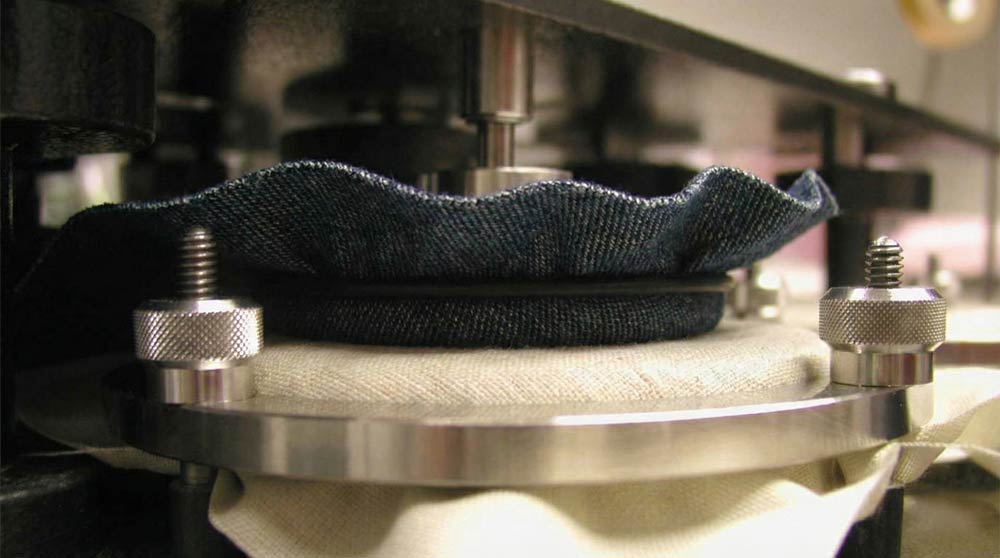
The ISO 12945 series was developed by the International Organization for Standardization to provide a unified method for assessing surface degradation in textiles. It serves as a critical technical requirement for global brands such as UNIQLO and ZARA to prevent quality disputes related to pilling.
Pilling is a dynamic physical process involving four stages: fiber migration, entanglement, pill growth, and wear-off. In the ISO 12945 test environment, mechanical friction overcomes the cohesive forces between fibers, causing loose fiber ends to migrate to the fabric surface, forming a layer of “fuzz.” Continued friction causes these fibers to entangle into visible “pills.” If the fiber strength is high (e.g., polyester), the pills remain attached; if the fiber is weaker (e.g., wool), the pills eventually break off.
| Grade | Description | Surface Appearance Criteria |
|---|---|---|
| Grade 5 | No change | No visible fuzzing, pilling, or matting. |
| Grade 4 | Slight fuzzing/pilling | Slight surface fuzzing and/or a few scattered, indistinct pills. |
| Grade 3 | Moderate pilling | Distinct fuzzing and/or moderate pilling. Pills vary in size and density. |
| Grade 2 | Distinct pilling | Dense fuzzing and/or distinct pilling covering a large part of the surface. |
| Grade 1 | Severe pilling | Dense fuzzing and/or severe pilling covering the entire surface. |
The ISO 12945-2 test must be conducted on a Martindale tester following these six precise steps to ensure repeatability:
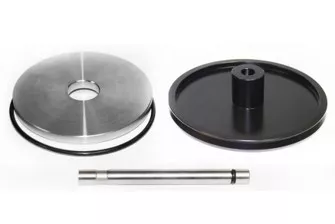


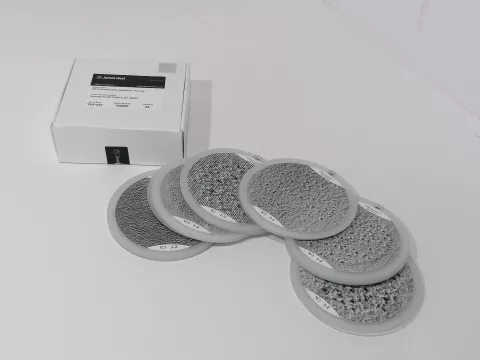
Assessment criteria involve identifying specific types of surface degradation. In an ISO 12945 evaluation, three distinct states must be distinguished:
Fuzzing: Protruding fiber ends that form a “hairy” or “fuzzy” layer on the fabric surface.
Pilling: The entanglement of protruding fibers into tight, clearly visible balls (pills).
Matting: The tangling and pile-up of fibers on the surface, causing the original texture of the fabric to disappear or become distorted.
Distinguishing between pilling (appearance) and abrasion (durability) is essential for accurate laboratory evaluation. The differences between ISO 12945 and abrasion standards like ISO 12947-2 and ASTM D4966 are summarized below:
| Parameter | ISO 12945-2 (Pilling) | ISO 12947-2 (Abrasion) | ASTM D4966 (Abrasion) |
|---|---|---|---|
| Evaluation Focus | Surface appearance grade | Cycles until yarn breakage | Physical breakdown or weight loss |
| Applied Load | Low (Approx. 155g or 415g) | High (9kPa or 12kPa) | Standard 12kPa |
| Friction Path | Lissajous Figure | Lissajous Figure | Lissajous Figure |
| End Point | Fixed number of cycles | Hole or broken yarns | Fabric failure or specified limit |
Test data serves as the core metric for determining if a fabric is fit for its intended purpose. Common scenarios include:
Achieving high anti-pilling grades requires a comprehensive approach across fiber selection, spinning, and finishing. BEGOODTEX provides the following industrial solutions:
MVS (Vortex Spinning) Yarn: MVS yarns utilize a wrapped structure that secures fiber ends. Since MVS yarn has minimal surface hairiness, it effectively blocks the “fuzzing” stage of pilling.
Bio-polishing: For cotton-rich fabrics, cellulase enzymes are used to precisely hydrolyze protruding microfibers. This chemical finishing step significantly improves ISO 12945 test grades.
Anti-pilling Modified Fibers: Utilizing low-tenacity modified polyester fibers. Once a pill forms, the weaker fiber strength allows the pill to break off easily during daily use, maintaining a clean surface.
A: Severity depends on the fabric type. For dense woven fabrics, the Martindale method (ISO 12945-2) is more severe due to the load. For loose knits, the Pilling Box (ISO 12945-1) is better at inducing pilling through random tumbling.
A: Washing typically loosens the fiber structure, leading to a decrease in the pilling grade. Commercial protocols often require a “post-wash” test to simulate real consumer feedback.
A: Synthetic fibers like polyester and nylon have very high tenacity. This high strength prevents formed pills from breaking off, resulting in lower scores in ISO 12945 grading.
A: It is generally recommended to replace the cork every 2,000 operating hours or when visible permanent indentations or glazing occur to ensure authoritative results.
A: No. ASTM D3512 uses a metal impeller and cotton lint, which is much more destructive than ISO standards. The two are part of different regional standard systems and are not directly comparable.
A: This usually happens when the wrong method is selected. If the upholstery was tested using the Pilling Box (ISO 12945-1), the lack of pressure failed to simulate the actual friction of a person sitting. ISO 12945-2 must be used for such products.
