Get in touch
Thank you for reaching out! Please tell us more about your needs — our expert team will get back to you within 24 hours.
Get in touch
Thank you for reaching out! Please tell us more about your needs — our expert team will get back to you within 24 hours.
In the textile industry, ensuring a fabric is “mold-proof” and “antibacterial” involves two completely different technical requirements. Simply put, AATCC 30 is an antifungal test designed to check if a fabric will grow fuzzy mold in damp conditions or rot (lose strength) due to microbial attack. On the other hand, ASTM E2149 is an antimicrobial test specifically for fabrics where the active agent is “fixed” to the fibers and does not leach out. It measures how effectively the fabric kills bacteria (like those found in sweat) upon direct contact. These two standards are the quality benchmarks for functional textiles used in outdoor, medical, and sportswear sectors.
AATCC 30 is the authoritative standard for evaluating the antifungal activity of textile materials, formally titled “Antifungal Activity, Assessment on Textile Materials: Mildew and Rot Resistance of Textile Materials.” The technical core of this standard is to simulate environments where fabrics are exposed to long-term high humidity or soil contact to determine their resistance to mold growth and microbial degradation of the fiber structure. It assesses not only the aesthetic damage (mold spots) but also the structural integrity (tensile strength) of the fabric. It is the primary reference for determining the biological safety of outdoor tents, awnings, and textiles intended for maritime export.
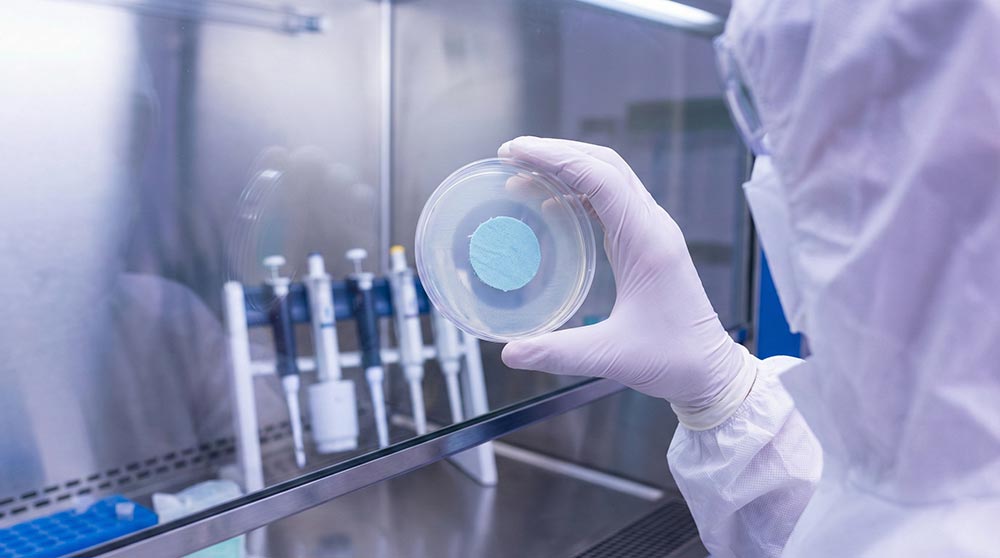
The AATCC 30 standard is divided into four independent procedures based on different usage scenarios. Each procedure utilizes different fungal strains and environmental conditions to evaluate fabric durability from various perspectives. Below is a detailed comparison of the four procedures:
| Procedure No. | Test Name | Core Evaluation Goal | Representative Strains | Typical Products |
|---|---|---|---|---|
| Test I | Soil Burial | Evaluates rot resistance and strength retention after being buried in soil. | Natural soil microbial community | Geotextiles, sandbags, military canvas. |
| Test II | Agar Plate (C. globosum) | Evaluates the degradation resistance of natural fibers like cotton and linen. | Chaetomium globosum | Pure cotton fabrics, linen products. |
| Test III | Agar Plate (A. niger) | Evaluates surface mold growth and inhibitory zones. | Aspergillus niger | Standard apparel, outdoor furniture fabrics. |
| Test IV | Humidity Jar | Simulates mold resistance in confined, damp, and unventilated environments. | Mixed spore suspension | Export goods, indoor upholstery. |
Test III is the most common antifungal procedure in commercial applications, primarily testing resistance against Aspergillus niger. The method involves placing the fabric on a non-nutritive agar plate inoculated with high concentrations of fungal spores. If mold grows on the fabric surface, it indicates the fungus is using the fabric as a food source; if no growth occurs, the fabric has undergone effective antifungal treatment. The operational workflow is as follows:
The results for AATCC 30 Test III are determined through a combination of macroscopic (naked eye) and microscopic observation. The criteria evaluate not only the cleanliness of the specimen surface but also the diffusion capability of the antifungal agent. The following is the standard industrial grading system:
Antifungal Rating Criteria:
- No Growth: No mold is visible on the specimen surface, even under a microscope. This is considered a “Pass.” A zone of inhibition indicates superior performance.
- Microscopic Growth: Mold spots are not visible to the naked eye but hyphae (fungal threads) are visible under 50x magnification. This is usually considered a “Fail.”
- Macroscopic Growth: Mold spots are clearly visible to the naked eye. This is a “Fail.”
- Zone of Inhibition: An area outside the specimen edge with no fungal growth. Typically, a zone wider than 1 mm indicates excellent antifungal performance.
ASTM E2149 is a quantitative standard for evaluating the antimicrobial activity of non-leaching agents under dynamic conditions. Titled “Standard Test Method for Determining the Antimicrobial Activity of Antimicrobial Agents Under Dynamic Contact Conditions,” it is specifically designed for antimicrobial fabrics where the active agent is permanently fixed to the fiber and does not migrate or wash away (e.g., silver ion or quaternary ammonium treatments). The technical principle involves mechanical agitation to force contact between bacteria and the antimicrobial sites on the fabric. It is the key technical evidence for “antibacterial and anti-odor” claims in sportswear, socks, and functional underwear.
ASTM E2149 utilizes the unique “Shake Flask Method,” ensuring thorough contact between bacteria and the fabric through high-speed shaking. This method simulates the real-world process where bacteria in sweat flow through fabric fibers during physical activity. The core operation is as follows:
The determination for ASTM E2149 is based on the “Bacterial Reduction Rate.” The test compares the total bacterial count of the experimental sample and the untreated control sample after 1 hour of shaking to calculate the percentage of bacteria killed. The logic is: subtract the number of bacteria in the experimental sample from those in the control sample, then divide by the control sample’s count. Commercial passing standards typically require a reduction rate of 99% or 99.9% or higher. If the reduction is less than 50%, the fabric is considered to lack effective antimicrobial activity.
In functional textile development, understanding the differences between these two standards is vital. The table below clearly illustrates their distinctions across various dimensions:
| Dimension | AATCC 30 (Antifungal) | ASTM E2149 (Antimicrobial) |
|---|---|---|
| Target Organism | Fungi (e.g., Aspergillus niger, Chaetomium globosum). | Bacteria (e.g., S. aureus, E. coli). |
| Test Logic | Observes if fungi can “colonize” and grow on the fabric. | Calculates the number of bacteria killed upon contact. |
| Contact Method | Static contact/incubation. | Dynamic mechanical agitation/collision. |
| Industry Focus | Outdoor, geotextiles, warehousing, and shipping. | Sportswear, underwear, medical textiles. |
Developing high-quality fabrics that meet both standards requires precise control of the finishing process. Standard antibacterial agents often fail antifungal tests; therefore, specific process adjustments are necessary:
A: AATCC 100 is a static test with a 24-hour growth window, whereas ASTM E2149 lasts only 1 hour under constant agitation. This suggests your antimicrobial agent kills too slowly to meet the requirements of immediate contact-killing.
A: No. The official Test III procedure specifies 7 days. Fungi need time to grow; shortening the cycle leads to inaccurate observations and unreliable conclusions.
A: This bacterium is a common cause of pneumonia and hospital-acquired infections. Including it in an ASTM E2149 report significantly enhances the authority of medical-grade antimicrobial fabrics.
A: Not necessarily. It could be that the concentration is below the effective threshold, or the softener layer on the fabric is too thick, preventing bacteria from reaching the active sites.
A: No. For non-leaching agents, as long as there is no growth on the specimen surface, it is considered a “Pass.” A zone of inhibition is not required.
A: Yes. The more a specimen is shredded, the more antimicrobial sites are exposed. Therefore, the standard strictly regulates the weight and shredding method to ensure fair comparisons.