Enter your details and we will send the requested document to your inbox.





Introduction: Maintaining the integrity of flame retardant (FR) garments is critical for ensuring personal safety in high-risk thermal environments. This article provides a comprehensive, technical guide on how to wash flame retardant clothes without compromising their protective properties. As a textile R&D expert at Begoodtex, I understand that the longevity of FR performance depends heavily on post-production care. Improper laundering—such as using the wrong detergent, excessive heat, or prohibited additives—can strip away chemical treatments or coat inherent fibers with flammable residues. Our objective is to bridge the gap between industrial safety standards and daily maintenance practices, offering clear instructions on detergent selection, temperature control, and inspection protocols. By following this expert-driven guide, procurement professionals and end-users can maximize the service life of their FR apparel while adhering to global safety regulations like NFPA 2112 and EN ISO 11612.

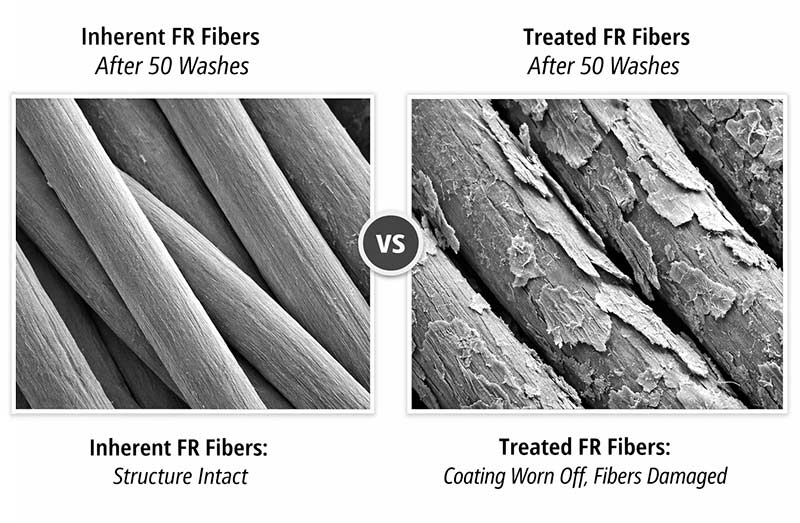
The washing strategy for FR clothing is primarily dictated by whether the fabric is inherently flame retardant or chemically treated. Inherent fibers, such as Modacrylic or Aramids, possess flame resistance at the molecular level, meaning the protection cannot be washed out, though it can be compromised by external contaminants. Conversely, treated fabrics like FR-cotton rely on a chemical finish (e.g., Proban or Pyrovatex) that is bonded to the cellulose. While modern treatments are durable, they are more susceptible to degradation from improper chemical exposure during laundering compared to inherent alternatives.
Comparison of Fiber Types and Wash Durability
| Feature | Inherent FR (e.g., Begoodtex Modacrylic) | Treated FR (e.g., FR Cotton/Nylon) |
|---|---|---|
| FR Mechanism | Molecular structure of the fiber. | Topical or polymer-linked chemical finish. |
| Wash Longevity | Permanent; lasts the life of the garment. | Guaranteed up to 50-100 cycles typically. |
| Chemical Sensitivity | Resistant to most detergents; low sensitivity. | High sensitivity to bleach and strong acids. |
| Shrinkage Potential | Low (Synthetics are heat-set). | Moderate to High (Natural fiber base). |
Fabric softeners and chlorine bleach are strictly prohibited for all types of flame retardant clothing due to their destructive chemical nature. Fabric softeners work by coating fibers with a thin layer of fats or waxes to increase softness, but these coatings are highly flammable and act as a fuel source if the garment is exposed to an arc flash or flash fire. Chlorine bleach (sodium hypochlorite) acts as a strong oxidizing agent that physically breaks down the chemical bonds of FR treatments and weakens the tensile strength of inherent fibers, leading to premature garment failure and loss of protection.
The ideal detergent for FR garments is a liquid, non-ionic, synthetic detergent with a neutral pH level between 6.0 and 10.5. Heavy-duty alkaline detergents or “natural” soaps based on animal fats must be avoided. Natural soaps can react with minerals in the water to form insoluble “calcium soap” residues (scum) that deposit on the fabric surface. These deposits are flammable and can ignite even if the underlying fabric is flame retardant. Furthermore, detergents containing “optical brighteners” should be avoided for garments used in environments where infrared detection or specific color fastness is required.
Detergent Specification Requirements
| Parameter | Recommended Value/Type | Reasoning |
|---|---|---|
| pH Value | 6.0 – 10.5 | Prevents fiber degradation and skin irritation. |
| Surfactant Type | Non-ionic | Superior oil and grease removal without residue. |
| Optical Brighteners | None (Optional) | Maintains original fabric color/spec. |
| Physical Form | Liquid | Dissolves better than powders at lower temperatures. |
Industrial laundering provides a controlled environment with specific formulas for temperature, mechanical action, and chemical titration, making it the preferred method for heavily soiled FR workwear. Home washing is convenient but often lacks the thermal energy and chemical precision required to remove industrial contaminants like hydraulic oils or greases. If home washing is chosen, users must ensure the water temperature is high enough to activate surfactants but low enough to prevent excessive fabric shrinkage, typically not exceeding 60 degrees Celsius for most FR blends.
Heavily soiled FR garments containing oils, fats, or lubricants pose a severe safety risk because the contaminants themselves are flammable. If these substances are not fully removed during the wash cycle, the garment’s FR rating is effectively neutralized. For extreme contamination, a pre-wash or “soak” cycle using a concentrated degreaser is necessary. It is critical to ensure that the degreaser used is compatible with FR finishes and does not contain flammable solvents that could remain trapped in the fiber matrix after rinsing.
Technical Note: If oil stains remain visible after a thorough wash, the garment must not be worn in a hazardous area. The presence of residual oil indicates a potential ignition point on the fabric surface.
Thermal energy in the wash cycle is essential for removing soils, but excessive heat during drying is the leading cause of FR garment shrinkage and hardware damage (e.g., FR zippers and reflective tapes). We recommend a maximum wash temperature of 60C (140F) for home laundering. For drying, a low-heat setting or tumble dry “permanent press” mode is optimal. Over-drying must be avoided as it creates static electricity and can make the fibers brittle, reducing the mechanical life of the garment.
Recommended Thermal Parameters
Flame retardant workwear should be washed whenever it becomes visibly soiled or develops a noticeable odor from perspiration or chemical exposure. There is no “fixed” number of days for washing; however, allowing soil to build up over multiple shifts makes it significantly harder to clean and increases the risk of the soil “setting” into the fiber. Regular washing does not significantly degrade inherent FR fibers, but for treated fabrics, users should track the number of cycles to stay within the manufacturer’s guaranteed performance window.
Global standards such as NFPA 2112 (USA) and EN ISO 11612 (Europe) require that FR fabrics undergo rigorous wash testing before certification. For example, fabrics are often tested for flame resistance after 50 or 100 industrial wash cycles following the ISO 15797 protocol. This ensures that the protection is “durable” and not just a temporary coating. When purchasing FR clothing, always verify that the manufacturer has performed these standardized wash-durability tests to ensure long-term compliance.
Wash Performance Standards Overview
| Standard | Required Wash Cycles | Test Method |
|---|---|---|
| NFPA 2112 | 100 Cycles | AATCC 135 / Industrial Heat |
| EN ISO 11612 | 5 Cycles (Minimum) | ISO 6330 / ISO 15797 |
| ASTM F1506 | 25 Cycles | AATCC 135 |
The care label on an FR garment is a legal requirement and serves as the primary technical guide for maintenance. It includes ISO 3758 symbols for washing, bleaching, drying, and ironing. For FR clothing, pay special attention to the “No Chlorine Bleach” triangle and the “No Softener” warnings. If the label is faded or missing, the garment should be treated with the most conservative cleaning methods or retired from service to avoid accidental damage to the protective layer.
Hard water contains high concentrations of calcium and magnesium ions which react with common soaps to form “calcium soap” or lime soap. This substance is extremely difficult to rinse out and acts as a flammable fuel. Over time, hard water deposits can build up on FR fibers, creating a layer that can catch fire even if the fabric itself is self-extinguishing. If your facility or home has hard water (above 120 ppm), it is essential to use a water softener or specialized synthetic detergents that sequester minerals to prevent this hazardous buildup.
Post-wash inspection is a non-negotiable safety step to identify physical damage or cleaning failures. Inspect for “thin spots,” holes larger than 1 inch, or frayed seams that could allow heat or flames to penetrate the garment. Additionally, check for “grease spots” that were not removed during the wash. Any garment that shows signs of mechanical failure, thermal charring from previous exposure, or permanent contamination must be professionally repaired using FR-rated thread and patches, or discarded immediately.
At Begoodtex, our R&D team focuses on “Eco-Friendly FR” solutions that maintain high durability with minimal environmental impact. To extend the life of your Begoodtex FR fabrics, we recommend washing inside out to protect the face of the fabric from mechanical abrasion. Avoid overloading the machine, which prevents proper rinsing of detergents. By maintaining a clean, residue-free garment, you ensure that the advanced polymer technology within our fibers performs at its peak during a thermal event.
A1: No. Starch is a flammable vegetable-based carbohydrate. Applying starch to an FR garment adds a layer of fuel that can ignite and cause the fabric to burn, negating its protective properties.
A2: No. Shrinkage usually indicates that the fibers have undergone thermal or mechanical stress. Stretching them back can damage the weave structure. Always follow temperature guidelines to prevent shrinkage beyond the 3% tolerance.
A3: For treated fabrics, you cannot tell by looking. You must follow the manufacturer’s wash cycle limit. For inherent fabrics like Begoodtex, the FR property never washes out, but you must check for flammable surface residues.
A4: This is not recommended. Non-FR clothes may shed flammable lint (especially cotton) which can transfer to the FR garments. Also, regular laundry may use softeners that could contaminate the FR load.
A5: Do not wear it. The odor indicates residual flammable fuel. Re-wash using a heavy-duty industrial degreaser. If the smell persists, the garment must be retired.
