Enter your details and we will send the requested document to your inbox.





When buying flame-retardant fabric for PPE, it is easy to focus only on the unit price.
Post-treated FR fabric usually looks cheaper. Inherently flame-retardant fabric, or IFR fabric, usually costs more at the beginning.
But PPE is not a one-time purchase.
Workers wear it every day. It gets washed often. It may face sparks, arc flash, flash fire, heat, and tough working conditions.
So the real cost is not only the first price on the quotation. It also includes washing, replacement, inventory, compliance checks, and safety risk.
This is where the difference between post-treated FR and inherent FR becomes much clearer.

Post-treated FR fabric is usually made by taking a normal fabric and adding flame-retardant finishing after weaving.
This method is easier to control in cost. The material choices are also more flexible. It is common in cotton, cotton blends, and many regular workwear fabrics.
So at the buying stage, the comparison looks simple:
But this only shows the entry cost.
It assumes both garments will last the same time, survive the same number of washes, and be just as easy to manage later.
In real factories, things are usually not that simple.
Buyers should consider not only the unit price, but also the service life, replacement frequency, and real cost per wear.
Looking at one full year makes the cost easier to understand.
Assume there are 100 workers.
For post-treated FR clothing:
For IFR clothing:
On the first quotation, IFR looks more expensive.
But at the end of the year, the post-treated FR option costs more in total.
This is one of the most common blind spots in PPE purchasing.
The money is not only spent on the day you buy the garment. It keeps adding up through washing, replacement, inventory, and management.

Many experienced buyers look at cost per wear.
This means:
How much does the garment cost, divided by how many times it can be safely worn?
Here is a simple comparison.
A post-treated FR garment costs USD 50 and lasts around 40 safe wearing cycles.
Cost per wear: USD 1.25.
An IFR garment costs USD 90 and lasts around 120 safe wearing cycles.
Cost per wear: USD 0.75.
From this perspective, the real cost difference between Inherent FR and Treated FR becomes much clearer.
Treated FR garments may have a higher cost per wear.
Inherent FR garments, when spread across a longer service life, can actually be more cost-effective.
This is especially important for large factories.
For a small team, the difference may not look too serious. But for hundreds or thousands of workers, even a small change in replacement frequency becomes a large cost.
So when buying FR clothing, the unit price matters.
But cost per wear matters too.
Post-treated FR fabric has one management problem:
The garment may still look fine, but the flame-retardant performance may already have weakened.
This is a difficult risk to manage.
Workers may continue wearing it because it is not torn.
Warehouse staff may not replace it because it still looks usable.
The safety team may not know the real condition if wash records are not clear.
Post-treated FR fabric depends on chemical finishing. After repeated washing, the protection may gradually drop.
So the garment may look complete, but it may no longer provide the required protection level.
This risk becomes much bigger during safety audits, customer factory inspections, or accident investigations.
It may lead to urgent replacement.
It may affect project approval.
It may create penalties, downtime, or insurance problems.
The difficult thing about compliance cost is that it does not appear every day.
But once it appears, it is usually not cheap.
IFR fabric has a clear advantage here.
Its flame-retardant performance comes from inside the fiber, so laundry management is easier, and the safety team can set a more stable replacement cycle.
 Fireproof Aramid Hood High Temperature Resistant for Bulk Safety Garment Production with Custom Production Options | EN ISO 11612
 Anti-Static Fireproof Aramid IIIA Henley Shirt Garments for Protective Clothing with Wholesale and Custom Supply Options | EN ISO 11612
 Fireproof Aramid 3A Jacket for Forest Firefighting with Anti-Static Protection and Contract and Export Supply Options | EN ISO 11612
Replacing clothing often is not only about buying more garments.
The purchasing team needs to process more orders.
The warehouse needs to stock more sizes.
Workers need to collect and return garments more often.
The laundry team needs to track washing cycles.
The safety team needs to decide which garments should be removed from service.
With post-treated FR clothing, management is usually more demanding.
How many times has it been washed?
Was the correct detergent used?
Was chlorine bleach used?
Has the FR finish been affected?
All of these need closer tracking.
IFR clothing is easier to plan.
The buying cycle is longer. Inventory pressure is lower. The safety team does not need to worry as often about whether a garment is still protective after repeated washing.
These management costs are not written clearly on the quotation.
But factories pay for them every day.
Post-treated FR fabric is not wrong.
It can be a practical choice in some situations.
For example:
In these cases, post-treated FR still has value.
Its main advantage is the lower starting cost and flexible material choices.
But for long-term industrial PPE, especially where garments are washed often, worker numbers are high, and audits are strict, the advantage of post-treated FR becomes weaker.
If garments need frequent replacement, careful tracking, and tighter control, the total cost may rise quickly.
So post-treated FR is more suitable for short-term or light-use projects.
For long-term PPE programs, the later cost should be calculated carefully.
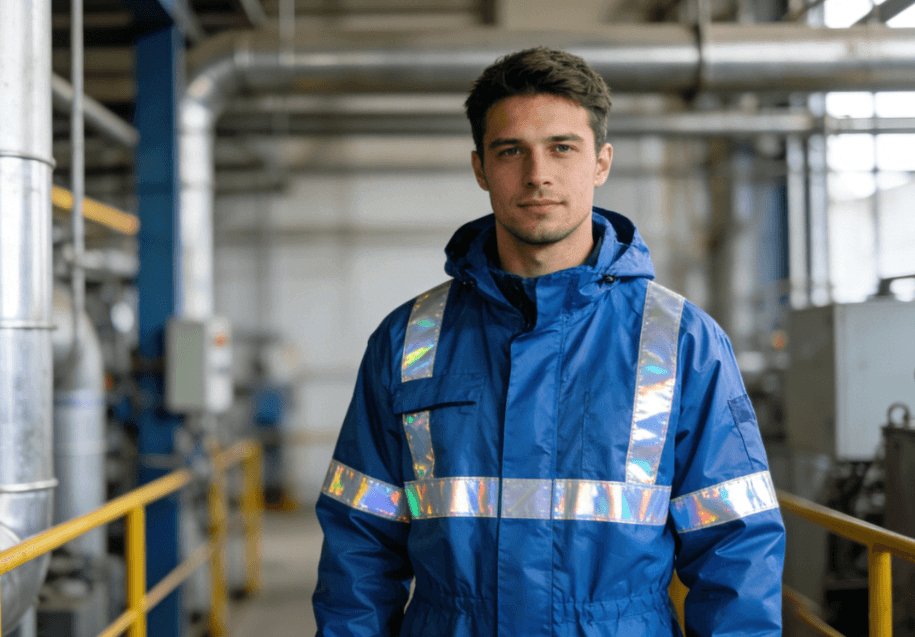
IFR means inherently flame-retardant.
The flame-retardant performance comes from the fiber itself. It is not added only as a surface treatment after the fabric is made.
This makes the protection more stable after washing, abrasion, and long-term use.
Long-term workwear, oil and gas, petrochemical, power, metallurgy, industrial maintenance, and flash fire risk environments should all take IFR seriously.
It is especially suitable when:
In these projects, IFR may cost more at the beginning, but it is easier to manage later.
The performance is more stable.
Replacement is less frequent.
Compliance risk is lower.
Over the full service life, IFR is often not only safer, but also easier to control in cost.
When buying FR clothing, price is important.
But it should not be the only question.
Buyers should also ask:
This affects long-term use and wash durability.
Reports also need to be checked carefully.
Which standard does the report follow?
Was the test done on fabric or on the finished garment?
Does the tested sample match the bulk product?
These questions may feel more troublesome than asking for price.
But they can prevent bigger problems later.
FR clothing is not ordinary uniform.
The price needs to be discussed, but the safety limit must be clear first.
| Cost Item | Post-Treated FR | Inherent FR / IFR |
|---|---|---|
| Initial price | Lower | Higher |
| Wash durability | More affected by finishing durability | More stable |
| Replacement frequency | Usually higher | Usually lower |
| Cost per wear | Can be higher | Often lower |
| Compliance management | Needs closer tracking | Easier to plan |
| Long-term total cost | May increase | Easier to control |
This table cannot replace a real quotation.
But it reminds buyers that PPE cost should not stop at “how much per piece.”
When Begoodtex handles PPE flame-retardant fabric projects, we do not recommend products based only on unit price. We first look at the customer’s real working environment and expected service life.
For example, we need to know whether the FR garments are for a short-term project or long-term industrial workwear, how often the garments will be washed, how frequently workers will wear them, and whether the fabric needs to meet standards such as EN ISO 11612, NFPA 2112, NFPA 70E, ASTM F1506, or other related requirements.
Only after these details are clear can we judge whether treated FR fabric is more suitable, or whether inherently flame-retardant fabric is the better choice.
For oil and gas, petrochemical, electrical utility, welding, and high-risk manufacturing projects, Begoodtex usually pays more attention to long-term stability after repeated washing and wearing, compliance risk, and maintenance cost over the full service life.
Our goal is not simply to help customers buy cheaper fabric for the first order. It is to help them choose a PPE flame-retardant fabric solution that is more stable, more controllable, and better suited to the real working environment throughout the entire use cycle.
Inherent FR and post-treated FR should not be compared only by the first quotation.
Post-treated FR has a lower starting price. It is suitable for short-term use, low washing frequency, or projects with very tight budgets.
Inherent FR costs more per garment, but it is more durable in washing, more stable in protection, and usually easier to manage over time.
FR clothing is not bought once and forgotten.
Workers wear it every day. It is washed again and again. It may also be checked during safety audits.
The real cost appears slowly during use.
So yes, unit price matters.
But washing life, cost per wear, replacement frequency, test reports, and compliance risk should be calculated together.
Cheap PPE is not always truly cheaper.
For long-term industrial projects, the better choice is usually the one that can protect workers steadily, reduce replacement trouble, and make safety management easier.
IFR means the flame-retardant performance comes from the fiber itself, so it is more stable after washing. Post-treated FR means the flame-retardant function is added after the fabric is made, so it can be more affected by washing, chemicals, and use conditions.
No. Post-treated FR can still be useful for short-term projects, low washing frequency, and tight budgets. For long-term industrial PPE, buyers should also calculate replacement frequency and compliance risk.
IFR usually lasts longer, needs fewer replacements, and keeps its protection more stable after washing. When calculated by cost per wear, it may be lower than post-treated FR.
Divide the garment cost by the number of safe wearing cycles. For example, if a USD 50 post-treated FR garment can be safely used 40 times, the cost per wear is USD 1.25.
It depends on the industry and risk. Common standards include NFPA 2112, ASTM F1506, and EN ISO 11612. Buyers should confirm whether the report covers the actual fabric or finished garment.
Yes. This is especially important for post-treated FR clothing. Wrong washing methods or too many washes can reduce flame-retardant performance. Buyers should check the washing conditions and after-wash test results.
