Get in touch
Thank you for reaching out! Please tell us more about your needs — our expert team will get back to you within 24 hours.
Get in touch
Thank you for reaching out! Please tell us more about your needs — our expert team will get back to you within 24 hours.
Modern commercial interiors—especially offices, conference rooms, recording studios, and cinemas—are no longer designed with aesthetics alone in mind. Today’s spaces must also meet strict fire safety regulations and acoustic comfort requirements. Excessive noise can reduce productivity in offices, while poor sound control can ruin the listening experience in studios or theaters.
This is where Flame Retardant Acoustic Fabric becomes essential. These specialized textiles combine fire protection with sound absorption, allowing designers to create safe and comfortable environments.
In this guide, we will explore how to select the best flame retardant acoustic fabric for modern interiors, covering acoustic performance, fire standards, durability, and practical applications.
Flame retardant acoustic fabric is a textile designed to provide both sound control and fire safety. It is commonly used to cover acoustic panels, wall systems, and interior decorative surfaces.
Unlike ordinary fabrics, fire resistant acoustic fabric is made with flame-retardant fibers or special treatments that help slow flame spread and self-extinguish once the ignition source is removed. At the same time, its breathable structure allows sound waves to pass through to the acoustic insulation behind it, helping reduce echo and improve sound clarity.
Common materials include flame retardant polyester fabrics, inherently flame-retardant synthetic fibers, and treated woven textiles. These fabrics are widely used in offices, theaters, studios, and cinemas because they improve acoustic comfort while meeting building fire safety standards.
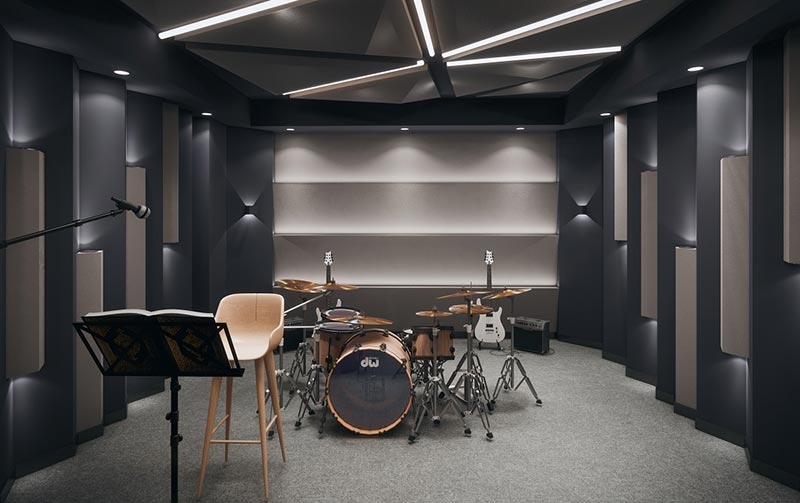
Selecting the right acoustic textile involves evaluating several technical aspects.
The most important acoustic indicator is the NRC sound absorption coefficient. NRC (Noise Reduction Coefficient) measures how effectively a material absorbs sound waves. The higher the NRC value, the better the sound absorption performance.
| NRC Value | Sound Absorption Level | Recommended Application |
|---|---|---|
| 0.30 – 0.50 | Moderate | Offices, meeting rooms |
| 0.50 – 0.70 | High | Conference rooms |
| 0.70 – 0.90 | Very High | Recording studios, cinemas |
High-performance soundproof fabric panels allow sound to penetrate the fabric surface and dissipate through the acoustic insulation layer behind the panel. When used as acoustic wall covering fabric, these textiles help control reverberation and reduce background noise, improving overall sound quality in the room.
For example:
Fire safety compliance is a mandatory requirement for commercial interiors. Different regions use different testing standards for flame retardant fabrics.
| Standard | Region | Application |
|---|---|---|
| NFPA 701 acoustic fabric | United States | Curtains and decorative textiles |
| BS 5867 flame retardant fabric | United Kingdom | Interior decorative fabrics |
| EN 13773 fire rated curtain fabric | European Union | Curtains and wall textiles |
| ASTM E84 fire performance | United States | Building materials |
For instance, NFPA 701 tests the flame propagation behavior of textiles exposed to a controlled flame source to ensure they do not rapidly spread fire. Projects such as offices, hotels, and theaters often require fabrics that comply with one or more of these standards. High-quality suppliers like BEGOODTEX typically provide test reports confirming compliance with these fire regulations.
The base material of the fabric plays a significant role in both acoustic and fire performance. The most common material used in fireproof acoustic materials is fire retardant polyester fabric. Polyester fibers can be engineered to provide permanent flame retardancy while maintaining durability and flexibility.
Flame retardant fabrics are generally classified into three types:
| Type | Description | Durability |
|---|---|---|
| Inherent flame retardant fabric | Flame resistance built into the fiber | Permanent |
| Durable FR finishing | Chemical treatment with wash resistance | Long-lasting |
| Temporary FR finishing | Surface treatment only | Short-term |
Durable flame retardant fabrics can maintain their protective performance even after multiple washes or long-term use. This durability makes them ideal for FR fabric for commercial acoustic panels used in high-traffic environments.
Another critical factor in fire safety is smoke generation. A high-quality low smoke acoustic fabric should minimize smoke production and avoid molten dripping during combustion. Low smoke performance is important because smoke inhalation is often the most dangerous factor in building fires.
High-quality fabrics should provide:
These features ensure safer evacuation conditions during emergencies.
Different environments require different types of soundproof fabric panels.
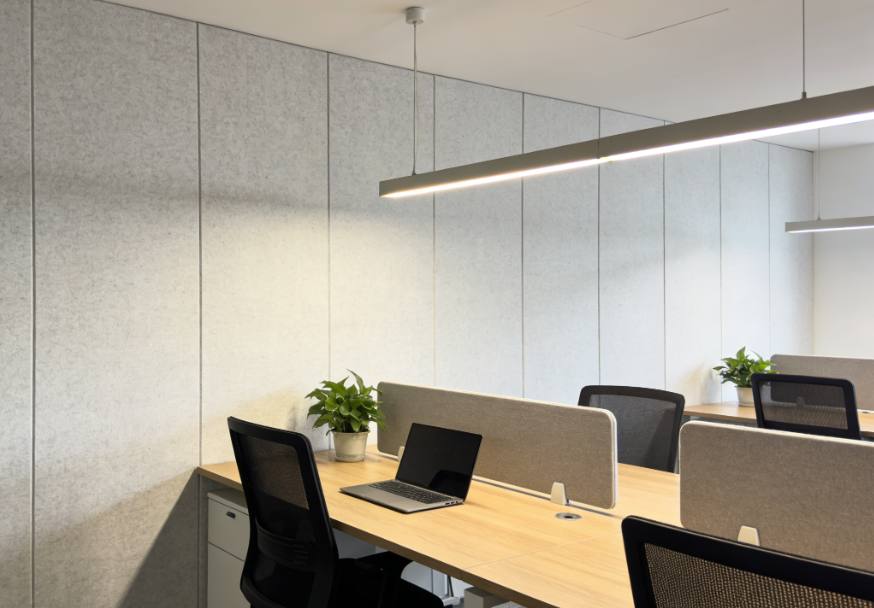
Modern offices often feature open layouts that increase noise levels. Installing office acoustic panels with flame retardant fabrics can significantly improve speech clarity and productivity.
Recommended solution:
Best flame retardant acoustic fabric for offices: Certified EN 13501-1 A2-s1,d0 Woven Fiberglass Acoustic Fabric – Black
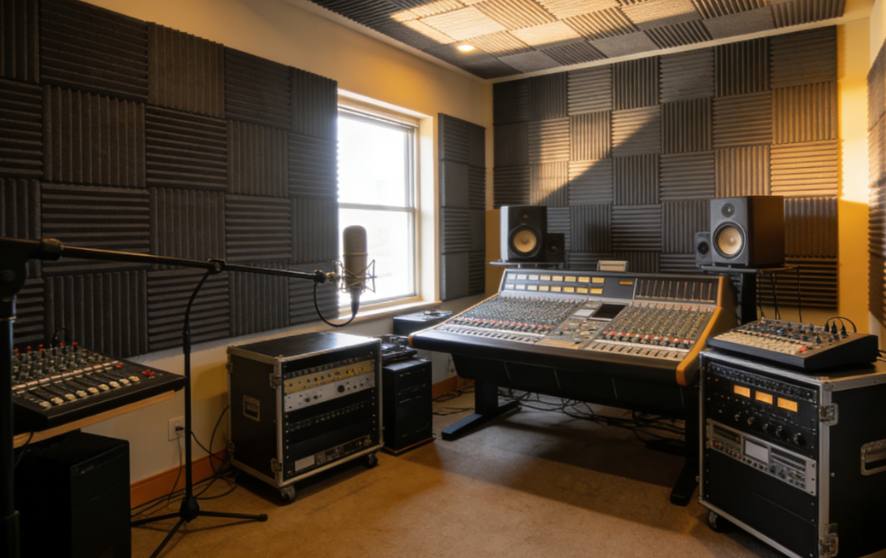
Recording studios require precise sound control to eliminate echo and external noise. Fireproof sound absorbing fabric for studios allows sound waves to pass through while maintaining fire safety compliance.
Recommended solution:
Recording studio soundproof fabric: Woven Fiberglass Acoustic Fabric (EN 13501-1 A2-s1,d0) for Architectural Interiors
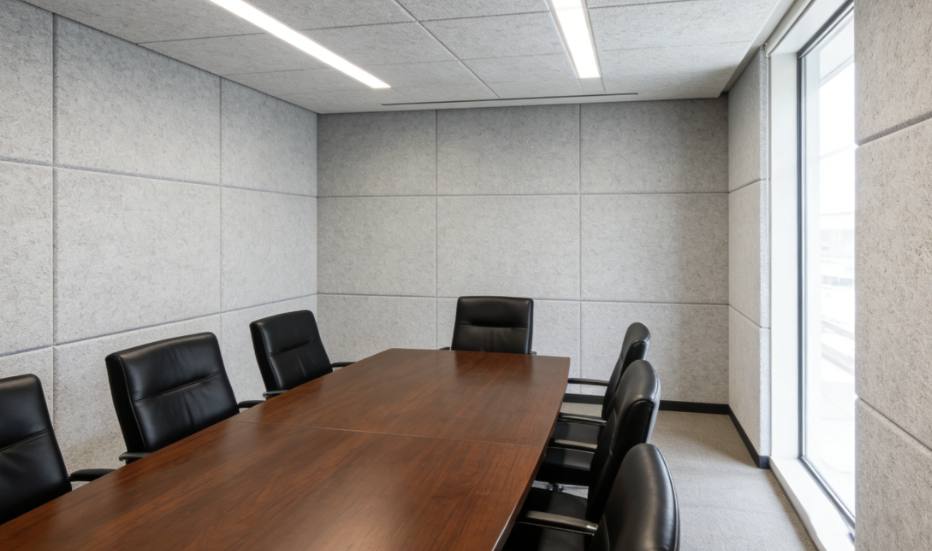
Conference rooms often suffer from sound reflections that make communication difficult. Installing conference room wall fabric improves meeting clarity and audio performance during video calls.
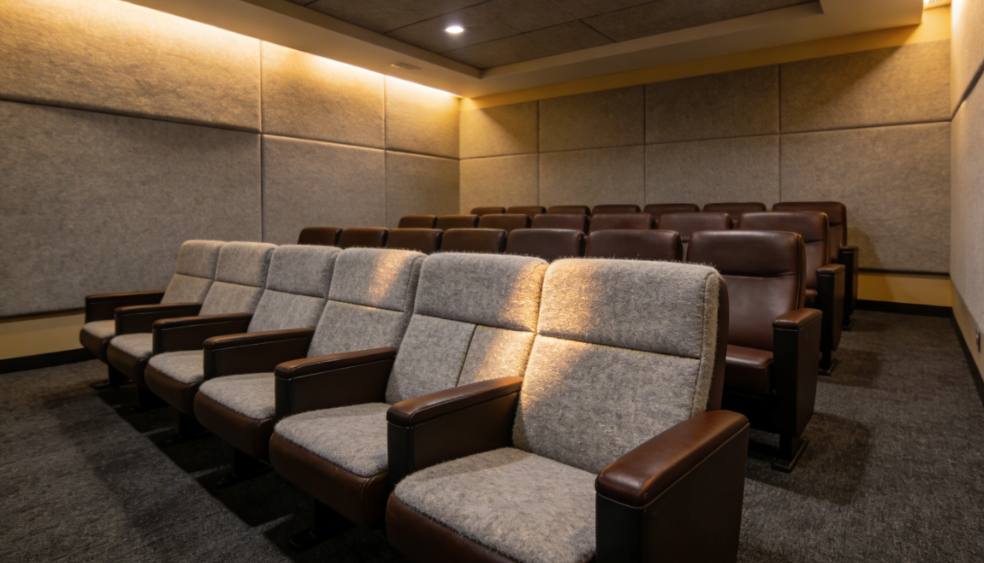
Entertainment spaces require excellent sound control for an immersive experience. Cinema acoustic wall panels covered with acoustic fabric can absorb sound reflections and enhance sound distribution.
Flame retardant polyester fabrics are widely used in building interior decoration materials such as wall coverings, carpets, and curtains due to their durability and safety performance.
When sourcing acoustic fabric for wall panels with fire rating, consider the following checklist.
| Selection Factor | Recommendation |
|---|---|
| Acoustic Performance | NRC ≥ 0.6 |
| Fire Certification | NFPA 701 / BS 5867 / EN 13773 |
| Material | Fire retardant polyester fabric |
| Durability | Durable flame retardant textile |
| Smoke Performance | Low smoke acoustic fabric |
| Application | Commercial acoustic panels |
Professional manufacturers like BEGOODTEX offer integrated solutions for architectural acoustic fabrics that combine acoustic transparency, fire safety compliance, and long-term durability.
Choosing the right Flame Retardant Acoustic Fabric is essential for creating modern commercial interiors that are both safe and comfortable.
A high-quality acoustic textile should provide:
With reliable suppliers like BEGOODTEX, architects and interior designers can confidently install FR sound absorbing fabric solutions that enhance acoustic comfort while meeting strict fire safety requirements.
A: Flame retardant acoustic fabrics are designed to slow down combustion and self-extinguish once the flame source is removed, while fire resistant materials typically resist ignition entirely. Flame retardant fabrics are more commonly used in interior acoustic applications because they offer safety while maintaining flexibility and decorative qualities.
A: The best option is usually fire retardant polyester fabric with an NRC value above 0.6 and certifications such as NFPA 701 acoustic fabric or BS 5867 flame retardant fabric. These fabrics provide strong acoustic performance and meet commercial fire safety requirements.
A: Yes. Many acoustic wall covering fabrics are designed with decorative textures and colors while maintaining acoustic transparency. Modern FR fabric for commercial acoustic panels allows architects to combine aesthetic design with functional sound control and fire safety.