Get in touch
Thank you for reaching out! Please tell us more about your needs — our expert team will get back to you within 24 hours.
Get in touch
Thank you for reaching out! Please tell us more about your needs — our expert team will get back to you within 24 hours.
If you are a safety equipment distributor or an industrial textile fabricator, understanding BS EN 1869 is not just about compliance—it is about protecting lives and your business reputation. This standard dictates how fire blankets are made, tested, and labeled across Europe and the UK.
In this guide, we break down the latest 2019 requirements, compare international standards like ANSI/FM 4950, and provide a technical checklist for choosing high-quality suppliers in today’s market.

BS EN 1869 is the European Norm (EN) adopted as a British Standard (BS) that specifies the requirements for portable fire blankets designed for use by a single person. It serves as the definitive safety benchmark for products intended to extinguish small-scale fires in residential, commercial, and light industrial settings.
The standard is “harmonized,” meaning it provides a consistent set of technical rules across all EU member states and the UK. While often associated with the kitchen, its scope is broader, covering any scenario where a fire blanket is needed to smother Class F fires (cooking oils) or a person’s flaming clothing. To receive this certification, a product must undergo a battery of physical and thermal tests to prove it can survive the intense heat of a grease fire without failing or allowing the fire to “breathe” through the fabric weave.
Essentially, BS EN 1869 ensures that when a user pulls those tabs in a panic, the blanket will deploy smoothly, cover the fire completely, and remain an effective thermal barrier until the fuel has cooled below its auto-ignition temperature.

The 2019 update brought significant shifts that downstream fabricators must recognize. The most critical change is the “Single Use Only” mandate. Unlike the older version, the 2019 standard explicitly states that a fire blanket must be discarded after its first deployment, regardless of how “clean” it looks.
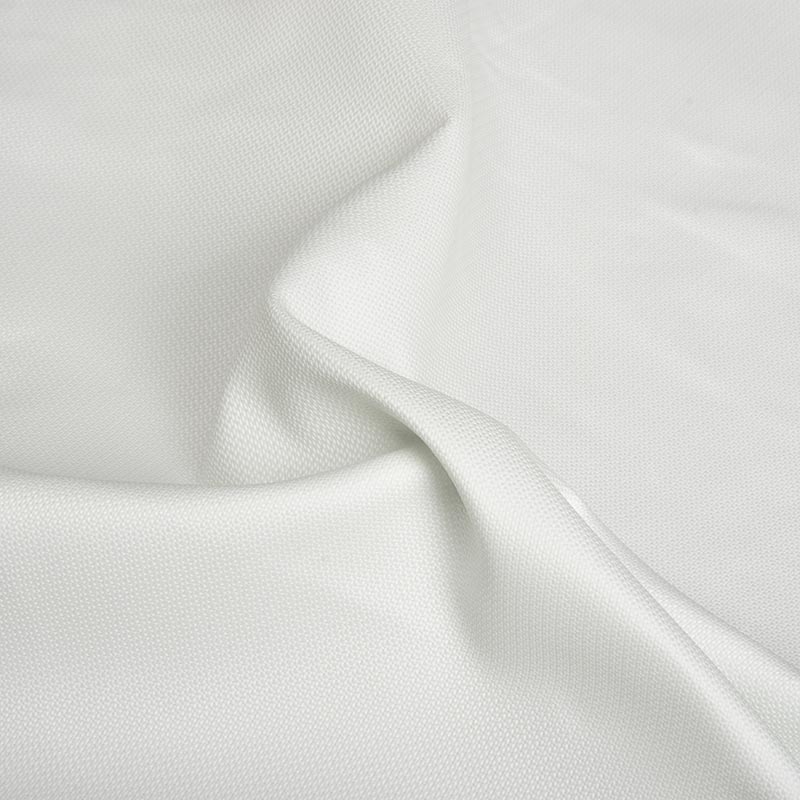
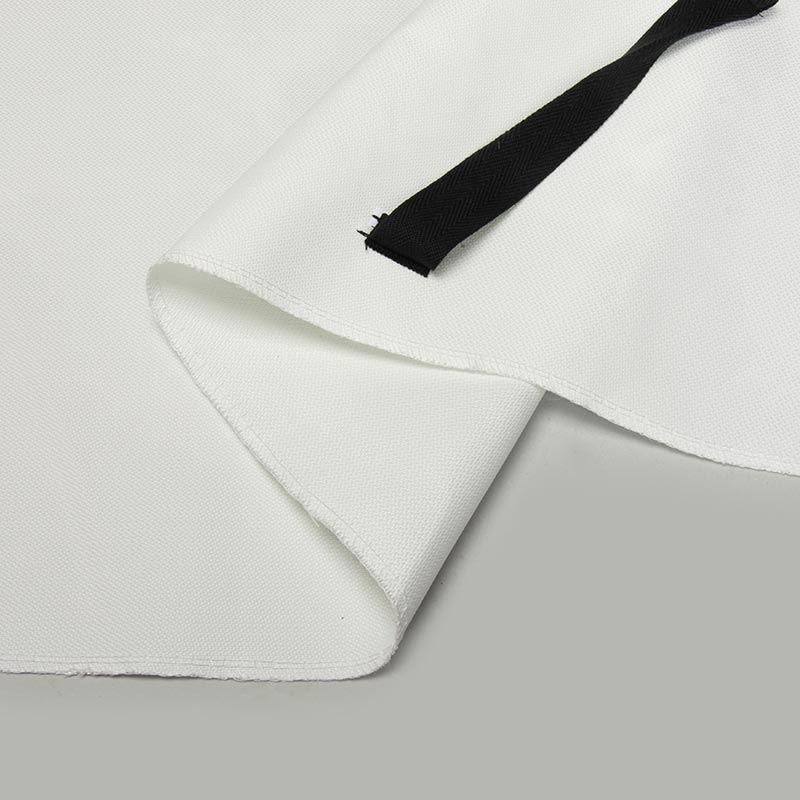
For safety apparel procurement officers and fabricators, the “fabric” is the product. A compliant BS EN 1869 blanket is usually made of treated fiberglass. Here are the core performance metrics:
How do labs verify a blanket is safe? The testing process is rigorous and focuses on real-world failure points.
The Cooking Oil Suppression Test
A tray of 3 liters of cooking oil is heated until it auto-ignites (usually around 360 degrees C). The tester deploys the blanket. To pass, the blanket must extinguish the fire within 3 minutes, and there must be zero re-ignition for at least 3 minutes after the blanket is removed.
Withdrawal Force Test
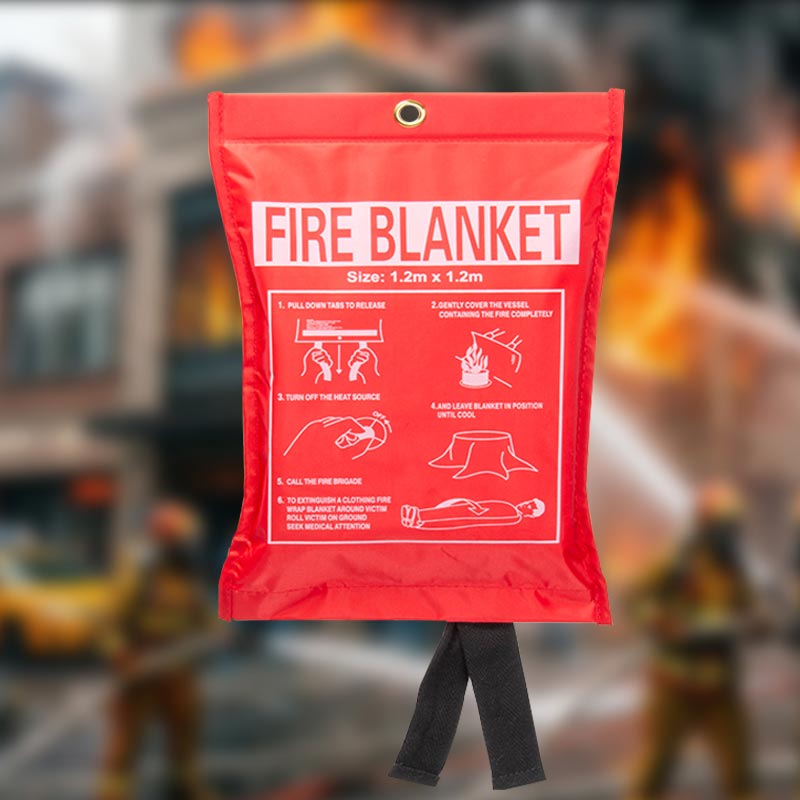
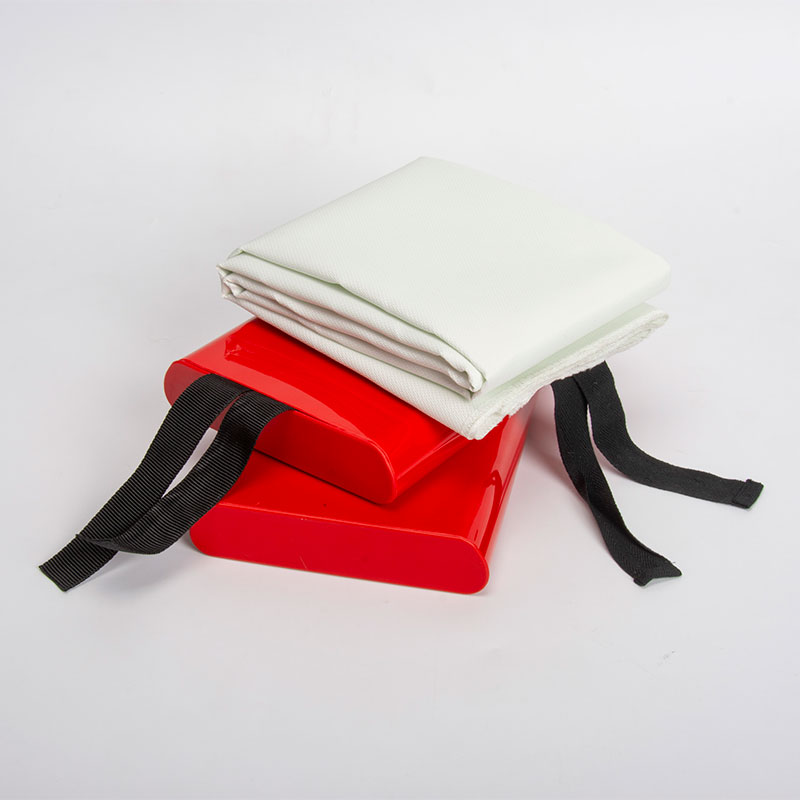
Safety distributors should note that the container is part of the test. The blanket must be easily pulled out using a force of no more than 80 Newtons. If it gets stuck, it fails.

Distributors often confuse fire blankets with welding blankets or heavy-duty industrial curtains. They are not the same. Using the wrong standard can lead to catastrophic failure.
| Standard | Region | Primary Focus | Key Difference from BS EN 1869 |
|---|---|---|---|
| BS EN 1869:2019 | Europe / UK | Small Oil & Clothing Fires | Optimized for “smothering” and electrical safety. |
| ASTM F1989 | USA | Cooking Fires | Similar testing, but uses different tray sizes and oil types. |
| ANSI/FM 4950 | Global/USA | Welding & Hot Work | Focuses on molten metal splash and sparks. Not rated for oil fire suppression. |
| AS/NZS 3504 | Australia / NZ | Portable Fire Blankets | Stricter requirements on size variations and pull-tab strength. |
| GB 25280 | China | General Fire Blankets | Highly aligned with EN 1869 but includes specific “Industrial” categories. |
Important Note: Never sell an ANSI/FM 4950 welding blanket as a kitchen fire blanket. Welding blankets are designed to catch sparks, but they may not be air-tight enough to smother a liquid grease fire.
If you are a safety equipment wholesaler or a company sewing these blankets into final kits, “compliance” is your insurance policy.
Legal Liability for Distributors
In the event of a fire, if a blanket fails to extinguish the flame and is found to be non-compliant with BS EN 1869, the distributor can be held legally liable for “fitness for purpose” violations. Insurance companies often refuse to pay claims if non-certified safety gear was used.
Market Access (CE & UKCA)
To sell in the EU or UK, the CE Marking or UKCA Mark is mandatory. You cannot legally apply these marks without a valid test report from an accredited lab (like TUV, BSI, or VdS) proving the product meets BS EN 1869:2019.
When auditing a factory or choosing a fabric supplier, use this checklist to ensure you are getting genuine protection:
For companies seeking high-performance raw materials or finished products that satisfy these rigorous demands, manufacturers like Begoodtex specialize in professional-grade fire-resistant fabrics. Their solutions are engineered to meet international standards, providing a reliable foundation for downstream safety equipment producers who cannot compromise on certification quality.
BS EN 1869:2019 is the definitive safety standard for fire blankets in the European market. It ensures that a blanket can safely extinguish a 3-liter oil fire and provide electrical insulation up to 1000V. For downstream safety companies, verifying this certification is the only way to guarantee product performance, avoid legal liability, and secure market access through CE/UKCA marking.
No. Welding blankets are tested for heat resistance against sparks, but they are often too porous to effectively smother a liquid fire. Always use a BS EN 1869 certified blanket for kitchen or clothing fires.
The standard certifies blankets for fires involving up to 3 liters of cooking oil. For larger commercial deep-fat fryers, a fixed suppression system is required.
Distributors should check stock annually for packaging damage. End-users should inspect the “pull tabs” monthly to ensure the blanket hasn’t shifted or become stuck.
No, but it is highly recommended. Silicone coating prevents skin irritation from fiberglass and improves the “air-tight” seal during fire suppression.
No. Under the 2019 standard, all certified blankets are single-use only. The heat of a fire damages the microscopic fibers, making it unsafe for a second use.