Get in touch
Thank you for reaching out! Please tell us more about your needs — our expert team will get back to you within 24 hours.
Get in touch
Thank you for reaching out! Please tell us more about your needs — our expert team will get back to you within 24 hours.
If you plan to sell upholstered furniture in the US market, understanding and complying with fire safety regulations is the first barrier to entry. This article provides an in-depth analysis of CAL TB 117-2013, the current gold standard for furniture fire safety in the United States, helping you avoid legal risks and select the right compliant materials.
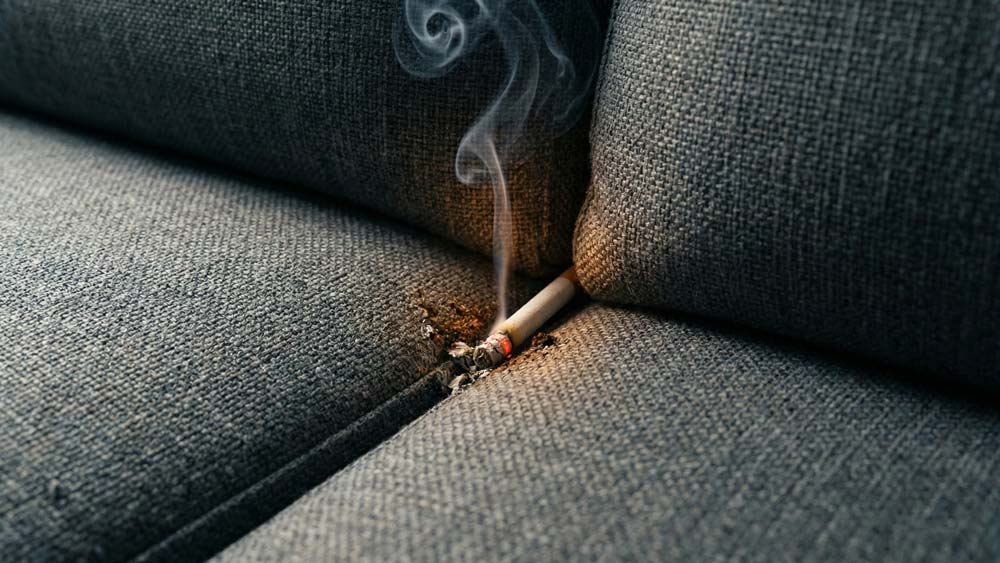
CAL TB 117-2013 (California Technical Bulletin 117-2013) is a mandatory technical standard established by the California Bureau of Household Goods and Services (BHGS). Its core purpose is to evaluate the Smolder Resistance of upholstered furniture when exposed to a smoldering heat source (a lit cigarette).
Although technically a regulation under California jurisdiction, due to the sheer size of the California economy and the unified nature of global supply chains, it has effectively become the De Facto National Standard for the entire US furniture industry.
🚀 Key Facts:
Since CAL TB 117-2013 is the universal threshold for the North American market, almost all soft furnishing products intended for export must comply. Key application areas include:
This is the primary application for TB 117-2013. All upholstered furniture sold in the US retail market (e.g., IKEA, Ashley, Walmart, Target) must be mandatory compliant.
While commercial spaces often have stricter fire codes (such as NFPA 260), TB 117-2013 is often regarded as the “Minimum Entry Standard.”
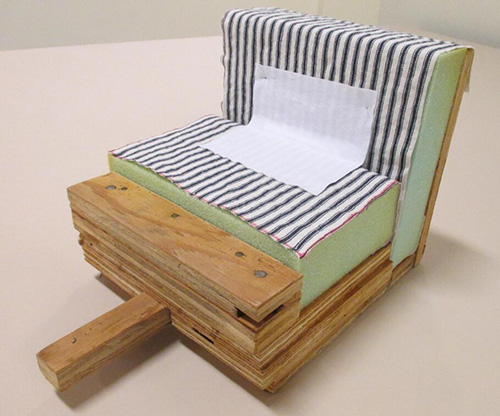
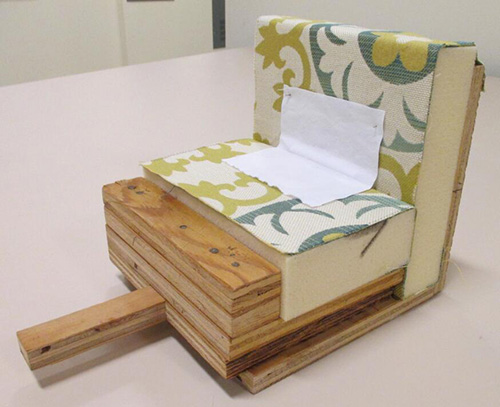
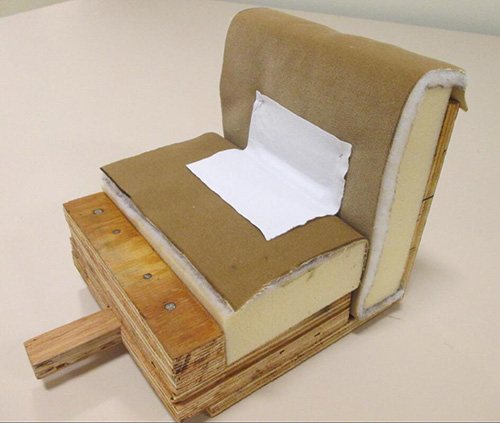
CAL TB 117-2013 is a Component Test. The standard tests fabrics (Section 1), barriers (Section 2), filling materials (Section 3), and decking (Section 4) separately. For fabric suppliers, the critical focus is Section 1.
The test simulates a real-world scenario where a lit cigarette falls into the crevice of a sofa.
To receive a passing report, the specimen must meet all three conditions:
Expert Correction: Please note that Section 3 (Filling Material Test) of TB 117-2013 is also a Smoldering Cigarette Test. It is NOT an open flame test. The misconception that the new standard requires open flame or heat release testing for foam is incorrect.
To understand the significance of TB 117-2013, one must compare it with its predecessor (TB 117-2000). This shift represents a major industry transition from “Chemical Fire Suppression” to “Physical Fire Safety.”
| Feature | TB 117-2000 (Old Version 1975) | TB 117-2013 (Current Version) |
|---|---|---|
| Primary Test Object | Focused on Filling Materials (Foam) | Component Test (Fabric + Foam + Barrier) |
| Ignition Source | Open Flame | Smoldering Cigarette |
| Chemical Retardants | Mandatory (Often contained PBDEs/TDCPP) | Not Required (Encourages physical barriers) |
| Eco & Health | ❌ High toxicity concerns; environmental hazard | ✔ Non-toxic Focus; aligns with global eco-trends |
| Scope | Mandatory in California only | National Standard (North American norm) |
In the global market, confusion often arises between the US standard (CAL TB 117-2013) and the European standard (EN 1021). While both use “cigarettes” as a heat source, they serve different legal jurisdictions and function slightly differently.
| Comparison | CAL TB 117-2013 (USA) | EN 1021 (Europe) |
|---|---|---|
| Ignition Source | Smoldering Cigarette ONLY | Part 1: Cigarette Part 2: Match (Open Flame) |
| Test Substrate | Standard PU Foam (Non-FR) Tests the fabric’s protective ability. | Standard PU Foam (for Fabric test) Or CMHR foam for furniture tests. |
| Difficulty Level | Moderate Requires fabric to block oxygen to the foam. | Variable Part 1 is similar to TB 117. Part 2 (Match) is harder. |
| Interchangeability | Accepted in USA/Canada | Accepted in EU/UK (Part 1 only) |
Generally, No. Although the physics of the cigarette test are nearly identical, US retailers and legal compliance officers strictly require the report to cite “CAL TB 117-2013” specifically. Presenting an EN 1021 certificate will likely result in rejection by the buyer.
However, from a material development perspective, if a fabric passes CAL TB 117-2013, it has a very high probability (99%+) of passing EN 1021-1 (Cigarette), as the physical requirements are highly correlated.
Facing the US market’s strict requirement for “Chemical Free” products, the furniture industry currently relies primarily on physical flame retardancy mechanisms to pass the test. Below are the most common material solutions in the market today:
These fabrics rely on fiber characteristics or weave structures to prevent cigarette heat from igniting the foam, without chemical additives.
For high-traffic areas like hotels and offices, which require durability and permanent fire safety, the industry typically employs the following technologies:
If you are a furniture manufacturer or exporter, use this checklist when sourcing fabrics:
A: Both focus on cigarette testing, but EN 1021 has two parts: Part 1 (Cigarette) and Part 2 (Match/Flame). CAL TB 117-2013 only involves the cigarette smolder test. Additionally, the substrate (foam) used during testing differs, so certificates are generally not directly interchangeable.
A: Yes. Almost all residential upholstered furniture sold in the US market is required by retailers to comply with this standard. Compliance is even stricter for juvenile products.
A: No. It is a Smolder Resistance test. The old version (TB 117-2000) included open flame testing, but the current version eliminated it to reduce the use of flame retardant chemicals.
A: Yes. We offer a full range of compliant fabrics, including chemical-free High-GSM Polyester, Jacquards, Velvets, and high-performance IFR series, all backed by third-party lab reports.
A: It depends. While RV interiors are primarily governed by FMVSS 302 (automotive standard), many high-end RV manufacturers or those selling loose furniture within RVs mandate TB 117-2013 compliance to ensure higher safety standards.