Get in touch
Thank you for reaching out! Please tell us more about your needs — our expert team will get back to you within 24 hours.
Get in touch
Thank you for reaching out! Please tell us more about your needs — our expert team will get back to you within 24 hours.
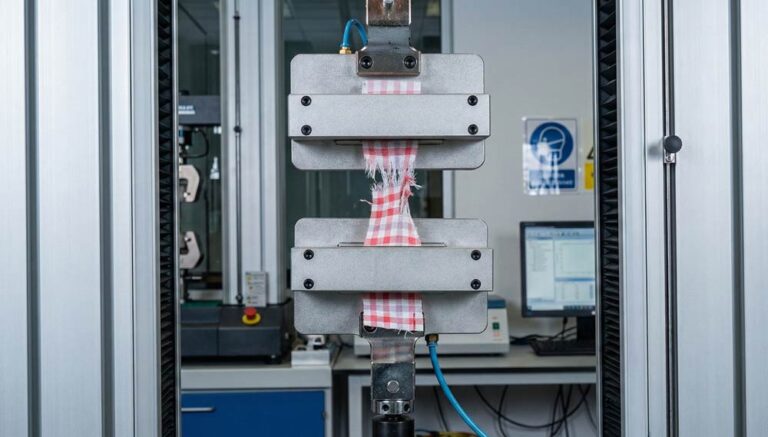
JIS L 1096 tests fabric strength, thickness, and abrasion. It covers woven and knitted textiles. Crucial for quality control for brands like UNIQLO.

Struggling with fabric pilling? ISO 12945 is the global standard for evaluating surface fuzzing and matting. This guide breaks down the Pilling Box (Part 1) and Martindale (Part 2) methods

When clients ask, “How many years will this sofa fabric last?” or “Is this Commercial Grade fabric?” what they really want to see is the “Abrasion Cycles” data derived from the ASTM D4966 (Standard Test Method for Abrasion Resistance of Textile Fabrics – Martindale…

In international textile trade, when buyers from Europe, Australia, or Asia ask, “How many abrasion cycles does this fabric have?” they are almost strictly referring to the test results of ISO 12947-2. As the core part of the ISO 12947 series,…

EN 13501-1 is the mandatory standard for CE marking. This guide decodes the "B-s1, d0" rating system, explains the rigorous Single Burning Item (SBI) test, and helps you select IFR fabrics to control smoke and flaming droplets.

Selling children's pajamas in the US? Compliance with 16 CFR 1615/1616 is mandatory. This guide details the strict "Tight-Fitting" exemptions, the rigorous 50-wash cycle requirement, and how to select IFR fabrics.

UIC 564-2 is a set of technical regulations established by the International Union of Railways (UIC) governing “Fire Protection and Firefighting Measures in Passenger-Carrying Railway Vehicles.” Before the unification of the European standard EN 45545-2, UIC 564-2 was the de facto…

FAR 25.853 is the core aviation fire safety standard for aircraft interiors. This guide explains flammability, heat release, smoke tests, global equivalency, and compliance strategies.

Supplying interiors for cruise ships? This guide details the rigorous fire tests for curtains (Part 7), furniture (Part 8), and bedding (Part 9), explaining why land-based standards like Crib 5 are invalid at sea and how to select salt-resistant IFR fabrics.

Manufacturing tents for North America? CPAI-84 is the mandatory flammability standard. This guide covers wall and floor testing, US/Canada regulations, and how to select compliant materials for legal market entry.

Exporting to Japan? Compliance with JIS L 1091 is mandatory. This guide explains the strict "Bouen Label" system, the unique 45-degree test method, and how to select compliant IFR fabrics

Exporting to Italy? UNI 9177 Classe 1 is mandatory for public spaces and requires both Small Flame (UNI 8456) and Radiant Panel (UNI 9174) testing—beyond EN 13773 compliance.

For companies exporting textiles to Germany and the DACH region (Austria, Switzerland), DIN 4102-B1 is more than just a technical standard—it is a mandatory “market passport.” Especially in the globally renowned German trade fair industry (e.g., Messe Frankfurt, Hannover Messe) and the…

Selling textiles to France? The M1 rating is the non-negotiable "Gold Standard." This guide details the rigorous NF P92-503 electrical burner test, strict anti-dripping requirements, and how to achieve the prestigious M1 classification for hotels and public projects.

This guide examines the UK’s toughest bedding fire standard, BS 7175 Source 7, and highlights the key differences between BS 7175, BS 7177, and BS 5815.