Get in touch
Thank you for reaching out! Please tell us more about your needs — our expert team will get back to you within 24 hours.
Get in touch
Thank you for reaching out! Please tell us more about your needs — our expert team will get back to you within 24 hours.
Ensuring the safety of children is the highest priority for parents and regulators alike. When it comes to clothing, especially nightwear, the risk of fire-related accidents is a major concern. Children are often less aware of fire hazards and may not react quickly if their clothing catches fire. This is why the European Union established the EN 14878 standard. EN 14878 is a European safety standard that specifies the flammability requirements for children’s nightwear. It aims to reduce the risk of injury by ensuring that fabrics used in pajamas, robes, and similar garments do not burn too quickly or produce a dangerous surface flash. For brands like Begoodtex, complying with this standard is not just about passing a test; it is about providing peace of mind through high-quality, flame-retardant materials. This comprehensive guide will walk you through everything you need to know about this safety specification, from its technical requirements to how it affects manufacturers and brands in the global textile market. This article covers the scope of the standard, the testing methods, common failure points, and how to ensure your products are ready for the European and UK markets.

The technical name for this rule is EN 14878:2007 (and the 2008 update) – Textiles: Burning behaviour of children’s nightwear – Specification. This is a European CEN standard that defines exactly how to assess and classify the burning behavior of garments used by children during the night. It is the primary tool used by safety experts to decide if a fabric is safe for the European market.
The standard relies on a specific testing procedure called EN 1103. This test measures how fast a flame travels across the fabric and if there is a dangerous surface flash. Interestingly, for the EN 14878 assessment, the fabrics are typically tested “as received,” meaning the standard wash and cleansing steps found in EN 1103 are often skipped to assess the material in its initial state. The results then determine the safety class of the garment, which guides everything from design to legal labelling.
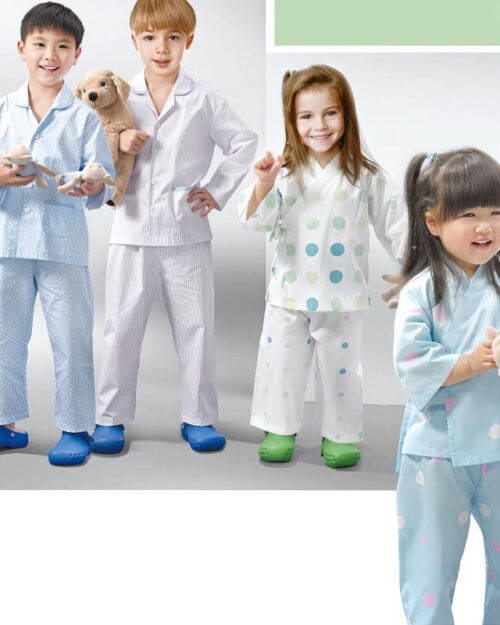
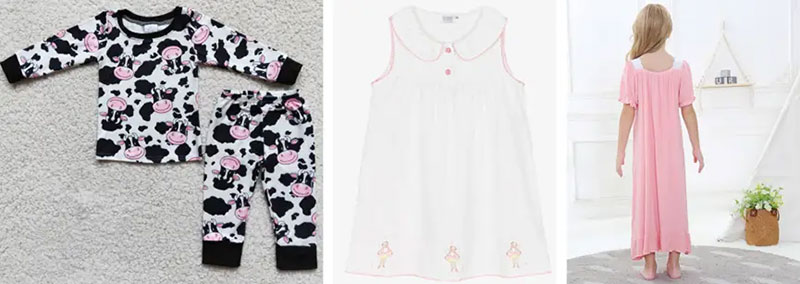
The scope of EN 14878 is very specific. It applies to all children’s nightwear, which includes bathrobes, dressing gowns, night shirts, night dresses, and pajamas. However, there is a very important exclusion that manufacturers must remember: babies’ nightwear for those under 6 months old is excluded from the flame spread testing and is automatically placed in Class C.
While some items like loungewear can be a “gray area,” the design and marketing usually dictate the classification. If you sell it as something a child should sleep in, it must meet these flammability rules.
Children are vulnerable. Their skin is much thinner than an adult’s, making them susceptible to deep burns in a very short time. Nightwear is often worn in environments where small ignition sources exist, such as heaters or candles. Furthermore, loose garments like bathrobes can accidentally brush against a flame, and if the fabric spreads the fire too fast, the child may not have time to escape.
“A few seconds of flame resistance can mean the difference between life and death in a real-world fire situation.” — Begoodtex Compliance Team.
By using materials that comply with Class A or Class B of EN 14878, brands ensure that even if the fabric catches fire, it will not engulf the wearer instantly. This is why Begoodtex focuses on inherently flame-retardant (IFR) fibers that provide permanent protection without relying on unstable chemical coatings.
The requirements for EN 14878 go beyond just the fabric itself. The standard looks at the design and the performance of the materials used.
The standard includes specific Clause 10 requirements for the physical design of pajamas to reduce the risk of ignition. These limits focus on how loose the garment is, as loose fabric catches fire more easily than snug-fitting clothes. Key design constraints include:
Testing is not done on a single piece of fabric. To get an accurate result, the lab requires at least one representative sample. From this sample, they cut six specimens: three in the machine direction (warp) and three in the cross direction (weft). If a garment is made of multiple layers, the lab must test them in the exact arrangement used in the final clothing item.
As mentioned, the core test method is EN 1103. The specimens are mounted vertically in a frame. A small flame is applied to the surface or edge for a controlled period. The lab then measures two critical things:
Because EN 14878 is used for safety classification, the lab report must be very detailed. It must include the lab’s name, the product identification, the specific class assigned (A, B, or C), and any deviations from the standard procedure.
The classification of the fabric depends on its performance during the test. For a garment to be considered safe, it must not show rapid surface flash, and the flame must take a certain amount of time to reach the 520 mm marker line. Below is the summary of the requirements based on the official classification table.
| Class | Applicable Products | Surface Flash Requirement | Flame Spread Time (to 3rd marker) | Notes |
|---|---|---|---|---|
| Class A | Childrens Nightwear (NOT Pyjamas) | No Surface Flash | 15 seconds or more | Highest requirement; usually for loose items like robes. |
| Class B | Childrens Pyjamas | No Surface Flash | 10 seconds or more | The minimum standard often required by platforms like Amazon EU. |
| Class C | Babies Nightwear (Under 6 months) | Not Tested or Other Provisions | Not Tested or Other Provisions | Specific requirements for infants with higher protection focus. |
In simple terms, a safe piece of children’s nightwear should not have a fast surface flash, and the flame should take at least 10 seconds to burn to a height of 520 mm. Those extra seconds are precious in a fire emergency.
If you are planning to sell your children’s nightwear globally, you must understand the major differences between the European EN 14878 and the United States standards CFR 1615 and CFR 1616. While both seek to protect children from fire, their testing logic and metrics are very different.
The biggest difference lies in what is being measured. The EU standard measures speed, while the US standard measures damage.
| Feature | EN 14878 (Europe) | CFR 1615 / 1616 (USA) |
|---|---|---|
| Primary Metric | Flame Spread Time (seconds) | Char Length (inches or mm) |
| Ignition Source | 10-second butane flame | 3-second methane flame |
| Pass Criteria | Time must be longer than 10 or 15 seconds | Average char length must not exceed 7.0 inches |
| Washing Step | Often tested “as received” | Strictly requires testing after 50 washings |
In the US, the fabric must essentially “self-extinguish” quickly so that the burned area (char length) is small. In Europe, the fabric can continue to burn, provided it does so slowly enough to allow for escape. Because of these differences, a fabric that passes EN 14878 might still fail the US char length test, and vice versa. Begoodtex produces fabrics that are specifically engineered to meet these individual requirements depending on your target market.
Most failures occur because the fabric choice does not match the garment’s design. Common reasons include:
EN 14878 does not exist in a vacuum. It is often used alongside other important textile regulations:
While the standard itself is a technical specification, it is effectively mandatory for anyone selling children’s nightwear in the EU or UK. National regulators and online platforms like Amazon and Zalando require proof of EN 14878 compliance before allowing products to be listed. Failure to comply can lead to immediate product recalls and legal action under the General Product Safety Regulation (GPSR).
To succeed in the European market, we recommend the following approach:
EN 14878 is the cornerstone of children’s safety in the European textile market. It classifies nightwear based on burning behavior, ensuring that garments offer a minimum level of flame resistance (Class A or Class B). Unlike the US CFR 1615/1616 standards which focus on char length, EN 14878 prioritizes the time of flame spread. By understanding the testing methods, design constraints, and statistical rules, manufacturers can avoid costly recalls and brand damage. Using high-quality, inherently flame-retardant materials is the most reliable way to ensure compliance while protecting the health and safety of children. Begoodtex remains committed to providing fabrics that exceed these standards, helping our partners navigate the path to market success with confidence.
Class A is for children’s nightwear like robes and has a stricter flame spread requirement (15 seconds). Class B is specifically for pajamas and requires a minimum flame spread time of 10 seconds.
Babies under 6 months (Class C) have different risk profiles. They are less mobile and typically wear very snug-fitting sleepsuits, which reduces the chance of accidental ignition compared to an older child walking near a fire source.
Not necessarily. The US standard measures char length after a 3-second ignition, whereas the EU standard measures flame spread time after a 10-second ignition. You must test for both standards specifically if selling in both regions.
This is a specific height on the testing frame. The “Flame Spread Time” measures how many seconds it takes for the flame to reach and burn through this thread. For Class B, it must take at least 10 seconds.
Yes. The UK uses BS EN 14878, which is identical to the European version. Compliance with this standard is essential for the UK market.