Get in touch
Thank you for reaching out! Please tell us more about your needs — our expert team will get back to you within 24 hours.
Get in touch
Thank you for reaching out! Please tell us more about your needs — our expert team will get back to you within 24 hours.
EN 469:2020 (Protective clothing for firefighters) is the highest authoritative standard in European and international markets for assessing the safety performance of “structural firefighter protective clothing.” It is not merely a single flame retardancy test, but a comprehensive systemic evaluation system covering thermal protection, waterproofing, breathability, and mechanical strength.
For global fire agencies, airport rescue teams, and petrochemical safety departments, a deep understanding of the EN 469 Level classifications and the X, Y, Z performance codes serves as the final line of defense for ensuring procurement compliance and safeguarding the lives of frontline personnel. This article provides an in-depth technical analysis of the standard’s core indicators and the mainstream material solutions used to achieve them.
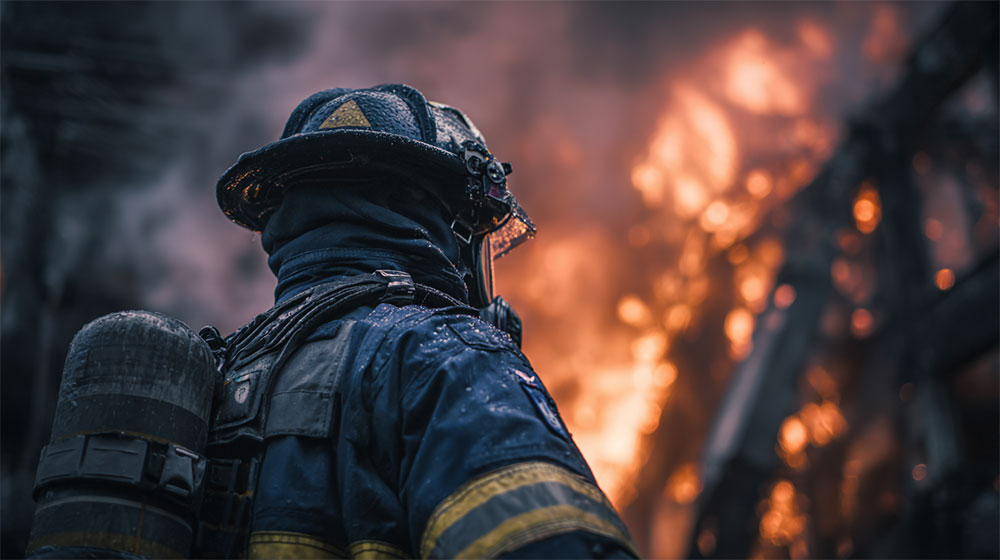
EN 469 stipulates the minimum performance requirements for protective clothing worn by firefighters during structural firefighting, rescue, and disaster relief activities. Its core purpose is to protect firefighters from the following fatal threats:
⚠️ Critical Distinction: Scope Limitations
Although EN 469 is a top-tier standard, it does not apply to all fire scenarios. For life safety, please ensure you distinguish between the following:
Expanded Application Scenarios: Beyond municipal fire brigades, the EN 469 standard is also widely applied in airport fire rescue (ARFF), shipboard firefighting, petrochemical refinery rescue teams, and high-risk industrial protection sectors.
EN 469 classifies protective clothing into two levels based on risk intensity. Industry experts recommend: For any operations involving interior firefighting or unknown risks, Level 2 gear must be procured.
On the label of EN 469 certified protective clothing, you will typically see codes like Xf2, Xr2, Y2, Z2. These codes represent the three core defense lines of the protective system.
| Code | Performance Dimension | Significance & Level 2 Requirements |
|---|---|---|
| X | Heat Transfer (Thermal Protection) | The Lifeline Indicator. Divided into two sub-tests:Xf (Convective): Convective heat transfer (HTI index).Xr (Radiant): Radiant heat transfer (Simulating intense fire radiation).Level 2 Requirement: Must withstand high temperatures for a longer duration without causing second-degree burns. |
| Y | Water Resistance (Anti-Penetration) | Prevents Liquid Penetration. Level 2 (Y2): Hydrostatic pressure resistance ≥ 20 kPa. This is to prevent the penetration of high-temperature water or chemicals, and to avoid water turning into “high-pressure steam” inside the suit, causing severe burns. |
| Z | Water Vapour Resistance (Breathability) | Prevents Heat Stress. Level 2 (Z2): Water vapour resistance Ret ≤ 30 m²Pa/W. The lower the value, the easier it is for sweat to escape, prolonging the firefighter’s physical endurance. |
In addition to the codes above, to achieve EN 469 certification, materials must pass a series of extreme physical tests. Accredited third-party laboratories typically monitor the following key indicators:
The material is placed in an oven at 180°C for 10 minutes.
Pass Standard: The fabric must not melt, drip, or ignite, and shrinkage must be controlled within 5%. This is the foundation ensuring the suit does not disintegrate in high-temperature environments.
Simulates a naked flame directly igniting the surface or edge of the fabric.
Pass Standard: Upon removal of the flame source, there must be no afterflame or afterglow, and absolutely no molten debris (to prevent secondary injuries).
EN 469 evaluates a “System.” To achieve Level 2, a multi-layer composite structure must be adopted. The following are proven generic material combinations in the industry:
| Structural Layer | Functional Goal | Typical Material Solutions |
|---|---|---|
| Outer Shell (First Line of Defense) | Resists flame, abrasion, chemicals, and prevents heat shrinkage. | Aramid Blends: Meta-Aramid and Para-Aramid blends (Classic solution).PBI / Aramid: High-end solution for extreme environments.Dope Dyed: Solution dyeing technology to ensure high color fastness under sun exposure. |
| Moisture Barrier (Waterproof/Breathable) | Blocks external water ingress and expels internal sweat vapor (Key to Y & Z). | PTFE Membrane Laminated: Top-tier breathability, compliant with Z2 standard.PU/TPU FR Membrane: Economical choice, attention must be paid to breathability metrics. |
| Thermal Liner (Insulation Layer) | Traps still air to block heat transfer (Core to X indicator). | Aramid Felt: Lightweight and insulating.Quilted Liner: Quilted structure providing tactile comfort. |
A: EN 469 (European Standard) focuses on layered testing (X, Y, Z) and flexibility, allowing for two-piece designs; NFPA 1971 (US Standard) focuses more on the overall TPP (Thermal Protective Performance) value and has stricter regulations on retro-reflective trim layout and garment overlap. The choice of standard depends on local regulations.
A: You must request third-party test reports from an ISO 17025 accredited laboratory. The report should explicitly list whether the HTI (Heat Transfer Index), hydrostatic pressure resistance, and Ret (Water Vapour Resistance) values meet the specific parameters for Level 2.
A: During prolonged firefighting operations, “Heat Stress” is a major killer of firefighters. Choosing Level 2 materials (low water vapour resistance) effectively allows body heat to escape, reducing the risk of heatstroke and cardiac strain.