Get in touch
Thank you for reaching out! Please tell us more about your needs — our expert team will get back to you within 24 hours.
Get in touch
Thank you for reaching out! Please tell us more about your needs — our expert team will get back to you within 24 hours.
In the fields of metal processing and heavy industry, welders face unique and high-risk safety threats: molten metal spatter, intense radiant heat, and the risk of electric shock. Standard fire-retardant workwear often fails to provide adequate protection for these specific scenarios. EN ISO 11611:2015 stands as the globally recognized standard for “Protective clothing for use in welding and allied processes,” providing a clear baseline for procurement and safety compliance.
This article provides an in-depth analysis of the technical requirements of EN ISO 11611, details the critical differences between Class 1 and Class 2, and offers scientific advice on selecting the right protective fabrics.
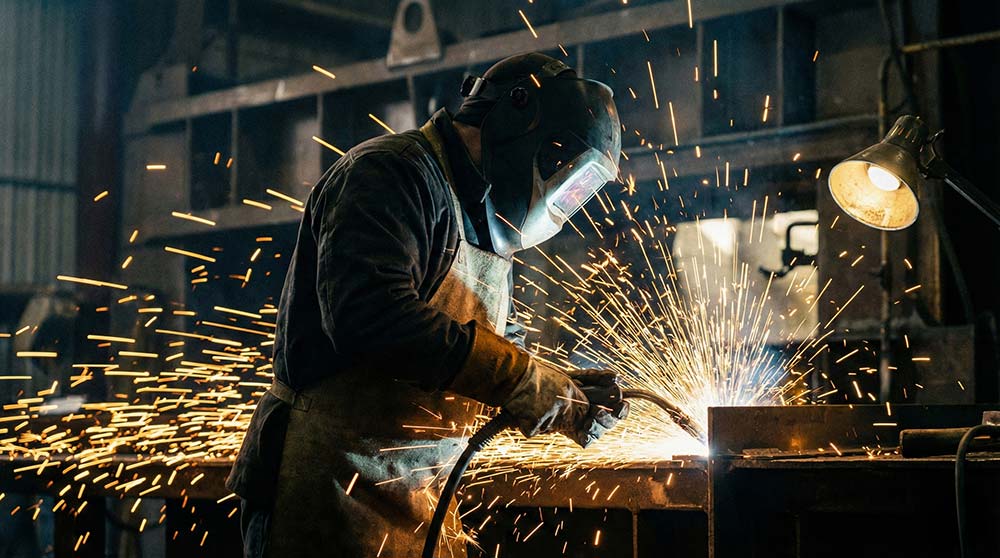
EN ISO 11611 specifies minimum basic safety requirements and test methods for protective clothing (including hoods, aprons, sleeves, and gaiters) designed to protect the wearer’s body during welding and allied processes. It replaces the older EN 470-1 standard.
The standard is designed to ensure protection against four core risks:
Procurement Alert: A fabric certified only for EN ISO 11612 (General Heat & Flame) does not automatically comply with EN ISO 11611. The welding standard has unique, mandatory requirements for “Impact of Spatter” and “Electrical Resistance.”
EN ISO 11611 divides protective performance into two distinct classes based on the hazardous nature of the welding process: Class 1 (Lower Risk) and Class 2 (Higher Risk). Understanding this distinction is the key to selecting the correct PPE.
Definition: Protection against less hazardous welding techniques and situations, causing lower levels of spatter and radiant heat.
Definition: Protection against more hazardous welding techniques and situations, causing higher levels of spatter and radiant heat.
| Test Indicator | Class 1 (Light) | Class 2 (Heavy) |
|---|---|---|
| Molten Metal Drops (ISO 9150) | ≥ 15 Drops | ≥ 25 Drops |
| Radiant Heat RHTI 24 (ISO 6942) | ≥ 7 Seconds | ≥ 16 Seconds |
| Tear Strength (ISO 13937-2) | ≥ 15N | ≥ 20N |
| Typical Scenario | TIG, Gas Welding | MAG, MMA, Cutting |
To achieve EN ISO 11611 certification, fabrics and garments must pass a series of rigorous laboratory tests.
This is the most critical test for welding clothing. Drops of molten metal are directed at a vertically oriented test specimen. The test measures how many drops are required to raise the temperature sensor behind the fabric by 40K. A higher number of drops indicates better insulation and resistance to burn-through.
Similar to EN ISO 11612, the fabric must pass Surface Ignition (A1) or Edge Ignition (A2) tests. Upon removal of the flame, the material must show:
This is unique to welding gear. The fabric assembly is tested under a potential of 100V ± 5V. It must demonstrate sufficient electrical resistance (typically > 10⁵ Ω) to prevent the welder from electric shock in case of accidental contact with the electrode or conductive surfaces. Note: This is not protection against high-voltage work.
Passing fabric tests is not enough. EN ISO 11611 imposes strict mandatory requirements on garment design to prevent molten metal from becoming trapped.
Choosing the right fabric type for different welding environments is essential for balancing cost, comfort, and safety. Here are general recommendations based on the standards:
EN ISO 11611 and EN ISO 11612 are often mentioned together, but their focus is entirely different. Simply put: EN ISO 11611 is “Job-Specific” (Welders), while EN ISO 11612 is “Hazard-Specific” (Heat & Flame).
| Dimension | EN ISO 11611 (Welding) | EN ISO 11612 (General Heat) |
|---|---|---|
| Primary Goal | Protects welders from risks specific to welding processes. | Protects industrial workers from contact with heat and flame. |
| Unique Requirements | Must provide Electrical Insulation; Specific Spatter Classes (1/2). | No electrical requirement; Detailed heat coding (A-F). |
| Test Focus | Focus on Molten Metal Drops and Radiant Heat. | Focus on Convective (B), Radiant (C), Contact (F) heat, etc. |
| Applications | Welding, Cutting, Grinding. | Oil & Gas, Utilities, General Industry. |
This is a common procurement error. Although both use the same flame spread test (ISO 15025), there are key “gaps”:
Expert Advice: For professional welding workshops, Dual Certification is the gold standard. We recommend selecting fabrics that pass both EN ISO 11611 Class 2 and EN ISO 11612 A1+B1+C1+E2/E3. This ensures insulation during welding and broad heat protection for other tasks.
A: Yes, but it is challenging. It typically requires a weight of over 400gsm and must use a high-density Satin or Twill weave combined with a top-tier FR finish. Standard lightweight cotton workwear fabrics can usually only achieve Class 1.
A: Yes, but with strict restrictions. The reflective tape itself must pass relevant flame retardancy tests (e.g., EN ISO 14116 or EN 469). More importantly, the placement of the tape must not create a “pocket effect” or ridge that could trap molten metal droplets, which would lead to burn-through.
A: No. EN ISO 11611 protects against radiant heat and small spatter from welding. While it offers some electrical resistance, it does not protect against the high-energy explosion of an Arc Flash. If you work with high-voltage switchgear, you must wear gear certified to IEC 61482-2.
A: It is strongly recommended to wear 100% cotton, wool, or other non-melting natural fibers. Never wear synthetic underwear (polyester, nylon, etc.). If the outer protective layer is breached in a severe accident, synthetic undergarments will melt into the skin, causing catastrophic secondary burns.
A: Garments must be replaced immediately if they show signs of holes, open seams, or if the fabric has become thin and brittle due to long-term UV exposure. Damaged clothing cannot provide the specified Class 1 or Class 2 protection. Additionally, if the garment is heavily soiled with flammable contaminants (oils, solvents) that cannot be washed out, it should be discarded.
A: It depends on the fabric type.
Treated FR (e.g., FR Cotton): Protection may gradually diminish over time. These often have a limit (e.g., 50 or 100 washes), and manufacturer instructions must be strictly followed.
Inherent FR (e.g., Aramid, Modacrylic): Flame resistance is permanent and will not wash out. However, avoid chlorine bleach, as it can degrade the fiber strength.