Get in touch
Thank you for reaching out! Please tell us more about your needs — our expert team will get back to you within 24 hours.
Get in touch
Thank you for reaching out! Please tell us more about your needs — our expert team will get back to you within 24 hours.
This article explores the key application areas of flame-retardant fabrics in 2025 and beyond. As global attention to public safety and industrial safety standards increases, flame-retardant textiles have evolved from a specialized niche market to an indispensable safety guarantee across multiple industries. This paper systematically analyzes the specific needs of seven core sectors: hotels, exhibitions, healthcare, transportation, public institutions, industrial protection, and home furnishings. It elucidates the crucial role of flame-retardant fabrics in these scenarios in preventing fire spread and protecting life and property. The article delves into the major European and American safety standards corresponding to different application scenarios, such as the US NFPA 701 and the European BS 5867, providing clear compliance guidance for industry professionals. By comparing inherently flame-retardant (IFR) and topically treated (TFR) technologies and by offering an outlook on market trends, this paper aims to provide purchasers, designers, and safety managers with a comprehensive, in-depth, and practical knowledge framework on the application scenarios of flame-retardant fabrics, helping them make informed and responsible decisions in a complex market.
Now, with an understanding of the technology, let’s explore the seven most critical application scenarios for flame-retardant fabrics. In each scenario, we will not only see how they function but also connect them to the key regulations that must be followed in the European and American markets, providing you with a practical guide to action.
Public accommodations such as hotels, resorts, and motels are classic application scenarios for flame-retardant fabrics. These spaces not only pursue aesthetic comfort and luxury but also bear the heavy responsibility of ensuring the safety of travelers from all directions. The high concentration of people, frequent flow of occupants, high electrical loads, and guests’ unfamiliarity with the environment all increase the fire risk and evacuation difficulty.

Imagine a fire suddenly breaking out in a hotel hallway late at night due to an electrical fault. If the curtains, carpets, and bedding are flammable, the fire will spread instantly along these textile “highways,” generating large amounts of toxic smoke that blocks escape routes. The situation will be dramatically different with the use of flame-retardant fabrics.
For suppliers exporting to European and American markets, meeting local fire safety regulations is the entry threshold.
As a hotel purchasing manager or designer, choosing products that meet both aesthetic requirements and the safety standards above is not only a matter of compliance but a solemn commitment to brand reputation and guest safety.
Exhibitions, trade shows, concerts, and various large-scale events are characterized by temporary spatial construction, a huge instantaneous flow of people, and dense electrical equipment. In these “temporary cities,” fire safety is paramount. Pipe and drape systems, table skirting, and ceiling decorations used to partition space, decorate backdrops, and set up booths constitute the primary fire load.
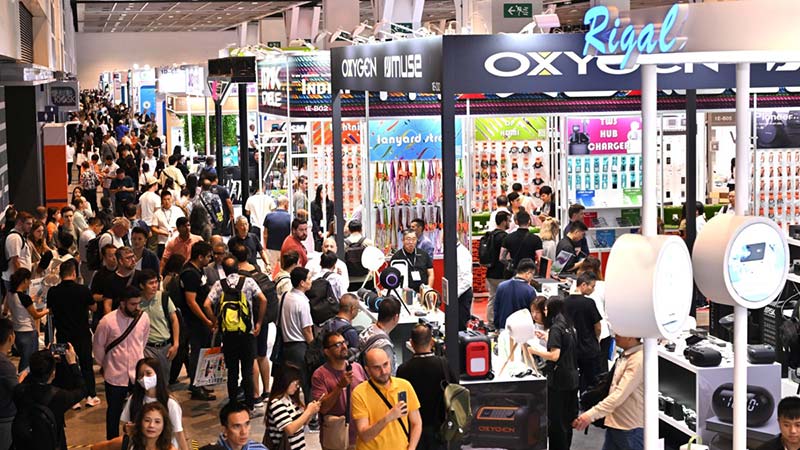
In a large exhibition, hundreds of booths are decorated with various textiles. If an overheated spotlight in one booth ignites the backdrop drape, the fire can rapidly spread to neighboring booths, leading to a chain reaction of disaster with unimaginable consequences.
Fire approval for the exhibition industry is extremely strict, and all decorative materials brought into the venue must provide valid flame-retardant certificates.
For event planners, choosing a supplier that has pre-certified its products (such as Begoodtex) can greatly simplify the approval process and avoid the risk and loss of being ordered to dismantle materials by fire inspectors on-site due to non-compliance.
Hospitals, clinics, nursing homes, and rehabilitation centers are special because they house a large number of people with limited mobility and self-evacuation capabilities. At the same time, the medical environment contains accelerants such as oxygen equipment, making fire protection requirements stricter than those for ordinary public places. Here, the core goal of applying flame-retardant fabrics is “passive fire protection”: maximizing fire control in the initial stage to create conditions for medical staff to transfer patients.

Procurement standards for medical institutions are extremely strict, often requiring products to meet both flame-retardant and anti-bacterial/multi-functional requirements.
Providing textile solutions for medical institutions means delivering a complete commitment to safety and hygiene. Every detail of the product concerns the life safety of the most vulnerable population.
Airplanes, trains, buses, and ships share the characteristics of being confined spaces with high passenger density and limited evacuation routes. A fire breakout would have catastrophic consequences. Therefore, interior materials in the transport sector, from seat covers to window curtains, are subject to the strictest flame-retardant regulations. The application scenario for flame-retardant fabrics here aims to maximize the delay of fire spread and minimize the toxicity of smoke.

Standards in the transport sector are usually set by specialized government agencies and are extremely demanding.
Providing interior fabrics for transportation vehicles is a business with extremely high technical thresholds, requiring suppliers to have a profound understanding and strict execution of complex regulations.
Schools, universities, courts, libraries, and government office buildings are core nodes of social operation. These places bear the function of educating the public and serving society, and their safety directly relates to public trust. In these buildings, the application scenarios of flame-retardant fabrics reflect the management’s commitment and responsibility to public safety.

Procurement for these public buildings typically follows government guidelines, emphasizing product durability and safety.
When choosing textiles for public institutions, one must consider not only the initial procurement cost but also evaluate their safety, durability, and maintenance cost from a long-term perspective—an attitude of responsibility to taxpayers.
In certain extreme working environments, fire is not a “possible” accident but a “constant” occupational risk. For steelworkers, welders, firefighters, and soldiers, what they wear is not ordinary “clothing,” but the last line of defense for life. The application scenario of flame-retardant fabrics here focuses on personal protective equipment.

Standards in the industrial and military sectors are highly specialized and stringent, directly related to the user’s life safety.
In this field, there is no compromise. The performance of the material directly determines life and death. Choosing suppliers with deep technical expertise and strict quality control is crucial. The emergence of advanced materials like MXene/aramid nanofiber composite films is even starting to integrate functionalities like electromagnetic shielding and early fire detection into protective materials, heralding a future where protective clothing will be smarter and multi-functional (National Center for Biotechnology Information, 2022).
In the past, flame-retardant fabrics seemed distant from ordinary households. But with increasing public safety awareness and optimizing product costs, the application scenarios of flame-retardant fabrics are gradually expanding to private residences. After all, home is our most relaxing haven and equally needs to be guarded for safety.

Home furnishing regulations primarily focus on products in direct contact with consumers.
With technological advancements, today’s domestic flame-retardant fabrics are virtually indistinguishable from ordinary fabrics in terms of hand feel, color, and design. When decorating or replacing home textiles, asking one more question—”Is this product flame-retardant?”—may, at some uncertain moment in the future, protect you and your family.
To help you better select the appropriate standard based on the application scenario, the table below summarizes the application fields of major standards:
| Standard | Main Applicable Region | Core Application Scenarios |
| NFPA 701 | US, Canada | Curtains, drapes, exhibition backdrops, stage curtains, medical privacy curtains |
| BS 5867 Part 2 | UK, Europe | Curtains, drapes (Type C is particularly suitable for hotels and hospitals) |
| DIN 4102-B1 / M1 | Germany / France (Europe general) | Exhibition materials, public building interiors, decorative textiles |
| BS 5852 / BS 7175 | UK | Furniture upholstery, mattresses / Hotel and hospital bedding |
| CFR 1615/1616 | US | Children’s sleepwear |
| NFPA 2112 / EN ISO 11612 | US / Europe | Industrial protective clothing (petroleum, chemical, welding, etc.) |
| FAR 25.853 / EN 45545-2 | Global / Europe | Aircraft interiors / Railway vehicle interiors |
In terms of single procurement cost, IFR fabrics are usually higher than TFR fabrics. However, we need to think from a “total life-cycle cost” perspective. IFR fabric’s flame retardancy is permanent and can be washed indefinitely without fear of performance degradation. TFR fabric’s flame retardant will be lost due to washing, potentially requiring professional, expensive dry cleaning, or replacement after a few years. For hotels and hospitals that require frequent washing, IFR fabric often proves to be more cost-effective in the long run.
This is an outdated concept. Early flame-retardant treatment technologies could indeed affect the fabric’s hand feel. However, with technological advancements, especially for IFR fabrics, their softness, drape, and skin-friendliness are now comparable to high-end decorative fabrics. For example, flame-retardant velvet or chenille fabrics made from modified polyester fibers can still offer a luxurious feel and visual effect.
This is a very important question. First, ask the supplier to provide a complete test report issued by an authoritative third-party laboratory (such as SGS, TUV, ITS), not just a certificate. The report should clearly state the testing standard (e.g., NFPA 701), product information, and test results. Second, you can contact the issuing laboratory to verify the authenticity of the report. Choosing a supplier like Begoodtex with a long industry reputation and multiple international certifications (e.g., BSCI, ISO 9001) can greatly reduce the risk.
This depends on the technology used. In the past, certain brominated flame retardants were controversial due to their potential environmental and health risks and have been banned in many regions. Modern mainstream flame-retardant technologies, particularly phosphorus-based, nitrogen-based flame retardants, and inherent flame-retardant fibers, have been widely validated for safety. Much research is focused on developing environmentally friendly flame retardants derived from natural polymers, such as using bio-based materials like chitosan and alginates for flame-retardant coatings on textiles (National Center for Biotechnology Information, 2022). Choosing eco-friendly flame-retardant fabrics certified by GRS (Global Recycled Standard) and made from recyclable materials is a wise choice that balances safety and sustainability.
This is a common misconception. The flame-retardant performance of a fabric has no direct relationship with its color but is entirely dependent on the chemical composition of its fibers and/or the flame retardants used. Whether deep black or pure white, as long as the same flame-retardant technology and process are used, the flame-retardant rating will be the same. When choosing a color, you only need to consider the design requirements, without worrying that it will affect safety.
Consumer-grade flame-retardant sprays are available, but they are usually only suitable for temporary, one-time applications, and their effect and durability cannot be compared with professional factory-treated TFR fabrics, let alone IFR fabrics. For any public space or commercial application with legal requirements, this DIY method is absolutely inadvisable, non-compliant, and unsafe. Professional flame-retardant treatment must be carried out under strictly controlled conditions to ensure the uniform penetration and firm binding of the flame retardant.
No. “Flame Retardant” or “Fire Resistant” does not mean the material will not burn at all. It means the material has the characteristic of inhibiting the spread of flames. When exposed to a fire source, flame-retardant fabric is difficult to ignite; even if ignited, it will self-extinguish quickly once the fire source is removed, and it burns very slowly while producing less smoke and toxic gas. Its core function is to “inhibit” rather than “eliminate” burning, thereby gaining time for escape and firefighting.
Looking back at these diverse application scenarios for flame-retardant fabrics, we can clearly see a main thread: as society’s safety standards continuously rise, the role of textiles in modern environments has evolved from mere decoration to a comprehensive solution integrating aesthetics, function, and safety. From protecting the restful sleep of hotel guests to ensuring the safety of personnel at exhibitions and guarding the lives of industrial workers, flame-retardant fabrics silently build an invisible firewall.
The market in 2025 demands multi-dimensional products. Consumers and purchasers are no longer satisfied with a single function. They require the assurance of compliance with the most stringent safety regulations, while also pursuing exceptional design aesthetics and comfortable experience, and increasingly focusing on product sustainability and environmental impact. Future innovations will not be limited to improving flame-retardant efficiency but will focus on how to seamlessly integrate safety performance into higher-quality, more environmentally friendly, and more design-conscious fabrics. As some cutting-edge research indicates, future textiles may even integrate flame-retardant, antibacterial, anti-static, and even intelligent sensing capabilities.
As a designer, purchaser, or end-user, having a profound understanding of the application scenarios of flame-retardant fabrics and the science and regulations behind them will make your decision-making more confident and composed. This is not just about choosing a product; it is about choosing peace of mind, a sense of responsibility, and a safer future.