Get in touch
Thank you for reaching out! Please tell us more about your needs — our expert team will get back to you within 24 hours.
Get in touch
Thank you for reaching out! Please tell us more about your needs — our expert team will get back to you within 24 hours.
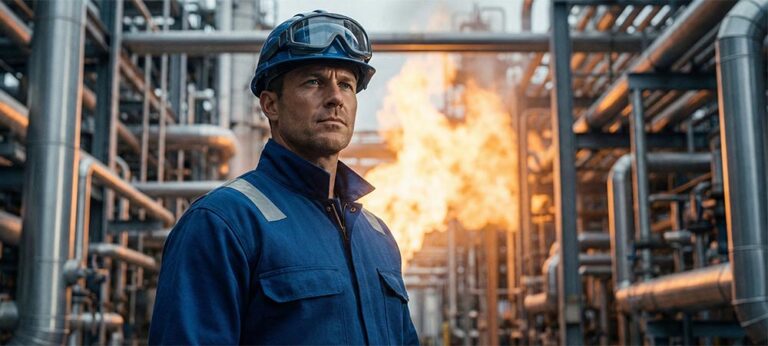
In industrial protection, energy, chemical, and even public spaces, Flame Retardant (FR) fabric is the final line of defense for life safety. However, most practitioners and procurement managers face a practical contradiction: “Fireproof clothes are often thick and stiff, while soft, breathable fabrics lose their effectiveness after just a few washes.”
Comfort and durability seem to be in perpetual opposition.
The root of the problem lies in traditional flame-retardant mechanisms. Most FR fabrics use “post-treatment” or “finishing” technology, where a flame-retardant coating is added to the surface of ordinary fabric. While this method can quickly meet standards, it also causes the fiber pores to become blocked, leading to two major drawbacks:
Here is a direct comparison of the three main FR technologies:
| FR Type | Principle | Wash Durability | Feel & Experience |
| Coated FR | FR agent adheres to the surface | Low (<10 washes) | Stiff, stuffy |
| Durable FR | FR molecules bond with fibers | Medium-High (≥50 washes) | Soft, natural |
| Permanent FR (Inherent FR) | Fiber itself is non-flammable | Very High (>100 washes) | Slightly stiff (can be improved with blending) |
Traditional technology is clearly unsuitable for Personal Protective Equipment (PPE) that requires prolonged wear. To resolve this conflict, we must start from the very nature of the fiber itself.

Traditional “coated” or “post-treated” FR technology is essentially “painting” a fire-resistant layer onto the fabric surface. While low-cost and able to pass initial tests, it sacrifices the fabric’s physical properties.
The durability of the FR effect depends on whether the “FR component” is chemically bonded with the fiber.
Traditional “surface adhesion” treatments pass initial tests, but the FR layer quickly degrades under mechanical friction and detergent washing. This is why many protective suits, though appearing intact after six months, have already “lost their protective power” and will fail to provide effective protection at critical moments.
The BEGOODTEX solution is to start from the fiber structure, not just the surface treatment. We achieve a union of “Protection + Comfort + Lifespan” through a three-tiered technical system:
We select fibers that are inherently flame-retardant, meaning the fiber itself is non-flammable. This typically includes aramid, polyester fiber or modacrylic fibers, whose highly stable molecular structures do not combust.
To counteract the inherent stiffness of some permanent FR fibers, we use textile engineering to optimize the yarn. For example, by blending them with high-quality natural fibers like cotton in specific ratios, we retain the skin-friendly softness of cotton while using the FR fibers to enhance the fabric’s strength and abrasion resistance.
In the final stage of fabric finishing, we apply eco-friendly softeners and moisture-wicking technologies.
FR performance cannot be judged by touch alone; it must be verified by data and standards.
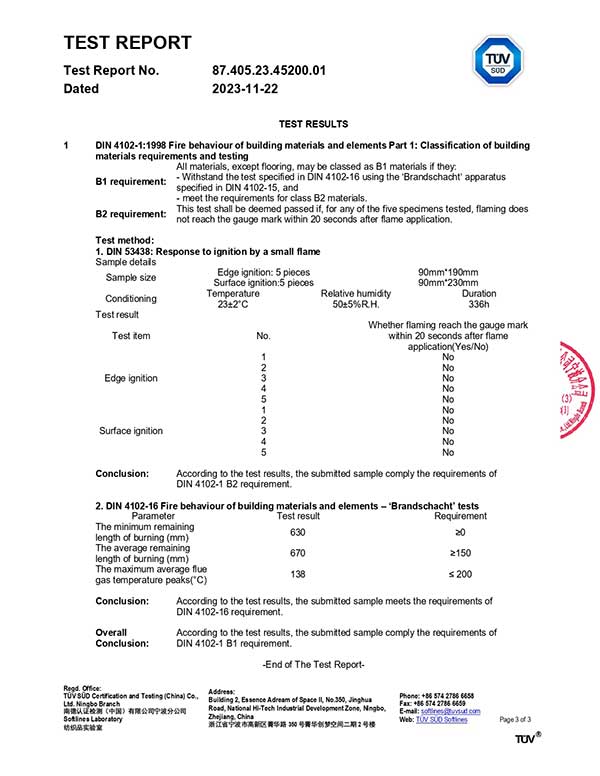
| Test Item | Standard Method | Requirement | Test Result | Conclusion |
|---|---|---|---|---|
| Small Flame Ignition Test (B2 Requirement) | DIN 53438 / DIN 4102-1 | Flame shall not reach gauge mark within 20 s for any specimen | Edge ignition (5 tests): No Surface ignition (5 tests): No | Meets B2 requirement |
| Brandschacht Vertical Burning Test (B1 Requirement) | DIN 4102-16 | Min. remaining length ≥ 0 mm Avg. remaining length ≥ 150 mm Max. flue gas temp ≤ 200 °C | Min. 630 mm Avg. 670 mm Max. 138 °C | Meets B1 requirement |
| Overall Evaluation | DIN 4102-1:1998 | Compliance with B1 flame-retardant classification | — | Pass |
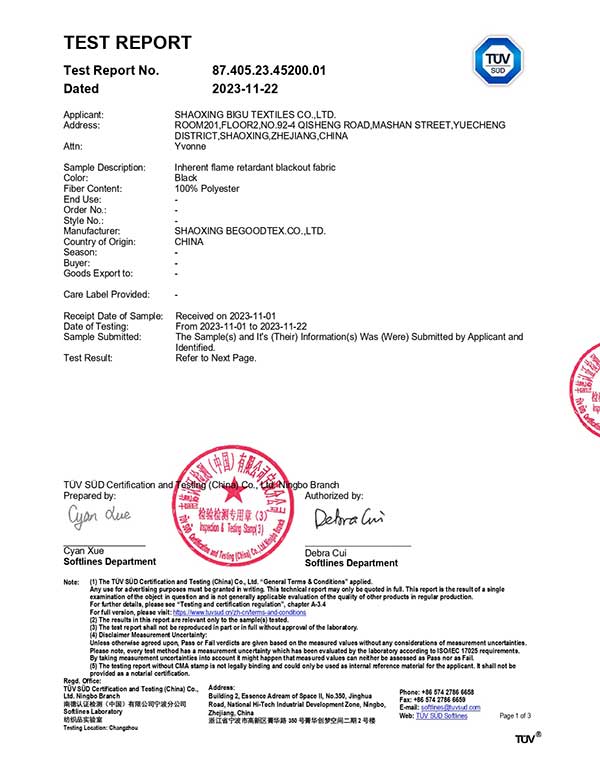
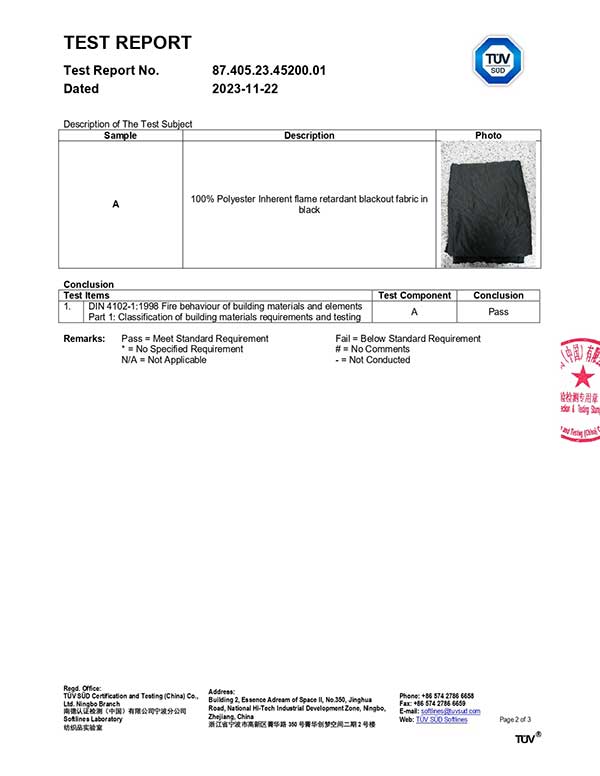
In the rigorous testing conducted by SGS Laboratory, the Begoodtex® inherent flame-retardant blackout fabric was evaluated in accordance with DIN 4102-1:1998 – Fire behaviour of building materials and elements.
The results showed that the fabric successfully met the Class B1 (flame-retardant material) requirements.
During the small flame ignition test (DIN 53438), all edge and surface ignition samples did not reach the gauge mark within 20 seconds after flame application, confirming compliance with the B2 pre-test requirement.
In the subsequent Brandschacht vertical burning test (DIN 4102-16), the sample maintained a minimum residual length of 630 mm, an average residual length of 670 mm, and a maximum flue-gas temperature of 138 °C, all well within the B1 limits.
Overall, the test results verify that Begoodtex® inherent FR polyester blackout fabric provides durable, stable, and permanent flame-retardant performance, making it highly suitable for curtains, stage draperies, and interior architectural applications where certified fire safety is required.
Relevant flame retardant testing report
The performance of the entire BEGOODTEX FR product line meets or exceeds the following international and national standards:
Modern industrial protection is no longer a competition in just flame retardancy; it is a system of fused, multiple performances. BEGOODTEX can integrate multiple functions into the same FR fabric to adapt to complex operational environments:
This transforms the FR garment from a “heavy burden” into lightweight, comfortable, and reliable safety equipment.
When choosing an FR fabric, you must focus on two points: ① Does the performance still meet standards after washing? ② Is the fabric certified for the target environment’s standards?
| Application Scenario | Recommended Fabric Type (Examples) | Key Features |
| General Industrial Work (e.g., electrical, mechanical) | FR Cotton / CVC Blends | Soft, skin-friendly, good breathability, comfortable. |
| Petroleum, Welding, High-Heat | Aramid Blends | Extremely high strength, high-temperature resistance, long protective life. |
| Firefighting & Military/Police | PBI / Aramid Composites | Provides extreme thermal protection, non-combustible, no-drip. |
| Public Decor / Hotel Curtains | Permanent FR Polyester / Modacrylic | Eco-friendly, washable, high colorfastness, stable light-blocking. |
Only when the fabric selection matches the actual working conditions can its long-term protective value be truly realized.
A: This is a common misconception. Modern FR processes (like the inherent FR fiber technology used by BEGOODTEX) achieve fire resistance at the molecular level, no longer relying on heavy post-treatment coatings. Therefore, the fabric can fully retain its lightweight, soft, and highly breathable properties.
A: If the garment’s surface shows visible burn marks, becomes stiff after carbonization, or fails to self-extinguish immediately after a small flame source is removed, it must be replaced immediately. We recommend that companies conduct performance spot-checks on in-use garments every two to three years.
A: Please use a neutral detergent. Never use chlorine bleach or strong acidic/alkaline detergents. The washing temperature should not exceed 60°C (140°F), and high-heat drying should be avoided. This will help maximize the comfort and protective lifespan of the garment.
A: The main difference is the persistence of the FR property. “Durable FR” typically means the FR molecules are chemically bonded to the fiber and can withstand a high number of washes (e.g., ≥50). “Permanent FR” (or Inherent FR) means the fiber itself is non-flammable; its FR property is part of the fiber’s lifespan and can theoretically withstand >100 washes.
A: Yes. We support on-demand production for different weights, colors, functions (like anti-static, water/oil repellency), or specific widths, allowing us to flexibly meet the unique needs of small-batch samples or specific industry clients.
In the past, fire protection and comfort were opposing forces. Today, BEGOODTEX uses scientific weaving logic and eco-friendly FR technology to prove they can coexist perfectly.
Truly great FR fabric doesn’t just show its value in the moment it stands up to a flame; it’s in the everyday wear, when it’s so comfortable you almost forget it’s there.
Contact the BEGOODTEX expert team today to get a customized FR fabric solution for your specific work conditions and receive our latest SGS test reports.