Get in touch
Thank you for reaching out! Please tell us more about your needs — our expert team will get back to you within 24 hours.
Get in touch
Thank you for reaching out! Please tell us more about your needs — our expert team will get back to you within 24 hours.
Abstract
This analysis provides a comprehensive examination of napped and pile fabrics, specifically differentiating among the categories of brushed fabric, fleece, and velvet. It explores the distinct manufacturing processes, material compositions, and resultant physical properties that define each textile type. The investigation covers the mechanical finishing of brushed fabrics like flannelette and faux suede, the knitted construction of performance-oriented fleeces such as polar and coral fleece, plus the complex pile creation inherent to velvets, including woven velvet, velour, and Dutch velvet. The functional implications of these differences are considered across various applications, from apparel to commercial upholstery. Particular attention is given to performance characteristics such as thermal insulation, durability, moisture management, and aesthetic qualities. The discourse also integrates the vital role of specialized treatments, with a focus on flame retardancy, contextualizing these materials within safety standards for both residential and public use. The objective is to equip readers with a nuanced understanding for making informed material selections based on functional requirements, aesthetic preferences, and safety considerations.

To navigate this landscape effectively, one must grasp a central distinction in textile production: the difference between a fabric’s fundamental construction and the finishing processes it undergoes.
A fabric’s construction refers to how its yarns are interlaced to create a planar structure. The two primary methods are weaving and knitting.
Finishing, on the other hand, refers to any process applied to the fabric after its initial construction. These processes can alter its appearance, feel, or performance. Brushing, for example, is a finishing process. A woven cotton fabric can be brushed to become flannelette. A knitted polyester fabric can be brushed to become polar fleece. The softness of both is a result of the finishing, but their underlying structures—and thus many of their properties like stretch and drape—remain fundamentally different.
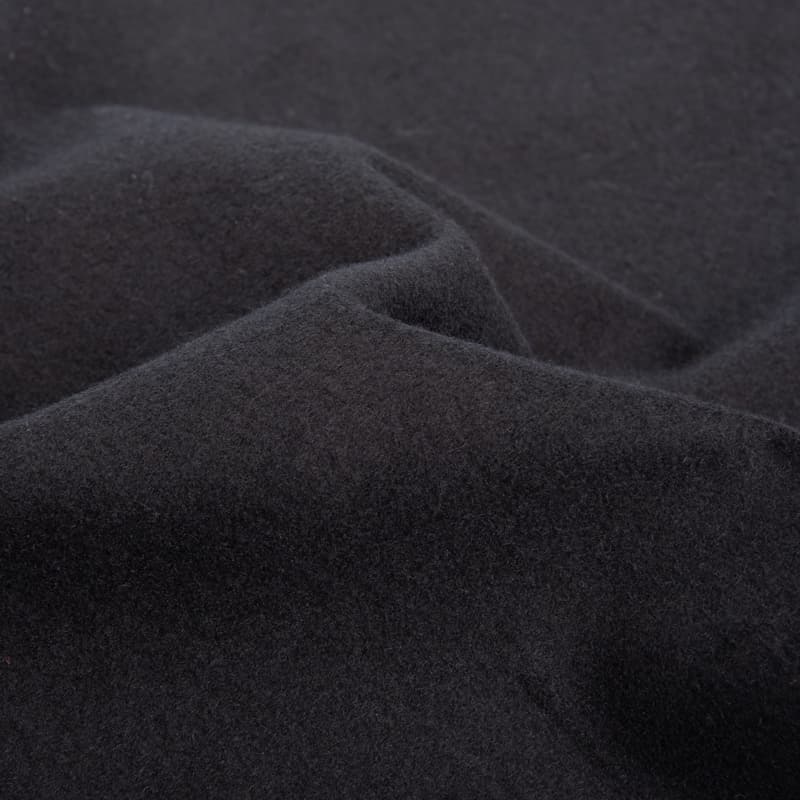
The term “brushed fabric” describes a category defined not by its fiber content or weave, but by a mechanical finishing process. It is a perfect illustration of how a post-construction treatment can radically transform a material’s character. The process involves guiding the fabric over rollers covered in fine, metal bristles, which gently pull at the fibers on the fabric’s surface, raising them to form a soft, fuzzy texture known as a nap.
Imagine a plain, flat-woven cotton sheet. It is smooth, perhaps a bit crisp. Now, picture that same sheet being subjected to the napping process. The wire brushes catch the outermost filaments of the cotton yarns, lifting them from the woven structure without breaking them. The result is a surface covered in a soft down, which creates tiny pockets of air. These air pockets are the key to the fabric’s newfound properties: they provide insulation, making the fabric feel warmer to the touch, and they create a much softer, cozier hand-feel. This process can be applied to one or both sides of a fabric. Many different base fabrics can be brushed, including cotton, polyester, and various blends, each lending its own core characteristics to the final product.
When most people think of a classic brushed fabric, they are often picturing flannelette. Typically made from cotton, flannelette is a lightweight to medium-weight woven fabric that has been brushed on one or both sides to create its signature softness. It is the material of cozy winter pajamas, soft baby blankets, and warm bed sheets. Its cotton base allows it to remain breathable while the brushed surface provides warmth, a combination that makes it exceptionally comfortable for items worn close to the skin. While “flannel” and “flannelette” are often used interchangeably, flannelette is generally lighter in weight than traditional, heavier woolen flannel.
Suede fabric, also known as suedette or microsuede, represents another fascinating outcome of the brushing process. Its goal is to replicate the soft, napped finish of genuine suede leather. The process starts with a tightly woven or knitted fabric, almost always made from polyester microfibers. These fibers are incredibly fine—much thinner than a human hair. After the fabric is constructed, its surface is abraded or brushed, which raises the ends of these tiny microfibers, creating a dense, soft nap that looks and feels remarkably like real suede. Because it is a synthetic fabric, suede fabric is far more resistant to stains and water than its animal-hide counterpart. It is also more durable and easier to clean, making it a popular choice for upholstery, footwear, and apparel.
To clarify the relationships within this family, a direct comparison is useful.
| Feature | General Brushed Fabric | Flannelette Fabric | Suede Fabric (Microsuede) |
|---|---|---|---|
| Primary Definition | A finishing process | A specific type of brushed fabric | A brushed microfiber fabric |
| Common Fiber | Cotton, Polyester, Blends | Cotton | Polyester Microfiber |
| Typical Construction | Woven or Knit | Woven (Plain or Twill) | Tightly Woven or Knit |
| Key Characteristic | Soft, fuzzy surface (nap) | Soft, warm, breathable | Very soft, dense nap; mimics leather |
| Primary Applications | Shirting, Linings, Bedding | Pajamas, Bed Sheets, Baby Items | Upholstery, Apparel, Accessories |
| Feel/Hand | Soft and fuzzy | Cozy and warm | Velvety and plush |
While brushed fabrics achieve softness through a finishing process on a pre-existing textile, fleece fabric is a more holistically engineered material. It is fundamentally a knit fabric, and its soft, napped texture is an integral part of its design and manufacturing process from the start. Originally developed as a synthetic alternative to wool, fleece has carved out its own identity as a lightweight, high-performance insulator.
At its core, almost all fleece fabric is a type of pile knit, typically made from polyester. The knitting process creates a fabric with loops on one or both sides. These loops are then sheared and brushed, a process that breaks open the loops and teases the fibers into a deep, soft pile. Like the nap on a brushed fabric, this pile traps air, providing excellent insulation. However, because the base structure is a knit, fleece has a natural stretch and flexibility that many woven brushed fabrics lack. Furthermore, its polyester composition makes it hydrophobic, meaning it repels water and dries very quickly, a key performance advantage inherited from its synthetic origins (Karmokar, 2021).
Polar fleece is the material that launched the fleece revolution. It is what most people visualize when they hear the word “fleece.” It is a double-sided pile fabric, meaning it has been brushed to be soft on both sides. It is valued for its exceptional warmth-to-weight ratio; a thin polar fleece jacket can provide a surprising amount of insulation without the bulk of wool or down. It is durable, machine-washable, and relatively inexpensive to produce. These qualities have made it a staple for outdoor apparel, athletic wear, blankets, and casual jackets.
Coral fleece and double-sided fleece represent an evolution toward even greater softness and luxury. Coral fleece is characterized by a higher, denser, and plusher pile than standard polar fleece. It feels exceptionally soft and velvety to the touch, making it a favorite for high-quality blankets, bathrobes, and children’s toys. The name “coral” comes from the texture’s supposed resemblance to sea coral. Double-sided fleece is a general term that simply means the fabric has been napped on both surfaces, a characteristic shared by both polar fleece and coral fleece. The key differentiator for coral fleece is the length and density of that pile, which elevates its plushness.
Loop fleece, more commonly known as French terry, offers a different take on the fleece concept. It presents two distinct sides. The face side is a smooth, flat knit surface, similar to that of a standard t-shirt. The reverse side, however, is characterized by a landscape of soft, absorbent loops of yarn. These loops give the fabric its alternative name, loop fleece. Unlike polar or coral fleece, these loops are often left intact rather than being sheared and brushed. This structure makes French terry lighter and more moisture-wicking than pile fleeces, making it an ideal material for athletic wear, sweatshirts, and loungewear where breathability and moisture absorption are desired next to the skin.
| Feature | Polar Fleece | Coral Fleece | Loop Fleece (French Terry) |
|---|---|---|---|
| Construction | Pile Knit, Brushed Both Sides | High-Pile Knit, Brushed Both Sides | Knit with Loops on Reverse |
| Texture | Soft, dense nap | Very plush, velvety, high nap | Smooth face, looped back |
| Warmth-to-Weight | Excellent | Very Good (but can be heavier) | Moderate |
| Moisture Handling | Hydrophobic, dries very fast | Hydrophobic, dries fast | Absorbent loops wick moisture |
| Stretch | Good (2-way stretch) | Good (2-way stretch) | Very Good (often with spandex) |
| Primary Applications | Jackets, Blankets, Outdoor Gear | Robes, Luxury Blankets, Baby Items | Sweatshirts, Joggers, Loungewear |
| Pilling Potential | Moderate to High (anti-pill versions exist) | Lower than Polar Fleece | Very Low |
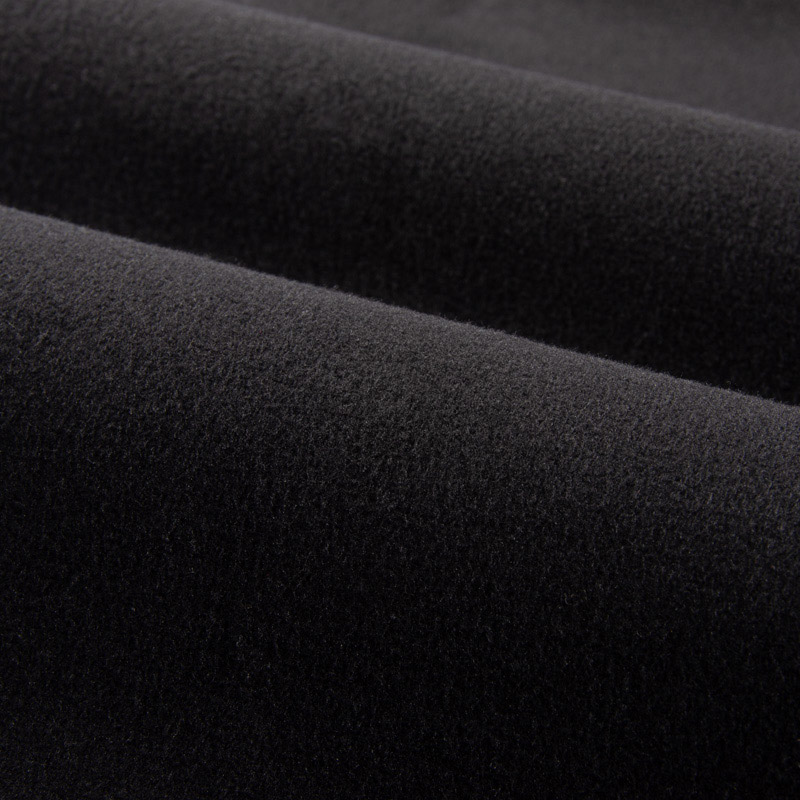
Velvet occupies a unique and storied place in the world of textiles. Its identity is not defined by fiber or finishing alone, but by a special weaving or knitting technique that creates a dense, uniform pile of cut yarns. This pile gives velvet its characteristic deep luster, rich color absorption, and unmistakably soft, directional feel. Unlike the tangled nap of a brushed fabric, velvet’s pile consists of short, upright tufts of yarn that are packed together tightly.
Traditional velvet manufacturing is a complex art. The most common method, double-cloth weaving, involves two layers of fabric being woven simultaneously on a loom, connected by an extra set of warp yarns. After weaving, a blade travels between the two layers, slicing these connector yarns perfectly down the middle. This action separates the two base fabrics, each now bearing a dense, even pile of cut yarn ends. This is what you feel when you run your hand across velvet. The direction in which these pile fibers lie creates a “nap” direction; brushing the pile one way makes it look lighter and feel smoother, while brushing it against the grain makes it look darker and feel more resistant.
Woven velvet is the classic form of the fabric, historically made from silk and associated with royalty and opulence. Today, it is also produced from cotton, rayon, and synthetic fibers. Cotton velvet is sturdy and has a less brilliant sheen, making it suitable for upholstery. Synthetic velvets offer enhanced durability and stain resistance. Because it is woven, it has dimensional stability and a structured drape, making it ideal for tailored garments, formalwear, and high-end drapery and upholstery. Its production is labor-intensive, which often places it at a higher price point compared to other soft fabrics.
The desire for a more affordable and versatile version of velvet led to the development of knitted varieties. Velour is the most common type of knit velvet. It is typically made from cotton or polyester and has a pile that is looped into the knit structure and then sheared. The resulting pile is soft and plush, but generally shorter and less dense than that of a high-quality woven velvet. Crucially, because velour is a knit fabric, it possesses significant stretch. This quality made it famous in the form of tracksuits and casualwear, offering the comfort of a knit with a touch of velvet’s luxurious feel. Warp knitted velvet is another variant, often produced with a higher sheen and excellent drape, finding use in performance wear, costumes, and specialty apparel where both stretch and visual impact are needed.
Dutch velvet is a more recent innovation in the velvet family, a type of warp-knitted polyester velvet that has gained immense popularity in home furnishings. It is celebrated for its exceptionally soft, smooth hand-feel and a subtle, elegant sheen. The pile is typically shorter and extremely dense, giving it a texture that some describe as being between traditional velvet and a high-end microsuede. Its polyester composition provides excellent durability, colorfastness, and resistance to crushing and stains. Dutch velvet has become a go-to choice for modern upholstery, decorative pillows, and heavy curtains where a combination of luxury, performance, and relative affordability is desired.
The unique combination of construction, fiber, and finishing leads to distinct performance differences across 13 key metrics.
The most fundamental differentiator among these fabrics is their underlying construction. This architectural choice between knitting and weaving dictates a cascade of other properties, including stretch, drape, and durability. It is the skeleton upon which the fabric’s personality is built.
Woven fabrics, created by the rigid grid of warp and weft yarns, are defined by their stability. Consider a classic cotton flannelette shirt or a piece of woven velvet upholstery. They hold their shape. They resist stretching along their primary grain lines. This stability is an asset in applications requiring structure and longevity. A tailored velvet blazer relies on this woven integrity to maintain its sharp lines. Upholstery on a sofa must be woven to withstand the daily stresses of sitting and stretching without sagging or distorting over time. Flannelette bedsheets benefit from this stability, resisting the tendency to become misshapen after repeated use and washing.
Knitting, by contrast, creates fabric from a series of interlocking loops. Imagine a chain of loops; it can easily be stretched and will spring back. This is the source of the inherent flexibility in all fleece fabrics, from polar to loop fleece, as well as in velour. This quality is not an afterthought; it is integral to their function. The comfort of a fleece pullover or a pair of velour joggers comes directly from their ability to move with the body. This built-in “mechanical stretch” allows for a closer, more comfortable fit in apparel without the need for added elastic fibers (though some, like French terry, may incorporate spandex for even greater recovery).
While both processes result in a soft surface, the distinction between a pile and a nap is technically significant and results in different aesthetic and performance characteristics. It is the difference between building a forest of individual trees versus cultivating a meadow of grass.
A pile is an integral part of the fabric’s structure, created during the weaving or knitting process itself. As described with velvet, an extra set of yarns is introduced specifically to form the upright tufts. These yarns are anchored firmly into the base fabric. When you look closely at a velvet surface, you can discern these individual, densely packed yarn ends standing at attention. This structure is what gives velvet its unique, deep luster; light enters the pile and reflects off the sides of the fibers, creating a complex play of shadow and highlight. This is also why velvet has a directional quality—the pile can be smoothed down or pushed up.
A nap, conversely, is created by a finishing process that acts upon the fibers already present in the yarns of a completed fabric. The brushing process does not add new material; it simply raises and tangles the existing surface fibers. The resulting surface is a soft, fuzzy mat of non-directional fibers. There are no distinct, upright tufts. This is the texture of flannelette and fleece. This matted layer of fibers is exceptionally effective at trapping still air, which is why napped fabrics are such excellent insulators. However, because these are merely raised surface fibers, they can be more prone to matting down with wear or forming small balls, a phenomenon known as pilling.
The type of fiber used as the raw material for these textiles is another critical point of divergence. The choice between natural fibers like cotton and synthetic fibers like polyester fundamentally shapes the fabric’s relationship with moisture, its durability, and its environmental footprint.
Flannelette is almost universally made from cotton, a natural cellulosic fiber. Cotton’s primary advantage is its breathability and hydrophilia (water-loving nature). It can absorb a significant amount of moisture—up to 27 times its own weight—which helps wick perspiration away from the skin, promoting comfort. This makes cotton flannelette an excellent choice for sleepwear and bedding, where managing moisture through the night is key to comfort. However, once saturated, cotton is slow to dry. It is also more susceptible to wrinkling and is not as inherently durable as its synthetic counterparts.
The world of fleece and most modern velvets (like Dutch velvet) is dominated by polyester. As a synthetic polymer, polyester is hydrophobic (water-repelling). A polyester fleece fabric will absorb less than 1% of its own weight in water (Savile, 1999). This is why fleece garments dry incredibly quickly and continue to provide insulation even when damp—the water is held in the spaces between the fibers, not within the fibers themselves. Polyester is also exceptionally durable, resistant to abrasion, stretching, and shrinking. Its main drawbacks are its lower breathability compared to cotton and its oleophilic nature, meaning it readily absorbs oils, which can sometimes lead to odor retention if not washed properly.
The primary reason for choosing many of these soft fabrics is warmth. Their ability to provide insulation is directly related to their structure and how effectively they can trap a layer of still air close to the body.
Fleece is a master of thermal insulation. Its deep, lofty pile, created by the brushing of knitted polyester, creates a vast network of tiny air pockets. Air is a poor conductor of heat, so trapping a layer of it prevents body heat from escaping into the colder environment. The warmth-to-weight ratio of a material like polar fleece is its defining performance metric. It provides a level of warmth comparable to wool but at a fraction of the weight and without the issue of retaining moisture. This makes it an ideal mid-layer for outdoor activities where warmth without bulk is essential.
Flannelette provides warmth through the same principle of trapped air in its brushed nap, but its effectiveness is more moderate. The nap is generally shorter and less dense than a fleece pile, and its cotton fibers will lose their insulating ability when they become damp. It offers a “cozy” warmth suitable for indoor environments rather than high-performance insulation for extreme cold. Velvet’s thermal properties are also moderate. Its dense pile does provide some insulation, but its primary role is often more aesthetic than thermal. Heavier velvets used for drapery, however, can be quite effective at insulating a room from drafts and heat loss through windows.
A fabric’s ability to withstand wear and tear over time is a crucial consideration, especially for upholstery and frequently worn apparel. Durability is a function of fiber strength, construction, and resistance to surface degradation like pilling.
When it comes to sheer durability for applications like upholstery, high-quality woven velvets made from filament polyester or nylon are top contenders. The pile yarns are securely locked into the woven base, making them resistant to being pulled out. The woven structure itself resists stretching and distortion. Abrasion resistance is often measured in “double rubs” (Wyzenbeek or Martindale tests), and commercial-grade velvets can withstand hundreds of thousands of cycles, making them suitable for furniture in hotels, restaurants, and busy homes. Suede fabric (microsuede) also exhibits excellent durability due to its tight weave and strong polyester microfibers.
Pilling is the formation of small, unsightly balls of tangled fibers on a fabric’s surface. It occurs when surface fibers are abraded, break, and get tangled together. This is a common challenge for many napped and pile fabrics, particularly those made from staple (short) fibers. Standard polar fleece is notoriously prone to pilling, although many manufacturers now produce “anti-pill” versions that are made from higher-quality yarns or receive a special treatment to reduce it. Brushed cotton flannelette can also pill over time with repeated washing and wear. Loop fleece (French terry) is much more resistant to pilling because its surface is a smooth knit, with the loops—the potential source of loose fibers—tucked away on the reverse side.
How a fabric interacts with water vapor (perspiration) and liquid water is critical for comfort, especially in apparel. This involves two related but distinct concepts: moisture-wicking and breathability.
As a hydrophobic material, polyester fleece excels at not absorbing water. This makes it an excellent choice for environments where getting wet is a possibility. It pushes moisture away from the skin to the surface of the fabric where it can evaporate quickly. This is its “wicking” action. However, the very dense structure that makes it a great insulator can also limit its breathability—the ability of air and water vapor to pass through it. In high-exertion activities, one might feel clammy in a standard fleece as perspiration vapor gets trapped before it can escape.
Cotton flannelette operates differently. As a hydrophilic fiber, it does not wick moisture in the same way as polyester. Instead, it absorbs it. A small amount of moisture absorption can feel comfortable, as it pulls vapor away from the skin. The fabric itself is also quite breathable due to the nature of its woven structure. However, once it absorbs a significant amount of moisture, it becomes saturated, feels heavy, loses its insulating properties, and is very slow to dry. This makes it ideal for sleeping or lounging but poorly suited for activewear.
Stretch refers to a fabric’s ability to elongate under tension, while drape describes how a fabric hangs under its own weight. These properties are largely governed by the knit-versus-woven structure.
The looped structure of knits gives them a natural elasticity. All fleece fabrics and velour will have at least a moderate amount of two-way stretch (crosswise). This allows for garments that fit closely to the body without feeling restrictive. The drape of these knit fabrics tends to be soft and fluid. A fleece blanket will contour easily around you, and a velour garment will hang softly from the body. This combination of stretch and soft drape is what defines their comfort-oriented character.
Woven fabrics like flannelette and traditional velvet have very little stretch, except for a small amount on the bias (diagonally). Their drape is more structured and weighty. A heavy woven velvet curtain will hang in deep, sculptural folds. A flannelette shirt has body and holds its shape rather than clinging. This structure is an aesthetic choice, lending a more formal or tailored appearance to garments and home furnishings.
The practicality of a fabric often comes down to how easy it is to clean and maintain. Here, the differences between natural and synthetic fibers, as well as complex versus simple constructions, are stark.
For the most part, fabrics made from polyester fleece and cotton flannelette are celebrated for their ease of care. They are generally durable enough to be machine washed and tumble-dried, although lower heat settings are recommended to prolong their life and minimize pilling or potential shrinkage in cotton. Suede fabric (microsuede) is also remarkably easy to care for, often being machine washable and quick to dry.
Traditional velvet, especially if made from silk or high-quality rayon, can be much more demanding. The pile can be easily crushed or marked if not handled correctly. Many woven velvets are designated as dry-clean-only. Water can sometimes spot or flatten the pile, and improper ironing can permanently damage it. While modern polyester velvets (like Dutch velvet) are far more resilient and often cleanable with water-based solutions, they still require more careful handling than a rugged fleece blanket. Steaming is often the preferred method for removing wrinkles from any velvet fabric.
The visual appearance of a fabric—its sheen, color depth, and overall character—is a primary factor in its selection. The way a fabric’s surface interacts with light is key to its aesthetic.
Velvet’s appearance is its most iconic trait. The upright pile structure creates a surface that absorbs light deeply while also reflecting it in a unique way, resulting in an unparalleled richness and depth of color. The luster is not a flat shine but a complex, shimmering effect that changes as the angle of light or the viewer’s perspective shifts. This luxurious aesthetic has made it a symbol of opulence and formality for centuries.
In contrast, fleece and flannelette have a soft, matte appearance. Their napped surfaces diffuse light rather than reflecting it directly, which contributes to their “cozy” and unpretentious look. The color appears softer and less saturated than in a velvet. This understated aesthetic is well-suited to casual apparel, comfortable home goods, and functional outdoor gear where visual softness and a welcoming feel are prioritized over high-impact luster.
Ultimately, the choice between these fabrics is dictated by the demands of the final product. Each family of fabric has found its niche based on its unique combination of properties.
In clothing, flannelette owns the realm of cozy sleepwear and casual shirts. Fleece, particularly polar fleece and loop fleece, dominates the world of outdoor mid-layers, athletic apparel, and casual jackets. Velour had its heyday in loungewear and tracksuits, prized for its combination of stretch and plushness. Woven velvet remains the choice for formalwear, elegant dresses, and structured blazers where its rich appearance and tailored structure are paramount.
For the home, flannelette is a top choice for warm winter bed sheets. Fleece is ubiquitous in throw blankets and casual bedding. In upholstery, the choice becomes more critical. Durable, stain-resistant suede fabric and robust polyester velvets like Dutch velvet are workhorses for family room sofas and chairs. High-end woven velvets are used for statement pieces and formal living areas. For drapery, woven velvet provides excellent light-blocking and insulating properties with a luxurious drape, while flame-retardant versions are essential for commercial spaces.
In commercial settings, performance and safety take center stage. Flame-retardant brushed fabrics are used for pipe-and-drape systems at trade shows and events. Flame-retardant velvets are a staple for stage curtains in theaters and auditoriums, not only for their light- and sound-absorbing qualities but for their compliance with public assembly safety codes. Flame-retardant fleece blankets and bedding are specified for use in hospitals, correctional facilities, and other institutions where both comfort and fire safety are required.
The complexity of manufacturing and the cost of raw materials create a clear price hierarchy among these textiles.
The production of standard polyester polar fleece is a highly optimized and efficient process. Polyester itself is a relatively inexpensive raw material. The combination of knitting and brushing can be done at high speeds, making polar fleece one of the most affordable soft, warm fabrics on the market. This accessibility has been a major factor in its widespread adoption.
At the other end of the spectrum lies traditional woven velvet. The double-cloth weaving process is slower and more complex, requiring specialized looms and skilled operation. If made from premium fibers like silk or long-staple cotton, the raw material cost is also significantly higher. This results in a fabric that is considered a luxury good, with a price point that reflects its intricate production and rich heritage. Knitted velvets like velour and Dutch velvet occupy a middle ground, offering a velvet-like aesthetic at a more accessible cost.
In an era of increasing environmental consciousness, the lifecycle of a fabric is an important consideration. Both natural and synthetic fibers present their own set of challenges and opportunities.
The primary environmental concern associated with polyester fleece is the shedding of microplastics. During washing, tiny synthetic fibers can break off and enter the water system, eventually accumulating in oceans and ecosystems (Carney Almroth & Åström, 2018). This has prompted research into fabrics that shed less, as well as washing machine filters and laundry bags designed to capture these microfibers.
On the positive side, the synthetic fabric industry has made significant strides in sustainability through recycling. A large portion of polyester fleece and velvet is now made from recycled polyethylene terephthalate (rPET), the polymer used to make plastic drink bottles. Using rPET reduces reliance on virgin petroleum, consumes less energy in production, and diverts plastic waste from landfills. Certifications like the Global Recycled Standard (GRS) provide third-party verification of recycled content and responsible social and environmental processing, offering a more sustainable choice for consumers and manufacturers.
For many applications, safety is the final and most critical differentiator. The ability of a fabric to resist ignition and slow the spread of flames is a highly engineered property.
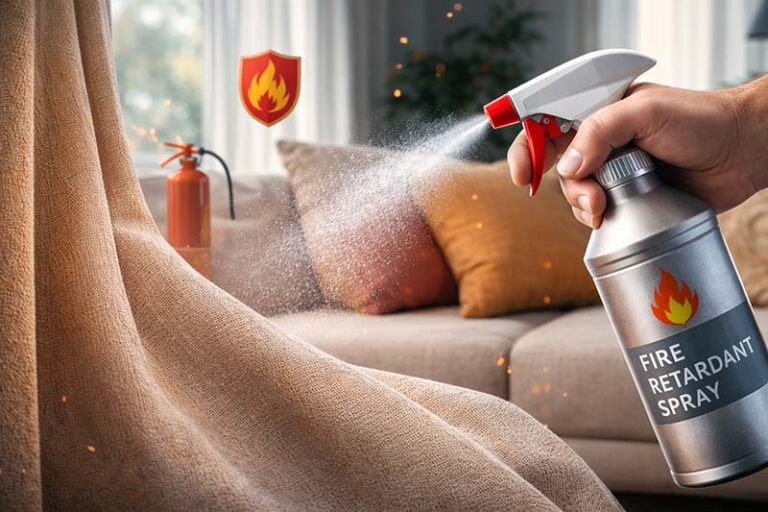
As mentioned earlier, flame retardancy can be achieved through two main pathways. A topical chemical finish can be applied to a fabric, which is often a less expensive solution but may diminish with washing. A more permanent and reliable solution is inherent flame retardancy (IFR). In IFR polyester, the flame-retardant properties are built into the molecular structure of the fiber itself. These properties cannot be washed out or worn away, providing durable, lifelong protection (Weil & Levchik, 2016). When sourcing fabrics for critical applications, specifying IFR materials is the best practice.
The performance of flame-retardant fabrics is not subjective; it is measured against rigorous, standardized tests. Different regions and applications have their own specific requirements. In the United States, NFPA 701 is a common standard for draperies and fabrics used in public spaces. In the United Kingdom, BS 5867 serves a similar purpose for curtains. For upholstery, standards like BS 5852 (testing with different ignition sources like cigarettes and cribs) are used. For children’s sleepwear in the US, CFR 1615/1616 applies. A reputable supplier of FR fabrics will be able to provide documentation certifying that their products meet or exceed the specific standards required for a project.
The core difference is construction and fiber. Fleece is a knit fabric, usually made of polyester, engineered for lightweight warmth and quick-drying performance. Flannelette is a woven fabric, typically made of cotton, that has been brushed for softness and provides breathable, cozy warmth.
It depends on the fiber. Traditional silk or rayon velvet should be dry-cleaned. Modern polyester velvets, like Dutch velvet, are often more durable and may be machine washable on a gentle cycle, but you must always check the manufacturer’s care label. Air drying or tumble drying on a no-heat setting is recommended to protect the pile.
Both offer excellent insulation. Coral fleece often feels plusher and warmer initially due to its higher, denser pile. However, the warmth-to-weight ratio of a high-quality polar fleece is exceptional. For active outdoor use, polar fleece is often preferred for its lower bulk, while coral fleece is favored for its luxurious feel in blankets and loungewear.
Pilling occurs when surface fibers on the fabric break and tangle into small balls from friction. It is common in lower-quality fleece. To prevent it, choose products labeled “anti-pill,” wash fleece inside out, use a gentle cycle with cool water, and avoid washing it with abrasive items like towels or denim. Air drying is preferable to machine drying.
Dutch velvet is a specific type of warp-knitted polyester velvet. It is known for its exceptionally smooth, soft feel, a very dense but relatively short pile, and a subtle, modern sheen. It is highly durable and stain-resistant, making it a popular and practical choice for contemporary upholstery and home decor.
You cannot tell just by looking or feeling. The only reliable way is through documentation from the manufacturer. Reputable suppliers will provide certificates showing that the fabric has passed specific flame-retardant tests (e.g., NFPA 701, BS 5867). Inherently flame-retardant (IFR) means the property is part of the fiber itself and will not wash out.
Not exactly. “Brushed fabric” is a broad category defined by the mechanical napping process. Flannel (and its lighter version, flannelette) is a specific type of fabric that is almost always brushed. So, all flannel is a brushed fabric, but not all brushed fabric is flannel. For example, brushed polyester or brushed twill are also brushed fabrics.
The journey through the world of soft textiles reveals a landscape rich with nuance and purpose. A fabric’s identity is a composite of its fiber, its construction, and the finishing touches it receives. A brushed fabric like flannelette offers breathable cotton comfort, born from abrading a simple weave. A fleece fabric stands as a testament to modern engineering—a knitted polyester structure designed for maximum warmth with minimum weight. A velvet, whether a traditional woven masterpiece or a modern knitted velour, offers a unique aesthetic of depth and luxury derived from its upright pile.
Understanding these distinctions is an exercise in empathy—empathy for the material itself and for its intended user. To choose the right fabric is to anticipate the need for stretch in a jogger, for durability on a family sofa, for warmth in a winter blanket, or for certified safety in a public theater. By moving beyond surface-level softness and grasping the foundational differences in structure, texture, and performance, one can make choices that are not only aesthetically pleasing but also functionally sound, responsible, and perfectly suited to the task at hand.