Get in touch
Thank you for reaching out! Please tell us more about your needs — our expert team will get back to you within 24 hours.
Get in touch
Thank you for reaching out! Please tell us more about your needs — our expert team will get back to you within 24 hours.
Selecting a fireproof jacket is a critical decision that directly impacts worker survival in high-risk thermal environments. Many procurement officers make the mistake of treating these garments as standard workwear, overlooking the specific engineering required to mitigate flash fires, electric arcs, or molten metal splashes. A jacket that lacks the correct thermal protective performance (TPP) or fails to maintain its integrity after industrial laundering is not just a sub-optimal purchase; it is a liability. This guide provides a technical framework for evaluating fiber chemistry, certification benchmarks, and real-world durability to ensure your team is equipped with a reliable last line of defense.
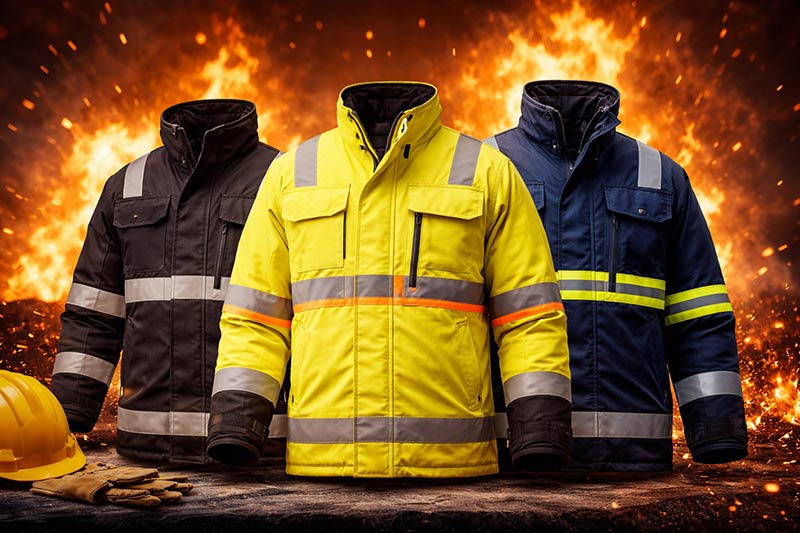
The primary reason for selecting a specific fireproof jacket is the nature of the thermal threat present in your specific operating environment. In my fifteen years of engineering protective textiles, I have seen numerous projects fail because the buyer did not distinguish between a short-duration flash fire and a sustained heat source. If the environment involves potential dust explosions or chemical vapor ignition, the protection requirements differ significantly from those needed for electrical utility work where arc flash is the dominant risk factor. Recognizing these nuances is the first step in avoiding catastrophic equipment failure during an actual emergency event.
Thermal hazards are categorized by energy intensity and duration. Flash fires typically last three seconds or less but reach temperatures exceeding 1000 degrees Celsius. In contrast, radiant heat from furnaces requires long-term thermal resistance without material degradation.
Using a standard polyester-blend jacket in a welding environment often results in the fabric melting onto the skin. This causes severe secondary burns that are much harder to treat than typical fire injuries. Always match the jacket to the specific thermal energy levels of your site.
Understanding the initial hazard assessment allows us to move into the critical phase of selecting the appropriate fiber chemistry for the garment construction. The choice between inherent flame-resistant fibers and treated fabrics is the most significant factor affecting long-term safety and total cost of ownership. Inherent fibers like meta-aramid or modacrylic have flame resistance built into their molecular structure, meaning the protection cannot be washed out or worn away. Conversely, treated fabrics rely on a chemical finish applied to flammable fibers like cotton, which may degrade if industrial laundering protocols are not strictly followed or if certain contaminants are present.
When evaluating materials, engineers must look at the char strength and the ability of the fabric to remain intact under extreme heat. Brittle fabrics that break open during a fire allow heat to reach the body directly, bypassing the protective barrier.
| Fiber Type | Protection Mechanism | Durability | Common Application |
|---|---|---|---|
| Meta-Aramid (Nomex) | Inherent molecular stability | Extremely High (Lifespan 5+ years) | Petrochemical, Flight suits |
| FR Treated Cotton | Chemical additive finish | Moderate (Degrades with bleach) | Foundries, General welding |
| Modacrylic Blends | Inherent self-extinguishing | High (Soft hand feel) | Electric arc protection |
Modern jackets often use a blend of fibers to balance protection with breathability. For example, adding para-aramid increases the mechanical strength and prevents the jacket from tearing during a thermal event.
Once the material technology is selected, you must verify that the jacket meets the specific regulatory requirements of your region and industry. Standards such as NFPA 2112 and EN ISO 11612 provide the objective data needed to compare different jackets, but they are often misunderstood by procurement teams. In my experience, a certificate alone is insufficient; you must review the actual test reports to understand the percentage of body burn predicted by the thermal manikin test. A jacket with a 40 percent predicted burn is vastly different from one with a 10 percent predicted burn, even if both technically pass the NFPA 2112 threshold.
Always request a UL or CE certificate from the manufacturer. In-house testing is a good indicator during the development phase, but only independent, third-party verification ensures that the production-run jackets actually perform to the levels claimed in the marketing materials.
Reliable protection is not a marketing claim; it is a verified engineering metric measured in calories per square centimeter.
Testing the fabric is vital, but the performance of the jacket as a complete system depends heavily on its construction details and hardware components. During site inspections, I have seen jackets where the fabric remained intact but the plastic zipper melted, trapping the worker inside the burning garment. To choose a safe fireproof jacket, you must ensure that every component, including the sewing thread, buttons, zippers, and reflective tapes, is also flame-resistant and capable of withstanding the same thermal energy as the main fabric. Small failures in these areas often lead to major injuries during the critical seconds of an emergency egress.
Zippers must be constructed from high-temperature resistant metals or specialized FR-treated polymers. Non-FR plastic components can melt and cause severe contact burns, even if the surrounding fabric does not ignite or char.
Jackets should be sewn with aramid thread. Standard polyester thread will melt at relatively low temperatures, causing the seams to burst open during a fire and exposing the wearer’s skin or undergarments to direct flame impingement.
A safe jacket that a worker refuses to wear due to discomfort is ultimately a safety failure for the organization. In hot and humid industrial environments, heat stress can be as dangerous as the fire hazard itself, leading to fatigue, reduced situational awareness, and heat stroke. When choosing a fireproof jacket, engineers must look for materials with high air permeability and effective moisture-wicking properties. At Begoodtex, we have found that incorporating breathable membranes or using lighter weight inherent fabrics can significantly reduce the physiological load on the wearer without compromising the primary thermal protective performance required for safety compliance.
There is often an inverse relationship between thermal protection and breathability. Increasing the fabric weight usually raises the TPP rating but decreases the air flow. The goal is to find the minimum weight that safely meets the required protection level for your site.
| Parameter | Impact on Safety | Impact on Comfort |
|---|---|---|
| Fabric Weight (gsm) | Heavier weight usually increases TPP | Higher weight increases heat fatigue |
| Air Permeability | Slightly reduces heat insulation | Essential for evaporative cooling |
| Moisture Regain | Damp fabric can cause steam burns | Natural fibers feel cooler on skin |
For extreme cold and fire hazards, a multi-layer system is often better than a single heavy jacket. This allows the worker to adjust their layers based on the current temperature while maintaining a consistent flame-resistant outer shell at all times.
The protective lifecycle of a fireproof jacket is determined by how it is cleaned and maintained after it leaves the warehouse. Even the highest quality inherent FR jacket can lose its effectiveness if it becomes saturated with flammable contaminants like oil, grease, or hydraulic fluid. Choosing a jacket also involves selecting a vendor who provides clear, actionable laundering instructions to prevent the buildup of these hazardous substances. In many industrial failures I have investigated, the jacket itself was compliant, but the presence of flammable industrial oils on the surface allowed the garment to sustain a flame, negating its self-extinguishing properties.
Check if the jacket is rated for at least 50 industrial washes. Many lower-grade products show significant shrinking or loss of mechanical strength after just 20 cycles, leading to exposed wrists or ankles which creates a safety gap.
Jackets must be retired if they show signs of thinning, large holes, or permanent staining from flammable chemicals. Educate workers to inspect their garments daily for any mechanical damage that could compromise the thermal barrier during an accident.
Choosing a fireproof jacket requires a systematic approach that balances hazard analysis, material science, and human factors. Starting with a clear understanding of the thermal threat allows for the selection of the correct fiber chemistry, whether inherent or treated. Verification against global standards ensures legal and safety compliance, while attention to hardware and construction prevents systemic failures during an event. Finally, accounting for heat stress and maintenance ensures the jacket remains a functional and reliable piece of equipment throughout its intended service life. By following this engineering-led framework, procurement teams can make informed decisions that maximize both safety and investment value.
No. Wearing a non-FR jacket over FR clothing creates a fuel source that can ignite and melt onto the protective layer, causing severe burns. Always use an FR-rated jacket as the outermost layer.
TPP (Thermal Protective Performance) measures protection against flash fires. ATPV (Arc Thermal Performance Value) measures protection against electric arcs. They are not interchangeable; ensure your jacket has the correct rating for your hazard.
Inherent FR jackets typically last 3 to 5 years depending on wear. However, if the fabric is torn, contaminated with non-removable oil, or the seams have failed, the jacket must be replaced immediately regardless of age.
Yes, standard waterproof coatings are often flammable. You must choose a jacket specifically engineered with an FR-rated breathable membrane that has been tested for both moisture protection and flame resistance concurrently.
Both can meet safety standards, but FR treated cotton relies on a chemical finish that can be damaged by improper washing with bleach. Nomex is inherently flame-resistant and offers a much longer service life in harsh industrial conditions.