Get in touch
Thank you for reaching out! Please tell us more about your needs — our expert team will get back to you within 24 hours.
Get in touch
Thank you for reaching out! Please tell us more about your needs — our expert team will get back to you within 24 hours.
In the textile quality assessment system, color fastness is a decisive technical indicator for market access and consumer evaluation. This article provides an in-depth analysis of ISO 105-X12 (Color Fastness to Rubbing), ISO 105-C06 (Color Fastness to Washing), and ISO 105-B02 (Color Fastness to Light). By systematically examining physical wear, chemical thermal effects, and photodegradation mechanisms, we aim to help laboratories and manufacturers build a robust quality assurance system.
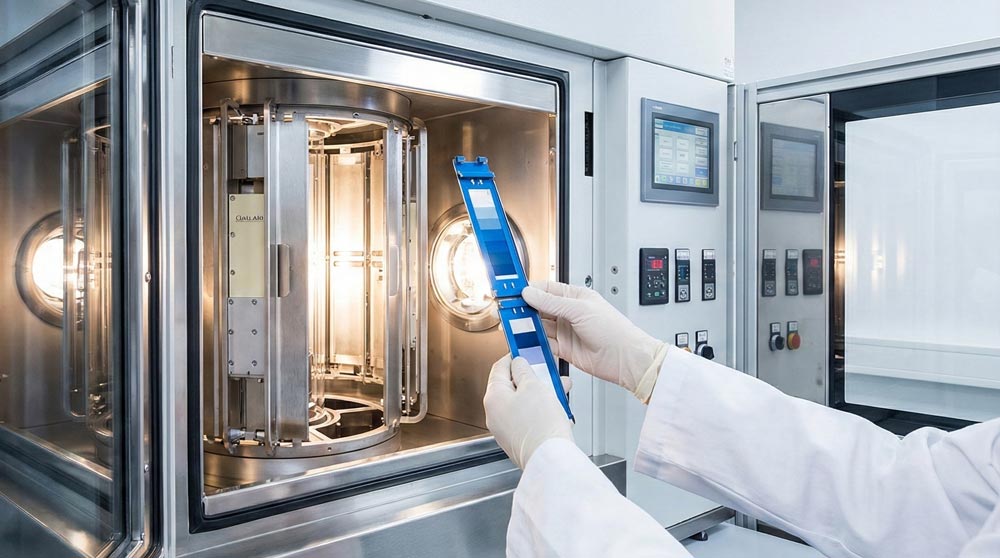
To ensure precise testing, technical personnel must master the following three dimensions of core knowledge regarding the ISO 105 series:
The following table provides a horizontal comparison of core technical parameters, illustrating the fundamental differences between the three standards in simulating real-world usage scenarios:
| Comparison Items | ISO 105-X12 (Rubbing) | ISO 105-C06 (Washing) | ISO 105-B02 (Light) |
|---|---|---|---|
| Evaluation Core | Physical wear and surface unfixed dye transfer | Color loss under wet-heat chemical conditions | Molecular stability under full-spectrum light |
| Key Equipment | Crockmeter | Rotational Washing Fastness Tester | Xenon Arc Weather-ometer |
| Core Parameters | Pressure 9 ± 0.1 N; Stroke 104 mm | Temperature 40°C – 95°C; Steel balls added | Black panel temp control; Effective humidity calibration |
| Grading Baseline | Grade 1-5 Gray Scale for Staining | Grade 1-5 Gray Scale for Color Change/Staining | Grade 1-8 standard Blue Wool References |
| Wet Treatment | 95% – 100% moisture pick-up (distilled water) | ECE standard detergent + Sodium perborate | Controlling chamber humidity impact on references |
ISO 105-X12 color fastness to rubbing is a standardized protocol designed to quantify the risk of color transfer from textiles during everyday physical contact. The core logic involves simulating how unfixed “surface dye” particles transfer to a standard white cotton cloth under external pressure and friction. This test is conducted in both dry and wet states and is a critical indicator for evaluating whether denim, prints, and various dark-colored fabrics will “stain” surrounding items (such as light-colored sofas or clothing). The test results directly reflect the thoroughness of the post-dyeing soaping process and the resistance of finishing agents to physical peeling.

To ensure global repeatability of results, ISO 105-X12 imposes strict mechanical requirements on the crockmeter:

Test results are evaluated using the ISO 105-A03 Gray Scale for Staining. Grade 5 represents no staining, while Grade 1 represents severe staining. In general trade, dry/wet rubbing for light-colored fabrics is usually required to be Grade 4 or higher; for dark-colored and reactive-dyed cotton fabrics, wet rubbing of Grade 2-3 is typically considered acceptable, while Grade 3 or higher is considered excellent. Failure to meet these standards often indicates insufficient reduction clearing after dyeing or that softeners have reduced the mechanical fastness of the dyes.

ISO 105-C06 color fastness to washing is a comprehensive testing protocol used to evaluate the ability of textiles to retain color and prevent staining in wet-heat chemical environments. By controlling temperature (40°C to 95°C), chemical additives (standard detergents and oxidants), and mechanical impact (steel balls), it simulates the entire process from gentle domestic washing to extreme commercial disinfection laundering. The core evaluation lies in the hydrolysis resistance of the dye-fiber bond. It serves as a vital barrier for preventing color fading or “cross-staining” in color-blocked garments (such as black-and-white striped shirts).
ISO 105-C06 includes various sub-programs, with alphanumeric codes defining the severity of the wash:
The assessment consists of two parts: using the ISO 105-A02 Gray Scale to evaluate the fading degree of the specimen itself, and using the ISO 105-A03 Gray Scale to evaluate the staining on six different fiber types of the multi-fiber adjacent fabric. For adjacent fabrics containing nylon, low staining grades often suggest incomplete reduction clearing during the dyeing process, causing “thermal migration” of disperse dyes.


ISO 105-B02 color fastness to light is a benchmark test that utilizes a xenon arc lamp to simulate natural sunlight radiation and evaluate the stability of dye molecules under photochemical action. Unlike physical rubbing or chemical washing, light fastness examines the resistance of dye chromophores to oxidative degradation after absorbing ultraviolet energy. This standard utilizes the unique “Blue Wool Reference” system and is the ultimate measure of environmental aging resistance for curtains, outdoor furniture, sun-shading equipment, and automotive interiors.

ISO 105-B02 does not use the 1-5 gray scale directly; instead, it uses standard blue wool reference samples ranging from Grade 1 to Grade 8:
Effective humidity is the variable most prone to deviation in light fastness testing. The standard strictly requires the daily use of a red cotton control fabric to calibrate the “Effective Humidity” inside the chamber, as it is restricted not only by environmental humidity but also by black panel temperature and airflow velocity. If effective humidity is too high, the fading rate of certain moisture-sensitive dyes (such as reactive dyes) will accelerate significantly, leading to incorrect low-grade results.
Textile color fastness is a comprehensive quality engineering task. Rubbing fastness (ISO 105-X12) relies on thorough cleaning of surface unfixed dyes and physical locking; Washing fastness (ISO 105-C06) depends on the stability of the dye-fiber bond and the reduction clearing process; and Light fastness (ISO 105-B02) is limited by the inherent anti-photo-oxidation capability of the dye molecules and the precise control of effective humidity in the test environment. By systematically mastering these three standards, manufacturers can not only avoid trade compliance risks but also enhance the final commercial value of their products through process optimization.
A: Reactive dyes on cotton are prone to mechanical cleavage of the bonds in wet conditions. High dye concentrations also lead to physical accumulation on the surface. Improvements usually involve increasing soaping efficiency or using specialized wet-rubbing improvers to form a protective 3D network film.
A: The most effective method is adding UV absorbers, which preferentially absorb high-energy UV rays and release them as harmless heat, protecting the dye chromophores. For products requiring Grade 7 or higher, solution-dyed (dope-dyed) technology is recommended.
A: Disperse dyes have a high affinity for Polyamide (Nylon). During washing at 60°C or above, unfixed dyes in polyester fibers undergo “thermal migration,” leaching into the wash liquor and rapidly depositing onto the nylon strip of the multi-fiber fabric. This indicates a need for stronger reduction clearing.
A: Because effective humidity is influenced by air speed, sample temperature, and other physical factors that electronic hygrometers cannot accurately simulate at the specimen surface. The red cloth (red azoic reference) is highly moisture-sensitive; its fading degree serves as a “biological indicator” of the actual aging environment.
A: Yes. The weave structure (e.g., twill or satin) differs in the warp and weft directions, leading to variations in friction resistance and fiber exposure. ISO 105-X12 requires testing in both directions to ensure safety across all angles of wear.