Get in touch
Thank you for reaching out! Please tell us more about your needs — our expert team will get back to you within 24 hours.
Get in touch
Thank you for reaching out! Please tell us more about your needs — our expert team will get back to you within 24 hours.
Introduction
In the world of functional textiles, there is a magical number that directly determines the lifespan, maintenance costs, and even safety assurance of a fabric—this is the “Martindale Cycles.” Whether it’s a frequently used hotel sofa fabric or an aircraft seat material with extreme safety requirements, the Martindale abrasion test is the globally recognized gold standard for measuring its durability.
Want your products to easily overcome the technical barriers of international trade? This article will deeply reveal the principle, international application, and result interpretation of this critical test to help you become an industry expert!

The Martindale abrasion test is a globally adopted, standardized textile testing method specifically used to precisely evaluate the abrasion performance of fabrics. Simply put, it predicts the durability of a fabric by simulating the repeated friction it undergoes during daily use.
The core of the Martindale test is to simulate the actual wear process, and its principle is both scientific and intuitive:

A standard Martindale testing machine primarily consists of the following key components:
Overview of Common Test Conditions:
Want to know how a rigorous Martindale test is completed? Here are the 7 standardized steps:
| Step | Description |
| 1. Prepare Samples | Cut multiple circular samples from the fabric under test along both warp and weft directions, avoiding the selvage to ensure representativeness. |
| 2. Install Abrasive | Lay out new standard abrasive material (typically wool fabric) flat on the abrasion table. |
| 3. Fix Sample | Clamp the fabric sample flat on the sample holder and apply the corresponding pressure (9kPa or 12kPa). |
| 4. Start Device | Start the testing machine; the sample begins the friction motion following the Lissajous curve trajectory. |
| 5. Regular Inspection | According to the standard requirements, pause the machine at regular intervals (e.g., every 5,000 cycles) to carefully check the wear status of the sample. |
| 6. Record Endpoint | When the sample reaches the specified wear endpoint (such as yarn breakage, hole formation, or severe fuzzing), immediately record the current cycle count. |
| 7. Calculate Result | Repeat the above steps to test multiple sets of samples, and take the average of all valid data as the final reported result. |

Different cycle counts correspond to different durability grades and application scenarios. This table can help you quickly assess:
| Cycles | Abrasion Grade | Typical Application Scenarios |
| Less than 10,000 | Light Use | Products with strong decorative appeal, such as decorative fabrics, curtains. |
| 20,000–40,000 | Moderate Use | Everyday household textiles, such as home sofas, chair covers. |
| 40,000–100,000 | Heavy Use | Public places and commercial environments, such as office chairs, hotel furniture, cinema seating. |
| Greater than 100,000 | Extreme Heavy Use | Extremely high-frequency use environments, such as seats in hospitals, airports, and public transport. |

The application scope of the Martindale test is extremely broad, covering nearly all textile fields where durability is a consideration:
| Industry Field | Typical Products | Test Purpose and Value |
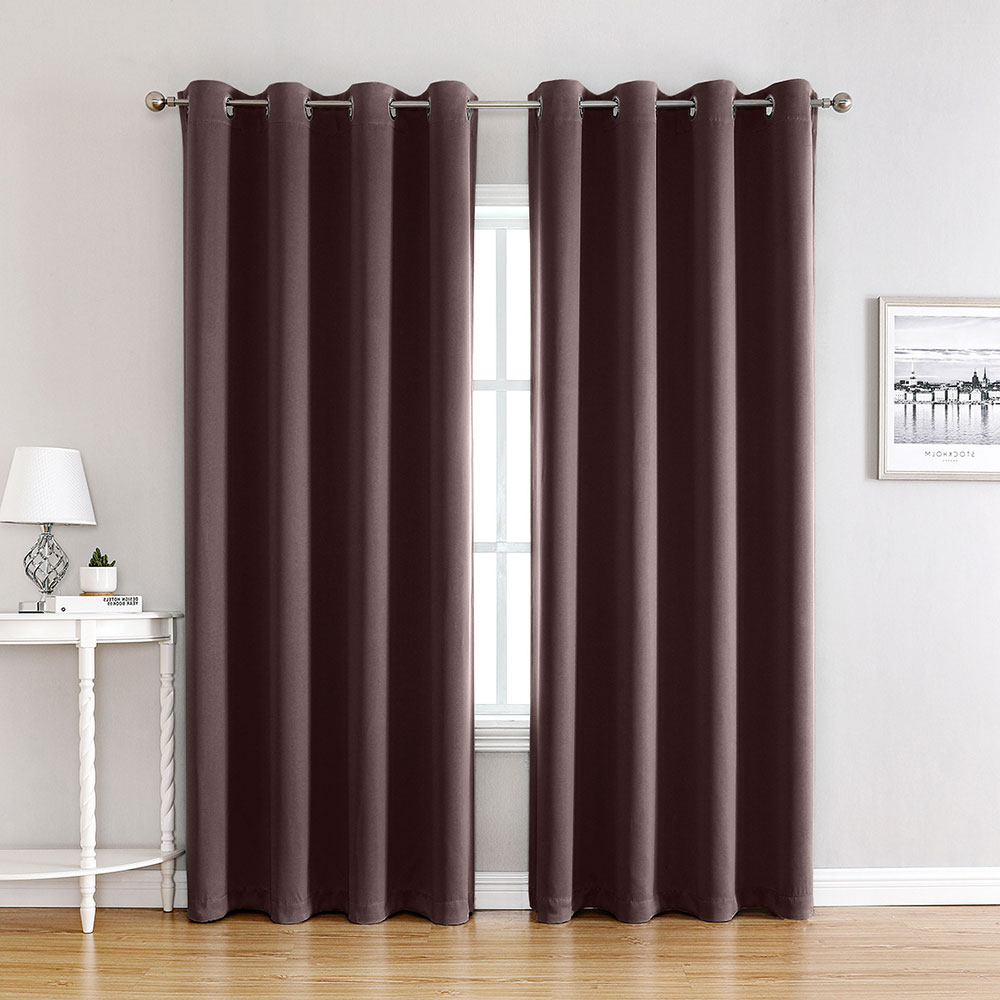
| Home and Interior Decoration | Sofa fabrics, curtains, carpets | To ensure the product maintains its aesthetic appeal and structural integrity during frequent daily friction. |
| Hotels and Public Spaces | Tablecloths, chair covers, stage curtains | To ensure excellent aesthetics and durability under high foot traffic and frequent use. |
| Transportation | Car, train, aircraft seat fabrics | To assess multiple properties—abrasion resistance, flame resistance, stain resistance—to ensure public safety and comfort. |
| Medical and Healthcare | Medical curtains, hospital bed covers | Must be both abrasion-resistant and withstand repeated industrial washing and disinfection. |
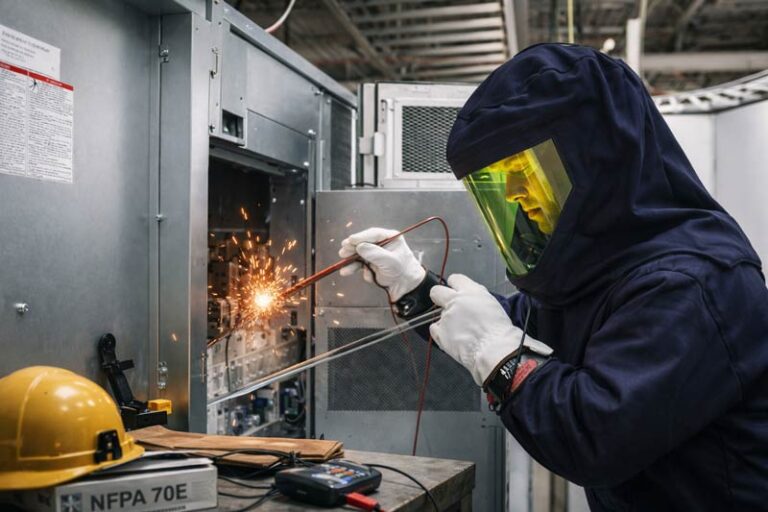
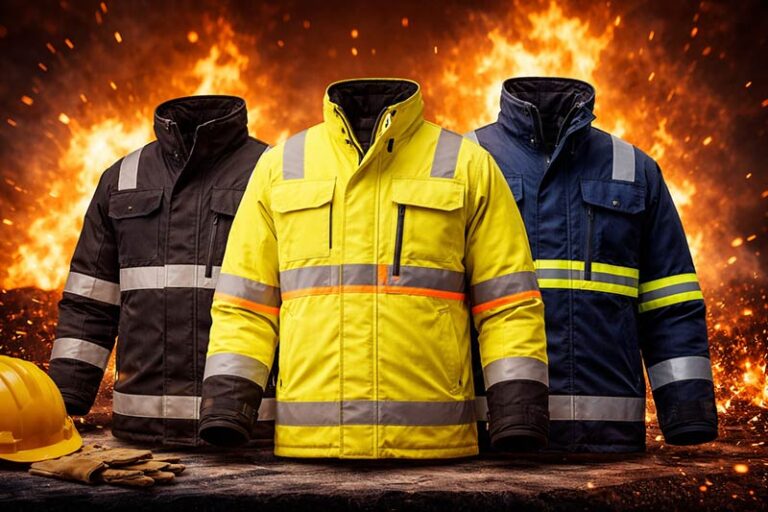
| Protection and Industrial | Flame-retardant workwear, cut-resistant gloves | To evaluate the fabric’s abrasion resistance and fundamental safety performance in harsh working environments. |
| Apparel and Fashion | Denim, sportswear, uniforms | To test the abrasion resistance of easily worn areas like elbows and knees, extending the garment’s life. |
An accurate test requires meticulous operation. Here are the details that must be paid attention to during testing:
Different countries and regions have adopted standards based on the Martindale method, but with slight differences in detail. Understanding these is crucial for product export.
| Country / Region | Standard Number | Standard Name | Main Application Fields |
| UK | BS EN ISO 12947 / BS 2543 | Textiles – Abrasion tests (Martindale method) | Furniture, apparel, curtains |
| EU | EN ISO 12947 | Same as above | Public spaces, transport vehicles |
| USA | ASTM D4966 / D3885 / D4157 | Standard Test Method for Abrasion Resistance of Textile Fabrics | Home furnishings, industry, aviation |
| China | GB/T 21196 | Test method for abrasion resistance of textiles (Martindale method) | Home textiles, flame-retardant fabrics |
| Japan | JIS L 1096 / L 0849 | Test Methods for Textiles – Abrasion | Uniforms, automotive interiors |
| Australia | AS 2001.2.25 | Textiles – Abrasion Test Methods | Upholstery fabrics |
| Russia | GOST R ISO 12947 | Textiles – Abrasion and pilling performance tests | Industrial fabrics, military/police uniforms |
| Item | ISO / EN | ASTM | GB/T | JIS |
| Abrasive Type | Wool fabric | Wool fabric / Sandpaper | Wool fabric | Wool fabric |
| Loading Pressure | 9 / 12 kPa | Same as ISO | Same as ISO | 9.8 kPa |
| Movement Trajectory | Lissajous curve | Lissajous curve | Lissajous curve | Elliptical trajectory |
| Judgment Standard | Yarn breakage or hole appearance | Same as ISO | Same as ISO | Significant change in appearance |
Different markets have clear minimum requirements for the abrasion resistance of textiles for various uses.
| Usage Environment | UK / EU | USA | China | Japan |
| Light Use | ≥20,000 | ≥10,000 | ≥15,000 | ≥10,000 |
| Moderate Use | ≥40,000 | ≥30,000 | ≥25,000 | ≥20,000 |
| Heavy Use | ≥60,000 | ≥50,000 | ≥40,000 | ≥40,000 |
| Extreme Heavy Use | ≥100,000 | ≥75,000 | ≥50,000 | ≥60,000 |

In public places such as hotels, theaters, hospitals, and transportation, safety is paramount. Therefore, fabrics in these fields must not only pass flammability tests but also meet the corresponding requirements for abrasion performance.
| Country / Standard | Flammability Standard | Abrasion Standard | Comprehensive Requirement |
| USA | NFPA 701 | ASTM D4966 | Flammability + |
| UK | BS 5867 Type C | EN ISO 12947 | Flammability + |
| EU | EN 13773 | EN ISO 12947 | Flammability + |
| China | GB 50222 | GB/T 21196 | Flammability + |
| Japan | JIS L 1091 | JIS L 1096 | Flammability + |
An excellent Martindale test result signifies much more than just a number:
The Begoodtex series of flame-retardant fabrics, including FR Velvet, FR Suede, FR Air Duct, and FR Curtain, have all undergone rigorous testing, achieving Martindale ratings from 20,000 to over 100,000 cycles, fully complying with the stringent standards of the global market.
The performance of Begoodtex products is outstanding. For example, its flame-retardant suede was independently tested by the internationally recognized testing authority, SGS. The test results clearly show that the fabric (100% Polyester Inherent Flame Retardant Suede Fabric) was tested according to the ISO 12947-2:2016 standard under a pressure of 12kPa for Martindale Abrasion Resistance. The final result exceeded 45,000 rubs. This authoritative data provides powerful proof of the exceptional durability of Begoodtex’s flame-retardant suede, confirming it can fully meet the demanding requirements of heavy-duty environments such as commercial spaces, hotel furniture, and public transportation.
If you need the relevant test report, you can click the link below to download it.
The Martindale test is not just a technical inspection; it is an international language for measuring textile abrasion performance and lifespan quality.
By simulating real-life friction scenarios, it provides a unified evaluation standard for designers, purchasers, and manufacturers, helping them achieve quantifiable, comparable, and verifiable quality assurance in product development and trade.
From home sofa fabrics to aircraft seating, from medical curtains to protective workwear, the varying test cycle standards across different industries reflect the severity of the usage environment and the requirements for the safety grade.
In today’s international market, the Martindale test is becoming one of the indispensable technical passes for global textile export and compliance certification.
For a professional functional fabric brand like Begoodtex®, passing high-standard Martindale testing not only signifies the product’s wear resistance and reliability but also symbolizes a commitment to customer safety, quality, and long-term value.
A1: The Martindale test is an international standard method that assesses a fabric’s abrasion resistance by repeatedly rubbing it against a standard abrasive under specified pressure.
A2: The cycle count indicates the number of friction times a fabric can withstand before showing damage or yarn breakage. A higher value means the fabric is more abrasion-resistant.
A3: Generally, over 40,000 cycles is considered a high abrasion resistance grade; fabrics exceeding 100,000 cycles are typically used in high-frequency environments like hospitals and transport vehicles.
A4: The main differences lie in the abrasive type, loading pressure, and judgment criteria. For example, ISO uses wool fabric abrasive and 9–12 kPa pressure, while the JIS standard uses an elliptical trajectory for testing.
A5: No, the test applies to multiple fields such as upholstery, curtains, medical fabrics, protective clothing, and transport interiors. Any fabric involving friction durability can be tested.
A6: In public spaces, fabrics must not only be fire-resistant but also durable to maintain safety and aesthetics over long periods of use, such as hotel curtains and aircraft seats.