Get in touch
Thank you for reaching out! Please tell us more about your needs — our expert team will get back to you within 24 hours.
Get in touch
Thank you for reaching out! Please tell us more about your needs — our expert team will get back to you within 24 hours.
Introduction: Unlocking the “Kaleidoscope” of Flame Retardant Standards
Have you ever been confused: “Why does a curtain exported to the UK need to comply with BS 5867, while the same product sold in the United States has to meet NFPA 701? Why can’t we just have one unified global standard?” This is an excellent question that goes to the heart of global product safety certification. In fact, the “kaleidoscopic” diversity of flame retardant standards is not accidental, but is determined by three core reasons:
This article will serve as your guide, systematically sorting out the 29 most common global flame retardant standards by application area. After reading this article, you will have a clear knowledge framework of the global flame retardant standard system.
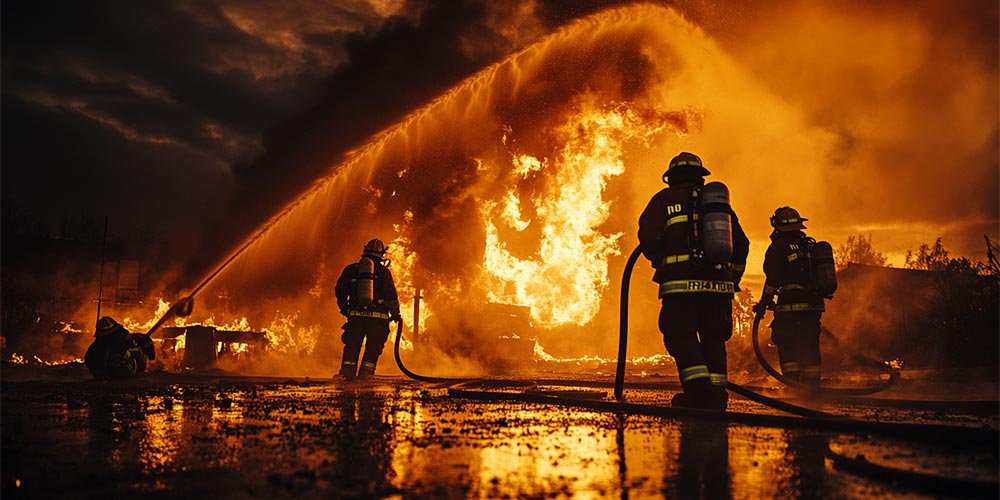
Flame retardant standards for homes and public places (such as hotels, theaters, and schools) are crucial. The primary goal of their existence is not to make materials completely “non-combustible,” but to effectively slow down the spread of flames and inhibit the generation of toxic smoke in the early stages of a fire, thereby buying valuable “golden time” for indoor personnel to evacuate. This chapter will cover four major categories of standards that are closely related to our daily life: upholstered furniture, bedding, curtains and decorative fabrics, and building materials.
| Standard Code | Main Country/Region | Core Application Area | Key Content and Test Focus Summary |
| BS 5852 (Upholstered Furniture) | United Kingdom | Upholstered furniture (sofas, cushions) | A series of testing standards for indoor upholstered furniture. “Crib 5” (wooden block with accelerant) is one of the high-intensity ignition sources used to simulate more severe fire scenarios. |
| CAL TB 117 (Technical Bulletin 117-2013) | United States (California) | Upholstered furniture (fabric, filling) | Specifies the cigarette smolder resistance and flame spread behavior of upholstered furniture components under cigarette or small flame conditions, and is an important standard for entering the California and US markets. |
| DIN EN 1021 — Teil 1 | Europe | Furniture components | Uses a “smoldering cigarette” as an ignition source to evaluate the ignition performance of covering materials and fillings upon contact with a cigarette. |
| DIN EN 1021 — Teil 2 | Europe | Furniture components | Uses a “small flame (butane flame/match)” as an ignition source to test whether furniture materials will continue to burn or spread when in contact with an open flame. It is usually used in combination with Teil 1. |
| BS 5815 (Bedding) | United Kingdom | Bedding for public institutions | Specifies the flammability performance requirements for bedding (such as quilts and sheets) used in public institutions such as hospitals and schools. |
| BS 7175 | United Kingdom | Bedding (bedspreads, pillows) | Defines a variety of ignition source tests for bedding ignition, of which “Source 7” is used to evaluate the performance of bedding when in contact with an open flame or smoking, and is suitable for high-requirement places such as hospitals and ships. |
| BS 7177 | United Kingdom | Mattresses, bedding | Standardizes the ignition resistance of mattresses and bed bases, and is usually used in conjunction with the EN 597 series of standards to evaluate their suitability for different hazard levels (residences, hotels, etc.). |
| GOST R 53294 | Russia | Bedding, furniture, curtains | A flammability test method for textile materials such as bedding, upholstered furniture, and curtains, used for ships, public, and civil buildings. |
| BS 5867 (Curtains, Tents And Decorative Fabrics) | United Kingdom | Curtains, window decoration fabrics | Divided into three grades: A, B, and C. “Type C” is the strictest grade, suitable for public places such as hotels and theaters, and focuses on flame spread, melt droplets, and afterflame after ignition. |
| CAN/ULC-S109-14 | Canada | Flame retardant fabrics and films | A small flame test method for fabrics such as curtains, drapes, and tents, which evaluates their combustion behavior under low-intensity fire sources. |
| CA Title 19 | United States (California) | Fabrics and tents in public places | “California Code of Regulations, Title 19” specifies the fire prevention regulations and certification process for stage drapes, exhibition fabrics, and tents used in California. |
| CPAI-84 | International | Camping tents | Developed by the International Camping Products Association, it specifically standardizes the ignition and flame spread performance of camping tent fabrics under small fire sources. |
| EN 13773 | Europe | Curtains, window decorations | A test specification for the combustion behavior of curtains. “Class 1” is the highest grade, and is usually used for public places and contract projects. |
| GOST R 50810-95 | Russia | Decorative fabrics | Specifies the combustion test methods and classification for decorative fabrics, curtains, and other textiles in Russia. |
| JIS L 1091 | Japan | General textiles | A Japanese Industrial Standard that specifies a variety of textile flame retardant test methods, widely used for clothing, curtains, and interior decoration. |
| NF P92-503-M1 | France | Flexible decorative materials | A French “reaction to fire” classification standard for flexible materials. “M1” represents a high level of flame retardancy, and is widely used in France and French-speaking countries. |
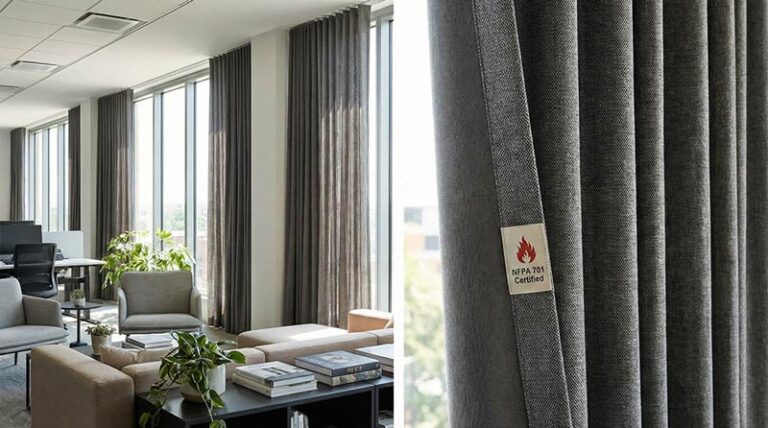
| NFPA 701 | United States | Vertical hanging fabrics | A flame spread test method for large vertical hanging fabrics such as stage drapes, curtains, and tents, widely used in public places such as theaters, hotels. |
| DIN 4102-B1 (Building And General Materials) | Germany | Building materials | A German building material “reaction to fire” classification standard. “B1” represents the “flame-retardant” grade, and is a commonly used flame retardant grade in Central Europe. |
| EN 13501-1 | European Union | Building products | A unified classification system for “reaction to fire” of building products in the European Union. It classifies materials into grades from A1 to F, and is accompanied by smoke (s) and droplet (d) indicators. |
| UNI 9177 | Italy | General materials | An Italian “material reaction to fire” classification standard. It is usually used in conjunction with test methods such as UNI 8457 and UNI 9174 to classify materials into grades from Classe 1-5, with “Classe 1” being the highest flame retardant grade. |
From our home environment and public spaces, we will now turn our attention to professional fields that provide protection for specific groups of people and high-risk environments.

Unlike general standards, the flame retardant standards for professional protective clothing have a more specific and rigorous goal. It is no longer just simple “flame-retardancy,” but rather to ensure that the wearer can be effectively protected from severe burns when facing specific industrial hazards (such as welding sparks and chemical flash fires). At the same time, it also provides additional safety protection for special groups of people (such as children) to prevent injuries caused by accidental contact with a fire source. This section will cover two major categories of standards: industrial protective workwear and children’s pajamas.
| Standard Code | Main Country/Region | Core Application Area | Key Content and Test Focus Summary |
| EN ISO 11611 (Industrial Protective Clothing) | Europe/International | Welding protective clothing | Specifies the performance requirements for protective clothing for welding and similar operations to resist welding spatter, short-term flames, and heat. |
| EN ISO 11612 | Europe/International | Heat and flame protective workwear | For industrial workwear that needs to prevent heat sources (such as radiant heat, molten metal splashes), it specifies multiple performance levels. |
| EN ISO 14116 | Europe/International | Limited flame spread protective clothing | Focuses on the “limited flame spread” performance of materials after contact with a small flame, aiming to prevent clothing from burning rapidly. It is often used as a supplementary evaluation to EN ISO 11612 / 11611. |
| NFPA 2112 | United States | Flash fire protective workwear | Specifies the design, fabric, and certification requirements for protective clothing in the petroleum, chemical, and other industries, and is specifically used to deal with the hazards of short-term heat exposure (flash fire). |
| CFR Part 1615 / 1616 (Children’s Pajamas) | United States | Children’s pajamas | A US federal mandatory flame retardant standard. 1615 is for sizes 0-6X, and 1616 is for sizes 7-14, which aims to protect children from pajama burns. |
In addition to fixed places and personal protection, there is another type of scenario where the requirements for flame retardant performance are extremely high—that is, mobile vehicles.
Why do vehicles such as airplanes and ships need to establish independent, extremely strict flame retardant standards? The answer lies in the special challenges they face: confined spaces, difficult evacuation, and difficult rescue. In these environments, if a fire occurs, the consequences are unimaginable. Therefore, the interior materials used in these vehicles, from seat fabrics to curtains and wall coverings, must undergo the most rigorous tests to ensure that the fire is delayed as much as possible, the smoke toxicity is reduced, and a chance of survival is created for passengers and crew. This section will introduce the authoritative standards in the two major fields of aviation and maritime.
| Standard Code | Main Country/Region | Core Application Area | Key Content and Test Focus Summary |
| FAR 25.853 (Aviation) | United States/International | Civil aircraft cabin interior materials | A Federal Aviation Administration (FAA) standard that puts strict requirements on the combustion, smoke, and toxicity of cabin interiors (seats, wall panels, carpets, etc.), and is a necessary condition for aircraft airworthiness certification. |
| IMO FTPC Part 7 (Maritime – IMO) | International | Vertical hanging textiles | An International Maritime Organization (IMO) standard that specifies the combustion test methods for vertical textiles and films (such as curtains and wall coverings) inside ships and evaluates their flame spread performance. |
| IMO FTPC Part 8 | International | Upholstered furniture | Specifies the combustion test methods for upholstered furniture (sofas, mattresses) used in ships to ensure that they will not burn rapidly due to small fire sources (cigarettes, small open flames). |
| IMO FTPC Part 9 | International | Bedding components | Specifies the ignition test for bedding (sheets, quilt covers) used in ships to evaluate their flame retardancy and ensure that they do not become accelerants in a fire. |
By sorting out the standards in the three major fields of living spaces, professional protection, and vehicles, we can clearly see the internal logic of the global flame retardant system.
Now, let’s go back to the original question: “Why are there so many standards?” Through the sorting in this article, the answer is clearly presented to us.
For beginners, you don’t need to memorize every standard code. What is more important is to understand the classification logic behind these standards—categorized by application area and risk level. When you master this framework, you can quickly look up and apply the corresponding standards according to specific products and markets in your future work or study, and truly put what you have learned into practice.
The diversity of global flame retardant standards stems from three core reasons: differences in legal and regulatory systems, varying application scenarios and risks for different products (e.g., furniture, aircraft materials), and the unique combustion properties of different materials that require specific testing methods.
The article divides global flame retardant standards into three main categories: standards for living and public spaces (e.g., furniture, curtains), professional protective fields (e.g., industrial workwear, children’s pajamas), and special vehicles (e.g., aircraft, ships). This classification helps to understand and apply the appropriate standards based on different application scenarios and risk levels.