Get in touch
Thank you for reaching out! Please tell us more about your needs — our expert team will get back to you within 24 hours.
Get in touch
Thank you for reaching out! Please tell us more about your needs — our expert team will get back to you within 24 hours.
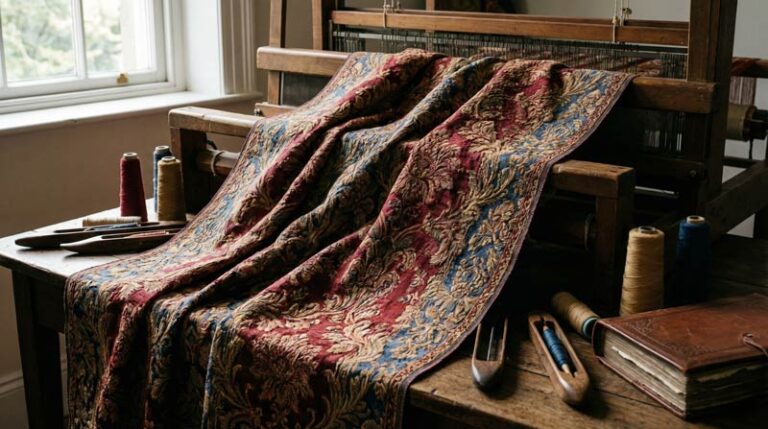
Taffeta is a crisp, smooth, plain-weave fabric known for its lustrous shine and unique “rustling” sound. Historically made from silk, modern taffeta is often crafted from polyester or nylon for durability and affordability. It is widely used in high-end gowns, linings, curtains, and even outdoor gear like tents. However, standard taffeta is highly flammable. Because it is thin and often made of synthetic fibers, it can melt and burn rapidly. For commercial use, you must look for specialized “Flame Retardant” versions to ensure safety and compliance with fire codes.
图片占位:Close-up of shiny taffeta fabric showing its smooth surface and crisp folds
Taffeta is one of the oldest and most recognizable luxury fabrics in the world. The word comes from the Persian word “tafteh,” which means “woven.”
Unlike satin, which is slippery and soft, taffeta is crisp and stiff. It is made using a simple plain-weave technique, where the lengthwise (warp) and crosswise (weft) threads cross each other one at a time. This creates a tight, high-density structure that holds its shape incredibly well.
For centuries, taffeta was made exclusively from silk and was worn only by royalty and the wealthy. In the 20th century, the invention of synthetic fibers changed everything. Today, while silk taffeta still exists for high-fashion, polyester and nylon taffeta are the industry standards for everything from coat linings to industrial covers.
Manufacturing taffeta today is a high-speed digital process designed for consistency. Here is the streamlined production journey:
Manufacturers choose between natural silk or synthetic polymers like polyester. For safety-critical projects, inherently flame-retardant (IFR) fibers are chosen at this stage to ensure the fabric is fire-safe from the very beginning.
The raw materials are spun into fine, high-tenacity yarns. Many taffetas are “yarn-dyed,” meaning the threads are colored before they are woven. This is what gives the fabric its signature iridescent or “changeable” look when it moves in the light.
The yarn is loaded onto high-speed looms. Taffeta is woven very tightly to achieve its signature stiffness. The density is often measured in “T” (like 190T or 210T), which counts the number of threads per square inch.
After weaving, the fabric may receive a “calendering” treatment—passing it through hot rollers—to increase its gloss. For industrial or commercial use, this is also when additional flame-retardant or waterproof coatings are applied.
图片占位:Industrial weaving machine producing high-density polyester taffeta
Why do designers keep coming back to taffeta? It offers a set of physical properties that few other fabrics can match:
| Material | Characteristics | Best Used For |
|---|---|---|
| Silk Taffeta | The original luxury version. High sheen, very crisp, but expensive. | Wedding gowns, high-end decor. |
| Polyester Taffeta | Affordable, durable, and wrinkle-resistant. | Linings, curtains, ribbons. |
| Nylon Taffeta | Extremely strong and weather-resistant. | Windbreakers, umbrellas, tents. |
| Paper Taffeta | An ultra-thin, almost parchment-like version. | Contemporary fashion accents. |
Taffeta is a “workhorse” fabric that appears in more places than you might realize:
图片占位:A luxury evening gown made of stiff, shiny taffeta fabric
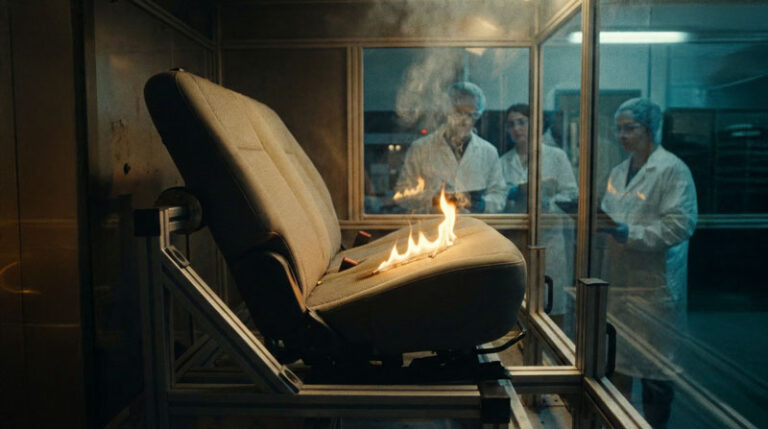
This is where safety becomes the priority. Standard taffeta is not fireproof. In fact, its structure and material makeup often make it a fire risk in certain environments.
The “Taffeta” name refers to the weave structure, not the safety level. A plain weave provides no protection against heat. Because taffeta is usually thin, oxygen can reach the fibers easily, allowing flames to spread rapidly across the surface.
Most modern taffeta is made from polyester or nylon. When these synthetic fibers catch fire, they don’t just burn—they melt. This creates hot, plastic-like “drips” that can cause severe skin burns or ignite other materials nearby (like carpets or furniture). This makes untreated taffeta a major liability in public spaces.
To meet modern safety laws, taffeta must be modified. There are two primary ways manufacturers do this:
In this version, the fire resistance is built into the molecular structure of the yarn before it is even woven.
Standard taffeta is dipped in a chemical fire retardant after production. While effective at first, these chemicals can dissipate over time or wash out during laundry, requiring the fabric to be retreated.
If you are working on a hotel, theater, or any public building, using FR taffeta is often a legal requirement.
“In a fire, seconds count. Flame-retardant fabrics like IFR taffeta don’t support combustion—they self-extinguish as soon as the flame source is removed.”
By choosing a solution from Begoodtex, you ensure that your project meets international standards such as NFPA 701 (for curtains) or BS 5852 (for linings and upholstery) without sacrificing the aesthetic beauty of the fabric.
图片占位:Comparison of untreated taffeta burning vs FR taffeta self-extinguishing
Taffeta is a versatile, high-density fabric valued for its crispness and shine. While it is a designer favorite for its structural beauty, its high flammability—especially in synthetic forms—cannot be ignored. For any commercial or safety-conscious application, Flame Retardant Taffeta is essential. Choosing a permanent IFR solution like those from Begoodtex provides the perfect balance of luxury, durability, and life-saving safety.
No. Satin has a soft, slippery feel and a very high shine on one side. Taffeta is much stiffer, crisper, and has a more subtle, uniform gloss on both sides.
Yes, unless it has been specifically treated with fire-retardant chemicals or made with IFR yarns. Standard polyester will melt and burn when exposed to a flame.
If it is Inherently Flame Retardant (IFR), yes, you can wash it as much as you like. If it has a chemical coating (FR-treated), you must follow the care label carefully, as washing may eventually remove the fire protection.
Modern IFR fibers feel exactly like normal fibers. However, some cheap chemical coatings can make taffeta feel slightly more “plastic-like” or stiff.
IFR taffeta provides a “set it and forget it” safety solution. It passes fire inspections year after year, saving the cost of retreating the fabric and ensuring constant guest safety.
The “T” stands for thread count. A 210T taffeta has 210 threads per square inch, making it denser and more durable than a 190T version.