Get in touch
Thank you for reaching out! Please tell us more about your needs — our expert team will get back to you within 24 hours.
Get in touch
Thank you for reaching out! Please tell us more about your needs — our expert team will get back to you within 24 hours.
Acrylic is an extremely common synthetic fiber, widely used in apparel, home textiles, and industrial fields due to its lightweight, warm, and wool-like feel. However, the “flammability” of regular acrylic fabric remains a critical industry focus, especially as global markets impose increasingly strict fire safety standards, presenting significant challenges for exporters. Many are confused about the difference between acrylic and its “modified” version, Modacrylic. This guide will thoroughly clarify the fundamental differences from a technical perspective to help you make compliant and safe choices.
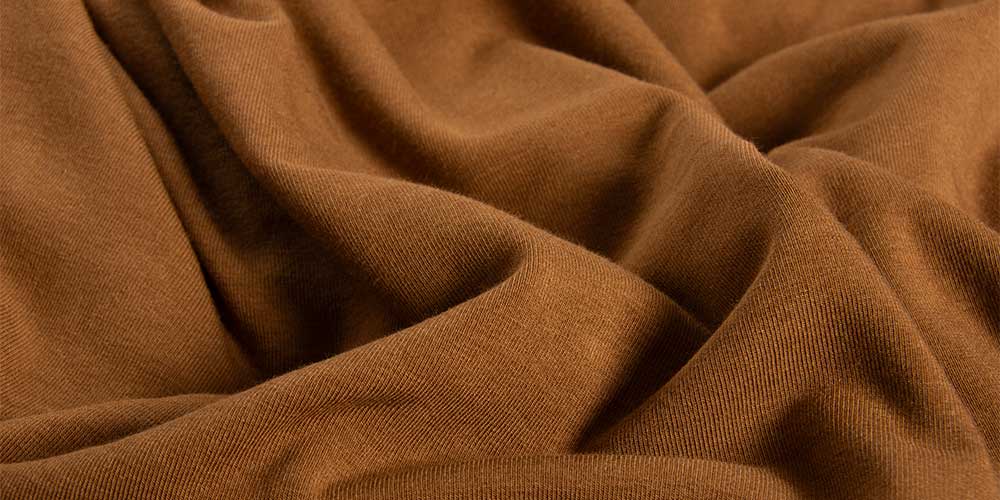
The conclusion regarding the flammability difference between Acrylic and Modacrylic is unequivocal: regular acrylic is a flammable fiber, while modacrylic is a flame-resistant fiber. Although their names are similar, they have fundamental differences in chemical structure, burning behavior, and safety applications.
Acrylic Fiber is a synthetic fiber polymerized from acrylonitrile monomers. According to the authoritative definition from the U.S. Environmental Protection Agency (EPA), the weight percentage of acrylonitrile units in acrylic fiber is at least 85%. It is a common textile raw material, but it is highly flammable, burns rapidly, and has a low Limiting Oxygen Index (LOI), classifying it as a flammable material.
Modacrylic Fiber is a chemically modified acrylic fiber. Also according to the EPA‘s definition, the weight percentage of acrylonitrile units in modacrylic fiber is less than 85%, but at least 35%. During polymerization, they are co-polymerized with a significant amount of flame-retardant comonomers (such as chlorine or phosphorus-containing monomers). This structure gives them natural, permanent flame resistance, classifying them as “Inherent FR” (Flame-Resistant) fibers with self-extinguishing properties.
According to official U.S. EPA documentation, both fibers are synthetic polymer fibers with acrylonitrile as the main monomer. They have a wide range of uses, such as in the production of carbon fiber, apparel, home furnishings, carpets, and other industrial and consumer products (like paint roller covers). Because the production process involves acrylonitrile, the EPA has established National Emission Standards (NESHAP) to regulate hazardous air pollutant emissions during production. This reflects the industrial importance of these materials and the seriousness of their regulation.
The vast difference in flammability between acrylic and modacrylic is primarily determined by their Limiting Oxygen Index (LOI), which in turn stems from their different chemical structures.
The Limiting Oxygen Index (LOI) is a critical metric for measuring a material’s fire performance, indicating the minimum oxygen concentration required to sustain combustion. The higher the LOI value, the more flame-resistant the material. Typically, fabrics with an LOI below 20% are considered flammable.
The LOI difference between the two is determined by their molecular chain structure:
Under actual fire conditions, regular acrylic will accelerate a fire, while modacrylic effectively stops flame spread. Their behaviors are completely different.
Regular acrylic is a highly flammable material. Its chemical structure makes it extremely dangerous when exposed to a flame source. When it makes contact with fire, it burns rapidly and will continue to burn even after the flame source is removed.
Its primary hazards are:
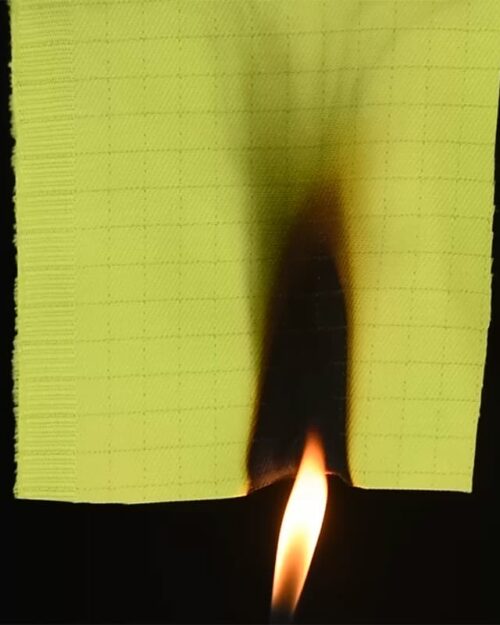
Modacrylic is a flame-resistant material. When exposed to a flame source, it will soften and shrink but does not melt and drip. It chars slowly, forming a barrier. Its most critical feature is that it is Self-extinguishing; as soon as the flame source is removed, combustion stops immediately, effectively preventing the fire from spreading and not producing toxic gases on the same level as regular acrylic.
To obtain “acrylic-like” products with flame-resistant properties, there are two distinct technical paths in the market:
This is the safest and most stable method. Instead of using regular acrylic, one directly chooses the Modacrylic fiber mentioned above. Its flame resistance comes from the fiber’s chemical structure, making it permanent. It will not degrade or disappear with washing or wear.
Regular acrylic fabric can also have its fire performance significantly improved through FR treatment technology. This method involves chemically adding flame retardants at the finished fabric stage.
Although the two are very similar in appearance and feel—both are soft, lofty, warm, and easy to dye—they differ vastly in safety performance, technical specifications, and cost.
| Performance Item | Regular Acrylic | Modacrylic |
|---|---|---|
| Chemical Structure (EPA Standard) | ≥85% Acrylonitrile | 35–85% Acrylonitrile + FR Comonomers |
| Fiber Property | Regular Chemical Fiber | Inherent FR Fiber |
| Flammability Rating | Flammable | Flame-Resistant / Self-Extinguishing |
| LOI (Limiting Oxygen Index) | 17–20 (Flammable) | 26–33 (Flame-Resistant) |
| Behavior After Flame Removal | Continues to burn | Self-extinguishes |
| Melting & Dripping | Will drip (Hazardous) | Minimal/No Drip / Chars |
| Smoke Volume | Heavy black smoke | Low to medium smoke |
| Source of FR Property | Requires FR Treatment | Natural (Inherent) |
The table below compares the fire performance of untreated regular acrylic with other common fibers:
| Material | Burning Speed | Melting/Dripping | Toxic Gas Release | Fire-Resistance Rating |
|---|---|---|---|---|
| Acrylic | Fast | High | Cyanide, etc. | ★★ |
| Cotton | Medium | None | None | ★★★ |
| Polyester | Slow | Slight | Low | ★★★★ |
| Nomex (Aramid) | Does not burn | None | None | ★★★★★ |
| Kevlar (Aramid) | Does not burn | None | None | ★★★★★ |
Note: Fire-Resistance Rating is a relative comparison.
Due to the fundamental difference in flammability, exporters must be extremely cautious when selecting fabrics to ensure products comply with target market safety regulations.
The application areas for these two fibers have almost no overlap. The wrong choice will lead to severe safety risks and compliance issues.
| Use Category | Regular Acrylic | Modacrylic |
|---|---|---|
| Apparel & Knitwear | ✔ Common | ✔ Usable (Higher safety) |
| Industrial Protective Wear (FR) | ✘ Absolutely Prohibited | ✔ Core Material (FR Workwear) |
| FR Curtains / Stage Drapes | ✘ Unsuitable | ✔ Standard Material (NFPA 701) |
| Home Textiles | ✔ Common | ✔ Recommended (Safer) |
| Transportation Interiors (Aviation/Rail) | ✘ Unsuitable | ✔ Standard Material |
For textile exporters, selecting acrylic fabrics that meet international fire standards is crucial.
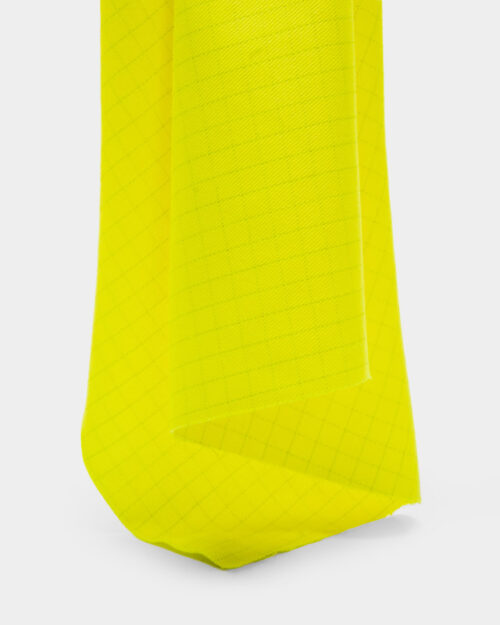
For exporters needing high-standard FR solutions, ensuring supply chain professionalism is critical. For example, Begoodtex’s line of inherent FR Modacrylic fabrics is designed specifically to meet these stringent international standards, helping clients easily meet global market compliance demands.
Want to understand the differences in flammability, flame-resistant ratings, and LOI (Limiting Oxygen Index) among various fibers? We have compiled a list of related professional articles to help you quickly determine if a material is safe and suitable for use as a flame-resistant fabric, click the link below to view quickly:
Yes, highly flammable. Regular acrylic has an LOI of only 17–20, far below the air’s oxygen concentration. It ignites easily, burns fast, melts and drips, and releases toxic gases like cyanide.
Because modacrylic incorporates chlorine or phosphorus-containing flame-retardant comonomers during its chemical polymerization stage. This gives the fiber itself flame resistance (known as “Inherent FR”). When it encounters a flame, it releases combustion-inhibiting substances and forms a char layer, allowing it to self-extinguish upon flame removal.
Yes, regular acrylic can be made flame-resistant through “FR Treatment.” This technique usually involves adding chemical flame retardants or coatings to the fabric. However, its disadvantage is that the flame resistance may diminish with washing, unless a specific durable FR treatment technology is used.
Yes. The price of modacrylic is significantly higher than regular acrylic. This is because it adds more costly flame-retardant comonomers during manufacturing, and the production process is more complex. However, it provides permanent, reliable inherent flame resistance.
Exporters must choose fabrics that meet international fire standards (e.g., NFPA 701, ASTM F1506). When purchasing, they must explicitly require the supplier to provide proof of whether it is “Inherent FR” (Modacrylic) or “FR-treated Acrylic,” and request corresponding LOI test reports and wash durability test reports.