Enter your details and we will send the requested document to your inbox.





Featured snippet: Fiberglass fabric is a Class A1 non-combustible material — it does not burn, drip, or release toxic smoke. Its fire resistance comes from its inorganic glass structure rather than chemical treatment, and it withstands continuous heat of 450–1000°C depending on grade (E-glass vs. high-silica).
Fiberglass fabric is the quiet workhorse behind most industrial fire protection and high-temperature insulation. As an internationally recognized A1-rated non-combustible material, it outperforms ordinary textiles whenever heat and flame are part of the job. This guide breaks down why fiberglass fabric is physically non-combustible, where its temperature limits sit, and how to avoid costly mistakes when you buy it.
Simply put, fiberglass fabric turns “hard glass” into “soft cloth” through a high-tech process. It is a high-performance inorganic material made from glass (primarily silicon dioxide, SiO₂). The production process resembles steelmaking: glass raw materials are melted at 1200–1600℃, drawn into filaments, plied, and woven into a fabric structure.
That inorganic body gives the fabric a dual nature. It keeps the flexibility and bendability of a textile while inheriting the hardcore genes of glass — inherently non-combustible, corrosion-resistant, and heat-resistant. Unlike an organic flame-retardant fabric that relies on surface chemistry, glass fiber needs no coating to resist fire.
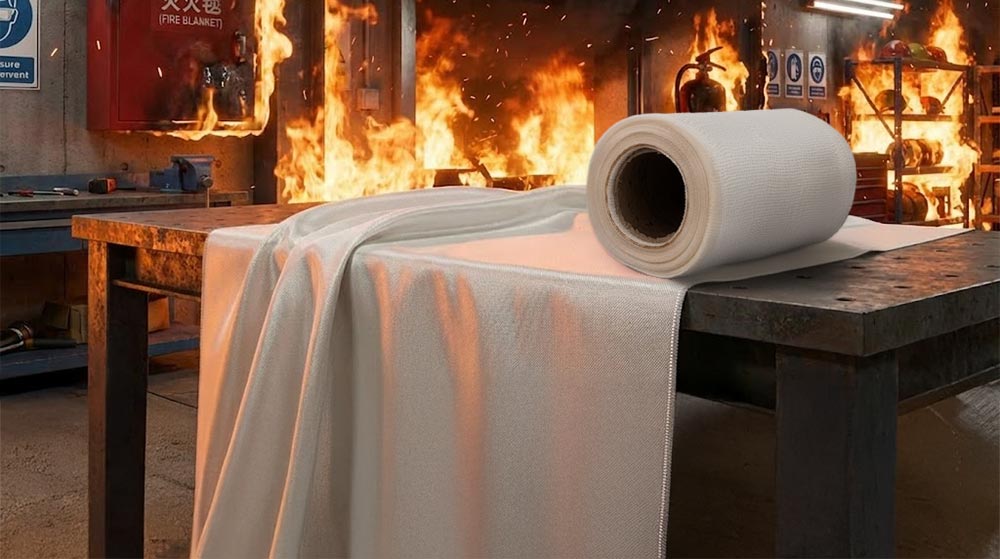
The answer is clear: fiberglass fabric is “fireproof / non-combustible,” a level well above “flame-retardant.” It is an inherently A1-class non-combustible material. Its protection comes from its microscopic physical and chemical structure, not from a surface treatment that can wash off.
The limiting oxygen index (LOI) of fiberglass fabric is theoretically infinite — it cannot be ignited under normal atmospheric oxygen. Under direct flame it shows perfect inertness: it will not burn, produce flames, spread fire, drip, or release toxic smoke. Only when temperature crosses its physical limit (typically above 750–850℃) does it soften and melt back into a glass state rather than char or burn. Learn more about the limiting oxygen index (LOI) and how it ranks fibers.
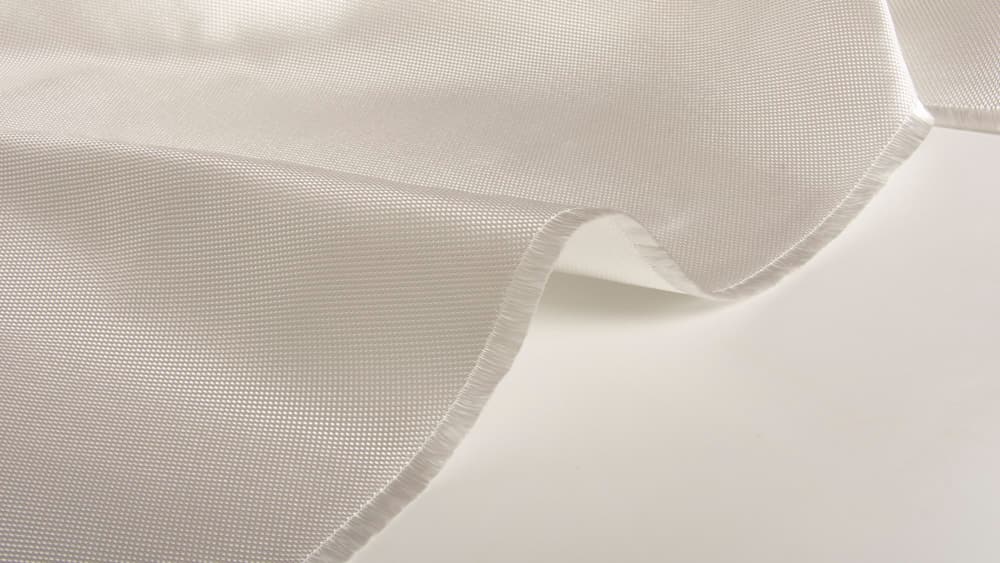
Thanks to its physical structure, fiberglass fabric combines high-temperature resistance with thermal insulation.
As an industrial-grade fireproof material, fiberglass fabric has irreplaceable strengths in specific scenarios — but also hard physical limits. Knowing the pitfalls is the key to buying the right material.
Pros
Cons
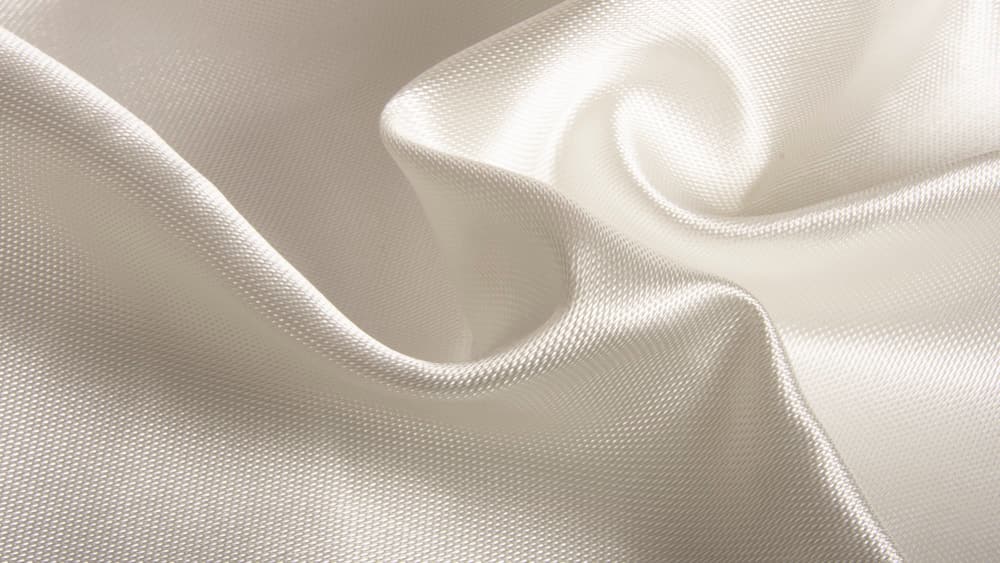
Here is how fiberglass fabric stacks up against the two alternatives buyers ask about most.
| Item | Fiberglass Fabric | FR Viscose |
| Fire rating | A1 fully non-combustible | Flame retardant (LOI 28–32) |
| Temp limit | 550–1000℃+ | Chars around 200℃ |
| Tactile feel | Hard, itchy | Silky, skin-friendly |
| Application | Equipment protection, construction | Underwear, protective workwear |
See how FR viscose compares on flammability and LOI.
| Item | Fiberglass Fabric | Aramid |
| Core feature | Extreme heat resistance (static) | High strength (dynamic) |
| Cost | Low (≈ $1–8/sqm) | High (≈ $30–100+/sqm) |
| Application | Industrial insulation, fire curtains | Firefighter suits, body armor |
For the full picture, read our aramid fabric guide.
 Acoustic Inherent Flame Retardant Textured Woven Fiberglass Fabric Dark Blue for Equipment Covers with Bulk Order Support | 300 g/m² | 100 cm
 Acoustic Inherent Flame Retardant Woven Fiberglass Fabric Black for Commercial Equipment Cover Projects | 435 g/m² | 100 cm
 Acoustic Inherent Flame Retardant Woven Fiberglass Fabric for Insulation with OEM Production Support | 315 g/m² | 100 cm
 Inherent Flame Retardant High Silica Fiberglass Fabric for Contract Insulation Projects | 600 g/m² | 100 cm | EN ISO 14116
Built on its “non-combustible + thermal insulation” dual nature, the fabric serves seven professional sectors:
Standard textile-grade fiberglass (fiber diameter ≥ 9μm) is not classified as a respirable fiber and carries no asbestos-like risk; it is considered safe and non-toxic. However, broken micro-fibers can mechanically irritate the skin. Wear gloves when handling, or choose coated products to reduce loose fibers.
The difference is temperature rating. Standard E-glass resists continuous 550℃, fine for general industrial insulation. High-silica fabric is acid-leached to over 96% SiO₂, withstanding continuous 1000℃ and instantaneous 1400℃ shocks — the top choice for extreme environments like steel smelting.
Burn test — Apply direct flame for 30 seconds; it should stay non-combustible, with no black smoke and no dripping.
Check labeling — Legitimate products clearly mark the temperature rating (e.g., 550℃ or 1000℃).
Verify certificates — Request an A1 non-combustible certificate (GB 8624 or EN 13501-1).
Not directly. Its stiff, brittle fibers irritate skin and it drapes poorly, so it is not suited to everyday garments or home drapery. For fire curtains and industrial barrier textiles it works well; for wearable protection, aramid or FR viscose are the better fit.
The key marks are EN 13501-1 (Euroclass A1/A2) and China’s GB 8624 A-level. Products are also tested to NFPA 701 for curtains and blankets. Always ask the supplier for the specific certificate matching your market. For an external reference on fire-testing requirements, see the National Fire Protection Association.
This fabric earns its place wherever non-combustibility and heat resistance matter more than softness or drape. Its inorganic glass structure makes it physically unable to burn, with temperature limits from 550℃ (E-glass) to 1000℃+ (high-silica). It beats organic alternatives on cost for large industrial areas, though it demands careful handling and professional finishing.
When you specify this fabric, match the grade to the temperature and verify the certificate for your market. Browse the full fireproof fiberglass fabric category or contact our team for OEM and specification support.
