Enter your details and we will send the requested document to your inbox.





Choosing between aramid and FR-treated cotton is one of the most common decisions buyers face when specifying protective clothing. The core difference between aramid fabric and FR-treated cotton fabric lies in their flame-resistant mechanism and protection durability. Aramid is an “Inherent Flame Resistant” (IFR) fiber; its fire resistance comes from its molecular structure, making it permanent. It also carbonizes with high strength and does not melt or drip. FR-treated cotton, on the other hand, is a flammable cotton fiber that has undergone a “Treated FR” chemical process to gain flame resistance—a property that can degrade with washing and use.
In short, aramid provides a higher level of reliable, permanent thermal protection, while FR-treated cotton is a more cost-effective and comfortable basic protection option. For the full molecular picture, read our comprehensive guide to aramid fabric.
Featured Snippet: Aramid is an inherently flame-resistant (IFR) fiber whose fire protection is permanent and built into its molecular structure—it never washes out. FR-treated cotton gains flame resistance from a chemical finish that degrades with washing. Choose aramid for high-risk protection where failure is not an option; choose FR cotton for comfort and lower cost in low-to-medium risk work.
Before comparing performance, you have to understand why these two fabrics behave differently under fire. The answer is structural, not cosmetic.
Aramid’s flame resistance is part of its chemical “DNA.” Its aromatic polyamide molecular structure is inherently heat-stable. When it encounters flame, it activates passive protection mechanisms, including heat absorption, dehydration, and the rapid formation of a dense, strong char layer on its surface. This char layer insulates heat, blocks oxygen, and stops the fire from spreading, allowing it to self-extinguish. For the detailed mechanism, read why aramid is flame resistant.
If your specification calls for an inherently flame resistant polyester fabric rather than aramid, BEGOODTEX’s inherently flame resistant polyester fabric range delivers permanent FR protection at a lower cost point than aramid for many applications.
Cotton itself is a highly flammable natural fiber. FR-treated cotton is made using chemical processes (like Proban® or Pyrovatex®) to “graft” flame retardants onto the cotton fibers, either through chemical bonding or physical adhesion. When exposed to flame, these chemicals activate, interrupting the combustion process by catalyzing the cotton’s dehydration and carbonization or by releasing inert gases to dilute oxygen.
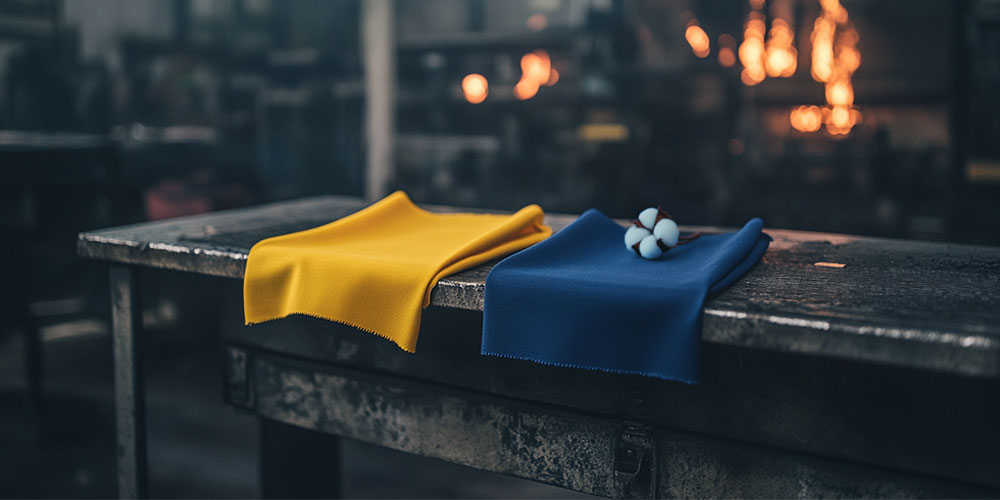
Now that we understand the mechanistic differences, let’s look at how they perform in the real world across the four dimensions buyers actually weigh.
Conclusion: In high-risk environments (like flash fires or electric arcs), aramid provides a superior level of thermal protection.
Conclusion: Aramid offers “permanently reliable” protection, whereas FR cotton’s protection requires “correct maintenance.” Buyers who cannot guarantee controlled laundering should weigh this heavily.
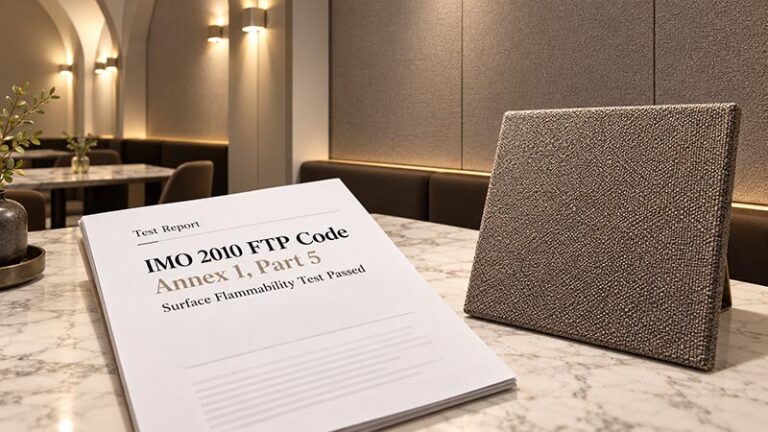
Every BEGOODTEX fabric ships with TÜV SÜD certified test reports so you can verify wash-durability and FR performance claims before purchase.
Conclusion: If comfort is the primary consideration, FR-treated cotton has the advantage. To understand how inherent FR technology is engineered for comfort, see our technology overview.
Conclusion: Aramid is the clear winner in “lightweighting” and “durability.”
| Comparison Dimension | Aramid | FR-Treated Cotton |
| FR Mechanism | Inherent FR | Treated FR |
| Protection Durability | Permanent (no degradation) | Limited (degrades with washing) |
| Reaction to Fire | Carbonizes, no drip | Carbonizes, no drip |
| Thermal Protection | Very high (stable char) | Good (brittle char) |
| Comfort | Fair (stiff, low absorption) | High (soft, breathable, wicking) |
| Physical Strength | Very high (abrasion resistant) | Average |
| Initial Cost | High | Low |
| Total Lifecycle Cost | Lower (long life) | Higher (frequent replacement) |
There is no absolute “better” or “worse” between aramid and FR-treated cotton, only “more suitable” or “less suitable.” The choice depends on the specific application scenario and the international flame-retardant standards that must be met. For the full list of standards aramid can pass—NFPA 2112, EN 11612, NFPA 701, and DIN 4102-B1—see the textile standards reference from NFPA.
When protection is the non-negotiable first priority, choose aramid. Its applications include:
Beyond PPE, inherently flame-resistant fabrics also serve flame retardant theater curtains and flame retardant medical curtains, where permanent, no-drip protection matters just as much as in clothing.
 Fireproof Oxidized PAN Aramid Composite Fabric NFPA 2112 Wholesale
 Fireproof Aramid Mesh Fabric UL for Flame-Resistant Garment Projects with Wholesale Supply Options | 135 g/m² | 150 cm | EN ISO 11612
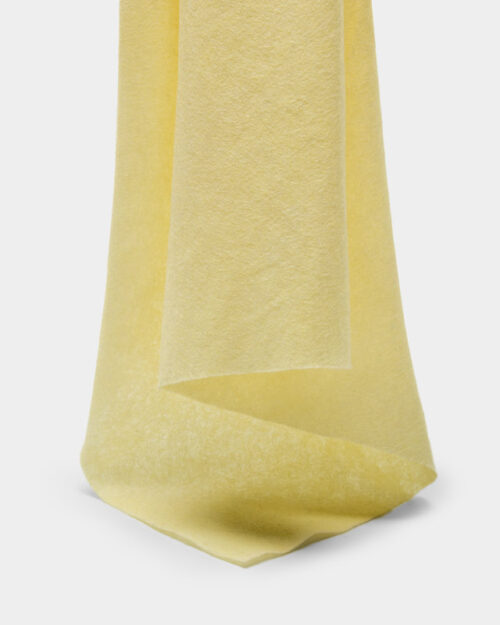 Inherent Flame Retardant High-Strength Para-Aramid Spunlace Non-Woven Fabric for Equipment Covers | 65 g/m² | 150 cm | EN ISO 14116
When a balance must be struck between “Protection,” “Comfort,” and “Cost,” FR-treated cotton is a reasonable choice:
 Inherent Flame Retardant Durable Cotton-Nylon Ripstop Fabric for Protective Workwear Production | 150 g/m² | 150 cm | EN ISO 11612
 Inherent Flame Retardant Heavyweight Cotton-Nylon Blended Fabric High ATPV Arc Flash and Durable Workwear | 450 g/m² | 150 cm | ASTM F1506
 Inherent Flame Retardant High-Count Cotton-Nylon Blended Plain Weave Shirting Fabric for Workwear | 150 g/m² | 148 cm | EN ISO 11612
Aramid represents the “performance benchmark” in flame-retardant technology, providing permanent, reliable, and uncompromising safety protection for high-risk environments. FR-treated cotton is the “economical and practical” solution, balancing comfort and cost for low-to-medium risk applications. Understanding the fundamental differences between these two materials is the first step for an enterprise to correctly equip its employees with the right Personal Protective Equipment (PPE).
When you are ready to specify, contact our FR fabric specialists for samples, test reports, and application guidance.
To help you quickly locate the information you need, we have summarized all knowledge about aramid into the following seven topics. You can browse the “Key Points” for a quick summary or click the title to read the full in-depth guide.
| Category | Topic Guide | Key Points |
| Mechanism | Aramid Fabric Explained | A Comprehensive Guide to Aramid Fabrics: From Molecular Structure to Ultimate Fireproof Performance |
| Structure | Why Is Aramid Flame Resistant? | Core Principle: Aramid relies on high-bond-energy aromatic ring structures to resist heat. It forms a protective char layer when burning, blocking oxygen and heat, and does not melt or drip, achieving self-extinguishing. |
| Comparison | What Is the Difference Between Aramid 1313 and 1414? | Core Difference: 1313 (Meta-Aramid) excels in heat resistance and flame retardancy (e.g., firefighting suits). 1414 (Para-Aramid) is renowned for ultra-high strength (e.g., body armor). |
| Standards | Which International Flame Retardant Standards Does Aramid Pass? | Authoritative Certification: Aramid can pass the world’s strictest FR tests, such as NFPA 2112 for apparel, EN 11612 (Europe), and NFPA 701 / DIN 4102-B1 for public spaces. |
| Applications | What Are the Typical Applications for Aramid Fabric? | Application Fields: Aramid is widely used in firefighting suits, aerospace interiors, electric arc protection, industrial heat insulation, and fire curtains. |
| Eco-Safety | Is Aramid Eco-Friendly and Non-Toxic? | Safety & Eco-Friendliness: Aramid is halogen-free, with low smoke toxicity and no dioxin release. It can be OEKO-TEX® Standard 100 certified. |
| Products | What Are the Aramid Product Classifications? | Product System: Aramid products are categorized into Aramid Fibers, Aramid Yarns, Aramid Fabrics, and Deep-Processed Products. |
The key difference is the FR mechanism. Aramid is “Inherent FR,” meaning its flame resistance is a permanent part of the fiber’s molecular structure. FR-treated cotton is “Treated FR,” meaning its protection is a chemical finish that degrades with washing.
Aramid offers superior, permanent thermal protection and durability, making it better for high-risk environments (e.g., flash fires). FR cotton is a more comfortable and cost-effective option for low-to-medium risk applications where proper laundering is controlled.
Yes, the FR properties of treated cotton are durable but not permanent. They degrade over time (e.g., after 50–100 washes) and can be completely neutralized immediately by improper laundering, such as using chlorine bleach.
Yes. Because pure aramid feels stiff and absorbs little moisture, it is commonly blended with comfort fibers such as FR viscose. The blend improves hand-feel and breathability while keeping the aramid’s permanent, inherent flame resistance intact.
Both are validated against major standards such as NFPA 2112 (flash fire apparel), EN ISO 11612 (heat and flame), and NFPA 70E for arc flash. Aramid’s permanent protection makes it easier to certify for the strictest levels, while FR cotton must be re-tested after its rated wash cycles to confirm it still complies.