Enter your details and we will send the requested document to your inbox.





Flannel is often used for winter pyjamas, blankets, bedding, and loungewear. Buyers like it because it feels soft, warm, and comfortable.
But is ordinary flannel flame-retardant?
Usually not.
Cotton flannel, regular polyester flannel, brushed fabrics, and fleece-type fabrics may burn quickly when exposed to fire. Some raised-surface fabrics may also create surface flash. In that case, the flame runs quickly across the fibers on the fabric surface before the whole fabric burns through.
So when flannel is used for children’s sleepwear, hotels, hospitals, or public spaces, hand feel is not enough. Buyers also need to check the flame-retardant test report — and more importantly, whether that report matches the final application.

Flannel is not one fixed fiber. It is more about the soft brushed surface and warm hand feel.
It can be made from different fibers. And each fiber behaves differently when exposed to fire.
Cotton flannel is breathable and soft against the skin. It is often used for sleepwear and bedding. The problem? Ordinary cotton burns easily, and the brushed surface can make the risk higher.
Wool flannel has some natural flame resistance. In many cases, it does not burn as quickly as cotton. But wool is more expensive, and it may not be the right choice for every mass-market product.
Polyester flannel is durable, easy to dye, and can be made with a full, fluffy touch. But regular polyester may melt and drip under high heat. For close-to-skin products, this can become a more serious safety concern.
Blended flannel gives buyers more flexibility in hand feel, strength, and cost. But the burning behavior is also harder to judge. Fiber content alone is not enough.
Ordinary flannel is usually not flame-retardant.
Cotton flannel can burn easily.
Regular polyester flannel may melt and drip under high heat.
Blended flannel depends on the fiber mix, fabric structure, and finishing process.
Wool flannel is more fire-resistant than many common fibers, but that does not mean it will automatically pass commercial flame-retardant standards.
One issue buyers should pay special attention to is surface flash.
What does that mean?
The fire may not burn through the whole fabric immediately. Instead, the flame can travel very quickly across the raised fibers on the surface. It may look like the fire “brushing” across the fabric in a moment.
Brushed fabric, fleece, polar fleece, flannel, velvet, and other raised-surface fabrics can all have this risk.
For clothing products, this can be dangerous. A person may not have enough time to react before the flame has already spread over a larger area.
To help reduce the flammability risk of traditional flannel fabrics, Begoodtex offers flame-retardant flannel fabric solutions.
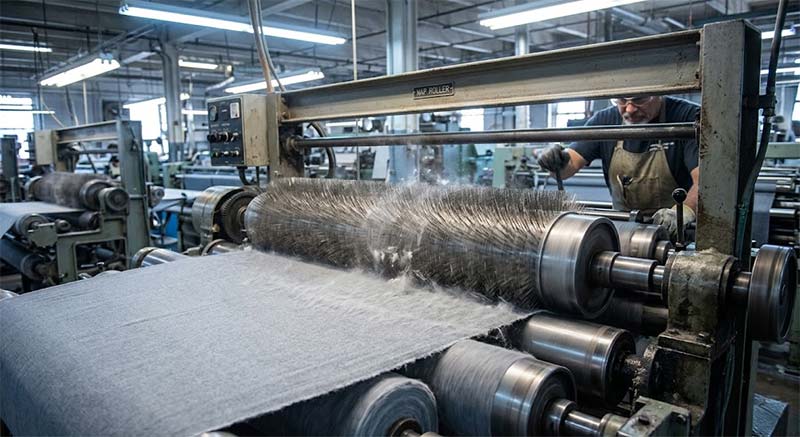
Flame-retardant flannel is flannel fabric designed to reduce burning risk.
There are usually two common routes.
One option is post-treated flame-retardant flannel.
The regular flannel fabric is produced first. After that, a flame-retardant chemical finish is applied.
The other option is inherently flame-retardant flannel, also called IFR flannel.
With IFR flannel, the flame-retardant performance comes from the fiber itself. It is not just a surface coating added later.
Begoodtex’s solution uses permanent flame-retardant fibers, so the flame-retardant performance becomes part of the fabric structure.
What does this mean in real use?
The fabric does not rely on a surface coating. It is less likely to lose flame-retardant performance after washing, and it can still keep the soft, warm, and comfortable hand feel that flannel is known for.
The main advantage is stability.
After repeated washing, rubbing, and long-term use, the flame-retardant performance is less likely to drop quickly. This matters for hotel blankets, hospital textiles, children’s sleepwear, and soft furnishings used in public spaces.
These products are used often. Many of them also need regular cleaning.
Post-treated flame-retardant flannel can still be useful in some cases.
Its advantage is clear: the cost is usually lower, and development can be more flexible.
For short-term projects, low-frequency use, or projects with a tighter budget, post-treated FR flannel may be considered.
But buyers should not stop at the first test result.
Washing durability and batch stability still need attention. A fabric may pass the test when new, but the result after repeated washing can be different.
For long-term use or frequent cleaning, especially in hotels, healthcare, and institutional projects, inherently flame-retardant flannel is usually the more stable choice.
Children’s pyjamas need to be soft and comfortable. But fire safety cannot be ignored.
Brushed fabrics, flannel, and fleece are popular for winter sleepwear because they feel warm. At the same time, the raised surface can increase the risk of surface flash.
For products exported to Europe or the United States, buyers should check the relevant requirements early, such as EN 14878 or 16 CFR 1615 / 1616.
The fabric, garment structure, trims, labels, prints, and final product description should all match the intended market requirement.
Hotel blankets, bed runners, decorative fabrics, and soft covering materials need to look good and feel comfortable.
But in many projects, that is not enough.
They may also need to meet fire safety requirements.
If ordinary flannel is used without a suitable flame-retardant test report, the product may be rejected during project review or compliance checking.
For hotel projects, confirm the required fire standard before choosing the fabric. Do not wait until the finished products have already been made.
In hospitals, nursing homes, and care facilities, some patients may not be able to move quickly in an emergency.
If blankets, patient clothing, or care textiles burn too fast, the risk becomes higher.
For these applications, flame resistance is only one part of the evaluation.
Washing durability, softness, chemical safety, cleaning method, and long-term maintenance all matter.
A fabric that feels soft at the beginning is not enough. It also needs to stay reliable after repeated use and cleaning.
Theatres, schools, cruise ships, passenger vessels, and public lounge areas often have stricter fire safety requirements for soft furnishings.
Flannel can be used for decoration, acoustic covering, protection, or warmth. But which standard should be used?
That depends on the final application.
A report for ordinary apparel fabric should not replace a public-space or marine fire test report. The application comes first. The fabric standard should follow that application.
 Flame Retardant Brushed Light Brown Polyester Flannelette Fabric for Table Decor Applications | 215 g/m² | 150 cm | EN 13773 Class 1
 Flame Retardant Warp Knitted Velvet Flannelette Fabric100% Polyester in Black for Stage Use | 330 g/m² | 150 cm | EN 13773 Class 1
 Permanent Flame Retardant Black Warp-Knitted Velvet Flannelette Polyester Textile for Stage Use | 240 g/m² | 150 cm | EN 13773 Class 1
Flannel is soft, warm, and widely used in clothing and home textiles. But ordinary flannel is usually not flame-retardant.
Cotton flannel, regular polyester flannel, brushed fabric, and fleece-type fabrics may burn quickly because of their raised surface. Some may also create surface flash when exposed to flame.
When flannel is used for children’s sleepwear, hotels, hospitals, public spaces, or marine projects, buyers should not only look at softness and price.
They also need to check the flame-retardant method, test standard, washing performance, and whether the report is suitable for the final application.
For long-term use, frequent washing, and higher compliance requirements, IFR flannel is usually a more stable solution.
Post-treated FR flannel can also be used in some projects. But washing durability and batch consistency should be reviewed carefully.
The right way to choose flame-retardant flannel is simple:
Confirm the application first. Then choose the material and test standard.
Flannel can be comfortable. It can also be safer.
The key is not to use ordinary flannel directly in high-risk environments.
Flannel is a soft, raised-surface fabric. It is not one fixed fiber. It can be made from cotton, wool, polyester, or blended fibers.
Usually not. Ordinary cotton flannel and regular polyester flannel may burn easily. The raised surface can also increase the risk of surface flash.
Flannel has raised fibers on the surface, with more air between those fibers. Once a flame touches the fabric, it may spread quickly across the surface.
They have different risks. Cotton flannel can burn easily and may leave afterglow. Regular polyester flannel may melt and drip under high heat, which can be more dangerous for close-to-skin use.
IFR means inherently flame-retardant. The flame-retardant performance comes from the fiber itself, not from a simple surface coating applied later.
It is usually more stable because the flame-retardant performance is built into the fiber. Still, buyers should check the test report and washing conditions.
Yes, but it depends on the application. It may be suitable for short-term or low-frequency use. For long-term projects with frequent washing, buyers should pay close attention to flame-retardant durability after laundering.
Buyers should be very careful. Children’s sleepwear has flammability safety requirements. Ordinary flannel may not meet standards such as EN 14878 or 16 CFR 1615 / 1616.
