What Is Flame Retardant Chenille Fabric?
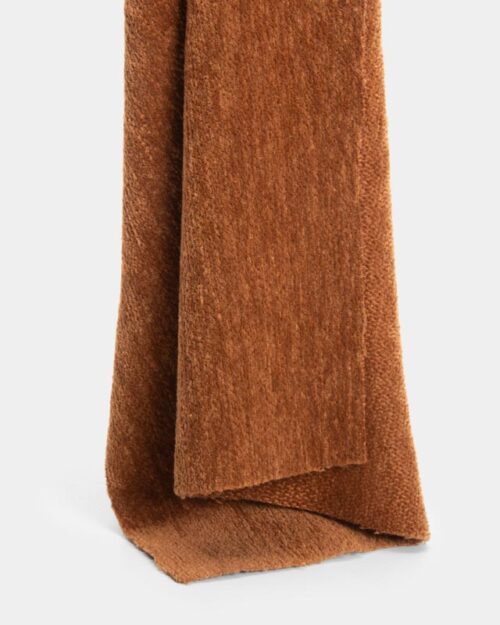
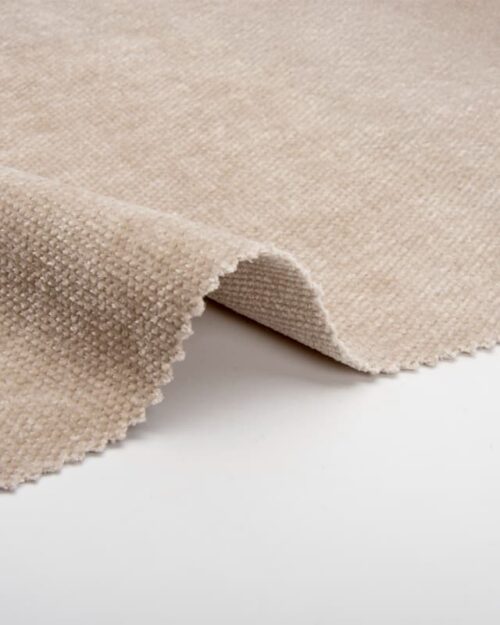
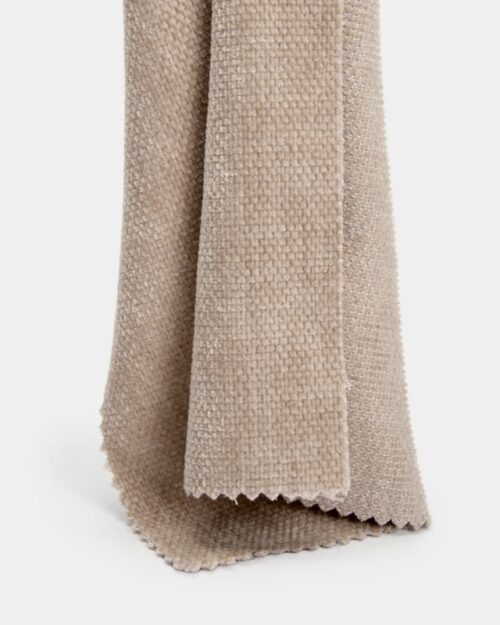
Flame retardant chenille fabric is made with chenille yarn, which uses fibers wrapped or twisted to create its characteristic soft, full, and slightly raised surface.
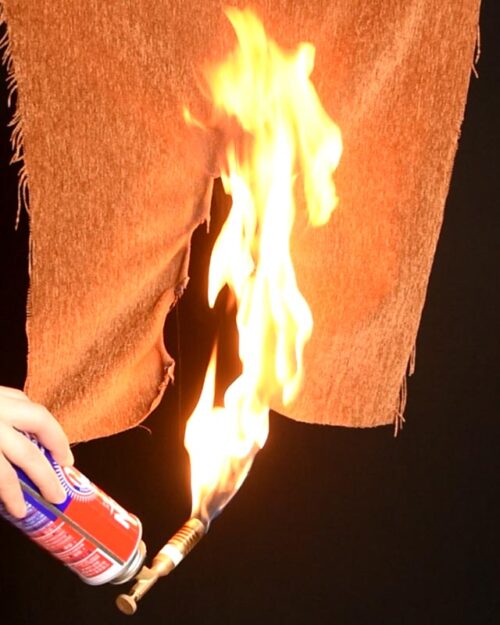
BEGOODTEX offers 100% flame retardant polyester chenille in different constructions, including jacquard, double-layer, composite, and upholstery fabrics for commercial interior projects.
Is Chenille Fabric Good for Upholstery?
Yes. Chenille is widely used for sofas, chairs, cushions, hotel furniture, and other upholstered surfaces because its textured yarn creates a soft hand and substantial appearance.
For high-traffic upholstery, buyers should pay particular attention to fabric weight, abrasion resistance, pilling performance, dimensional stability, and cleaning requirements. BEGOODTEX currently offers upholstery chenille constructions around 390–480 g/m², including products tested to furniture fire standards.
Does Chenille Fabric Pill?
Chenille can pill when loose surface fibers are repeatedly exposed to friction, especially in high-use seating applications.
Pilling performance depends on the fiber, yarn construction, pile density, abrasion level, and finishing. For contract sofas and chairs, an anti-pilling or abrasion test should be confirmed before bulk ordering rather than judging durability from the soft surface alone.
Chenille for Curtains and Decorative Textiles
Chenille is also suitable for hotel curtains, decorative drapery, bed runners, cushions, and other interior textiles where a fuller surface and stronger visual texture are preferred.
Heavier chenille constructions provide more body for curtains and upholstery, while lighter versions can be used for bed runners and decorative textiles. BEGOODTEX currently offers a 250 g/m² chenille for hospitality textiles and heavier 480–500 g/m² constructions for curtains and upholstery.
Chenille vs. Velvet: What Is the Difference?
Both fabrics can feel soft and substantial, but their surface structures are different.
Chenille Fabric gets its texture mainly from the chenille yarn itself, giving the surface a more irregular, dimensional, and often slightly fuzzy appearance.
Velvet Fabric is characterized by a more uniform pile surface, creating a smoother and more continuous visual effect.
Chenille is often selected when buyers want a tactile, textured interior fabric, while velvet is usually chosen when a more uniform pile and richer drape are preferred.
What Flame Retardant Standards Can Chenille Fabric Meet?
The applicable standard depends strongly on the final use.
For furniture upholstery, selected BEGOODTEX chenille fabrics support standards such as BS 5852 Crib 5, CAL TB 117, EN 1021-1, EN 1021-2, IMO FTP Code Part 8, and JIS L 1091.
For curtains and contract textiles, selected constructions also support NFPA 701, BS 5867 Type C, EN 13773 Class 1, GOST R 50810-95, and JIS L 1091. Some bedding-oriented chenille constructions additionally support BS 7175 Source 7.
The exact standard and test report should therefore be confirmed according to the selected chenille fabric and final product.