Enter your details and we will send the requested document to your inbox.





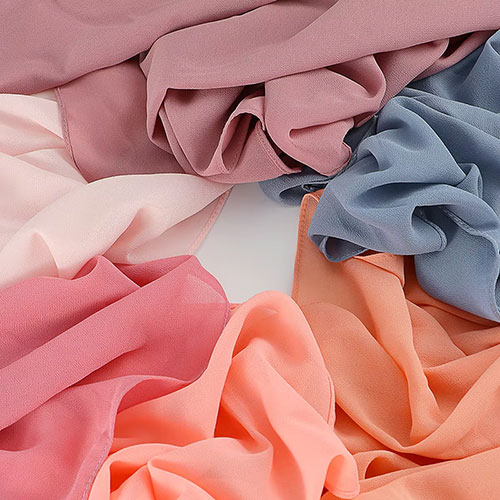
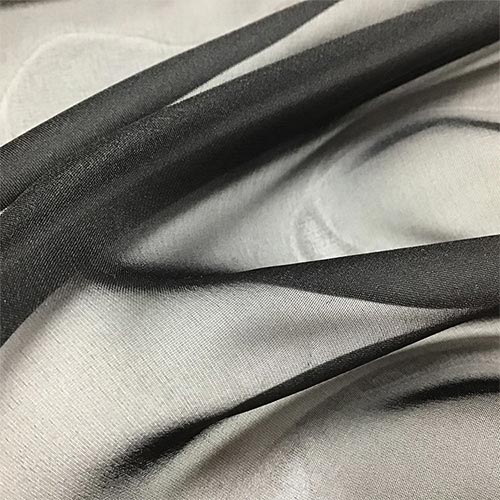
Light, sheer, and soft in drape — this is what most people think of when they see chiffon.
Chiffon is not tied to one single fiber. It can be made from silk, cotton, rayon, polyester, or nylon.
In today’s market, polyester chiffon is more common. Why? The cost is easier to control, colors are easier to produce, and daily care is simpler.
Touch the surface, and you will usually feel a slight crepe texture. It has a little grain to it. Not as smooth as satin. Not as stiff as organza.
Because chiffon feels light and flows easily, designers often use it for wedding dresses and evening gowns. It is also used for scarves, sheer curtains, stage backdrops, and event decor.

The reason is simple: it is thin, light, and breathable.
Once a flame touches the fabric, air can move around it very easily. More air means more oxygen for the flame. The lighter the fabric, the faster the flame may spread.
The risk becomes higher when chiffon is hanging vertically.
Think about sheer curtains, ceiling drapes, or stage backdrops. These fabrics are often used in large areas. If they catch fire, flames may travel upward along the surface very quickly.
That is why commercial projects should not choose chiffon only by color, transparency, drape, or photo effect.
Before ordering, check the fire safety requirement. Check the flame-retardant test documents too.
Flame-retardant chiffon is chiffon fabric made to reduce burning risk.
There are two common ways to do this.
The first option is post-treated flame-retardant chiffon. The fabric is made first. After that, a flame-retardant treatment is added.
The second option is IFR chiffon, also called inherently flame-retardant chiffon. In this case, the flame-retardant performance comes from the fiber itself, not from a surface coating.
Why does this matter?
Because the flame-retardant property is inside the fiber, it stays stable over time. It also holds up during cleaning and rubbing.
Another point is hand feel. Chiffon depends heavily on its light, soft, semi-transparent, and flowing appearance. If a treatment makes it stiff or heavy, the final look may change.
For dresses, decoration, sheer curtains, and stage backdrops, this difference matters.
So when a project needs both beauty and fire safety, IFR chiffon is often the better choice for long-term use.
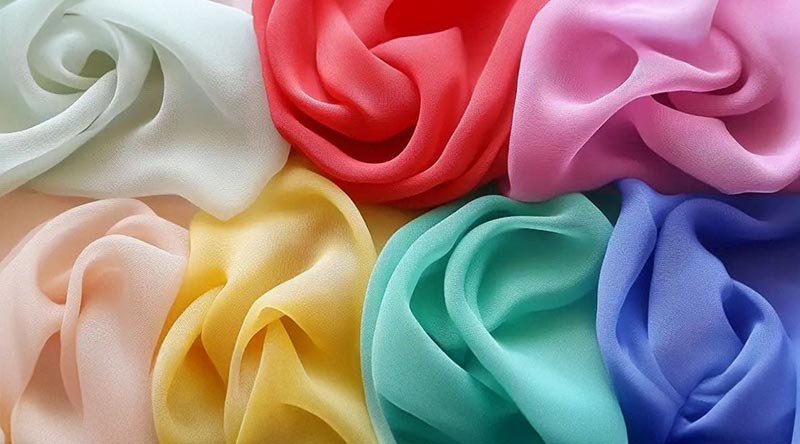
Chiffon works well for skirts, shawls, overlays, and decorative layers.
It gives a soft, floating look without making the garment feel too heavy.
But ordinary synthetic chiffon has limits. Under high heat, it may melt, shrink, or deform. For close-to-skin use or large-area designs, appearance alone is not enough.
When safety matters, check the fabric performance and the test report.
Wedding backdrops, ceiling drapes, table covers, sheer curtains, stage decoration — chiffon appears in many event spaces.
These projects often use a lot of fabric. Many pieces are also hung from ceilings, frames, or stage structures.
What happens if ordinary chiffon catches fire?
The flame may move quickly along the fabric surface.
For event venues, hotel banquet halls, and exhibition sites, flame-retardant chiffon is often required. The right test documents should be prepared before installation, not after problems appear.
Hotels often use chiffon or similar light fabrics for sheer curtains, soft decorative layers, and drapes.
But hotels are public spaces. Curtains and hanging fabrics usually need to meet fire safety requirements.
For North American projects, buyers may need to check NFPA 701.
No suitable report? Then the project may get stuck during approval or final inspection.
Stages are not simple environments.
There are lights, electrical devices, heat sources, and large fabric areas. Chiffon can create a beautiful visual effect, but ordinary chiffon also brings higher fire risk.
For theatre, performance, and exhibition projects, confirm the flame-retardant standard before installation.
Do not wait until the fabric has already been installed before arranging testing. That usually creates more trouble.
Different uses may involve different standards.
For ordinary apparel entering the U.S. market, 16 CFR 1610 may apply.
For curtains, event decoration, and stage backdrops, NFPA 701 may be required.
For children’s sleepwear or children’s nightwear, EN 14878 or 16 CFR 1615 / 1616 may be involved.
For marine soft furnishings, the relevant requirements under the IMO FTP Code may need to be checked.
For public building projects, local fire codes or customer-specified standards may also apply.
The fabric name alone is not enough. The final use decides which standard should be checked.
Chiffon is delicate, so care still matters, even when the fabric is flame-retardant.
Use cold water and a neutral detergent.
Avoid harsh washing. It may damage the fibers or change the surface feel.
Do not use high-temperature dryers.
Even with IFR chiffon, extreme heat may still affect the drape and appearance of delicate polyester chiffon.
Hang the fabric when possible to avoid deep creases.
Need to fold it? Fold it loosely. Tissue paper can also help reduce hard fold marks.
Chiffon is light, semi-transparent, and easy to drape. This makes it useful for clothing, gowns, sheer curtains, and event decoration.
But ordinary chiffon is usually not flame-retardant.
Because it is thin and breathable, it may burn quickly after contact with flame. When used as a hanging fabric, the flame may also travel upward along the surface.
For long-term use or projects with strict compliance needs, IFR flame-retardant chiffon is often a safer choice.
Ordinary chiffon can still be used in low-risk applications. For commercial spaces with fire safety requirements, however, proper testing should be confirmed first.
Chiffon can look beautiful. It can also be safer.
The right approach is simple: confirm the application first, then choose the fabric and standard.
Chiffon is a light, semi-transparent fabric with a soft drape. It can be made from silk, cotton, polyester, nylon, or rayon.
Usually not. Ordinary chiffon is thin and light, so it may burn quickly when exposed to flame.
Because chiffon is thin and breathable. Air moves around the fabric easily, which helps the flame spread faster.
It depends on the use. Ordinary polyester chiffon may melt, shrink, or drip under high heat. For commercial or close-to-skin use, buyers should check the test report.
IFR flame-retardant chiffon means its flame resistance comes from the fiber itself.
It does not come from a simple surface coating.
In most cases, it is more stable because the flame-retardant performance is inside the fiber. Still, buyers should check the test report and washing instructions.
Yes, but hotel projects usually need flame-retardant chiffon with a valid fire test report. This can be NFPA 701 or the local required standard.
Yes. But stage and theatre backdrops usually need to meet fire safety requirements. Ordinary chiffon is not recommended for direct use in these projects.