Get in touch
Thank you for reaching out! Please tell us more about your needs — our expert team will get back to you within 24 hours.
Get in touch
Thank you for reaching out! Please tell us more about your needs — our expert team will get back to you within 24 hours.
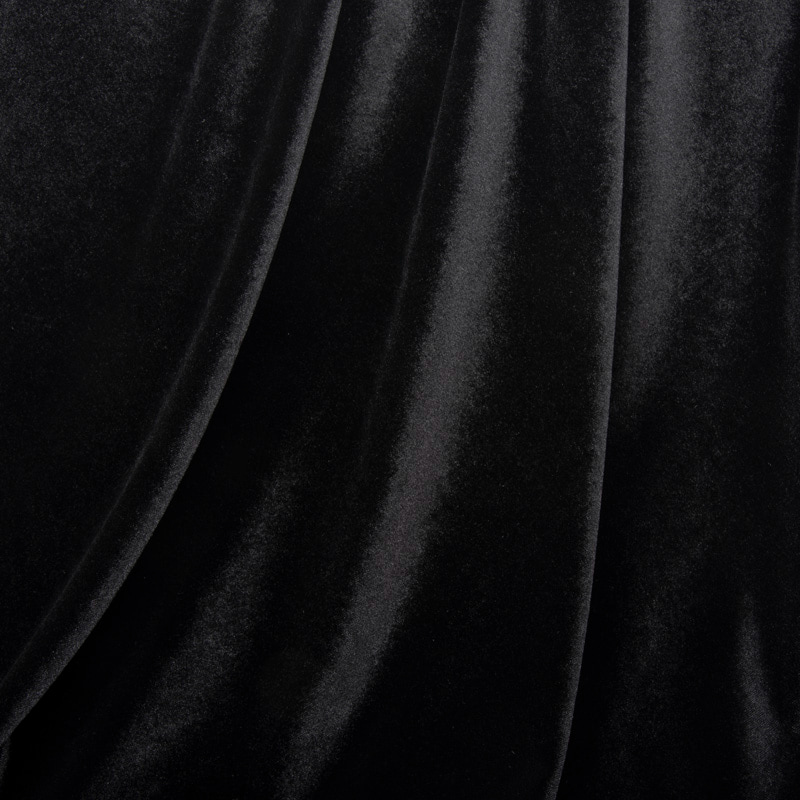
Velour is a plush, knitted fabric that mimics the luxury of velvet but offers more stretch and durability. Traditionally made from cotton, most modern velour is crafted from synthetic polyester. It is widely used in stage curtains, sportswear, and home upholstery. Its flammability depends entirely on its composition: while cotton velour is highly flammable unless treated with chemicals, synthetic polyester velour can be manufactured to be inherently flame retardant (IFR), making it a safer choice for public venues.
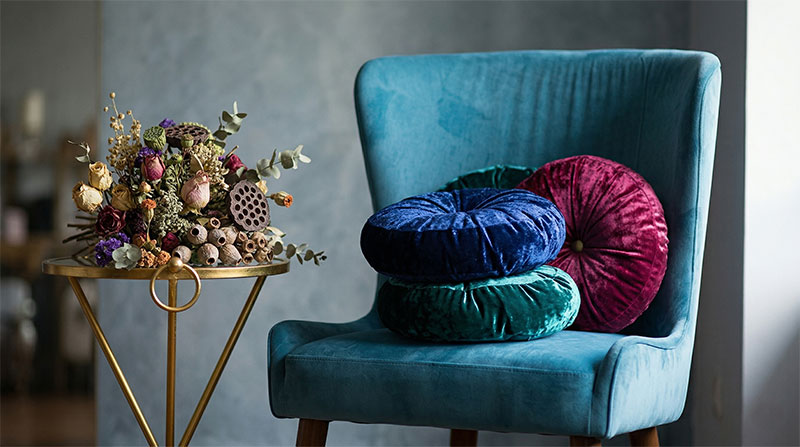
Velour is a specialized pile fabric characterized by a soft, fuzzy surface created through a series of loops that are cut to a uniform height. While it shares visual similarities with velvet, its internal construction is fundamentally different. Modern velour is primarily a pile knit fabric, meaning it is produced on circular or flat-bed knitting machines rather than traditional looms. This interlocking loop structure is the reason for velour’s high degree of mechanical stretch and flexibility.
The performance profile of velour is dictated by the fibers used in its knit. Cotton Velour is the preferred choice for applications requiring extreme opacity and a rich, matte finish. It is exceptionally dense and provides the best light-absorption properties. Synthetic Polyester Velour, however, is the industry standard for commercial environments because it is resistant to moisture, UV fading, and wrinkling. In the fashion and dancewear sectors, Spandex-blend Velour is used to provide four-way stretch, allowing the fabric to conform precisely to the contours of the body.
When selecting velour for public auditoriums, hotels, or automotive interiors, fire safety is the most significant technical parameter. The flammability of velour is not a binary attribute; it is a direct consequence of how specific materials (Cotton vs. Polyester) are engineered or treated.
Velour’s unique pile structure creates a critical fire hazard known as surface flash. The vertical fibers of the cut pile provide an immense surface area relative to the mass of the fabric. This exposes a high volume of fiber to atmospheric oxygen. Consequently, a flame can travel across the surface of the pile at extreme speeds—often faster than the human eye can track—before the base fabric even begins to smolder. This makes untreated velour a potent fuel source in a fire event.
The method of fireproofing depends entirely on the raw material used in the velour’s construction. Professional buyers distinguish between these three categories:
IFR Velour is almost exclusively made from specialized polyester polymers. During the chemical manufacturing of the polyester fibers, flame-retardant additives are integrated directly into the polymer chain. This means the fire resistance is a permanent molecular property of the fabric.
DFR Velour is the standard for natural cotton versions. Since cotton is a cellulose fiber (effectively a type of fuel), it must be chemically treated after it is woven or knitted. The fabric is immersed in a solution of flame-retardant salts. When exposed to heat, these salts react to create a non-combustible gas and a carbon char.
NFR Velour refers to untreated fabrics, whether cotton or synthetic. This is standard for residential apparel and home decor (such as throw pillows or casual hoodies). These fabrics will burn readily and should never be used in a commercial venue or for stage curtains, as they do not meet building fire codes.
| Standard | Industrial Application | Key Requirements |
|---|---|---|
| NFPA 701 | US Public Theaters & Halls | Limits the after-flame time and prevents flaming drips from igniting debris. |
| BS 5867 Part 2 | UK Hospitality & Schools | Type B ensures the fabric does not ignite when exposed to a small flame for 15 seconds. |
| DIN 4102-B1 | European Trade Shows | Highest standard for “not easily flammable” materials with strict smoke density limits. |
| FMVSS 302 | Global Automotive Seat Covers | Horizontal burn test ensuring the material does not propagate fire within the cabin. |
The appearance of velour is not determined by the dye alone, but by the physical orientation of the cut pile. This directional property dictates how light waves are absorbed or reflected by the surface.
The fibers in velour are brushed to lean in a specific direction. This orientation causes the fabric to exhibit anisotropy.
Because of this fiber orientation, velour requires a “one-way layout” during manufacturing. If two panels of the same fabric are joined with opposite pile directions, they will appear to be different colors. This “shading” effect is a physical property, not a dye defect. Accurate marking of the pile direction is mandatory in both garment tailoring and architectural upholstery to ensure visual consistency.
In technical procurement, it is vital to distinguish between knitted velour and woven velvet. Their performance under tension and acoustic loads varies significantly.
Velvet is created using a complex woven structure where two layers of fabric are woven together and then sliced apart. This produces a very dense, vertical pile that is rigid. Woven velvet is prized for its “silky” hand and formal appearance, but it has zero mechanical stretch and can be prone to permanent “creasing” if folded incorrectly.
Velour is typically knitted. The loops are integrated into the base during the knitting process. This allows the fabric to stretch and recover its shape, making it far more durable for high-traffic seating or activewear. Furthermore, velour is generally thicker and heavier than velvet, which contributes to its superior light-blocking and insulation properties.
| Technical Aspect | Velour (Knitted) | Velvet (Woven) |
|---|---|---|
| Elasticity | High (Stretch & Recovery) | Minimal (Rigid) |
| Acoustic NRC Rating | Superior (0.75 – 0.95) | Moderate (0.50 – 0.70) |
| Durability | High Friction Resistance | Moderate (Pile can “bald”) |
| Maintenance | Machine Washable (Synthetics) | Dry Clean Only (Usually) |
Velour is a high-performance material that provides a distinct set of functional and economic advantages for professional sectors.
Velour is a top-tier acoustic absorber. Due to its thickness and porous pile structure, it captures sound waves and prevents reverberation. Heavyweight theatrical velour (500 grams per square meter or higher) is commonly used in concert halls to achieve specific Noise Reduction Coefficient (NRC) targets, ensuring audio clarity for the audience.
For theaters and cinemas, “blackout” capability is essential. The density of velour fibers prevents light leakage, making it the premier choice for stage masking and window drapes in luxury hotels. It provides total privacy and darkness even under high-intensity external lighting.
Unlike velvet, which can hold permanent wrinkles, the knitted base of velour is resilient. It resists pilling and crushing, and if it is compressed, the fibers can be easily restored. This makes it ideal for portable stage backdrops and “touring” curtains that are frequently packed and unpacked.
The dead air space trapped within the velour pile acts as a thermal insulator. In large commercial buildings, velour drapes can significantly reduce heat loss through glass windows in winter and prevent heat gain in summer, lowering overall HVAC energy consumption.
Velour offers a luxury aesthetic at a fraction of the cost of silk-woven fabrics. The speed of modern knitting machines allows manufacturers to produce thousands of meters of high-quality velour per day, making it accessible for massive industrial projects like stadium seating and airport lounge outfitting.
Modern velour production focuses on maintaining pile density and chemical integrity across large batches.
Synthetic fibers are extruded with IFR polymers if required. Cotton fibers are scoured to ensure even dye absorption. The yarns are then spun to a specific denier to determine the final weight of the fabric.
The fabric is produced on high-speed circular knitting machines. This stage creates the stable base and the upright loops that will eventually become the plush surface.
The loops are passed through rotating helical blades that shear them at a height of 1 to 3 millimeters. Immediately after, industrial brushes set the pile direction while the fabric is under tension on a tenter frame.
Dye is applied via high-pressure vats to ensure the color reaches the very bottom of the pile. Finally, the fabric is heat-set to ensure dimensional stability, preventing the velour from shrinking during future use.
Yes. Since the flame retardancy is inherent to the fiber, washing in cool water will not affect its safety rating. However, avoid high heat in the dryer to prevent fiber melting.
Check the fiber content. If it is 100 percent cotton, it must be DFR (chemically treated). If it is polyester, it may be IFR. Always request a fire certificate from the supplier to confirm.
Never iron the pile directly. Use a professional steamer from the back of the fabric. The steam will lift the compressed fibers and restore the uniform pile direction.
Velour is an excellent sound *absorber* (reducing echo), but it is not a sound *blocker*. To block sound between rooms, you need a dense barrier like mass-loaded vinyl behind the velour.
No. Standard cotton and polyester velour will absorb moisture and UV rays will eventually degrade the fibers. For outdoors, specialized “solution-dyed acrylic” napped fabrics are required.