Get in touch
Thank you for reaching out! Please tell us more about your needs — our expert team will get back to you within 24 hours.
Get in touch
Thank you for reaching out! Please tell us more about your needs — our expert team will get back to you within 24 hours.




Many everyday garments entering the U.S. market need to pay attention to 16 CFR Part 1610.
Why does it matter?
Because this regulation asks a very direct question:
If a clothing fabric touches a small flame, will it burn too fast?
When a fabric burns too quickly, the product may be treated as dangerously flammable. For exporters, brands, and importers, that can lead to customs issues, failed inspections, rejected goods, marketplace removal, or even product recalls.
For ordinary apparel sold in the United States, 16 CFR 1610 is one of the basic compliance checks buyers should not ignore.
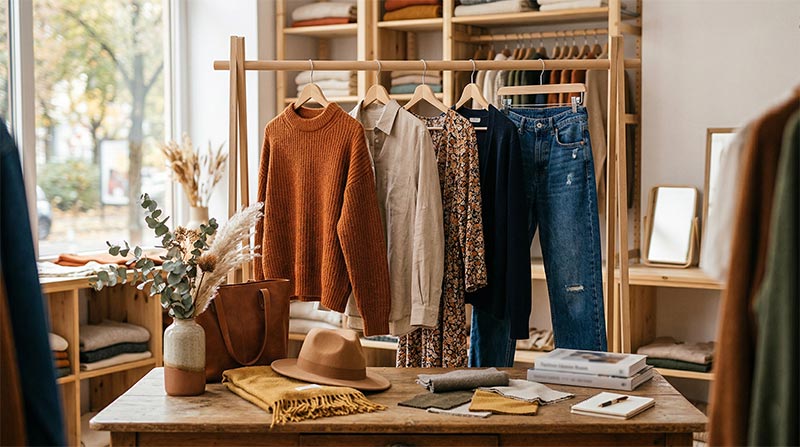
16 CFR Part 1610 is the U.S. flammability standard for clothing textiles.
It checks the burning behavior of fabrics used in apparel. The test is not meant to prove that a garment is fireproof. That is not the purpose.
The real question is simpler:
Does the fabric burn too quickly and create an unreasonable fire risk for consumers?
The test uses a 45-degree flame method.
In the lab, the fabric specimen is mounted at a 45-degree angle. A standard flame is then applied for a short time, and the lab records how long it takes for the flame to travel along the fabric and reach the specified point.
The key result is burning time.
The faster the flame spreads, the higher the risk. If the fabric burns too quickly, it may be classified as Class 3. That means clothing made from this fabric cannot be legally sold in the U.S. market.
16 CFR 1610 applies to most ordinary wearing apparel.
Common examples include:
It also applies to fabrics intended to be made into these types of garments.
But not every textile product is judged under 16 CFR 1610.
Some products have different rules, or extra requirements.
For example, children’s sleepwear usually needs to meet 16 CFR 1615 or 16 CFR 1616. Curtains, bedding, carpets, mattresses, and industrial protective clothing also have their own testing methods or regulatory requirements.
So before testing, check the final product first. Is it ordinary apparel, children’s sleepwear, home textile, or protective clothing? The answer decides which standard should be used.
16 CFR 1610 divides fabrics into three classes: Class 1, Class 2, and Class 3.
| Class | Simple Meaning | Can It Be Sold? |
|---|---|---|
| Class 1 | Normal flammability | Yes |
| Class 2 | Intermediate flammability, only for certain raised-fiber fabrics | Yes, but with more attention |
| Class 3 | Rapid and intense burning | No |
Class 1 is the most common and preferred result for ordinary apparel. Most regular clothing fabrics should meet this level.
Class 2 applies only to certain raised-fiber fabrics. It is not the best result, but it is still allowed under the standard.
Class 3 is the result buyers need to avoid. It means the fabric burns too rapidly and is considered dangerously flammable.
Can Class 3 fabric be used for clothing in the U.S.? No. Clothing made from Class 3 fabrics cannot be sold in the United States.
16 CFR 1610 includes some exemptions.
For example, some plain-surface fabrics may be exempt from testing if they meet certain weight requirements. Some plain-surface fabrics made from specific fibers may also qualify for exemption, such as acrylic, modacrylic, nylon, olefin, polyester, and wool.
But exemption does not mean “no documents are needed.”
In real export projects, retailers, importers, or online platforms may still ask for compliance documents, such as a General Certificate of Conformity, often called a GCC.
Whether a fabric can be exempt depends on several details:
So buyers should not hear “this fabric is exempt” and then skip compliance preparation.
The exemption must match the actual product. If the fabric structure, surface, weight, or use changes, the old judgment may no longer apply.
Many buyers confuse 16 CFR 1610 with 16 CFR 1615 and 16 CFR 1616.
They are not the same.
16 CFR 1610 is mainly used for ordinary clothing, including adult apparel and general children’s clothing. It uses a 45-degree flame test and focuses on how fast the fabric burns.
16 CFR 1615 and 16 CFR 1616 are children’s sleepwear standards. They apply to children’s pajamas, nightgowns, robes, and other sleepwear products. These standards are stricter and usually focus on char length.
A simple way to look at it:
A regular children’s T-shirt may fall under 16 CFR 1610.
Children’s pajamas or sleepwear should usually be checked under 16 CFR 1615 / 1616.
The product name alone is not always enough. The sales page, intended use, label wording, and product images also matter.
If a product is marketed as sleepwear, nightwear, pajamas, or shown as clothing for sleeping, do not treat it only as ordinary apparel.
This is where many compliance mistakes start.
Many failures come from fabric structure and surface condition.
Lightweight fabrics may burn faster than expected. Raised-surface fabrics can also be more sensitive because the surface fibers help the flame move quickly.
Products that need extra attention include:
Color, printing, brushing, finishing, and fabric weight can also affect the result.
A fabric may pass in one color or one weight, but that does not automatically cover every later version.
What if the bulk goods are different from the tested sample?
Then the report may not be suitable.
This is why testing should be checked before bulk production, not only after the finished garments are ready.
Before producing apparel for the U.S. market, exporters should confirm the product category first.
Key questions include:
For apparel fabrics, small changes can matter.
A change in color, weight, brushing process, print, finishing, or supplier batch may affect whether the old test report can still be used.
For U.S. orders, check the applicable standard and document requirements before cutting fabric or arranging bulk shipment. It is much easier to confirm this early than to fix the issue after production.
For apparel projects entering the U.S. market, Begoodtex helps customers review the fabric application, testing direction, and related document requirements based on the final product.
We do not only check whether a fabric has one test report.
We also check whether that report matches the garment type, fabric structure, target market, and actual bulk production.
If the product is ordinary apparel, 16 CFR 1610 may be the key requirement.
If the product is children’s sleepwear, then 16 CFR 1615 or 16 CFR 1616 should be reviewed separately. In that case, a 16 CFR 1610 report alone is not enough.
Our goal is not simply to supply a fabric.
We help customers choose a more suitable apparel fabric solution for the U.S. market, with better stability for product listing, inspection, compliance review, and long-term supply.
16 CFR 1610 is a common U.S. flammability regulation for ordinary clothing textiles.
It uses a 45-degree flame test to check how quickly a fabric burns after exposure to a small flame. The result is classified as Class 1, Class 2, or Class 3.
For brands, importers, and fabric suppliers exporting apparel to the United States, Class 1 is usually the preferred result.
Class 3 must be avoided. It means the fabric is dangerously flammable and cannot be sold as clothing in the U.S.
If the product is children’s sleepwear, 16 CFR 1610 is not enough. Buyers need to check 16 CFR 1615 or 16 CFR 1616 separately.
The key is simple: confirm the final use first, then choose the right fabric, test standard, and compliance documents.
16 CFR 1610 is the U.S. flammability standard for ordinary clothing textiles. It checks whether a fabric burns too quickly when exposed to a small flame.
It applies to most ordinary wearing apparel, such as T-shirts, shirts, dresses, skirts, pants, knitted garments, woven garments, scarves, shawls, and similar wearable textile products.
Usually, 16 CFR 1610 alone is not enough. Children’s sleepwear normally needs to meet 16 CFR 1615 or 16 CFR 1616.
The test uses a 45-degree flame method. The fabric is mounted at an angle, exposed to a standard flame, and then the burning time is recorded.
Class 1 means normal flammability. It is the most common and preferred passing result for ordinary apparel fabrics.
No. Class 3 means the fabric burns rapidly and intensely. It is considered dangerously flammable and cannot be sold as clothing in the United States.
No, not directly. Children’s pajamas and sleepwear should usually be checked under 16 CFR 1615 or 16 CFR 1616.
Not always. If the fabric color, weight, brushing, printing, finishing, or production batch changes, buyers should confirm whether the original report still covers the new goods.
Yes, some fabrics may qualify for exemptions based on weight, fiber content, and surface condition. But exemption should be confirmed carefully, and buyers may still need compliance documents such as a GCC.
No. 16 CFR 1610 is a flammability safety regulation for ordinary clothing textiles. Passing it does not mean the fabric is flame-retardant. It only means the fabric meets the flammability requirement for ordinary apparel.