Get in touch
Thank you for reaching out! Please tell us more about your needs — our expert team will get back to you within 24 hours.
Get in touch
Thank you for reaching out! Please tell us more about your needs — our expert team will get back to you within 24 hours.




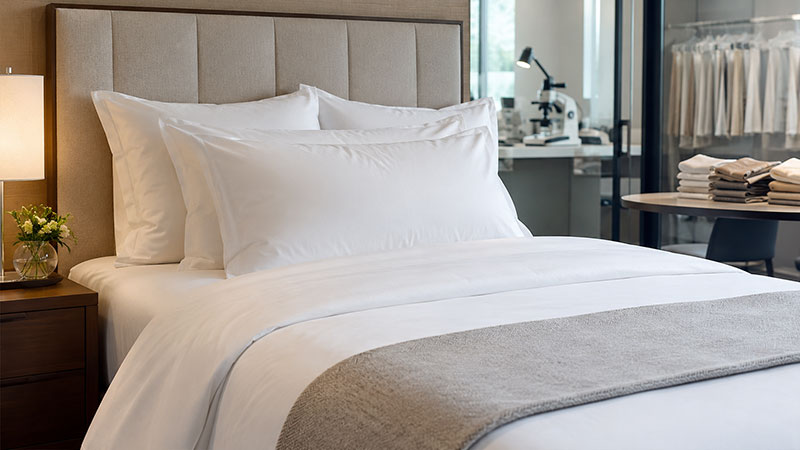
Bedding is easily underestimated. Unlike massive stage curtains or high-heat welding gear, it doesn’t look high-risk—but in hotels, hospitals, dorms, and marine cabins, a fire breakout is a major hazard.
That is why true flame retardant bedding is more than a label. It is about whether the flame retardant bedding can survive in the real world. Because the places where we use flame bedding are so different there is no one standard that works everywhere.
Flame retardant bedding includes things, like sheets and blankets and mattresses and pillows and special linens for boats. Each one of these types of flame bedding has its own way of dealing with fire safety.
“Can this bedsheet pass the British Standard 7175 test?”
“Does every hotel bed need to comply with the European Standard EN ISO 12952?”
“If my mattress fabric has a Fire Resistance report does that mean the whole mattress is fire resistant?”
People who buy Fire Resistance textiles often ask these questions.
People who make these textiles know that the name of the standard is not the most important thing to check.
First we need to know some things about the product.
The end-use environment is important it could be a hotel or a hospital or a dorm or a boat or just a regular home.
We need to know if the product will be washed a lot, like every week.
Many new buyers watch a quick vertical burn video and immediately judge whether a fabric is compliant. When you are looking at video demonstrations they are a place to start.. You should not rely on them because they can never take the place of an official laboratory test report from a laboratory.
Bedding is different from curtains or wallcoverings. This is because bedding is in contact with skin for a long time and it gets washed a lot.
Places like hotels and hospitals and dormitories and marine sectors need to wash their bedding often and they need to keep track of everything.
When you are trying to find a flame resistant bedding solution you need to look at more, than just if the fabric can stop burning on its own. You need to look at the flame resistant bedding solution.You must verify:
A fabric can do great in a test to see if it catches fire but how well it stops fires can change a lot after it has been colored treated sewn into a quilt, filled with material or washed many times in a factory.
This is why big projects trust the results from labs instead of what people say or show in videos.
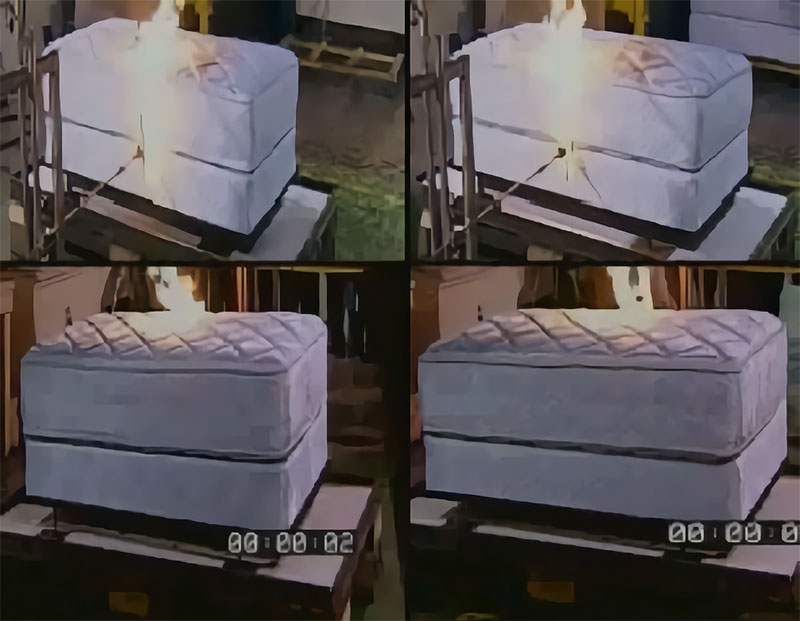
Because flame-retardant bedding lacks a universal standard, different product types are governed by distinct testing methodologies:
| Product Category | Common Reference Standards | Key Procurement Safeguards |
|---|---|---|
| Sheets, Duvet Covers, Pillowcases | EN ISO 12952, BS 5815, BS 7175 | Prioritize wash durability, hand-feel, shrinkage rates, and skin safety. |
| Blankets, Bedspreads, Quilts/Duvets | BS 7175, EN ISO 12952, IMO FTP Code Part 9 | Internal filling, thickness, and loft significantly impact flammability outcomes. |
| Mattresses, Mattress Overlays, Pads | 16 CFR 1632, 16 CFR 1633, BS 7177 | A standalone ticking/fabric report cannot validate the compliance of a complete mattress system. |
| Children’s Sleepwear | 16 CFR 1615/1616, EN 14878, AS/NZS 1249 | Must strictly account for sizing, tight-fit dimensions, labeling, and wash cycles. |
| Marine Bedding | IMO 2010 FTP Code Part 9 | Standard hospitality test reports are legally invalid for maritime applications. |
Note: While this matrix is not exhaustive, it serves as an essential framework to ensure your selected standards match your physical product type.
The reason is simple: if you alter the configuration of the tested sample, you alter the fire behavior.
An FR fabric might pass a laboratory test as a single standalone layer. When you turn that fabric into a duvet you are adding fiberfill to it.. Maybe you are making a mattress encasement with foam and quilting layers and fire barriers.. Perhaps you are making a pillow and stuffing it with down or synthetic clusters. In any case the flame is not just touching one layer of fabric anymore. It is touching a product, with many layers like a duvet or a mattress encasement or a pillow.
When you look at a laboratory report make sure to check the part that says Sample Description carefully. Focus on:
If these parameters do not match, the documentation will likely be rejected during the project’s compliance audit.
When you are sending your products to the United States it is really important to remember that mattresses and kids sleepwear have to follow rules.
16 CFR 1632 evaluates the cigarette ignition resistance of mattresses and mattress pads. It measures how the product reacts to a smoldering heat source.
16 CFR 1633 is a full-scale open-flame test for mattress sets. It measures heat release rates and flame spread across the entire mattress system, not just the outer fabric.
Critical Takeaway: Sourcing an inherently flame-retardant mattress ticking (outer fabric) does not guarantee the final mattress will pass 16 CFR 1633. Internal polyurethane foams, structural fillings, quilting threads, and fire-barrier socks all dictate the final outcome.
These standards are totally different from the rules for bedding. They say that people have to do a lot of testing based on how big something’s how clothes fit whether they are tight or loose what the labels say about how to take care of them and whether they can be washed. They also have to test the seams and the trim on clothes. The standards for clothes have rules about seams. Trim construction and about wash testing and these rules are important for clothes with permanent care labels and different sizes, like tight fit and loose fit clothes. Never attempt to substitute a standard residential bedding report for children’s sleepwear compliance.
In UK textile procurement, buyers frequently cross paths with BS 7175, BS 5815, and BS 7177. Because the nomenclature is similar, they are often mistakenly interchanged.
BS 7175: Primarily applies to bed covers, pillows, duvets, and equivalent individual bedding items exposed to smoldering and flaming ignition sources.
BS 5815: Focuses on sheets, pillowcases, duvet covers, and towels used in public sectors and institutions.
BS 7177: Specifies requirements for resistance to ignition of mattresses, mattress pads, divans, and bed bases.
A fancy hotel and a psychiatric facility may seem like they are similar when you first look at them.. The law says they have to follow different rules because their risk categories are very different.
EN ISO 12952 is the premier international benchmark for evaluating the ignitability of bedding items when exposed to a smoldering cigarette or a small open flame.
When working with this European standard, clarify the testing scope: Is the laboratory assessing the base fabric or the finished assembly? For finished items, the structural configuration of the duvet or pillow will fundamentally dictate the burn characteristics.
Furthermore, because bedding comes into direct contact with human skin, European buyers regularly pair FR mandates with strict chemical safety certifications.
Beyond flammability compliance, ensure your products meet OEKO-TEX® STANDARD 100, REACH regulations, or your client’s specific Restricted Substances List (RSL). Fire safety must not compromise skin comfort, breathability, or chemical safety.
The maritime sector has strict rules about fire safety especially when it comes to things like blankets and towels.
A lot of people think that fancy hotel bedding can be used on a ship. That is not the case for big boats like cruise ships, ferries and oil rigs.
The maritime sector has rules about fire safety especially when it comes to blankets and towels on these big boats.
The bedding used on these ships has to meet safety rules like the ones outlined in the IMO 2010 FTP Code Part 9 which is a test for the parts that make up the bedding.
When it comes to projects people need to keep track of everything from the start to the finish for the maritime projects.
 Flame Retardant Kids Bedding Set Custom Printed Cartoon Pattern OEKO-TEX Standard 100 Bulk Supplier
 Flame Retardant Polyester Satin Bedding Set BS 5815 Certified Factory Direct
 Flame Retardant Striped Bedding Set Hotel Satin OEKO-TEX Wholesale——Luxury Hotel Quality
 Flame Retardant Polyester Bedding Set OEKO-TEX Standard 100 Wholesale Factory Direct-Ultimate soft sleep fabrics
Choosing between IFR and FR-treated options is not a simple choice of price versus hand-feel; it depends heavily on your laundering requirements and project lifespan.
The flame-resistant properties are engineered directly into the molecular structure of the synthetic fiber (such as modified FR Polyester).
Best For: High-use hospitality, commercial healthcare, cruise lines, and public institutions.
Pros: Permanent fire resistance that cannot wash or wear out; excellent structural stability; highly predictable batch-to-batch performance over extended life cycles.
Standard textiles (like cotton or poly-blends) are treated with a topical chemical flame retardant during the post-weaving finishing stage.
Best For: Budget-conscious projects, residential applications, or short-term event designs prioritizing a classic cotton hand-feel.
Pros: Lower upfront material costs; can achieve specific natural fiber aesthetics.
Cons: Flame retardancy can degrade over repeated industrial washings or heavy friction.
The majority of customs clearances and project compliance holds occur due to administrative mismatches in test documentation rather than structural fabric failure.
When you receive a laboratory pass report, verify these seven fine-print metrics prior to issuing a deposit:
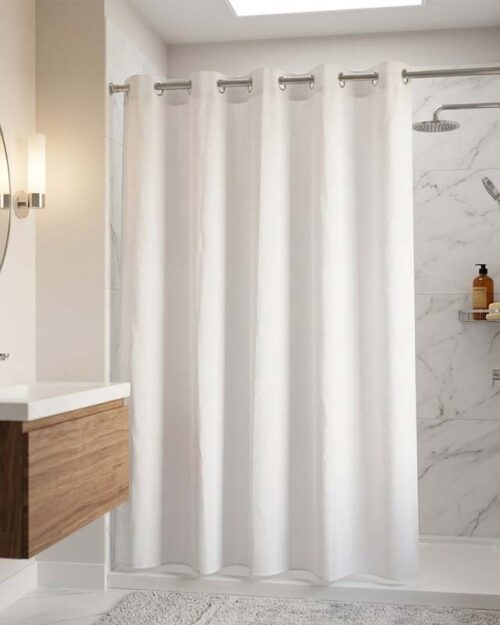 Fireproof Shower Curtain Waterproof Mildew Resistant Polyester NFPA 701 Wholesale Supplier
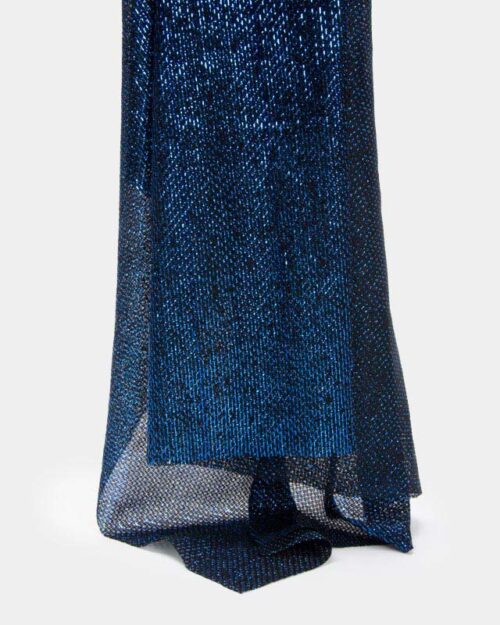 Flame Retardant Metallic Fabric 75 g/m² for Stage Curtains OEKO-TEX Certified Wholesale Supply
 100% Polyester Flame Retardant Chenille Bed Runner for Hotels NFPA 701 Factory Direct
 Begoodtex Flame Retardant Peach Skin Fabric Bedding Fabric
Avoid these frequent pitfalls to protect your lead times and production capital:
| Common Procurement Pitfall | Consequent Project Risk | Correct Sourcing Protocol |
|---|---|---|
| Requesting a generic “FR Certificate” | Receiving documentation completely invalid for your specific product type or target country. | Define the exact item, target marketplace, and required standard code from day one. |
| Substituting curtain standards (e.g., NFPA 701) for bedding | Total rejection during project compliance audits. | Verify that the testing scope explicitly covers bedding applications, not window treatments. |
| Relying solely on a base fabric report for composite products | The finished mattress, pillow, or duvet failing its final full-scale burn test. | Determine whether your client requires raw component validation or finished composite testing. |
| Ignoring the laundering pre-treatment parameters | Severe liability risks if topically treated fabrics lose FR performance after institutional washing. | Explicitly verify the required wash-cycle durability (e.g., 50 industrial washes) beforehand. |
| Assuming one report covers all product colorways/weights | Discrepancies during customs inspections or quality control checks. | Cross-reference report parameters with mass production variants to ensure complete compliance coverage. |
Before finalizing your FR textile procurement, ensure you have precise answers to these six core criteria:
At Begoodtex, we engineer specialized flame-retardant textile solutions tailored for demanding commercial and institutional environments. Our comprehensive manufacturing and supply capabilities include:
If your technical specifications are still open, our engineering team will help you align your performance criteria with the correct international testing framework—ensuring your production runs pass regulatory audits smoothly while safeguarding project lead times.
A: No, there isn’t. Standards vary wildly depending on the product and where it’s being used. Sheets, blankets, mattresses, children’s sleepwear, and marine bedding all have completely different testing requirements.
A: It depends on the destination market and the venue (hotels, hospitals, dorms, etc.). The most common ones you’ll run into are EN ISO 12952, BS 5815, and BS 7175.
A: It’s a standard flammability test for top-of-bed items like sheets, pillowcases, and duvet covers. Essentially, it checks how easily the fabric catches fire when exposed to a cigarette or a small match flame.
A: No, 16 CFR 1633 is specifically for full mattress sets, not sheets. However, if you are buying fabric to make a mattress, then the entire finished mattress build will need to pass this test.
A: They aren’t interchangeable. BS 7175 is for bedding items like pillows, duvets, and blankets. BS 7177 applies strictly to mattresses, pads, and bed bases.
A: Usually EN ISO 12952 or BS 7175, but it really depends on local fire codes and the hotel chain’s own specs. Always check the project tender or client requirements first.
A: You’ll need IMO 2010 FTP Code Part 9. Standard hotel bedding reports won’t clear maritime audits, so you’ll need to confirm the specific shipyard or classification society requirements beforehand.
A: Not necessarily. A fabric report only proves the raw material passed. Once you add fillings or layers to make a pillow, quilt, or mattress, the entire finished item usually needs its own composite test.
A: Make sure to confirm the exact testing standard, whether it’s a fabric or finished product report, wash durability (how many washes it withstands), fabric specs, lab accreditation, and batch stability.
Not necessarily. A fabric test report only certifies the performance of that specific raw textile layer under laboratory conditions. When that fabric is integrated into a finished composite item—like a stuffed pillow, quilted duvet, or multi-layered mattress—the interaction between the fabric, threads, trims, and internal cushioning fillings can completely alter the final flammability results.