Enter your details and we will send the requested document to your inbox.





In many flame-retardant fabric projects, the first part of the conversation is usually about fire performance.
Can hotel curtains pass NFPA 701?
Does the UK project require BS 5867?
Does the European customer need EN 13773?
But as the project discussion moves forward, buyers often add one more question:
“Do you have OEKO-TEX?”
This may sound like an extra requirement, but it is actually very common.
Fabric is not only used to “pass a flame test.” It is also touched by people every day. Hotel guests may lean against curtains.People who go to the hospital may touch the curtains in the hospital rooms. Kids wear pajamas to bed. Hospital workers wear clothes for a long time.
If a piece of fabric has features like it does not catch fire easily it does not get wet easily it kills bad bacteria it blocks out light it has pictures on it or it has other special things, people who buy this fabric want to know if the stuff used to make it special is safe, for them.
This is the problem that the OEKO-TEX STANDARD 100 is made to solve.
The name “OEKO-TEX” can be confusing.
Many buyers see it for the first time and assume it represents organic cotton, green factories, or low-carbon production.
In fact, STANDARD 100 focuses on the textile product itself.
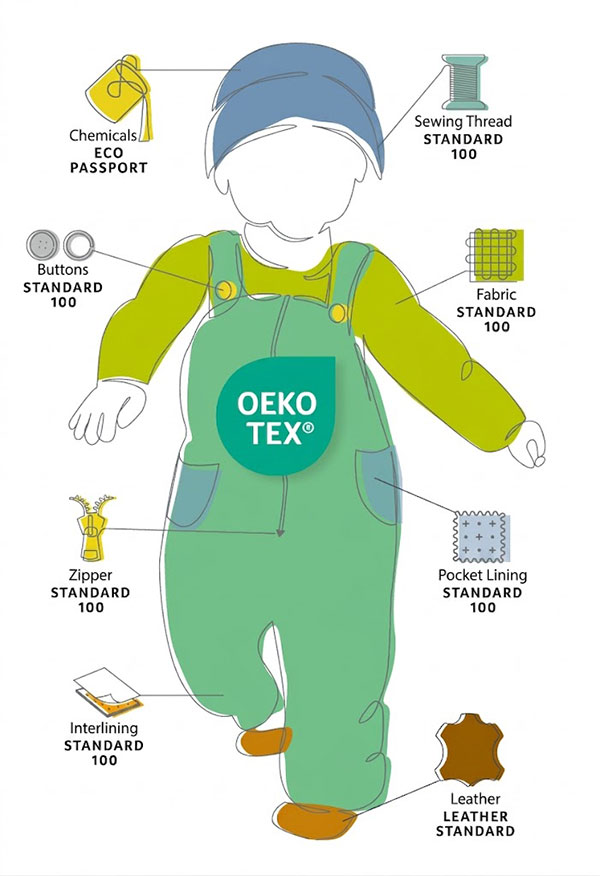
It checks whether harmful chemical residues are present in textile products. The product may be fiber, yarn, greige fabric, dyed fabric, flame-retardant fabric, curtains, bedding, garments, sewing thread, zippers, buttons, coatings, or printing materials.
This also explains why, in finished product projects, having a certificate for the main fabric alone may not always be enough.
For example, a flame-retardant workwear garment may use OEKO-TEX-certified main fabric. But if reflective tape, zippers, and buttons are added later, the customer may continue to ask whether these accessories are also covered.
Another example is a flame-retardant blackout curtain. The ordinary dyed fabric may have a certificate, but the final order may include a blackout coating. In that case, buyers need to confirm whether the original certificate still covers the new fabric structure.
Many projects do not get stuck on the main fabric. They get stuck on these details.
Sewing thread, coatings, printing, and edging may look small, but during brand audits, hospital procurement, or export documentation checks, they can all be reviewed carefully.
Some buyers hear OEKO-TEX and immediately think:
Is it only about formaldehyde?
Is it only about azo dyes?
These are only part of the scope.
OEKO-TEX STANDARD 100 covers a much wider range of harmful substances. It may include banned azo dyes, carcinogenic dyes, formaldehyde, heavy metals, pesticide residues, phthalates, PFAS, pH value, color fastness, and other indicators.
Ordinary textiles need to consider these items. Flame-retardant fabrics need to consider them even more.
This is because flame-retardant fabrics usually involve more than one dyeing process.
Hotel curtains may include blackout coating.
Hospital cubicle curtains may include antibacterial finishing.
Outdoor and public space fabrics may include water repellency, oil repellency, antistatic finishing, or lamination.
The more functions a fabric has, the more complex the processing becomes. The more complex the processing is, the more buyers care about the chemical safety of the final fabric.
That is why, in hotel, healthcare, and export projects, the document package often includes two types of reports:
These two documents focus on different things, but in real projects, they often appear together.
STANDARD 100 has four product classes.
There are many technical explanations, but buyers can first remember a simple rule:
The closer the textile is to the skin, the stricter the requirement.
| Product Class | Common Products | Procurement Understanding |
|---|---|---|
| Class I | Baby clothing, baby bedding, soft toys | The strictest class, suitable for products for babies and toddlers under 36 months |
| Class II | Bedding, underwear, pajamas, inner layers of close-fitting workwear | Direct skin contact, with high safety requirements |
| Class III | Coats, some technical textiles | Little or no direct skin contact |
| Class IV | Curtains, sofa fabrics, tablecloths, carpets | Decorative and interior materials |
OEKO-TEX checks harmful substances. It does not test burning performance.
If a fabric has OEKO-TEX, it only means that it has passed chemical safety testing under the relevant product class.
Whether it can be used as flame-retardant curtain fabric still depends on the fire standard required by the project, such as NFPA 701, BS 5867, EN 13773, or local fire regulations.
The reverse is also true.
A fabric that has passed a flame-retardant test does not automatically meet OEKO-TEX harmful substance requirements.
That is why many flame-retardant fabric projects need to prepare two types of documents:
| Document | What It Mainly Proves |
|---|---|
| Flame-retardant test report | The fabric’s burning behavior when exposed to a fire source |
| OEKO-TEX certificate | The fabric’s chemical safety for daily contact and use |
Hotels, hospitals, children’s textiles, bedding, and export projects increasingly review these two types of documents together.
When a supplier sends an OEKO-TEX certificate screenshot, buyers should not only check whether the layout looks official.
At minimum, these points should be verified:
Some certificates are real, but they may not apply to your order.
For example, the certificate may only cover ordinary dyed polyester fabric, while you are buying flame-retardant blackout coated fabric.
Or the certificate may cover an older fabric, while a newly developed printed, antibacterial, or laminated version is not included.
So, when it comes to OEKO-TEX, the key question is not only:
“Do you have it?”
The better question is:
“Does this certificate cover this exact fabric, this exact process, and this final application?”
| OEKO-TEX Certification | Main Focus | More Suitable For |
|---|---|---|
| STANDARD 100 | Harmful substances in textile products | Most common in the procurement of FR curtain fabrics, FR bedding fabrics, medical cubicle curtains, and workwear fabrics |
| MADE IN GREEN | Harmful substance testing, environmentally friendly production, working conditions, supply chain traceability | When customers care about green manufacturing, brand sustainability claims, or supply chain transparency |
| STeP | Environmental performance, chemical management, and social responsibility of factories and production facilities | Auditing dyeing mills, finishing mills, weaving mills, and other production sites |
| ECO PASSPORT | Chemicals such as dyes, auxiliaries, and finishing agents | Reviewing flame retardants, dyes, or finishing chemicals themselves |
Simply put:
When buying fabric, STANDARD 100 is usually the first thing to check.
When reviewing brand sustainability and supply chain transparency, MADE IN GREEN becomes more relevant.
When evaluating factory management capability, STeP is more important.
When checking the chemicals themselves, ECO PASSPORT is the right direction.
For ordinary fabric procurement, buyers may only need composition, weight, color fastness, and basic testing.
Flame-retardant fabrics are usually questioned in more detail.
The reason is simple: the more functional the fabric is, the more buyers want to know how those functions are achieved.
A flame-retardant blackout curtain for hotels may go through dyeing, flame-retardant processing, blackout coating, heat setting, water-repellent finishing, or antibacterial finishing.
A hospital cubicle curtain may also need to consider antibacterial performance and frequent washing.
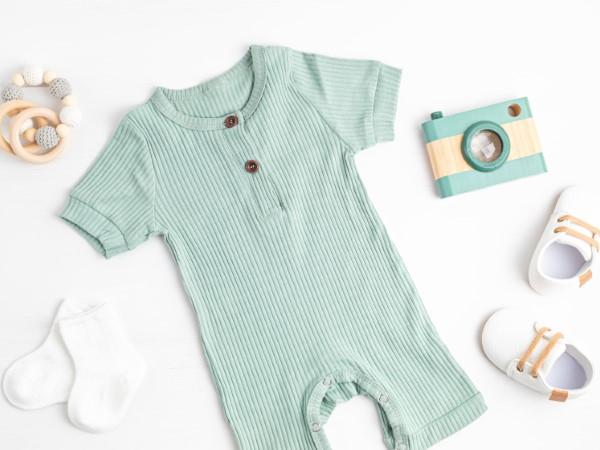
Children’s pajamas and bedding are closer to the skin, so customers naturally become more cautious.
Buyers do not only ask, “Can it resist fire?”
They may also ask:
This is also why inherently flame-retardant fabrics receive more attention in some high-end commercial projects.
For inherently flame-retardant polyester, flame-retardant performance comes from the fiber system itself. This reduces reliance on surface-applied flame retardants and makes long-term use and chemical safety control clearer.
However, even inherently flame-retardant fabrics cannot automatically skip OEKO-TEX review.
Dyes, auxiliaries, printing, coatings, sewing thread, and accessories can all affect the final certificate scope. The specific project still needs to be checked against the certificate and test documents.
Based on real procurement experience, OEKO-TEX STANDARD 100 is most often requested in hotel, healthcare, children’s textile, workwear, bedding, and export orders.
Hotel projects use large quantities of fabric. Curtains, bedding, sofa fabrics, and decorative textiles all enter guest rooms or public areas. Group customers usually prepare a compliance document list in advance. They do not only look at price and color.
Hospitals and nursing institutions are more cautious. Patient contact, frequent washing, disinfection processes, antibacterial finishing, and harmful substance control may all be considered together.
Children’s textiles are reviewed even more carefully. Baby bedding, children’s pajamas, and soft toys usually require a higher level of chemical safety.
Workwear and protective textiles may look more industrial, but workers wear them for long hours. Sweat, friction, and skin contact should not be ignored.
Bedding is also a typical application. Bed sheets, duvet covers, pillowcases, mattress covers, and blankets are in contact with the body for long periods every day. Customers often ask about formaldehyde, pH value, dye safety, and skin comfort.
Marine, cruise ship, and public space projects may also have detailed documentation requirements. Fire testing, chemical safety, wash durability, and batch consistency may be reviewed together.
In flame-retardant fabric projects, Begoodtex usually reviews fire performance and chemical safety together. We do not focus only on one flame-retardant report.
For hotel curtains, in addition to NFPA 701, BS 5867, or EN 13773, we also check blackout performance, drape, cleaning method, and whether the OEKO-TEX certificate covers the fabric.
Hospital cubicle curtains require more detailed review. Flame retardancy, antibacterial performance, washability, and harmful substance control are often required together.
Children’s pajamas and bedding are closer to the skin, so product class, dyes, auxiliaries, and finishing scope all need to be checked carefully.
Export projects may also require REACH, PFAS-free, halogen-free, or other chemical compliance documents.
So in the early communication stage, it is better to clarify the application first:
The earlier this information is confirmed, the smoother the later process will be.
It also helps the supplier judge whether the existing certificate can be used, whether additional testing is needed, or whether the fabric solution should be adjusted.
OEKO-TEX STANDARD 100 may look like just one certification label, but in flame-retardant fabric procurement, it often affects project progress.
It focuses on the control of harmful substances in textile products.
For hotels, hospitals, children’s textiles, bedding, workwear, public spaces, and export projects, this certificate can help buyers reduce chemical safety risks.
But it cannot replace flame-retardant testing.
A qualified flame-retardant fabric usually needs to prove both fire performance and chemical safety.
Flame-retardant testing looks at burning behavior. OEKO-TEX checks for stuff, in products. They look at things and often both are needed in real projects.
When buying it’s an idea for buyers to check if the certificate is still good what products it covers, what class the product is, how its finished and whats included before they buy.
Taking a bit time to check everything at the start can save a lot of work later on like asking for documents retesting products and going back and forth on email.
It is not something that is required by law everywhere in the world.
A lot of people, like hotel groups and hospitals and companies that buy products for kids they want to see this certification when they are buying things.
Some companies even need it to sell their products to countries.
Yes.
The key is whether the fiber, dyes, flame-retardant system, coating, finishing processes, and accessories meet the harmful substance limits for the relevant product class.
No.
The OEKO-TEX STANDARD 100 is about making sure fabrics are safe, from substances. This standard does not check how well fabrics can withstand fire. If you have flame- fabrics you still need to get separate reports that show they passed fire tests like the ones required by NFPA 701 BS 5867 EN 13773 or other standards that apply to the OEKO-TEX STANDARD 100 and flame-retardant fabrics.
Generally, it is not recommended.
Class IV materials are often used for things like curtains, sofa fabrics and carpets.
They are good for stuff.
However for things like bedding, pajamas and baby products that touch skin, a different and more suitable class is usually needed.
This is because skin-contact products require consideration.
No.
REACH is an EU chemical regulation. OEKO-TEX STANDARD 100 is a textile harmful substance testing certification. In export projects, customers often ask for both.