Get in touch
Thank you for reaching out! Please tell us more about your needs — our expert team will get back to you within 24 hours.
Get in touch
Thank you for reaching out! Please tell us more about your needs — our expert team will get back to you within 24 hours.




When you walk into a hospital or a medical clinic, there is one piece of equipment you will see in almost every single room. It is not a high-tech heart monitor or a surgical robot. It is a simple, flowing piece of fabric hanging from the ceiling. This fabric is widely known as a cubical curtain.
For most patients and visitors, these curtains just blend into the background. But for hospital administrators, nurses, and facility managers, they are a critical piece of healthcare infrastructure. They separate beds, hide medical equipment, and give patients a safe, private space to heal. More importantly, as modern healthcare evolves, these fabrics must meet strict rules for fire safety and infection control.
At Begoodtex, we are experts in manufacturing professional flame retardant fabrics. We know exactly what goes into making a medical privacy curtain safe, durable, and reliable. In this guide, we will break down everything you need to know about these curtains, from what they are and how they are used, to why built-in fire safety matters so much.

A cubical curtain is a specialized fabric partition used primarily in healthcare facilities to create temporary, private spaces for patients.
Unlike the curtains you have in your living room or bedroom, a medical privacy curtain is designed strictly for function. It does not touch the floor, which makes it easier to clean the room. It often has a mesh section at the top to allow light to pass through and to let water from ceiling sprinklers reach the room in case of a fire. It is a heavy-duty, commercial-grade product built for a highly demanding environment.
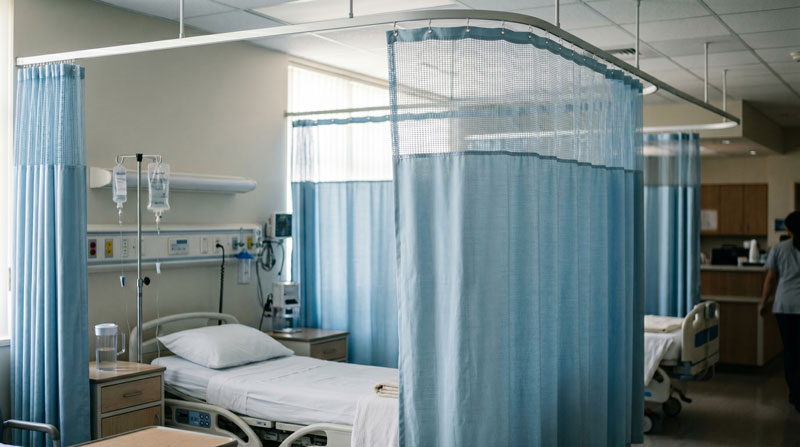
If it is just a curtain, why is it called a “cubical” curtain? The name perfectly describes the visual shape and function of the space it creates. When you pull the fabric all the way around a hospital bed, the ceiling track system guides it into a square or rectangular enclosure. From the outside, this three-dimensional, enclosed area looks just like a small cube.
Because the curtain visually and physically transforms an open space into these small, cube-like private blocks, it naturally became known as a cubical curtain.
You will also frequently see it called a cubicle curtain, which carries the exact same meaning of creating a small partitioned room. It is hung from a ceiling-mounted track system, allowing medical staff to easily slide it open or closed. The main purpose of this curtain is to provide visual privacy, maintain basic hygiene, and meet strict hospital safety compliance rules.
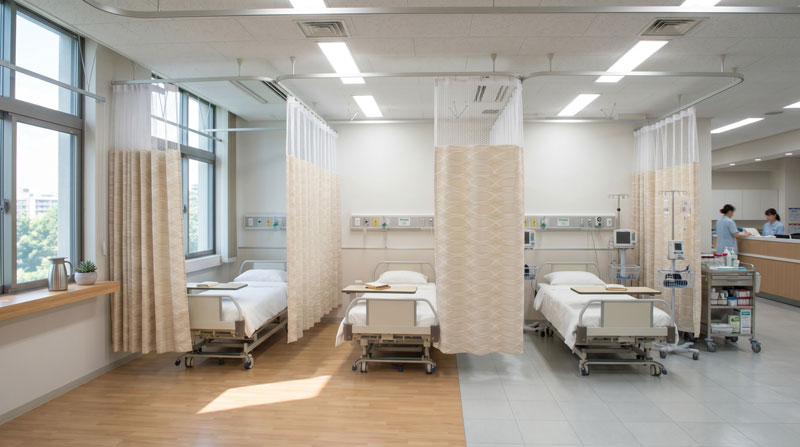
You will find these privacy systems in almost every corner of a modern medical facility. They are the go-to solution whenever a hospital needs to split a large room into smaller, usable sections without building solid walls.
Before we get into the deeper technical details, we need to understand the big picture. Why do hospitals care so much about a piece of cloth?
“In a healthcare environment, the simplest solutions often solve the most complex problems. A well-designed medical curtain provides instant space management while maintaining a safe, healing environment for the patient.”
A cubical curtain is much more than a window treatment. It is a highly engineered privacy system. It works hard every single day. Nurses grab it and pull it shut countless times a shift. It gets bumped into by medical carts. It faces potential splashes from liquids and chemicals. Despite all of this heavy use, it must remain perfectly clean, easy to move, and totally safe against fire hazards.
If a hospital uses the wrong type of fabric, the results can be serious. A curtain that cannot handle hospital laundry machines will fall apart. A curtain that is not properly treated for fire resistance can become a major hazard. That is why understanding this product is so important for anyone involved in healthcare facility management or procurement.
To understand why this “cube” concept is so popular today, we have to look back at how hospitals used to be built. Before the 1930s, hospitals often used large open wards. A single long room might have twenty or thirty beds lined up against the walls. There was zero privacy. Everyone could see what was happening to everyone else.
As modern medicine advanced, doctors and hospital managers realized this was bad for patient dignity and bad for stopping the spread of sickness. However, building solid walls between every single bed was too expensive and took up too much space. It also made it impossible for one nurse to keep an eye on multiple patients at once.
The solution was the ceiling track and the fabric partition. It allowed hospitals to keep the large open room design but instantly create a private, cube-like zone whenever necessary. This simple invention completely changed healthcare architecture and remains the standard today.
When buyers are looking to purchase these privacy systems, they do not always use the exact same words. Because these items are used all over the world in different types of clinics, the industry has developed several different names for the exact same thing. Knowing these terms is helpful for sourcing and buying the right product.
| Standard Name | What It Means | Common Usage |
|---|---|---|
| Cubical Curtain | The primary industry term, highlighting the cube-like space it creates. | Used by architects, manufacturers, and professional hospital buyers. |
| Cubicle Curtain | A highly popular alternative term meaning “a small partitioned space.” | Used interchangeably with cubical curtain across the medical industry. |
| Hospital Curtain | A generic term for any fabric curtain used in a medical setting. | Used widely by the general public and clinical staff. |
| Medical Privacy Curtain | Focuses heavily on the function of hiding the patient from view. | Used in outpatient clinics and specialized care centers. |
A note on industry terms: Whether you see this product listed as a Cubical Curtain, Cubicle Curtain, Hospital Curtain, or Medical Privacy Curtain, they all refer to the exact same ceiling-mounted partition system. The variety in names simply reflects different priorities of the user. Architects and facility managers might use “cubical” or “cubicle” to describe the physical space block it creates, while clinical staff often prefer “hospital” or “medical privacy” to describe its everyday clinical function. Knowing these variations helps buyers cast a wider net when sourcing from professional manufacturers.
We know they exist and we know what they are called. But what makes them so absolutely necessary that hospitals spend thousands of dollars installing them in every room? The answer comes down to privacy, space flexibility, hygiene, and fire safety.
Being a patient in a hospital is stressful. You are in an unfamiliar place, wearing an uncomfortable gown, and dealing with health issues. The last thing a patient wants is to feel exposed to strangers walking down the hallway. These curtains provide instant visual isolation. They help patients maintain their dignity while changing clothes, using a bedpan, or having sensitive conversations with their doctor. Psychological comfort plays a huge role in physical healing, and simple privacy is the first step.
Hospital real estate is incredibly expensive. A room that serves as a triage area in the morning might need to hold extra beds in the afternoon during a rush. Fixed walls cannot move. If you build a solid wall, that space is permanent. Fabric partitions allow a room to breathe. You can slide them out of the way against the wall to open up a massive space for large medical equipment to roll through, and then pull them shut five minutes later to create three private patient areas. This flexibility is priceless for high-density environments.
Nurses and doctors are incredibly busy. They need an environment that works with them, not against them. The ceiling track system allows a nurse to open or close a patient’s area with one hand in less than two seconds. It also allows nurses to hear what is happening. A solid door blocks sound. A curtain blocks sight but allows sound to pass, meaning a nurse can hear if a patient in the next bed is calling for help or struggling to breathe. It is the perfect balance of supervision and separation.
Healthcare-associated infections are a major problem globally. Because these privacy systems surround the patient, they are deeply involved in hospital hygiene. Throughout the day, the fabric is touched by patients, family members, doctors, and nurses. It is what the healthcare industry calls a high-touch surface. Hospitals solve this hygiene problem using a few different product options:
This is where the conversation gets incredibly serious. Once a fire breaks out, hospitals face an absolute nightmare: they are packed with people who cannot easily evacuate. Patients are connected to machines or are simply too weak to walk. Because of this, hospital buildings are strictly regulated to prevent fires from starting or spreading. A large piece of hanging fabric could act as a giant ladder for flames if it catches fire. That is why flame retardant cubical curtains are a mandatory legal requirement, tested against strict standards like NFPA 701 in North America or BS 5867 in the United Kingdom.
When sourcing these fabrics, buyers will encounter two main types of fire protection: FR (Flame Retardant) and IFR (Inherently Flame Retardant).
Because hospitals must wash privacy curtains frequently for infection control, standard FR fabrics are a poor long-term investment. At Begoodtex, we specialize exclusively in IFR fabrics. With IFR, you can wash the curtain dozens of times in high heat, and it will remain 100 percent compliant with safety codes. This drastically reduces long-term maintenance costs, eliminates the risk of human error in laundry tracking, and guarantees uninterrupted patient safety.
When you are buying these privacy systems, you are not just buying a sheet of cloth. You are buying an integrated system that relies on two main components: the fabric body and the ceiling track. If either part fails, the system is useless.
Most high-quality medical curtains are made from 100 percent polyester. Polyester is used because it is incredibly strong, does not wrinkle easily, holds dye well so colors do not fade in the wash, and most importantly, it can be manufactured to be fire-resistant.
If you look closely at a hospital curtain, you will notice that the top section is usually made of an open mesh netting with holes in it. This is not for decoration. It is a strict building code requirement. In the United States and many other countries, fire codes require that fire sprinklers on the ceiling must be able to spray water evenly across the entire room. If a curtain went all the way to the ceiling, it would block the water. The standard rule is a 20-inch mesh header. This allows water from the sprinklers to pass through to extinguish a fire, and it also allows smoke to rise to the ceiling to trigger the smoke detectors.
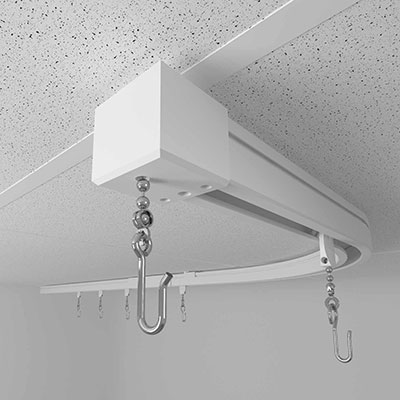
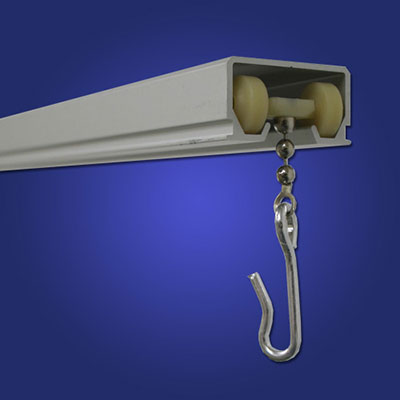
The fabric hangs on a track system. This is usually an aluminum rail screwed directly into the ceiling. Inside the track are small plastic wheels with metal hooks attached to them, called carriers or glides. The curtain has metal rings punched into the top edge, and these rings hook onto the carriers.
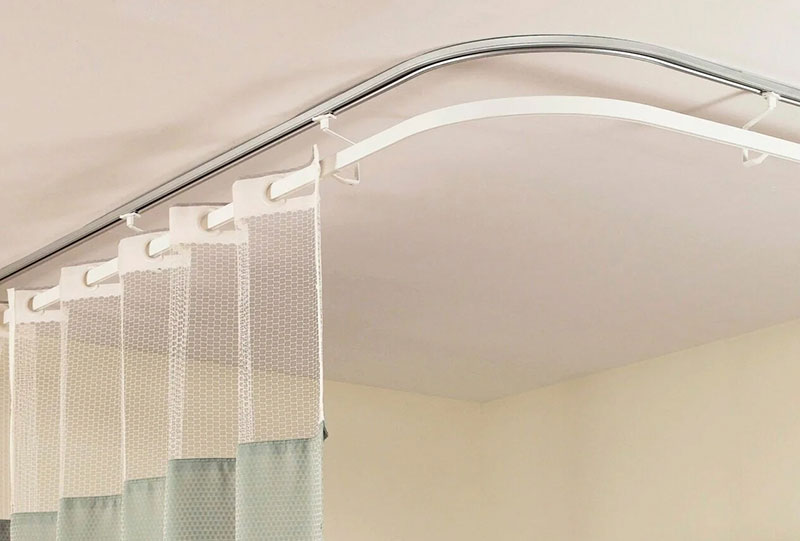
The track is just as important as the fabric. If the track is cheap or bent, the wheels will get stuck. A nurse will try to pull the curtain, it will jam, and the fabric will tear. High-quality systems use seamless aluminum tracks that can be curved around beds to create a perfect U-shape or L-shape without any snagging points.
If you are a purchasing manager tasked with outfitting a new clinic or replacing old inventory, you cannot just buy the cheapest cloth online. You need to evaluate the product like a piece of medical equipment. Here is the checklist you should follow to ensure you are buying the right product.
When searching for suppliers, B2B buyers often find the best results using terms like custom cubical curtains, hospital privacy curtain supplier, flame retardant hospital curtains, and medical curtain manufacturer. Partnering with a direct manufacturer like Begoodtex ensures you get factory-direct quality and strict quality control on the IFR fibers.
We have covered a lot of ground, from the history of hospital wards to the chemical differences in polyester threads. But let us bring it all back to the core product.
Whether you are talking about patient privacy, infection control, seamless track systems, or complex fire safety codes, the solution always circles back to the Cubical Curtain. It remains an irreplaceable part of medical infrastructure because it perfectly balances the hospital’s need for flexible space with the patient’s need for a private, dignified healing environment.
Ultimately, a high-quality privacy system is not just a piece of decor. It is a functional tool that keeps patients comfortable, helps nurses work efficiently, and, through advanced flame retardant technology, keeps the entire building safe. If hospitals want a better balance of privacy, hygiene, and safety, choosing the right Cubical Curtain is the most practical place to start.
While lengths vary based on ceiling height, standard sizes are usually 84 to 96 inches tall. The width should always be 10 to 15 percent wider than the ceiling track to ensure the fabric overlaps properly and does not sit stretched tight.
The mesh allows water from ceiling fire sprinklers to penetrate the room in an emergency. It also allows smoke to rise to trigger ceiling alarms and lets natural light from windows reach enclosed patient areas.
This depends on hospital policy and the specific ward. High-risk areas like isolation rooms require changing the curtain immediately after a patient leaves. Standard wards generally wash them every 3 to 6 months, or immediately if visibly soiled.
NFPA 701 is the standard test method used in North America for the flame propagation of textiles. If a fabric passes this test, it means it will not aggressively spread fire and is legally safe for commercial and healthcare use.
It depends on the facility’s needs. Washable IFR polyester is more cost-effective and environmentally friendly for long-term use in standard wards. Disposables are excellent for high-infection areas where washing the fabric poses too much risk of contamination.