Enter your details and we will send the requested document to your inbox.





Welding clothes are different from work clothes.
Normal work clothes need to be strong, easy to clean and resistant to dirt.. Welding clothes have to protect against sparks, hot metal splashes, heat and sometimes oil, water or even electrical flashes.
On a welding site sparks can hit your chest, sleeves, shoulders and pants. When welding overhead hot splashes can fall from above. If the wrong fabric is used it can burn holes quickly. It can even. Stick to your skin.
When choosing fabric for welding clothes don’t just ask:
“Is it fireproof?”
Ask instead:
“What kind of welding job is this fabric, for?”
Light welding, welding, overhead welding, shipyard work, pipeline work and hot workshop jobs all have different risks. The fabric must match the job not just pass a fire test.

Polyester is not a choice for welding clothes.
It is strong and easy to dye so it works well for uniforms.
Welding is different because of the heat and sparks.
When polyester gets too hot it can. Stick to your skin, which makes burns even worse.
For welding clothes there is a rule:
The material should not catch fire easily and it should not melt.
If a material does not meet this rule it is not good for welding clothes no matter how cheap it is.
The fabric, for welding clothing should not burn quickly. It should not melt or drip so welding clothing made from ordinary polyester is not a good idea.
FR cotton is one of the most widely used fabrics for welding clothing.
The reason is simple: welders are willing to wear it.
It feels more natural than many synthetic protective fabrics. It absorbs moisture better, and it is usually more comfortable for daily workshop use.
This matters more than many buyers think. If a garment is too stiff, too hot, or too uncomfortable, workers may roll up the sleeves, leave the front open, or stop wearing it properly. Then the protection on paper does not mean much in real life.
FR cotton is treated to resist flame. When sparks land on it, the fabric tends to char instead of continuing to burn. It is a common choice for general welding, repair workshops, fabrication shops, and light to medium welding work.
But FR cotton needs proper washing.
Its performance can be affected by the laundry process. Buyers should always check the care instructions, especially whether chlorine bleach is allowed. In many cases, chlorine bleach should be avoided because it may damage the FR finish.
A lot of welding clothing does not fail because it is worn out.
It fails because it is washed the wrong way.
Some welding garments are not destroyed by fire first. They are worn out by friction.
Workers rub against steel structures, tools, machines, floors, and rough workpieces all day. Pure cotton is comfortable, but in tougher environments, it may not last long enough.
That is why people often use FR cotton and nylon blends.
A common mix is eighty eight percent cotton and twelve percent nylon.
The cotton makes the garment comfortable to wear while the nylon makes it stronger and helps it longer when it gets rubbed or torn.
This kind of fabric can be a good choice for welding jobs where the garment needs to last longer.
But do not look only at abrasion resistance.
For welding clothing, the fabric still needs proper FR performance, wash durability, and no-melt/no-drip behavior. A stronger fabric is useful only if it is also safe.
Some welding sites are clean. Others are not.
In shipyards, vehicle repair shops, machinery workshops, and oil and gas maintenance, clothing may touch oil, water, mud, coolant, or cleaning liquid.
When it comes to water and oil water- and oil-repellent FR fabric can be really useful.
Water- and oil-repellent FR fabric helps reduce absorption. It keeps some contaminants on the surface of the water- and oil-repellent FR fabric. This means they do not soak in quickly.
There is one thing that buyers should be careful, about.
They should not judge the water- and oil-repellent FR fabric by a new sample.
A new water- and oil-repellent FR fabric may look nice when water beads up on it. However that does not mean the effect will stay after the water- and oil-repellent FR fabric is washed.
The water- and oil-repellent finishing can also make the garment less breathable.
If workers wear the clothing for a time the sample garments should be tested in real working conditions.
FR cotton is not enough for every welding job.
In factories that make petrochemicals fix airplanes, do manufacturing work with metals, weld pipelines or are near hot equipment the risk of getting hurt is really high.
These kinds of jobs might need fabrics like aramid oxidized PAN or other high-performance materials to protect workers.
Aramid fabric is strong. Can handle high temperatures. It does not melt easily which makes it good for use in gear that needs to work well in tough conditions.
Oxidized PAN fabric is also used to protect against temperatures. It is hard to catch fire and does not melt easily which makes it useful for jobs, like welding making heat barriers and protecting against local hot spots.
These materials give protection but they are also more expensive. They might feel heavier or harder to breathe depending on how the fabric is made.
So buyers should not choose a fabric only because the material sounds “high-end.”
If the job risk is not that high, over-protection can make the clothing too heavy and too hot. Workers may then avoid wearing it properly.
The right fabric should match the real risk.
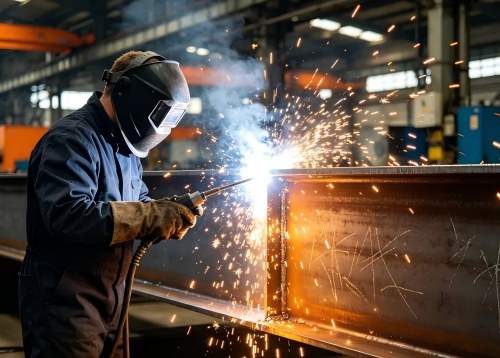
Leather is still widely used in welding protection.
Thick split cowhide is very good at blocking heavy sparks and hot spatter. A leather welding suit works well for welding, cutting and heavy welding jobs.
Many welders use leather aprons, sleeves and leg guards for this reason.
However leather has a drawback: it is heavy and does not breathe well.
A full leather welding suit offers protection but it can be very uncomfortable for long work hours and limits movement.
A mixed design is often an option.
You can use leather on high-risk areas like the chest, forearms and thighs. Use flame-resistant cotton or a cotton-nylon mix on the back, underarms and sides where heat builds up quickly.
This way you get protection where you need it most without the whole suit feeling like armor.
Leather welding suits are really useful, for protecting you from heat and sparks.
They help keep you safe on the job.
Some materials look very protective.
For example fabric and silicone-coated fiberglass.
They have heat resistance.
People do not usually choose them for everyday welding clothing.
Silicone-coated fiberglass is often used for things like welding blankets, sleeves, leg guards and equipment protection.
It can handle heat but it is usually too stiff to make a full garment.
Aluminized fabric is mainly used to reflect heat that comes from radiation.
It is more suitable for areas with furnaces, foundries, smelting zones or jobs, with a lot of heat.
For workshop welding these materials might be too heavy and unnecessary.
But in high-radiant-heat areas, regular welding fabric may not be enough.
So again, the material depends on the working environment.
| Fabric Type | Better For | What to Check |
|---|---|---|
| FR cotton | General welding, repair shops, daily workshop use | Washing method, comfort, FR durability |
| FR cotton/nylon | Welding jobs with more abrasion | Tear strength, wash durability, no-melt/no-drip |
| Water- and oil-repellent FR fabric | Sites with oil, water, mud, or light liquid contamination | Repellent durability, breathability, after-wash performance |
| Aramid | Petrochemical, aviation, heavy industry, higher-risk jobs | Cost, comfort, protection level |
| Oxidized PAN | Heavy welding, heat barriers, high-temperature areas | Garment design, comfort, heat protection |
| Leather | Overhead welding, cutting, heavy sparks, local reinforcement | Weight, breathability, movement |
| Aluminized / silicone-coated fiberglass | High radiant heat, welding blankets, sleeves, leg guards | Usually not suitable for full daily garments |
This table is only a starting point.
The final choice should still depend on welding type, working posture, spark level, washing method, wearing time, and the required standard.
 Flame Resistant Dark Blue Polyester Woven Velvet Blackout Curtain Fabric for Contract Projects | 540 g/m² | 142 cm | EN 13773 Class 1
 Flame Resistant Woven Velvet, Polyester in Dark Red with Fade Resistance for Bulk Orders | 370 g/m² | 142 cm | EN 13773 Class 1
 Flame Retardant Technical Polyester Blackout Roller Blind Fabric for Global Project Supply | 420 g/m² | 300 cm | NFPA 701
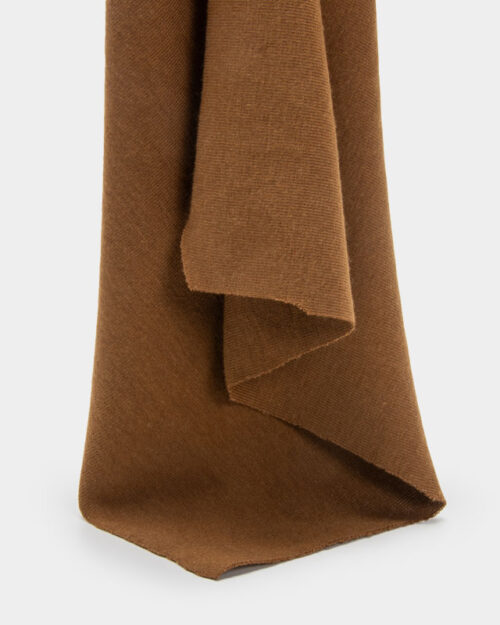 Inherent Flame Retardant Modacrylic Rib Knit Fabric High Elasticity with Wear Resistance for Workwear | 260 g/m² | 175 cm | EN ISO 11612
 Inherent Flame Retardant Heavy-Duty Cotton Blend Twill Fabric- Industrial Workwear with Wear Resistance | 395 g/m² | 150 cm | EN ISO 11612
Welding clothing often refers to ISO 11611.
Class 1 is usually for lower-risk welding, where sparks and spatter are lighter.
Class 2 is for higher-risk work, such as heavy welding, overhead welding, shipbuilding, pipeline work, and cutting.
So Class 1 should not be used for every welding job.
At the same time, not every worker needs Class 2. If the job is light TIG welding in a clean workshop, Class 2 may be more protection than needed.
Buyers should match the class to the actual job.
Other standards may also appear. EN ISO 11612 focuses more on heat and flame protection. NFPA 2112 is more common in North America for flash fire protection.
These standards are useful, but they are not the same. Each one is designed for a different risk.
Welding fabric is often judged by GSM.
Heavier fabric usually gives better resistance to burn-through and spatter. For example, 330–350 GSM can work for general workshop welding, while 400–450 GSM may be better for heavy welding or overhead welding.
But thicker is not always better.
If the garment is too heavy, workers get tired faster. If it is too hot, they may not wear it properly. In summer or enclosed workshops, heat stress can become a real safety issue.
A better approach is often zone protection.
Use a suitable fabric weight for the main garment, then add leather or stronger material on high-risk areas.
That is usually more practical than making the whole garment extremely thick.
Many welding clothing inquiries start with price and fabric weight.
Those are important, but they should not be the first questions.
Before choosing fabric, it is better to understand the job:
These answers decide the fabric direction.
Some jobs only need FR cotton.
Some need FR cotton/nylon for better abrasion resistance.
Some need leather reinforcement.
Some high-risk jobs need aramid, oxidized PAN, or aluminized materials.
Even in the same factory, different welders may need different protection.
One fabric for every worker is not always the safest choice.
At Begoodtex, we usually do not recommend welding fabric before understanding the working conditions.
For workshop welding FR cotton or FR cotton and nylon is a good choice.
The key things to think about are comfort, how well it holds up to washing. If it meets the ISO 11611 level.
If the job involves a lot of rubbing or sparks you might need reinforcement in certain areas.
For jobs in petrochemical, aviation, metallurgy or where theres a lot of heat you might need better materials like aramid oxidized PAN or special composite fabrics.
If the work site has sparks, oil, water and dirt all, at once you could consider FR fabric thats water and oil resistant.
You have to check how well it breathes and how it performs after washing.
Good welding clothing is not just about thick fabric.
It needs to handle sparks, friction, washing, and real workshop use. It also needs to be comfortable enough that workers are willing to wear it properly.
No. Ordinary polyester may melt, drip, or stick to the skin under high heat. Welding clothing should use proper flame-retardant or heat-protective fabric.
No. FR cotton is good for general welding, but heavy welding, overhead welding, cutting, or high-radiant-heat work may need stronger protection or leather reinforcement.
Class 1 is for lighter welding risks. Class 2 is for heavier spatter, overhead welding, cutting, and more demanding welding work.
Leather blocks sparks well, but it is heavy and not breathable. Many garments use leather only on high-risk areas, while using FR fabric on other parts for better comfort.
It depends on the fabric and finishing process. The washing method is very important. Chlorine bleach should usually be avoided because it may damage the FR finish.
It is useful when workers may face sparks plus oil, water, mud, or light liquid contamination. Buyers should check the repellent durability, breathability, and after-wash performance.


