Get in touch
Thank you for reaching out! Please tell us more about your needs — our expert team will get back to you within 24 hours.
Get in touch
Thank you for reaching out! Please tell us more about your needs — our expert team will get back to you within 24 hours.
At the beginning of 2026, the global industrial sector encountered a supply chain shock unseen in decades. Since the outbreak of the U.S.–Israel–Iran regional conflict on February 28, 2026, the operational logic of the flame-retardant (FR) textile industry has been completely restructured. Originally stable raw material supplies, quoting mechanisms, and logistics routes fell into extreme volatility within just two weeks. For practitioners in the global industrial and safety protection sectors, this represents a direct challenge concerning production costs and capacity security.

As the world’s most critical energy chokepoint, the strategic position of the Strait of Hormuz is irreplaceable. According to real-time monitoring data from Reuters Maritime, influenced by the conflict situation and the resulting regional blockade, maritime traffic through the strait has plummeted by nearly 90% over the past week. As a passage carrying approximately 20% of the world’s daily oil consumption, its effective closure means that the supply of petrochemical raw materials required for producing synthetic FR fibers is on the brink of interruption. This turmoil is not limited to physical shortages of raw materials; the blockade of the strait has led to a rapid depletion of liquidity in the global synthetic fiber market, with many textile companies in Europe and Asia facing various risks due to the cut-off of raw material supplies.
“The 2026 conflict directly strikes at the core of the global industrial safety system—the energy supply hub.”

| Date (2026) | Event and Impact on the FR Textile Industry |
|---|---|
| Feb 28 | Regional conflict officially breaks out. Crude oil prices surge 15% within 24 hours; the petrochemical market enters a state of high alert. |
| Mar 1–5 | Due to regional instability, the supply of polymer chips and raw materials required for synthetic fiber production drops by nearly 30%. |
| Mar 7 | According to a Financial Times report, crude oil prices once exceed 125 USD/barrel. |
| Mar 9 | Due to severe shortages, spot prices for flame-retardant fibers (such as inherently FR fibers) rise by 10-20%. |
| Mar 11 (Today) | Although crude oil has currently pulled back to 92-94 USD/barrel, the chaotic pricing of fabrics remains due to the backlog effect from the previous period. |
As of early March 2026, the drastic fluctuations in crude oil prices have been directly transmitted to the very bottom of the FR fabric market. The reason the chemical raw material supply chain has suffered a deep impact is primarily due to the destruction of core oil facilities in the Middle East and the blockade of export shipping routes. Since the production of synthetic fibers such as FR polyester and FR nylon highly depends on petrochemical precursors extracted from crude oil (such as Paraxylene and Ethylene Glycol), the destruction of upstream facilities leads to production interruptions, while the blockade of export routes cuts off the “provisions” for global factories.
In the FR textile industry, the raw material supply for flame-retardant polyester chips faces severe challenges. As core components for polyester production, the supply of Purified Terephthalic Acid (PTA) and Ethylene Glycol (MEG) highly depends on a stable petrochemical industrial system. Affected by the regional situation, the extraction and refining of global petrochemical raw materials have been hindered, leading to an increase in the production costs of chemical precursors such as PTA and MEG within the last month. This drastic price volatility at the raw material end puts downstream production factories under immense cost pressure, and supply uncertainty may lead to an inability to schedule production according to established plans.
In this extreme market environment, traditional long-term price agreements have almost become invalid. To reduce the risks of hourly fluctuations, production suppliers have been forced to adopt extremely conservative quoting strategies. Quote validity periods, which were originally one month, have now been shortened to 48 hours or even 24 hours. For large international orders, suppliers have begun to adopt a “real-time confirmation” principle, meaning the quote is only valid at the moment of inquiry.
An extremely flexible mechanism of “one quote per order” has begun to be widely implemented within the industry. Even for long-term partners, every new order must have its costs recalculated based on the spot price of raw materials at that time. Furthermore, even during the contract signing phase, suppliers often require a “secondary quote confirmation” before final ordering and payment to prevent losses caused by fluctuations in exchange rates or crude oil prices during the few days of contract processing.
If the Strait of Hormuz is blocked, will shipping routes from Asia to Europe and the Middle East be affected? The simple answer is: they will be extremely seriously affected, especially for goods destined for the “Gulf Six” countries and all Eurasian routes relying on Middle Eastern energy.
This is the route most directly hit by the impact. The destination blockade has caused major ports inside the Persian Gulf (such as Jebel Ali in Dubai, Dammam in Saudi Arabia, and Hamad in Qatar) to fall into stagnation. Once blocked, bulk commodities, consumer goods, and construction materials will be unable to enter these countries via sea. Currently, logistics giants like Maersk and CMA CGM have suspended relevant bookings, and goods originally destined for these ports can only be unloaded at ports in Oman outside the strait, and then attempt transshipment via extremely limited and expensive land routes.
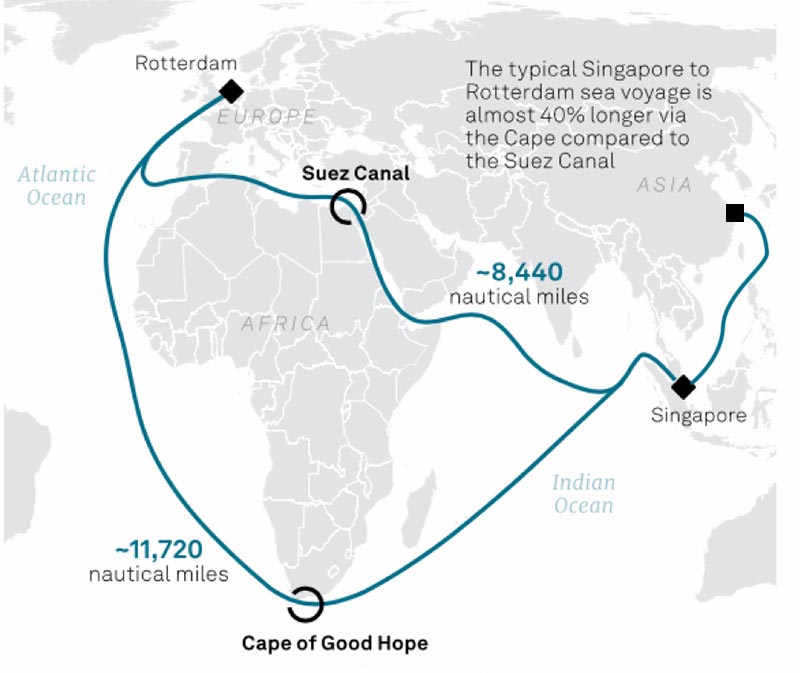
Although the main route from Asia to Europe usually passes through the Strait of Malacca and the Suez Canal without directly entering the Persian Gulf, the ripple effects remain massive:
The impact of this crisis shows a clear “category differentiation.” The most severely affected are synthetic flame-retardant terminal products such as Polyester, Nylon, and Acrylic. Because the molecular chains of these fibers originate from crude oil, their raw material extraction highly depends on the energy environment, resulting in the deepest cost impact. Since early March, the overall market quotes for Man-Made Fibers (MMF) have risen by about 20%, and the price volatility of high-end Nylon 66 raw materials has far exceeded the average level.
In contrast, natural fibers such as Cotton are less affected. Although the supply of chemical flame-retardant additives required in the production process is restricted due to petrochemical logistics disruptions, because the cotton substrate supply is relatively independent, its price volatility is lower than that of synthetic fibers.
As flame-retardant materials are ubiquitous in modern society, this double crisis of raw materials and logistics has impacted the following key industrial sectors:
In the commercial space and hospitality sector, this impact is particularly evident, with the industry facing unprecedented cost volatility challenges. Core categories affected include:
Since these fields have rigid requirements for fire safety, in a volatile market environment, choosing products such as BEGOODTEX inherently flame-retardant polyester decorative fabrics and FIREPROOF flame-retardant pure cotton fabrics has become a key strategy for companies to maintain fire safety and cost competitiveness.
The healthcare and technical application sectors have also felt significant supply pressure. Stable supply for core categories is vital for the normal operation of healthcare environments, primarily involving:
Targeting these industries with high standards for both hygiene and safety, the BEGOODTEX Medical Grade FR Series effectively adapts to the high-frequency turnover needs of medical environments by balancing antibacterial and fire safety characteristics. Meanwhile, raw material shortages have also prompted relevant industries to actively seek material solutions with greater supply resilience while maintaining safety standards.
In the industrial, transportation, and special protection sectors involving life safety, supply chain stability is directly related to the safety protection of personnel. The scope of impact in this field covers:
To address protection challenges in extreme environments, the FIREPROOF Industrial Arc-Rated (AR) and Inherent FR Series provides professional and continuous safety security, helping relevant industries build a solid protective barrier during this wave of global supply chain shock, ensuring that safety needs from industrial protection to special application fields are met.
Image Placeholder: BEGOODTEX high-performance flame-retardant fabrics in extreme industrial environment testing
The evolution of the situation in 2026 has pushed the flame-retardant textile industry into a “wartime supply state.” Damage to oil facilities and the blockade of export routes have jointly driven up petrochemical costs. Facing quote validity periods shortened to 24 hours and the paralysis of Persian Gulf routes, timely decision-making and supply chain diversification are crucial. To ensure your capacity security, contact BEGOODTEX technical experts immediately. We will provide you with optimized safety protection solutions and supply chain hedging strategies based on real-time market data.
The core reason is that crude oil prices reached a peak exceeding 125 USD and production was disrupted, causing the cost of polyester chip raw materials (PTA/MEG) to rise by 15%-25%. Suppliers must hedge risks through ultra-short-term quotes.
Ports inside the Persian Gulf are nearly paralyzed, and relevant bookings have been suspended. Goods usually need to be unloaded at ports in Oman and converted to expensive land transport, facing force majeure unloading risks.
In terms of cost stability, yes. Cotton materials are less affected by oil crisis fluctuations. During synthetic fiber shortages, the BEGOODTEX flame-retardant cotton series is an ideal budget-friendly alternative.
The detour will increase the voyage by 10–14 days, and due to rising fuel costs and insurance premiums, freight rates may double.
Affected by extreme volatility, quote validity periods are usually shortened to 24–72 hours. For bulk orders, it is recommended to adopt a secondary confirmation model before final ordering.