Enter your details and we will send the requested document to your inbox.





Many buyers ask the same question when they look for fire-resistant fabric:
“How degrees can it withstand?”
That is a good question but it does not give a complete picture.
Different materials, like carbon fiber, aramid and fiberglass can handle temperatures but they serve different purposes.
For example a welding blanket, fire curtain, firefighter suit arc flash garment and equipment insulation cover all require materials.
Using the material even if it is expensive may not provide the desired results.
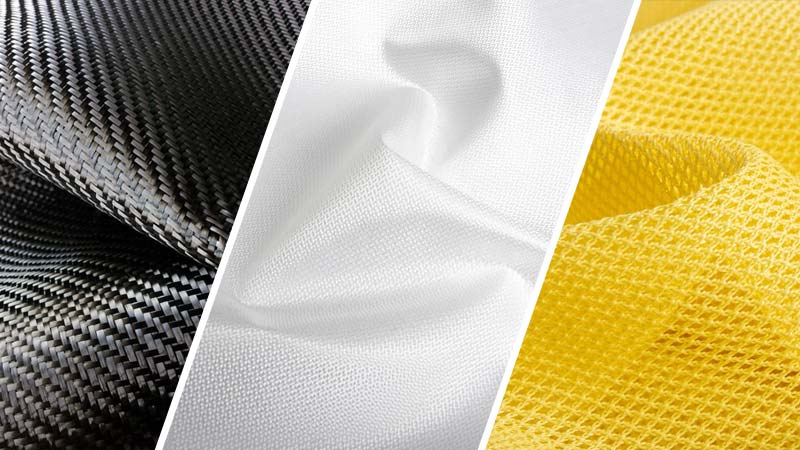
Carbon fiber is composed of at least 90 percent carbon. It is produced through the high-temperature carbonization of precursor fibers like polyacrylonitrile (PAN). In the flame retardant industry, we consider it the gold standard for environments where temperatures exceed 1000 degrees C.
Heat Resistance: Carbon fiber remains structurally stable at temperatures exceeding 1000 degrees C and can withstand up to 3000 degrees C in inert environments.
Carbon fiber is light, strong, and stable under high heat. It does not melt and drip like many ordinary synthetic fibers.
It is often used in aerospace heat shields, welding blankets, equipment insulation layers, and antistatic composite materials.
But carbon fiber also has a clear weakness.
It is relatively stiff and brittle. It is not very soft, and it does not like repeated bending. If you use pure carbon fiber fabric for normal protective clothing, the wearing experience is usually not good.
Carbon fiber is also a conductor of electricity. This is really useful when you need to stop electricity from building up but it can be a problem when you need to keep electricity from flowing.
So carbon fiber is a choice for things that need to keep heat from escaping for systems that need to stop static electricity and, for things made from lots of different materials.
Carbon fiber is usually not the thing to use to make the clothes that workers wear every day because carbon fiber has some issues.
Aramid fibers (aromatic polyamides) are famous under brand names like Kevlar and Nomex. These are the workhorses of the safety industry. They do not have a melting point and only begin to degrade or carbonize at temperatures above 400 degrees C.
Heat Resistance: Aramid fibers have no melting point and begin to carbonize or degrade only when exposed to temperatures above 400 degrees C.
Aramid is widely used in firefighter suits, industrial flame-resistant clothing, arc flash Its value is not only heat resistance. More importantly, it can be made into protective clothing that people can actually wear and move in.
When exposed to heat, aramid does not melt, drip, or stick to the skin like ordinary synthetic fibers. This is very important for PPE.
Workers need to bend, raise their arms, climb ladders, squat, and work for long hours. If the fabric is too stiff, too heavy, or too scratchy, people will not want to wear it properly.
This is where aramid performs well. It has heat stability, strength, and flexibility at the same time.
Aramid also has different types.
Meta-aramid, such as Nomex, is more commonly used for heat and flame protection. It is often seen in firefighter suits, racing suits, and industrial FR clothing.
Para-aramid, such as Kevlar, is known more for strength, tear resistance, and cut resistance. It is often used in cut protection, ballistic protection, or reinforcement layers.
Many high-end PPE fabrics use more than one type of aramid. One fiber helps with heat protection, while another improves strength and durability.
Aramid is not perfect either.
It does not like strong acids. It should not be washed with chlorine bleach. Long-term strong UV exposure may also cause color change and strength loss.
So aramid products still need proper care. For long outdoor use, an outer protective layer or proper storage is often needed.
 Anti-Static Fireproof Aramid IIIA Henley Shirt Garments for Protective Clothing with Wholesale and Custom Supply Options | EN ISO 11612
 Inherent Flame Retardant Double Layer Aramid High Temperature Gloves 500°C Heat Cut Resistant for Workwear | EN ISO 11612
 Fireproof Aramid Hood High Temperature Resistant for Bulk Safety Garment Production with Custom Production Options | EN ISO 11612
Glass fiber is made from silica-based compounds. It is the most widely used reinforcement and insulation material due to its low cost and high melting point (around 1100 degrees C).
Heat Resistance: Glass fiber handles continuous service temperatures up to 550 degrees C and possesses a high melting point of approximately 1100 degrees C.
Fiberglass is very common in industrial fire protection.
It is relatively cost-friendly, stable under heat, and also has good electrical insulation. It is often used for steam pipe wrapping, fire curtains, welding blankets, equipment insulation covers, and heat shields.
But fiberglass is not a good choice for normal clothing.
After repeated bending, fiberglass filaments can break more easily. When it is close to the skin, it may also feel itchy or uncomfortable.
So fiberglass is better when it stays in place.
Hanging, wrapping, laying, covering — these are good uses for fiberglass.
When the product needs to be worn on the body, aramid is usually the more practical choice.
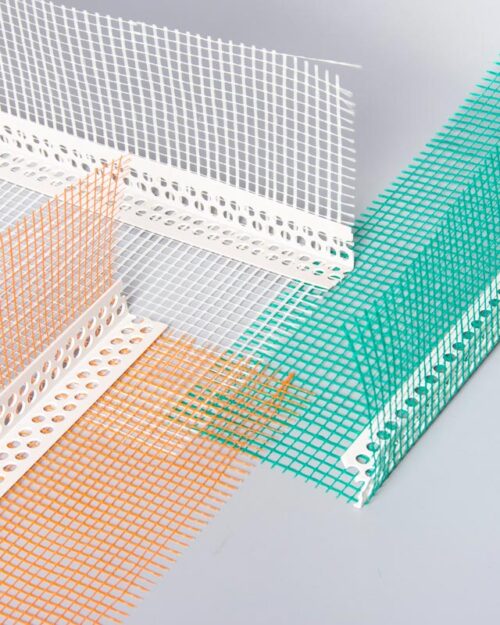 Fireproof High Temperature Fiberglass Mesh Fabric for Wholesale Equipment Cover Projects from a China Textile Mill | 60 g/m² | 150 cm
 Acoustic Inherent Flame Retardant Woven Fiberglass Fabric for Insulation with OEM Production Support | 315 g/m² | 100 cm
 Inherent Flame Retardant High Silica Fiberglass Fabric for Contract Insulation Projects | 600 g/m² | 100 cm | EN ISO 14116
| Material | Better For | Main Strength | What to Watch |
|---|---|---|---|
| Carbon fiber | High-temperature insulation, welding blankets, aerospace heat shields, antistatic composites | High heat stability, low weight, stable size | Stiff, brittle, conductive, not ideal for daily clothing |
| Aramid | Firefighter suits, industrial FR clothing, arc flash garments, racing suits, cut protection | Heat stable, strong, flexible, wearable | Avoid strong acids, chlorine bleach, and long UV exposure |
| Fiberglass | Pipe wrapping, fire curtains, welding blankets, equipment insulation | Cost-effective, heat stable, good electrical insulation | Itchy near skin, not ideal for clothing, can suffer from repeated bending |
This table is only a starting point.
Before placing an order, you still need to check the real application, working temperature, bending frequency, skin contact, electrical risk, chemical environment, and cleaning method.
For protective clothing, one basic rule is very important:
The fabric should not melt and drip.
Many ordinary synthetic fibers can melt under high heat. If melted material sticks to the skin, the injury can become much worse.
Aramid does not melt. Carbon fiber also does not melt and drip like ordinary synthetic fibers. This makes them valuable in thermal protection.
Fiberglass itself is also difficult to burn, but it is not comfortable to wear and does not handle repeated bending as well as clothing fabrics.
So when choosing PPE fabric, do not only ask:
“How many degrees can it withstand?”
Also ask:
Will it melt?
Will it shrink?
Will it become hard?
Will stored heat keep moving toward the skin after the flame is gone?
These questions are often more useful than one temperature number.
Even when the fiber is the same, the fabric can behave very differently.
Take aramid as an example.
A plain weave is stable and easier to control in cost. It is often used for fire curtains, insulation fabrics, and welding blankets.
A twill weave is usually softer and has better drape, so it is more suitable for workwear and protective clothing that needs movement.
A satin weave fabric has a smooth surface. It can also be made dense. This type of fabric is often used for making parts for airplanes, spacecraft structures or other things that need to fit together perfectly.
When buying this fabric people should ask questions than just:
“Is it made from aramid fiber?”
They should also find out:
How is the fabric woven?
How thick is the fabric?
Does it have a coating, on it?
Is it attached to another layer of material?
What will the fabric be used for?
The same type of fiber can be used in different ways just by changing how it is woven.
 Anti-Static Fireproof Oxidized PAN Fabric for Safety Garment Production with Contract Supply Options | 400 g/m² | 115 cm | EN ISO 11612
 Fireproof 1800°C Oxidized PAN Woven Fabric for Bulk Protective Workwear Production from a China Textile Mill | 350 g/m² | 160 cm | EN ISO 11612
 Fireproof 1800°C Oxidized PAN Knitted Fabric for Flame-Resistant Garment Projects with Bulk Order Support | 200 g/m² | 160 cm | EN ISO 11612
Many high-temperature projects are not only about temperature.
The site may also have oil, acid, alkali, solvents, moisture, dust, vibration, or cleaning chemicals. Different materials age differently in these environments.
Carbon fiber is really great when it comes to withstanding chemicals and it works well in some really tough environments.
Aramid is very strong. You have to be careful because it does not do well with strong acids or chlorine bleach.
Carbon fiber and Aramid are not the options Fiberglass is also good, at resisting chemicals however it can be damaged if it is vibrated or rubbed against something for a long time or if it is bent over and over again which can affect the structure of the Fiberglass.
So the real working environment should be explained before choosing the fabric.
If it is for clothing, explain how it will be washed.
If it is for equipment wrapping, explain whether there is vibration, moisture, or friction.
If it is for antistatic use, explain the conductivity requirement and electrical environment.
Materials are not used in a laboratory. They go into workshops, machines, outdoor sites, and laundry rooms.
The clearer the working conditions are, the less likely the supplier will recommend the wrong material.
Different products need high-temperature materials.When working on high-performance flame retardant fabric projects, Begoodtex does not recommend materials based solely on temperature resistance. Instead, we first evaluate the end use of the product and the specific fire risks it may face.
For things like welding blankets and insulation covers and pipe wrapping and fire curtains you should think about using fiberglass or high-silica fiberglass or carbon fiber or coated composite materials.
These high-temperature materials are good because they can block heat.
They do not have to be soft like the clothes we wear.
High-temperature materials, like these are used for welding blankets and fire curtains. They work well because they can block heat.
For firefighter suits, industrial FR clothing, racing suits, and arc flash garments, aramid or aramid blends are usually more suitable. They provide heat protection and are more practical for wearing and movement.
If the project needs both antistatic performance and high-temperature resistance, carbon fiber may be added. But because it is conductive, it must not conflict with electrical insulation requirements.
If the project is mainly about cut resistance or lightweight mechanical protection, and there is no high-temperature risk, UHMWPE can be considered.
Many mature solutions do not rely on only one fiber.
Carbon fiber gets brittle when used alone so we mix it with aramid to make it less brittle.
Aramid is often mixed with types of fibers to get a good balance of strength, cost and how it feels to the touch.
Fiberglass can be coated with silicone, aluminum foil, PU, or other finishes to improve water resistance, abrasion resistance, heat reflection, or surface protection.
Good high-temperature protective materials are often built as a system, not chosen as a single fiber.
Pure carbon fiber is usually too stiff and brittle for normal protective clothing. It is better for high-temperature insulation, welding blankets, composite materials, or antistatic structures. In wearable products, it is more often used in blends or functional layers.
Aramid does not melt, has good heat stability, strong mechanical performance, and can be made into wearable fabric. It is more practical for clothing than fiberglass or pure carbon fiber.
Fiberglass can break after repeated bending and may feel itchy when it touches the skin. It is better for pipe wrapping, fire curtains, welding blankets, and equipment insulation.
UHMWPE is good for cut resistance, ballistic protection, and lightweight mechanical protection. But it has a relatively low melting point, so it is not suitable as the main layer for high-temperature fire protection.
Carbon fiber has very strong high-temperature stability and is suitable for special industrial insulation and heat protection. But for wearable protective clothing, aramid is often more practical.
Plain weave is stable and suitable for fire curtains and insulation fabrics. Twill is softer and more suitable for protective clothing. Satin has a smoother surface and is better for curved composite parts or denser structures. The final choice depends on the product.
