Enter your details and we will send the requested document to your inbox.





Modern offices, meeting rooms, recording studios, cinemas, and theatres are no longer judged only by decoration style.
A space needs to look good. It also needs to sound clear, feel comfortable, and stay safe.
In an open-plan office, too much echo can make conversations, phone calls, and video meetings interfere with each other. In a meeting room, poor acoustic treatment can make voices sound empty, messy, and tiring. For recording studios, cinemas, and theatres, the requirement is even higher. Wall materials, acoustic panels, and surface fabrics can all affect the final sound performance.
At the same time, many of these spaces are commercial or public areas.
That means interior textile materials may also need to meet fire safety requirements.
This is why flame-retardant acoustic fabrics are getting more attention in office, studio, hospitality, and public building projects.
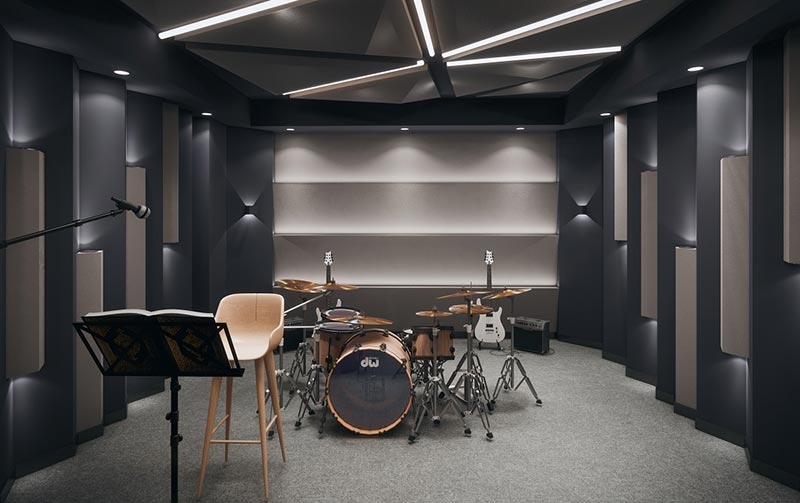
Flame-retardant acoustic fabric is a textile material used for acoustic and fire-safety-related interior applications. It is often used to cover acoustic panels, wall systems, and decorative interior surfaces.
On one side, it needs flame-retardant performance. This can help slow flame spread and, in many cases, help the fabric self-extinguish after the ignition source is removed.
On the other side, it also needs to work with sound.
For acoustic panels, the fabric should allow sound to pass through the surface and reach the acoustic core behind it. That core may be acoustic foam, fiberglass wool, rock wool, polyester fiber, or another sound-absorbing material.
So the fabric is not only decoration.
It also affects sound transmission, surface appearance, fire safety, and long-term installation performance.
First, the fabric itself should have flame-retardant performance, or it should be treated properly to meet the fire requirement of the project.
Second, the fabric structure should not be too dense or too closed.
Why?
Because if the surface fabric blocks sound, the acoustic material behind it cannot work properly. Sound needs to pass through the fabric before it can be absorbed by the core material.
Appearance also matters.
For commercial interiors, buyers usually need suitable color, texture, hand feel, abrasion resistance, and installation stability. A fabric may pass a fire test, but if it looks poor or becomes loose after installation, it will still create problems for the project.
Many buyers ask directly:
“What is the NRC of this fabric?”
This question needs context.
NRC means Noise Reduction Coefficient. It is commonly used to describe the sound absorption performance of a material or system.
But for acoustic wall panels, the final NRC is usually not decided by the surface fabric alone.
It depends on the whole structure.
| NRC Value | Sound Absorption Level | Recommended Applications |
|---|---|---|
| 0.30 – 0.50 | Moderate | Offices, meeting rooms |
| 0.50 – 0.70 | High | Meeting rooms |
| 0.70 – 0.90 | Very high | Recording studios, cinemas |
High-performance acoustic fabric panels allow sound to pass through the fabric surface and then be absorbed by the acoustic layer behind the panel.
When used as acoustic wall covering, these textiles help control reverberation and reduce background noise. The result? Better speech clarity and a more comfortable sound environment.
For example:
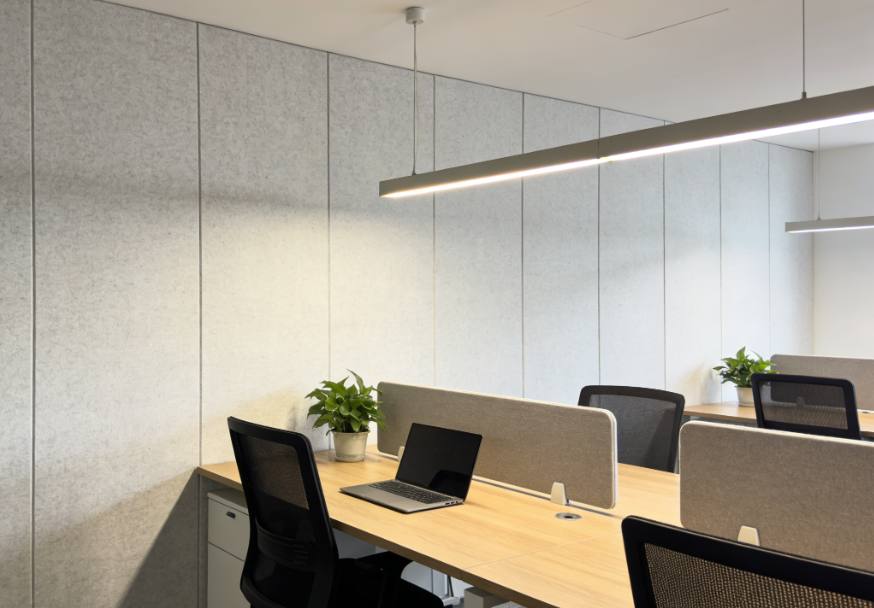
Office acoustic panels can help reduce conversation noise in open workspaces.
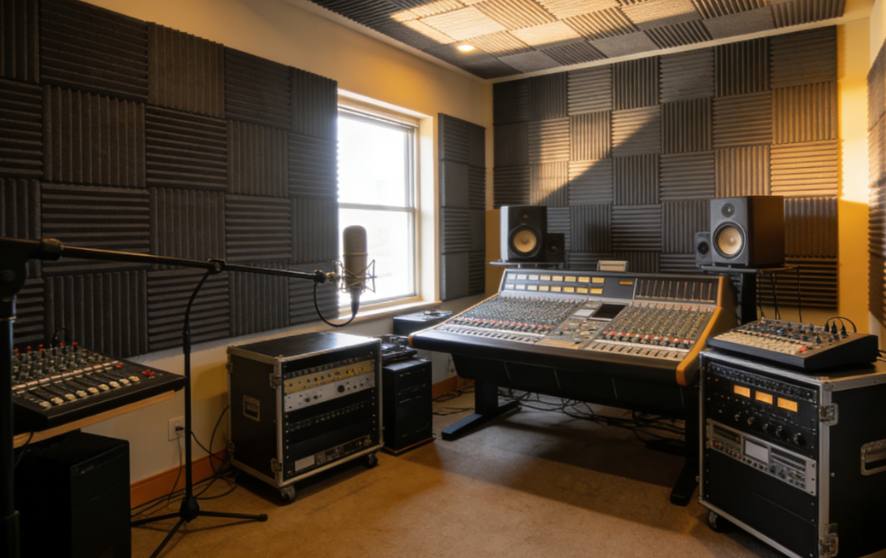
Recording studio acoustic fabrics can help improve sound clarity during recording.
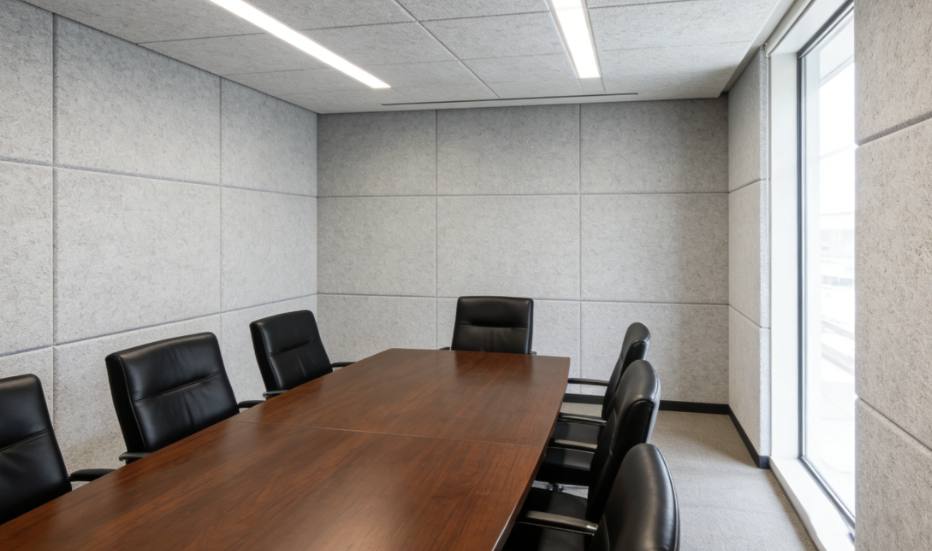
Cinema acoustic wall panels can improve the audience’s audio experience.
But one point should be clear.
The same fabric can perform very differently when used with different acoustic cores, panel thicknesses, densities, air gaps, and installation methods.
So buyers should not judge acoustic performance by fabric alone.
Wall coverings, curtains, upholstered panels, and decorative textiles used in offices, hotels, theatres, cinemas, schools, and public buildings usually need to consider fire safety.
Different markets and different applications may require different standards.
| Standard | Common Application Direction | What Buyers Should Note |
|---|---|---|
| NFPA 701 | Curtains, hanging fabrics, decorative textiles in the U.S. market | Often used for drapery and hanging textiles. It does not automatically cover all wall materials. |
| BS 5867 | Curtains and decorative fabrics in the UK market | Common for indoor curtains and flame-retardant decorative textiles. |
| EN 13773 | Curtains and hanging textiles in the European market | Often used for curtains, drapes, and similar hanging fabrics. |
| EN 13501-1 | European fire classification for construction products | Often used for building material systems. The tested structure must be checked. |
| ASTM E84 | U.S. surface burning test for building materials | Often used for wall, ceiling, panel, or system-type materials. |
Here is where many mistakes happen.
Curtain standards, wall material standards, building material classifications, and acoustic panel system tests are not the same thing.
A fabric that passes NFPA 701 does not automatically mean it will meet ASTM E84 when used as part of an acoustic wall panel.
A material that reaches a certain EN 13501-1 classification also needs to be checked carefully. Was the test done on a single fabric layer? Or was it tested as a complete system?
For real projects, this difference matters.
Common materials for flame-retardant acoustic fabrics include flame-retardant polyester, fiberglass fabric, flame-retardant blended fabrics, and other functional textiles.
Different materials are better suited for different project needs.
| Material Direction | Main Features | Common Applications |
|---|---|---|
| Flame-retardant polyester fabric | More color options, better hand feel, strong decorative effect | Offices, meeting rooms, hotels, general commercial spaces |
| Fiberglass fabric | Higher fire resistance and good dimensional stability, but the hand feel may be stiffer | High fire-rating wall surfaces, cinemas, theatres, public buildings |
| Flame-retardant blended fabric | Can balance appearance, strength, and function | Commercial acoustic panels, upholstered panels, decorative wall surfaces |
| Coated or laminated fabric | Can add blackout, stain resistance, or other functions | Special projects, but acoustic transparency and fire performance must be checked |
When choosing a fabric, buyers should not only look at color.
They also need to check whether the fabric is acoustically transparent enough, whether it matches the panel structure, and whether the fire test covers the actual finished material.
In public spaces, fire safety is not only about whether the fabric burns.
Smoke, melt dripping, and harmful gases also matter.
Some materials may not produce a large flame, but they can generate heavy smoke. Some synthetic materials may soften, shrink, or even drip when exposed to heat.
In crowded spaces, these issues can affect evacuation safety.
That is why high-requirement projects often look beyond a simple “flame-retardant” label.
They may also pay attention to smoke production, melt dripping, harmful gas release, and whether the material can keep some structural stability under heat.
This is especially important for cinemas, theatres, transport spaces, schools, hospitals, and large public buildings.
For these projects, fire safety should be judged by overall performance, not by one single flame-retardant test only.
When selecting acoustic materials for fire-safe wall panels, the following checklist can be useful.
| Selection Factor | Recommended Direction |
|---|---|
| Acoustic performance | NRC ≥ 0.6 |
| Fire certification | NFPA 701 / BS 5867 / EN 13773 |
| Material | Flame-retardant polyester fiber |
| Durability | Durable flame-retardant textile |
| Smoke performance | Low-smoke acoustic fabric |
| Application | Commercial acoustic panels |
A professional manufacturer such as BEGOODTEX can provide integrated solutions for architectural acoustic fabrics, combining acoustic transparency, fire safety compliance, and long-term durability.
For buyers, the goal is not only to find a fabric that looks good.
The fabric also needs to work with the acoustic system, pass the correct fire requirement, and stay stable during installation and long-term use.
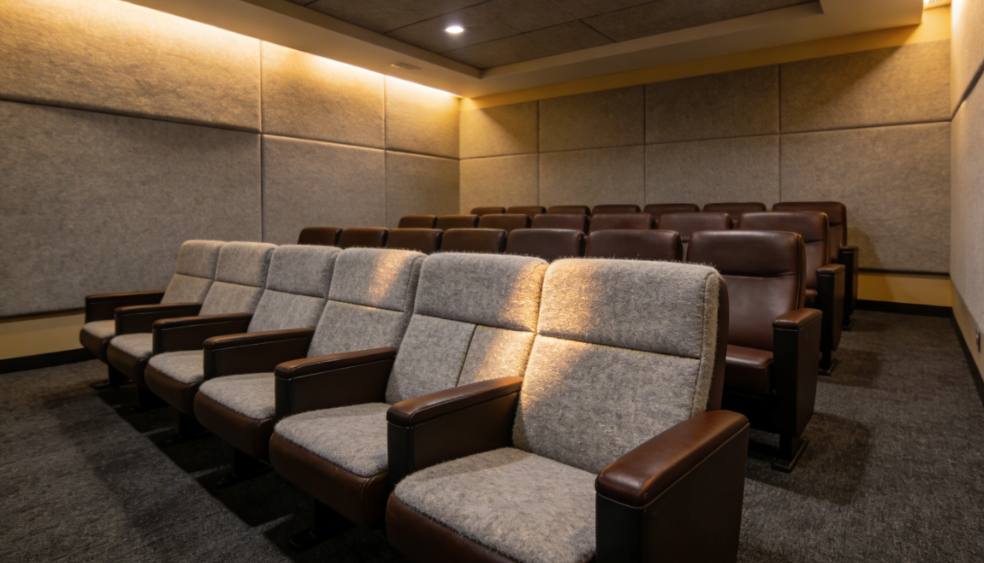
Choosing the right flame-retardant acoustic fabric is important for modern commercial interiors that need both safety and comfort.
A good acoustic textile should offer several key properties:
With a reliable supplier such as BEGOODTEX, architects, interior designers, and project buyers can choose flame-retardant acoustic fabric solutions with more confidence.
The right fabric can improve acoustic comfort while also helping the project meet fire safety requirements.
Not always.
In many projects, sound absorption comes from the full system, including the surface fabric, acoustic core, panel thickness, air gap, and installation method.
The fabric mainly provides sound transparency, decoration, and flame-retardant protection.
Not necessarily.
NRC is usually used to evaluate the sound absorption performance of a material or system.
For acoustic panel projects, NRC often depends on the full panel structure, not only the single fabric layer.
Offices usually need fabrics with good appearance, good acoustic transparency, and stable flame-retardant performance.
The final choice depends on the acoustic panel structure, fire standard, color requirement, and installation method.
Fiberglass fabric usually has higher fire resistance and good dimensional stability, but it may feel stiffer.
Flame-retardant polyester fabric offers more color and texture options, making it suitable for many commercial decorative spaces.
The right choice depends on the required fire rating and design needs of the project.
No.
A fire test report cannot be used blindly for every application.
Buyers need to check which standard the report follows, what material structure was tested, whether finishing is included, and whether it matches the actual project use.
