Get in touch
Thank you for reaching out! Please tell us more about your needs — our expert team will get back to you within 24 hours.
Get in touch
Thank you for reaching out! Please tell us more about your needs — our expert team will get back to you within 24 hours.




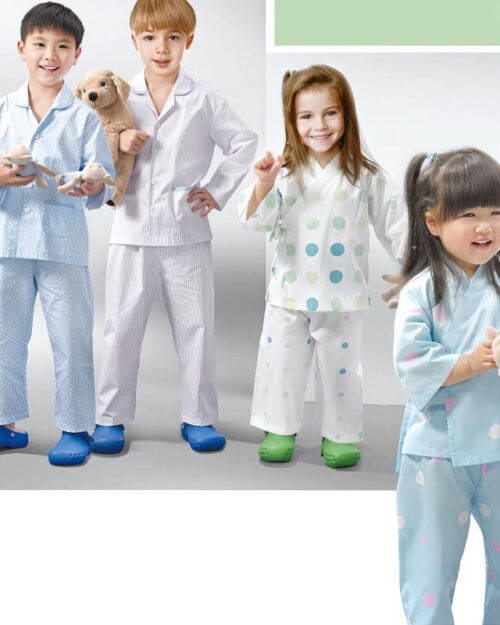
Children’s nightwear may look like ordinary kids’ clothing, but in Europe it is treated more carefully.
The reason is really simple. A child may wear pyjamas near a heater or a candle or a fireplace or even a kitchen flame. If the pyjamas fabric catches fire the child may not react enough. This is because the child is wearing pyjamas. Loose pyjamas styles such, as bathrobes and dressing gowns can be more risky because the sleeves and the belts and the hems of the pyjamas may touch a flame more easily.This is why EN 14878 matters.
For brands, importers, fabric suppliers, and garment manufacturers, EN 14878 is not just another test report name. It can affect fabric choice, garment design, lab testing, product labels, and whether the item can be safely sold as children’s nightwear in the EU or UK market.

The full name is EN 14878:2007 – Textiles: Burning Behaviour of Children’s Nightwear – Specification.
This standard is used to check how children’s nightwear behaves when it is exposed to a small flame. It does not prove that a garment is completely fireproof. Normal sleepwear should not be described that way.
The main question is more practical:
If the garment catches fire, does the flame spread too quickly?
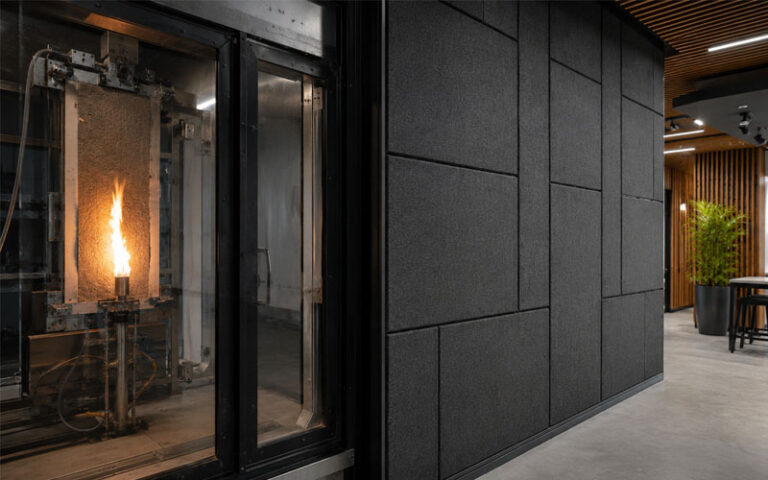
Testing is usually carried out with reference to EN 1103. In the test, fabric specimens are fixed in a vertical position and exposed to a controlled flame. The lab then checks flame spread and surface flash.
Surface flash is one of the key points buyers need to understand. Some fabrics may not burn deeply at first, but the flame can run quickly across the raised fibers on the surface. This is often where brushed, fleece, or soft pile fabrics become more difficult.
EN 14878 mainly applies to children’s nightwear for children up to 14 years old.
Common products include:
Some products sold as “loungewear” may also be reviewed as nightwear. This depends on how the product is described, photographed, packaged, and marketed.
For example, if a product page repeatedly uses words such as sleepwear, nightwear, pyjamas, or shows children wearing the item in bed, retailers or regulators may treat it as children’s nightwear, even if the seller calls it loungewear.
Baby nightwear for infants under six months is usually placed in a separate category. It is generally classified as Class C and is not normally tested for flame spread. Even so, the age range and product description should be clearly stated, otherwise the product may be questioned during compliance review.
In real sourcing work, the class is one of the first things to check. Different garment styles are not always judged in the same way.
| Class | Typical Products | What It Means |
|---|---|---|
| Class A | Bathrobes, dressing gowns, loose nightwear | Stricter requirement |
| Class B | Standard children’s pyjamas | Most common sleepwear class |
| Class C | Nightwear for babies under 6 months | Special infant category |
Class A is usually the one to watch for loose styles such as bathrobes and dressing gowns. These garments have more fabric movement, wider sleeves, belts, and hanging parts, so they are more likely to come into contact with a flame.
Class B is more commonly used for regular children’s pyjamas.
Class C is used for baby nightwear under six months.
So when sourcing children’s nightwear fabric, it is not enough to ask:
“Can this fabric pass EN 14878?”
A better question is:
“What garment will this fabric be made into, what age group is it for, and does it need to meet Class A or Class B?”
It is also important to check whether the test was done only on the fabric, or on the finished garment. In some projects, the fabric may pass, but the final garment may perform differently after adding trims, prints, linings, quilting, or accessories.
Many suppliers work with both European and U.S. children’s sleepwear orders. This is where confusion often starts.
The common European standard is EN 14878.
The U.S. uses 16 CFR 1615 and 16 CFR 1616.
They are not the same, and they should not be treated as interchangeable.
| Item | EN 14878 | CFR 1615 / 1616 |
|---|---|---|
| Market | EU / UK | United States |
| Main Focus | Flame spread and surface flash | Char length |
| Ignition Time | Usually 10 seconds | Usually 3 seconds |
| Evaluation | How fast the flame spreads | How far the fabric is damaged |
| Washing | Often tested as received | Usually tested after laundering |
EN 14878 pays more attention to how quickly the flame travels across the fabric. The U.S. standards focus more on char length after burning, and laundering is also an important part of the requirement.
This means a fabric that passes EN 14878 may still fail CFR 1615 or CFR 1616. The opposite can also happen.
For products sold in more than one market, the safest approach is to test according to each target market separately, instead of assuming one report can cover everything.
Most failures are not random. They usually come from the fabric structure, surface effect, garment design, or finishing process.
Lightweight fabrics are comfortable and cost-effective, but some of them burn faster than expected. Brushed, raised, or fleece surfaces are more sensitive because the loose fibers on the surface can help the flame move quickly.
This is especially common with:
These fabrics are popular because they feel warm and soft. But in flammability testing, that soft surface can become the biggest problem.
A fabric test is important, but it does not always tell the whole story.
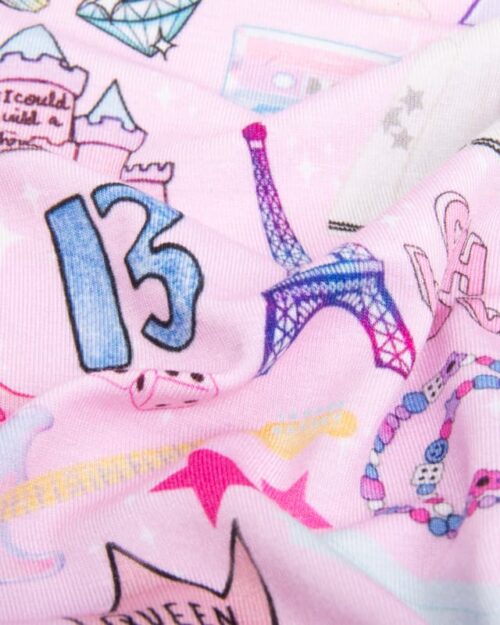
In real production, children’s nightwear may include:
All these details may affect burning behavior.
For example, a plain fabric may pass the test, but after brushing, printing, or adding decorative parts, the final garment may no longer perform the same way. A small design change can create a different test result.
This is why buyers should avoid testing only an early fabric sample and then changing the bulk production version later. Fabric weight, color, print, surface brushing, coating, trims, and garment construction should stay consistent with the tested sample.
Some children’s nightwear fabrics rely on flame-retardant finishing. This can work, but consistency is very important.
If the flame-retardant treatment is uneven, one part of the fabric may perform well while another part may not. Sometimes one test direction passes, but another direction becomes more difficult.
This problem is more likely to appear when the fabric has unstable finishing, uneven brushing, or poor process control between sample and bulk production.
For export orders, buyers should not only ask for a test report. They should also confirm whether the supplier can keep the same performance in bulk production.
A small approved sample is not enough if the final shipment behaves differently.
Before producing children’s nightwear for the EU or UK market, exporters should confirm the product category first.
Ask these questions early:
For fabric and garment production, the tested sample should match the final bulk goods as closely as possible.
Pay attention to:
For e-commerce products, wording also matters. A product called “kids loungewear” may still be treated as nightwear if the listing shows children wearing it in bed or uses sleepwear-related keywords.
So the compliance risk is not only in the fabric. It can also come from the product description, images, packaging, and final selling channel.
For children’s nightwear projects, Begoodtex does not only look at whether a fabric can pass one flame test.
We first check how the fabric will be used.
A standard pyjama, a loose bathrobe, a fleece nightdress, and a baby sleepwear product may all need different attention. The fabric surface, garment shape, softness, warmth, washing requirement, and target market all matter.
For raised or brushed fabrics, we usually recommend checking the flammability risk as early as possible. These fabrics may feel very good to the hand, but the surface fibers can make testing more difficult.
For export projects, the goal is not simply to prepare a report at the end. The better approach is to choose the right fabric, control the surface effect, confirm the correct class, and keep the sample and bulk production consistent from the beginning.
This helps reduce failed tests, shipment delays, and last-minute product changes.
EN 14878 is an important European flammability standard for children’s nightwear. It applies to products such as pyjamas, bathrobes, dressing gowns, nightdresses, and nightshirts for children.
The standard mainly checks flame spread and surface flash when the fabric is exposed to a small flame. It does not mean the garment is fireproof.
It should also not be confused with U.S. standards such as CFR 1615 and CFR 1616. EN 14878 focuses more on flame spread, while the U.S. standards focus on char length and laundering performance.
For brands and manufacturers, the key point is this: passing EN 14878 is not only about choosing a flame-retardant fabric. The fabric surface, garment style, trims, coatings, prints, and final product description can all affect compliance.
Testing early is usually much cheaper than changing the fabric or garment after bulk production has already started.
Mainly children’s pyjamas, bathrobes, dressing gowns, nightdresses, and nightshirts for children up to 14 years old.
It depends on how the product is marketed. If it is described or shown as sleepwear, nightwear, or pyjamas, it may be treated as children’s nightwear.
It mainly checks flame spread and surface flash when the fabric is exposed to a small flame.
Class A is usually used for loose garments such as bathrobes and dressing gowns. Class B is more common for standard children’s pyjamas.
Usually they fall under Class C and are not normally tested for flame spread. But the age range and product description should be clearly stated.
No. Children’s sleepwear sold in the U.S. usually needs to meet CFR 1615 or CFR 1616. These standards use different test methods and criteria.
EN 14878 focuses more on how fast flames spread. CFR 1615 and CFR 1616 focus more on char length and performance after laundering.
The raised fibers on the surface can let flames move quickly across the fabric. This may cause surface flash during testing.
Not always. The finished garment may include trims, prints, linings, coatings, or accessories that change the burning behavior. For higher-risk styles, finished garment testing may also be needed.