Get in touch
Thank you for reaching out! Please tell us more about your needs — our expert team will get back to you within 24 hours.
Get in touch
Thank you for reaching out! Please tell us more about your needs — our expert team will get back to you within 24 hours.
In high-risk workplaces like oil refineries, chemical processing plants, and power stations, your clothes need to do more than just look professional. They are your last line of defense. For a long time, standard fire-resistant (FR) clothing was the only option. But in modern heavy industry, fire is rarely the only threat. Workers today face a combination of flash fires, chemical splashes, oil spills, and static electricity all at the same time.
This is why multifunctional fabrics—textiles that are flame retardant, oil-repellent, and chemical-resistant—have become the new standard for industrial safety. If your workwear can’t handle a splash of acid or a soak in crude oil without becoming a fire hazard, it’s not doing its job. This guide breaks down why these advanced materials are essential and how they protect you on the front lines.

Standard flame-retardant fabrics are designed to stop burning once the heat source is removed. They are great at preventing clothing from melting onto your skin during a brief flash fire. However, heavy industry is rarely that simple. Hazards almost never occur alone.
Workers in oil fields or research labs often deal with “compound risks.” For example, if a standard FR suit gets soaked in oil or petroleum-based liquids, the oil itself can ignite. Even if the fabric is fire-resistant, the oil trapped in the fibers acts as a fuel source, making the fire much more intense and harder to extinguish. Similarly, corrosive liquids like sulfuric acid can eat away at the fabric’s structure, leaving you exposed to thermal risks you thought you were protected from.
Without oil and chemical resistance, your protection is incomplete. In sectors like metallurgy and petroleum, using basic FR polyester is no longer considered a “premium” choice—it is a safety gap that needs to be filled.
Think of multifunctional FR fabric as a high-tech shield. It’s an engineered textile system that integrates three core protective properties into a single piece of material: flame resistance, oil repellency, and resistance to acids and alkalis.
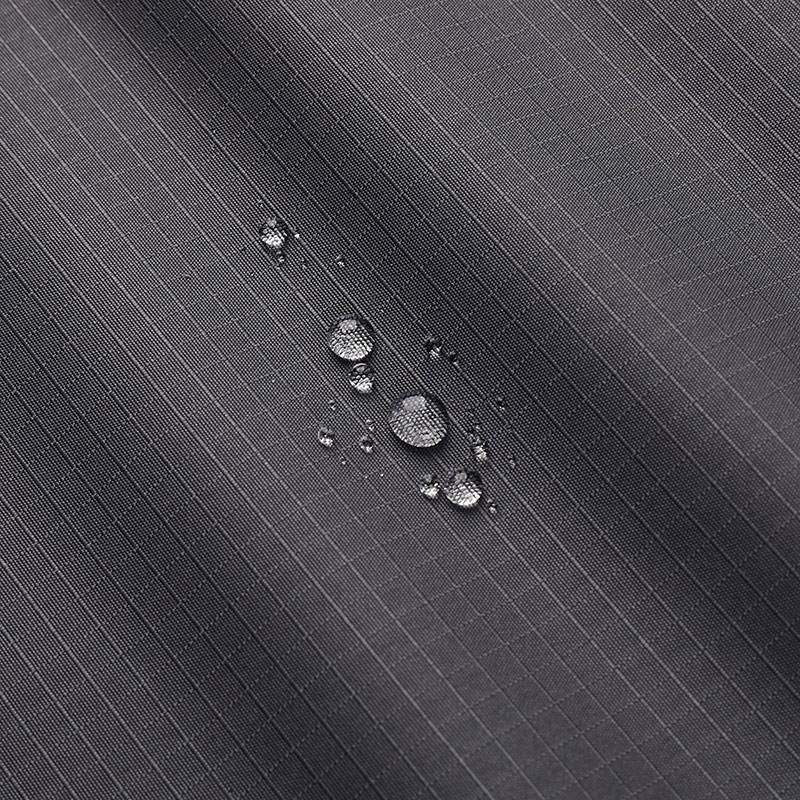
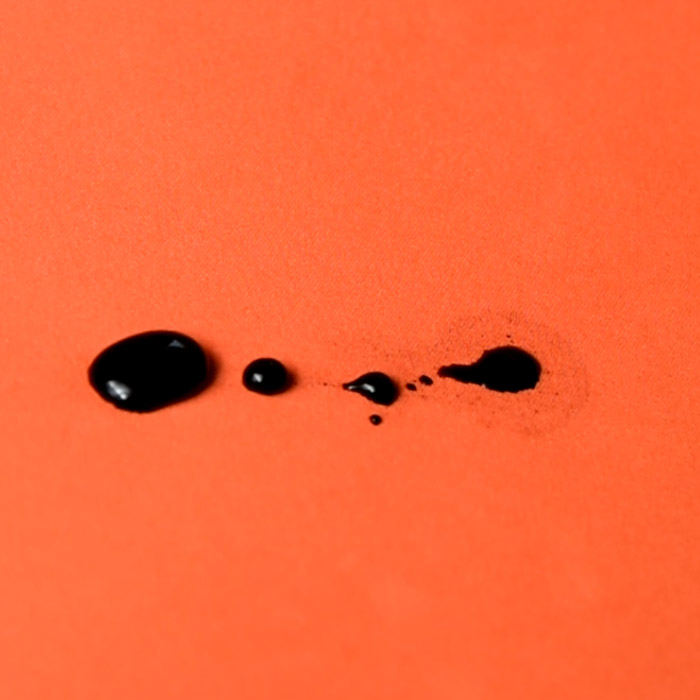
The secret to keeping oil out is “surface energy.” Manufacturers apply a specialized finish that lowers the surface energy of the fabric fibers. Most industrial oils have low surface tension, meaning they want to soak into normal cloth. By making the fabric’s surface energy even lower than the oil’s, the oil is forced to form droplets instead of soaking in.
“When oil hits a treated fabric, it beads up on the surface. Instead of penetrating the fibers and creating a fire hazard, the oil can simply be wiped away or washed off.”
This mechanism creates a stable protective interface on the fiber surface. Crucially, when engineered correctly, this treatment doesn’t interfere with the fabric’s ability to stop fire. It simply adds a layer of “liquid armor.”
In laboratories and chemical plants, fabrics must resist aggressive substances like sulfuric acid and sodium hydroxide. Permanent flame-retardant fabrics can exhibit high resistance to these substances while maintaining their structural integrity. This resistance is achieved through a combination of dense fiber construction, hydrophobic engineering, and specialized finishing techniques that prevent chemicals from reaching the wearer’s skin.
If you are deciding which fabric to buy for your team, it helps to see the data side-by-side. The jump from single-function to multifunctional protection is significant.
| Performance Feature | Basic Flame Retardant Fabric | FR + Oil-Repellent + Chemical Resistant |
|---|---|---|
| Flame Spread Control | Yes | Yes |
| Oil Resistance | Limited/None | High resistance to petroleum-based liquids |
| Acid/Alkali Resistance | Basic | Enhanced splash protection |
| Industrial Suitability | Moderate-risk zones | High-risk industrial environments |
| Wash Durability | 20 to 30 cycles | 30 to 50+ industrial wash cycles |
Creating a fabric that stops fire, repels oil, and blocks acid is a technical balancing act. If you add too many chemical coatings, the fabric becomes as stiff as a board and impossible to breathe in. If you don’t add enough, the protection fails.
The main challenges manufacturers face include:
Only through strict quality control and rigorous testing can a manufacturer guarantee that a garment will actually perform when a disaster happens.
When purchasing PPE for global operations, you must ensure the fabrics meet recognized safety standards. While flame spread is the core requirement, additional tests for oil and chemical resistance are becoming standard in high-risk industries.
In modern industrial settings, fire, oil, and corrosive chemicals often exist in the same space. Using workwear that only protects against one of these is a risk that companies can no longer afford to take. Multifunctional FR fabrics provide better safety, longer garment lifespans, and a lower total cost of ownership. By investing in integrated textile solutions, global PPE brands and industrial distributors ensure that workers stay safe, no matter what the environment throws at them.
Standard FR fabric only controls flame spread. Chemical-resistant FR fabric includes additional finishing systems that repel oils, acids, and alkalis, providing protection in petrochemical and laboratory environments.
If oil soaks into an untreated fabric, it can act as a fuel source, increasing the intensity of a fire. Multifunctional fabrics prevent this absorption, maintaining stable safety performance even if splashed with petroleum.
Yes. High-quality multifunctional fabrics are engineered to maintain their FR, oil-repellent, and chemical-resistant properties for 30 to 50+ industrial wash cycles.
Modern engineering allows these fabrics to remain breathable and flexible. By using blends like Modacrylic and Rayon, manufacturers ensure wearer comfort isn’t sacrificed for protection.
In environments with volatile oil vapors or chemicals, a small static spark can trigger an explosion. Integrating conductive fibers like N66 ensures the garment remains safe in explosive atmospheres.
No. When applied correctly through controlled finishing sequences, the oil-repellent barrier is highly durable and designed to last through the life of the garment.