Get in touch
Thank you for reaching out! Please tell us more about your needs — our expert team will get back to you within 24 hours.
Get in touch
Thank you for reaching out! Please tell us more about your needs — our expert team will get back to you within 24 hours.




Flame-retardant fabric is used for lots of things.
It is used for blackout curtains in hotel rooms, privacy curtains in hospital rooms and stage drapes in theaters.
You can also find flame-retardant fabric as seat fabric in train carriages, booth backdrops at exhibitions and protective workwear in factories.
So flame-retardant fabric is not just, for firefighters.It is something that lots of places need to have because it is a safety thing.
The real question is not simply, “Which industry needs flame-retardant fabric?”
It is: “What will this fabric be used for?”
Will it hang as a curtain? Be worn as clothing? Cover a wall? Wrap a seat? Or form part of a temporary structure?
That matters more than the industry name itself.

Many buyers treat “flame retardant” as one simple label. In real projects, it is much more specific.
Flame-retardant polyester for hotel curtains should not be used for welding garments. A hospital curtain fabric may not be suitable for railway seats. A fabric that passes a hanging textile flame test for exhibition use does not automatically qualify as an interior wall covering.
Flame-retardant fabrics are a broad category. Some are designed for drape and color stability. Some focus on wash durability.Others are made for heat, smoke and toxicity control, abrasion resistance, tear strength, waterproofing, UV resistance or coating durability.
For example when it comes to hotel blackout curtain fabric people usually check the blackout rate, width how it feels, color consistency, shrinkage and if it meets standards like NFPA 701 or BS 5867.
For welding garment fabric buyers care about different things. They want to know if it can handle sparks, heat and molten metal splashes. They also think about comfort how times it can be washed and if it meets standards, like EN ISO 11611 or EN ISO 11612.
Both are flame- fabrics.. They are built for very different jobs. Flame-retardant fabrics are used in areas.
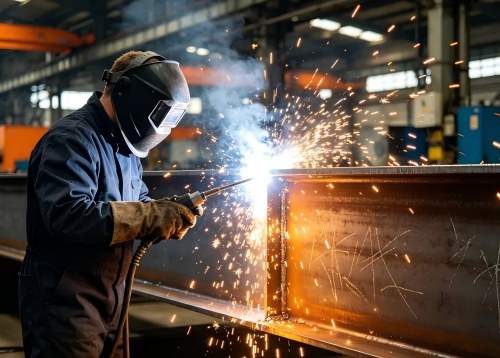
Industrial PPE is a big deal when it comes to flame-retardant fabrics.
The fabric here isn’t for show it’s a protective layer that people wear right on their body.
It has to deal with some tough stuff like flash fires, electric arcs sparks from welding, really hot equipment, splashes of molten metal or sudden heat hazards in places, like chemical plants, oil rigs, gas stations or electrical facilities.
If you pick the fabric it’s not just a mistake when buying something.
It can actually put people in harms way.
A regular factory uniform may only need to be durable, comfortable, and color-consistent. But if that same uniform is used in electrical maintenance, the risk changes completely. An arc flash may last only a moment, but the heat released can be extreme. A general “FR” claim does not mean the fabric is suitable for arc protection.
For industrial PPE projects, professional buyers usually need to confirm:
Common workwear materials include FR cotton, cotton-nylon blends, modacrylic blends, aramid, and oxidized PAN. Standards may include NFPA 2112, ASTM F1506, NFPA 70E, EN ISO 11612, EN ISO 11611, and EN 1149-5.
In this field, the first question should not be “Which fabric is cheapest?”
It should be “What hazard are we protecting against?”
Hotels use a lot of flame-retardant fabric, but the logic is very different from industrial PPE.
Guests care about color, drape, softness, and blackout performance. Project owners care about fire compliance, batch consistency, installation results, and maintenance costs.
A single hotel may need curtains and blackout drapes for hundreds of rooms, plus fabrics for lobbies, meeting rooms, restaurants, corridors, and banquet halls. If the color varies between batches, it becomes obvious after installation. If the fabric width is not suitable, too many seams can affect the final look. If the blackout rate is too low, the guest experience suffers.
Certification is another common problem. Some projects focus only on price at the beginning, then discover during approval that the project requires NFPA 701, while the supplier has provided a report for another market. Sometimes the report belongs to an old batch or an old fabric structure and cannot be used for the current order.
Hotel curtain projects may involve standards such as NFPA 701, BS 5867, EN 13773, DIN 4102-B1, NF P92-503 M1, or CAN/ULC-S109, depending on the country, designer, and local fire authority.
For hotel fabrics, the key is not only whether the fabric is flame retardant. Buyers also need to check whether the standard is correct, the color is stable, the blackout effect is sufficient, the drape works for finished curtains, and repeat orders can match the original batch.
The biggest risk is not always a slightly higher unit price. It is finding out before installation that the whole batch cannot be used.
Hospitals, clinics and care homes use fabrics that don’t catch fire easily. This is because people in these places might not be able to move much.These areas also have lots of equipment.Some places even use oxygen, which can make fires burn easily.If there is a fire it is much harder to get everyone out.
So flame-retardant fabrics are used to help keep them safe.These fabrics help prevent fires from spreading.This gives people time to get out safely.
Hospital privacy curtains are an example. They look simple. They have to do many things at once.
They must keep people move smoothly be easy to take out and wash not shrink much and sometimes have special finishing to prevent bacteria growth.
The top part may need a mesh to help air flow or for sprinkler systems.
For hospital fabrics just having a certificate that they do not catch fire easily is not enough.
If the curtain gets smaller after washing does not work well anymore or you cannot get it in the color and type again then it is hard to take care of.
In hospitals what we really want is to balance safety, cleanliness, privacy how easy it’s to clean and making sure we can get the same supplies for a long time.
Stage curtains and school auditorium drapes and exhibition backdrops and event fabrics and tablecloths and temporary partitions all have something in common. They are usually used to cover areas.
You can look at a sample of fabric that is the size of a piece of A4 paper and it may seem fine when you do a small flame test.. When you use the same fabric to make a huge stage curtain that is ten meters high or cover a whole wall at a booth the risk is really different.
Theaters have a lot of things like lighting and audio systems and cables and equipment, for the stage. School halls have students and people watching. Exhibition sites are put up quickly. They have power cables and lights and wood structures and printed things and lots of people all in one place.
In these spaces flame-retardant fabric is more, than a material choice. It actually impacts fire inspection. Whether the site gets to open or not.
For exhibitions and public events you should confirm fire requirements on. This may involve checking NFPA 701, BS 5867 or other tests that local fire authorities accept.
The temporary the site is, the sooner you should think about flame-retardant compliance. Don’t leave it until the minute.
Cars, buses, trains, subways, aircraft, and ships often have more complex requirements for flame-retardant fabrics.
These are enclosed spaces with many people and limited escape routes. In a fire, the danger is not only the flame itself. Smoke, toxic gases, heat release, and melting or dripping materials can be just as serious.
Train seat fabric is a typical example. It must be flame retardant, but also abrasion-resistant, stain-resistant, color-stable, and durable over long-term use. It is also rarely used alone. It usually works together with foam, backing, adhesive, and other composite layers.
Testing only the outer fabric may not represent the performance of the final seat system.
Automotive and bus interiors may refer to FMVSS 302. Railway projects may involve EN 45545-2 or NFPA 130. Aircraft cabin materials often refer to FAR 25.853. Marine fabrics may involve the IMO FTP Code.
For transportation, aviation, and marine projects, buyers usually care a lot about report completeness. Was the fabric tested alone or as a composite? Was foam included? Are smoke and toxicity covered? Can the supplier support technical documentation?
In these industries, flame-retardant fabric is not a standalone product. It is part of a larger material system.

Commercial furniture also uses flame-retardant fabrics, including hotel lobby sofas, office chairs, cinema seats, waiting-area seating, acoustic wall panels, and decorative wall coverings.
The challenge is that buyers want both safety and design value.
If the fabric is too stiff, designers may reject it. If the color range is limited, it may not fit the interior plan. If abrasion resistance is poor, public seating may pill or wear out quickly. If the hand feel is bad, the user experience suffers.
Furniture fabrics may involve standards such as BS 5852, EN 1021, or CAL TB 117-2013. Wall coverings and interior materials may also involve ASTM E84 or EN 13501-1.
One common mistake is looking only at the fabric report.
A sofa or seat is more than the fabric. It has foam, lining, a frame, stitching and sometimes adhesives and layers.
If you need to test the product, a report, on fabric alone might not be enough.
For furniture projects it’s crucial to know what the customer wants.
Do they need the fabric to be flame-retardant or do they want the whole sofa or seat to have that performance?
You have to clarify this to meet their needs.
Flame-retardant fabrics are also used in fabric ducts, tents, canopies, awnings, exhibition structures, temporary partitions, outdoor event shelters, and functional covers.
These products face more than fire risk. They also face weather.
When you are using tents the fabric is going to be out in the sunlight and it is going to get rained on and it is going to be windy and there is going to be dust and mildew and you are going to have to fold it up and transport it. So outdoor tents need to be able to handle all of these things.
For tents flame retardancy is just one thing that is required. Outdoor tents also need to be waterproof. They need to be able to resist the suns ultraviolet rays and the coating on outdoor tents needs to be durable and outdoor tents need to be strong enough to resist tears and they need to keep their shape.
Some people only check to see if their outdoor tents pass the flame test at first. Then they find out later that there are problems, with the coating cracking or the water resistance is not as good as it used to be or the color is fading or the edges are tearing after they have been put up and taken down a few times. Even if the outdoor tents are fine when it comes to flame retardancy they can still fail when you are actually using them.
Tent projects in North America may involve CPAI-84. Other regions may have their own local fire or temporary structure requirements.
Before developing or sourcing these fabrics, it is best to confirm the real use environment: indoor or outdoor, short-term or long-term, rain exposure, strong sunlight, repeated folding, mildew resistance, waterproofing, and UV resistance.
| Industry / Scenario | Key Buying Concerns |
|---|---|
| Industrial PPE | Hazard type, wash durability, protection level, garment structure |
| Hotel / Medical Curtains | Standards, blackout, drape, shrinkage, cleaning, batch consistency |
| Theaters / Schools / Exhibitions | Large-area hanging, fire approval, installation risk |
| Transportation / Aviation / Marine | Smoke, toxicity, abrasion, composite structure, documentation |
| Furniture / Commercial Interiors | Abrasion, hand feel, foam combination, finished-product testing |
| Outdoor / Temporary Structures | Waterproofing, UV resistance, coating durability, tear strength, dimensional stability |
This shows one simple truth: there is no universal flame-retardant fabric.
A fabric that works well for hotel curtains may be completely wrong for welding workwear. A fabric suitable for an exhibition backdrop may still be insufficient for a train seat.
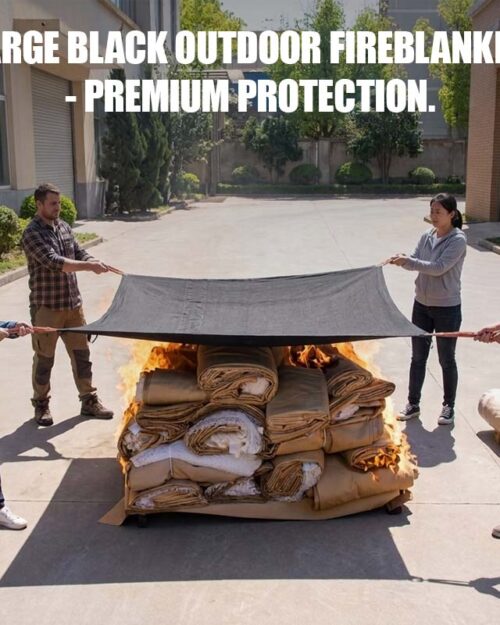 Large Black Fireproof Outdoor Blanket 1800°C Resistance NFPA 701 Standard Bulk Wholesale Supplier-Essential Safety Gear For Every Home
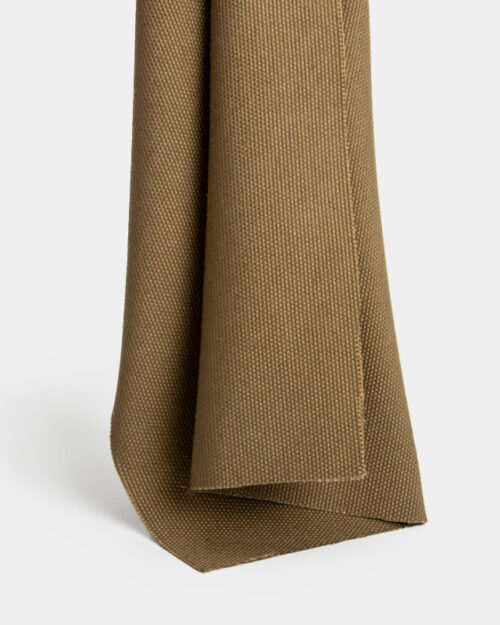 Flame Retardant Oxford Fabric NFPA 701 Wholesale for Outdoor Gear
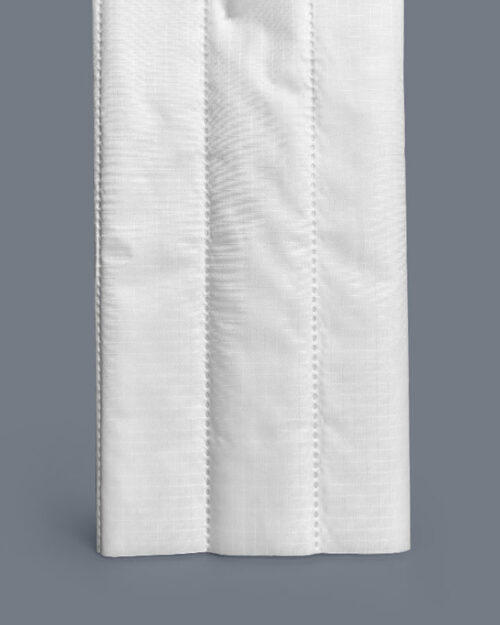 Flame Retardant Thermal Tent Liner Fabric NFPA 701 Certified Bulk Order Supplier-Eco-Friendly Material Choice
Flame-retardant fabrics usually fall into two broad types: inherent flame retardancy and flame-retardant finishing.
Inherent flame retardancy means the FR performance comes from the fiber or polymer itself.
FR finishing means a normal fabric is treated through finishing to gain flame-retardant properties.
Neither is automatically better. It depends on the project.
For hotel curtains, hospital curtains, school curtains and public space furnishings that last a time using polyester that is already flame resistant is often a good choice. This is because it performs well and doesn’t change much when you clean it.
For short-term events or projects where cost’s a big concern or for special fabrics that need extra treatment applying a flame resistant finish can be helpful.
However you have to be careful, with washing and maintenance. Some fabrics might pass the flame resistance test at first. Their performance can get worse after you wash them dry clean them or expose them to the outdoors many times.
Instead of asking only, “Which one is cheaper?” buyers should ask:
These questions are closer to the real project cost.
Many inquiries start like this:
“I need flame-retardant fabric, 150 cm wide. Please quote.”
That is usually not enough.
The supplier does not know whether the fabric will be used for curtains, workwear, sofas, tents, train seats, or hospital cubicle curtains. Different applications require different fibers, weights, weaves, finishes, standards, and testing methods.
A better inquiry should include:
The clearer the information, the easier it is for the supplier to recommend the right fabric.
Otherwise, the sample may look good and the price may seem right, but the standard may be wrong. Then the project has to restart with new materials, new testing, and a new delivery schedule.
For Begoodtex, flame-retardant fabric is not a single product. It is a material solution matched to the industry and application.
Curtain projects may require inherently flame-retardant polyester, FR blackout fabric, dim-out fabric, velvet, jacquard fabric, or medical cubicle curtain fabric.
Workwear projects may need FR cotton blends, modacrylic blends, aramid, oxidized PAN, antistatic fabrics, or coated FR solutions.
Transportation and commercial interior projects depend on the final use, such as seating, upholstered panels, wall fabrics, acoustic panels, vehicle interiors, aircraft cabins, or marine applications.
Custom development can also focus on weight, width, color, texture, printing, coating, blackout rate, waterproofing, antibacterial treatment, antistatic performance, and third-party test reports.
A good FR fabric project usually does not start with “Do you have stock?”
It starts with better questions:
Once these points are clear, material selection becomes much more accurate.
Flame-retardant fabrics are widely used in industrial protection, hotels, healthcare, schools, theaters, exhibitions, transportation, aviation, marine, commercial furniture, interior design, architecture, and outdoor temporary structures.
But the real deciding factor is not the industry name. It is the use environment.
A hotel curtain needs drape, blackout performance, and fire compliance.
A welding garment needs protection against sparks and heat.
A train seat fabric needs to consider smoke, toxicity, and abrasion.
A wall covering or acoustic panel needs to match interior and composite structure requirements.
A tent or canopy also needs to handle rain, sunlight, and repeated use.
Flame-retardant fabric is not simply about adding “FR” before a product name. It needs to match the final application, test standard, material structure, maintenance method, and project risk.
Choose the right fabric, and the project runs much more smoothly.
Choose the wrong one, and even a complete-looking certificate may not prevent problems during testing, approval, or real use.
Industrial workwear, hotels, healthcare, schools, theaters, exhibitions, transportation, aviation, marine, commercial furniture, interior design, architecture, and outdoor temporary structures all commonly use flame-retardant fabrics. Different applications face different risks, so one fabric cannot solve every problem.
Many hotels, schools, hospitals, and public buildings require curtains made from flame-retardant tested fabrics. The exact standard depends on the project country, local fire regulations, and project specifications.
Usually, no. Workwear, especially PPE, must be selected according to hazards such as flash fire, arc flash, welding sparks, high heat, or molten metal splash. FR polyester for curtains and FR fabric for protective clothing are designed with very different priorities.
For long-term use, frequent cleaning, or more stable flame-retardant performance, inherent FR fabric is often a better choice. FR-treated fabric can still work for short-term, cost-sensitive, or specific applications, but wash durability and maintenance conditions should be confirmed.
Start with the final use and required standard. Then check fiber composition, weight, width, color, hand feel, washing method, functional finishes, test reports, and whether the supplier can support bulk production and repeat orders.