Get in touch
Thank you for reaching out! Please tell us more about your needs — our expert team will get back to you within 24 hours.
Get in touch
Thank you for reaching out! Please tell us more about your needs — our expert team will get back to you within 24 hours.

In high-risk fields such as firefighting, aerospace, military, and industrial manufacturing, the requirements for protective materials go far beyond “usable”—they must be “absolutely reliable” under extreme conditions. Traditional textiles are vulnerable to high temperatures and flames, and many primary flame-retardant…
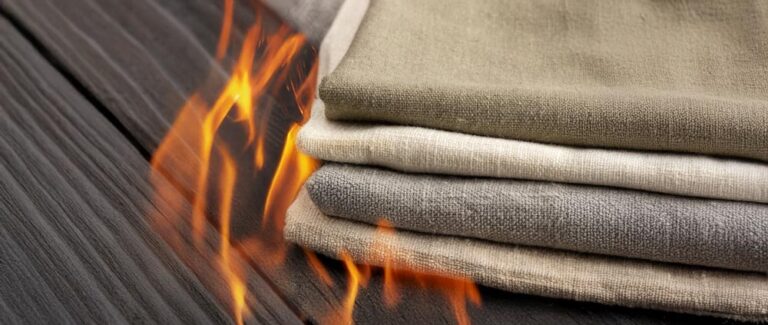
The Flammability of Linen Is Linen Flammable? Yes, linen is classified as a flammable textile. It is a natural plant fiber, and like other plant-derived fibers (such as cotton), it has a relatively low ignition point. Once linen comes into contact…

In our daily lives, cotton is everywhere—from soft T-shirts, comfortable bed sheets to absorbent towels. As a natural fiber, cotton is favored for its comfort and breathability. But when it comes to fire safety, a key question emerges: Is cotton…

Introduction In high-risk industries such as electricity, welding, petrochemicals, and metallurgy, protective clothing is the last line of defense for workers against thermal hazards. The core value of a qualified protective suit lies not only in its instantaneous flame resistance…

Preface Have you ever stood in front of your closet, wondering why some T-shirts are breathable and dry while others feel stuffy and uncomfortable? Why do some skirts drape smoothly while others wrinkle easily? The answer lies in a small…

Flame-retardant wool fabrics refer to wool fabric textiles that are either specially treated or inherently possess flame-retardant properties. These fabrics retain the natural advantages of wool fabric, such as warmth, breathability, moisture absorption, and comfort, while also offering excellent fire-resistant characteristics. When exposed to a…

Advocating for the Environmental and Flame-Retardant Properties of Natural Fibers Highlighting the Environmental Attributes of Wool Fabric Wool, a natural fiber derived primarily from sheep, boasts numerous environmental benefits. Its production is renewable and sustainable, as sheep grow new fleece annually,…

Processing of Flame Retardant Wool Fabric Creating flame-resistant wool fabric requires going through a series of steps to guarantee that the material attains its intended characteristics. Shearing Process At the start of the process, sheep undergo shearing to gather wool,…