Get in touch
Thank you for reaching out! Please tell us more about your needs — our expert team will get back to you within 24 hours.
Get in touch
Thank you for reaching out! Please tell us more about your needs — our expert team will get back to you within 24 hours.




Filament fibers are long continuous fibers, while staple fibers are short fibers that must be spun into yarn before fabric production. This simple difference changes the surface, strength, hand feel, pilling, moisture behavior, durability, and final use of a fabric.
In simple words, filament fabrics are usually smoother, stronger, shinier, and more suitable for curtains, upholstery, functional fabrics, and flame retardant fabrics used in public spaces. Staple fabrics are usually softer, warmer, more natural in touch, and more common in T-shirts, hoodies, bedding, blankets, and comfort-focused home textiles.
For flame retardant fabric buyers, this difference matters even more. A fabric used in hotels, hospitals, schools, theaters, transport interiors, and public buildings must not only look good. It also needs stable performance, good strength, low maintenance, and reliable flame retardant behavior. This is why many high-end IFR flame retardant fabrics use filament yarns, especially polyester filament systems.
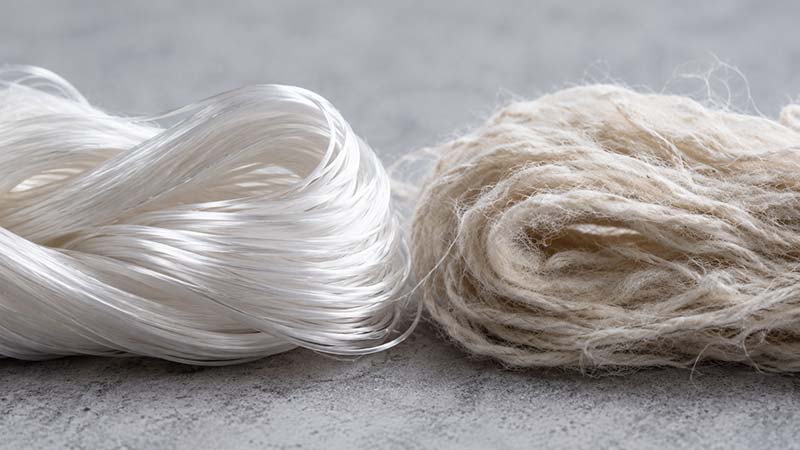
Every fabric starts with fiber. Before a fabric becomes a curtain, sofa cover, hospital privacy curtain, uniform, bedsheet, blanket, or sportswear, the fiber structure already decides many of its basic properties.
This is why two fabrics made from the same raw material can still feel very different. For example, polyester filament fabric can be smooth, shiny, strong, and crisp. Polyester staple fabric can feel more cotton-like, softer, warmer, and more textured. The raw material is both polyester, but the fiber form is different.
For daily consumers, this explains why some fabrics feel cool and smooth while others feel fluffy and soft. For professional buyers, this helps in choosing the right textile for fire safety, washing durability, comfort, cost, and long-term use.
Quick answer: Filament fiber is best understood as a continuous fiber. Staple fiber is best understood as a short fiber. Filament is often chosen for smoothness, strength, drape, and function. Staple is often chosen for softness, warmth, and a natural hand feel.
Filament fiber is a continuous fiber with very long length. It can be natural or man-made. The most common natural filament fiber is silk. Most synthetic fibers, such as polyester and nylon, are first produced as continuous filaments through spinning or extrusion.
In fabric production, filament yarn can be used directly or processed into different yarn styles. Polyester filament, nylon filament, viscose filament, and flame retardant filament are common examples in the textile industry. For buyers comparing raw material families, this broader guide to natural, regenerated, and synthetic fibers can help explain how fiber origin also affects performance.
Filament fabrics are widely used where smooth appearance, strength, and stable performance are important. Common applications include curtains, hotel decorative fabrics, sofa fabrics, sportswear, functional fabrics, medical privacy curtains, and flame retardant fabrics for public spaces.
In commercial interiors, filament fabrics are especially useful because they can provide a clean surface, good drape, stable color, and better long-term appearance after repeated use. They are often selected for flame retardant curtain fabrics, hotel window treatments, and healthcare partitions where appearance and safety must work together.

Staple fiber is a short fiber. It can be naturally short, like cotton, wool, and linen, or it can be made by cutting synthetic filament into fixed short lengths. These short fibers are then spun into yarn before weaving or knitting.
The length of staple fiber can range from a few millimeters to several centimeters, depending on the fiber type and final use. Because staple fibers are short, the yarn contains many fiber ends. These ends help create a softer and more natural feel, but they also make the fabric more likely to have fuzz and pilling.
Staple fabrics are common in daily clothing and home textiles. You can find them in T-shirts, hoodies, blankets, bedding, thermal clothing, filling materials, and soft home products. When buyers want warmth, comfort, and a natural touch, staple fiber is often a good option. In safety textiles, staple fibers are also used in cotton-rich and wool-rich flame retardant products, such as cotton flame retardant fabric and flame retardant wool fabric.
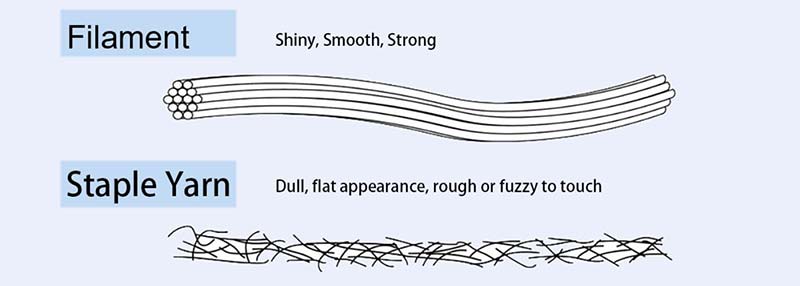
The difference between filament and staple fiber is not only about length. That length affects almost every part of the final fabric, including appearance, touch, durability, maintenance, and end use.
| Feature | Filament fiber | Staple fiber |
|---|---|---|
| Fiber length | Continuous and very long | Short and fixed length |
| Yarn structure | Can be used as continuous filament yarn | Needs spinning into yarn |
| Surface | Smooth and clean | Hairier and more textured |
| Appearance | Often shiny and neat | Often matte, soft, and natural |
| Hand feel | Cool, smooth, and drapey | Soft, warm, and fluffy |
| Strength | Usually higher | Depends on fiber length, yarn twist, and fabric construction |
| Pilling | Usually lower risk | Usually higher risk |
| Common use | Curtains, upholstery, functional fabrics, flame retardant textiles | Clothing, bedding, blankets, warm home textiles |
Filament fiber has a continuous thread-like structure. Staple fiber has short fiber lengths. Because staple fibers are short, they need spinning before fabric production. This spinning process gives staple yarn its soft and natural character, but it also creates more fiber ends.
Filament fabrics are usually smoother and more lustrous. Staple fabrics are usually softer in appearance, less shiny, and more natural. This is why filament polyester is often used in elegant curtains and decorative fabrics, while cotton-like staple fabrics are common in casual clothing and bedding.
Filament fabrics often feel cool, slick, and fluid. Staple fabrics often feel soft, warm, and gentle. Neither one is always better. The right choice depends on the product. A hotel curtain needs drape and durability. A sweatshirt needs softness and warmth.
Filament fibers usually offer higher yarn strength because the fiber is continuous. Staple yarns can also be durable, but their performance depends more on fiber length, yarn twist, blending, fabric density, and finishing. In high-use areas such as hotels, hospitals, schools, and public buildings, filament fabrics are often easier to control for strength and long-term appearance. Buyers can also check abrasion performance through methods such as the Martindale abrasion test.
Pilling happens when loose fibers move to the fabric surface, tangle, and form small balls. Staple fabrics have more short fiber ends, so they are more likely to pill. Filament fabrics have fewer loose ends, so they often resist pilling better. For formal textile evaluation, ISO 12945 pilling and fuzzing tests are often used to compare surface change.
Staple fabrics, especially natural staple fabrics like cotton and wool, often feel more breathable and absorbent. Filament fabrics are often used when quick drying, smoothness, easy cleaning, and functional performance are more important. Fabric construction also matters. A loose filament weave can still be breathable, and a dense staple weave can still feel warm and less airy.
There is no absolute winner between filament and staple fiber. The better choice depends on the product, user, safety requirement, washing method, design style, and budget.
Buying tip: Do not ask only whether a fabric is filament or staple. Ask what the fabric will be used for, how often it will be washed, whether it needs flame retardant certification, and whether the final product needs softness, drape, strength, or long service life.
In flame retardant textiles, fiber choice is not just about touch. It affects safety performance, durability, washing resistance, and project suitability. This is especially important for curtains, privacy curtains, wall coverings, upholstery, bedding, and decorative fabrics used in commercial and public buildings.
Begoodtex focuses on flame retardant fabric solutions for these demanding uses. For buyers, the goal is not only to buy a fabric that passes one test once. The real goal is to choose a material that keeps its performance, appearance, and quality during real use.
IFR means inherent flame retardant. In many modern flame retardant polyester systems, the flame retardant property is part of the fiber or polymer system instead of being only a surface treatment. This helps the fabric keep its fire safety behavior for a longer time under proper use and care. For a deeper comparison, buyers can read this guide on inherent FR vs treated FR.
IFR filament fabrics are becoming more popular in high-end functional textiles because they combine safety, durability, clean appearance, low pilling, good drape, and easier maintenance. These points are very important for public areas where textiles are used every day and must meet strict safety expectations.
You do not always need a laboratory to make a first judgment. A simple visual and hand-feel check can give you useful clues. However, for professional purchasing, you should still confirm the fiber type, yarn type, composition, and test report with the supplier.
For flame retardant fabric projects, do not rely only on touch and appearance. Ask for technical documents, such as composition, yarn type, width, weight, flame retardant standard, washing instructions, color fastness, and test report. If the fabric is used for public spaces, the required standard may include NFPA 701, BS 5867, EN 13773, DIN 4102-B1, or other local fire safety rules.
High-end functional fabrics are expected to do more than ordinary fabrics. They need to look good, perform well, pass safety tests, resist daily wear, and support large projects with stable quality. Filament fiber has clear advantages in many of these areas.
Continuous fibers can help improve yarn strength and fabric stability. This is useful for products used in commercial spaces, such as hotels, hospitals, schools, offices, theaters, and transport interiors. These fabrics are touched, cleaned, opened, closed, rubbed, and exposed to light more often than normal home fabrics.
For IFR filament fabrics, flame retardancy can be built into the fiber system. This helps reduce the risk that the flame retardant effect will be lost quickly through washing or surface wear. For buyers, this means better long-term value and easier maintenance planning. This is also why professional buyers often compare FR, IFR, DFR, PFR, and CFR before confirming a textile specification.
Large textile projects need consistent color, stable width, steady hand feel, and reliable test performance. Filament fabrics are often easier to control in production, especially when combined with dope dyed fabric, engineered weaving, and strict quality inspection.
Choosing between filament and staple fiber should start with the final use. A soft blanket and a hospital privacy curtain do not need the same fabric. A hotel curtain and a T-shirt also have different priorities.
Begoodtex develops flame retardant textile solutions for professional buyers who need reliable performance in real projects. For curtain fabrics, medical curtains, upholstery, and decorative textiles, filament-based IFR fabrics can provide a strong balance of safety, durability, and visual quality. For project-specific curtain selection, buyers can also review how to choose flame-retardant curtains and how to choose medical curtain fabric.
Filament and staple fibers are two basic fiber forms in the textile industry. Filament fiber is continuous and long. It usually creates smooth, strong, shiny, low-pilling fabrics with good drape. Staple fiber is short. It usually creates soft, fluffy, warm, and natural-feeling fabrics.
Neither one is always better. Filament fiber is stronger for curtains, upholstery, functional textiles, flame retardant fabrics, and commercial projects. Staple fiber is stronger for comfort clothing, bedding, blankets, and warm home textiles.
In flame retardant fabric applications, filament fiber has special value. IFR polyester filament fabrics can support durable flame retardant performance, stable appearance, lower pilling, and better long-term use in public spaces. For buyers working on hotels, hospitals, schools, offices, and transport projects, this makes filament-based flame retardant fabric a practical and reliable option.
No. Filament fiber is not always more premium. It is better for smoothness, strength, drape, and function. Staple fiber is better for softness, warmth, and natural comfort. The right choice depends on the final product.
Cotton is a staple fiber. Its yarn contains many short fiber ends. During rubbing and washing, loose fibers can move to the surface, tangle, and form pills. Yarn quality, fabric structure, and finishing also affect pilling.
Filament fabrics usually have better drape, smoother surfaces, higher strength, and lower pilling. These properties help curtains hang neatly and keep a cleaner appearance in hotels, hospitals, offices, and public spaces.
Staple fabrics contain many short fibers and small air spaces. This structure creates a fluffy and warm touch. That is why staple fabrics are common in T-shirts, hoodies, blankets, and bedding.
Polyester filament is continuous polyester fiber. It is often smoother, stronger, shinier, and better for curtains and functional fabrics. Polyester staple fiber is cut into short lengths and spun into yarn. It feels more cotton-like and is often used in clothing and soft home textiles.
Both can be used. Flame retardant filament fabrics are common in curtains, medical privacy curtains, decorative fabrics, and public space textiles because they offer better durability and stable appearance. Flame retardant staple fabrics are often used when softness and warmth are more important.
Buyers should check fiber composition, yarn type, fabric weight, width, flame retardant standard, washing durability, color fastness, test report, and final application. For public spaces, buyers should confirm the exact fire safety standard required by the local market or project owner.