Get in touch
Thank you for reaching out! Please tell us more about your needs — our expert team will get back to you within 24 hours.
Get in touch
Thank you for reaching out! Please tell us more about your needs — our expert team will get back to you within 24 hours.




When you source flame retardant fabrics for large commercial projects, you often hear two main questions. Does the fabric pass the fire test? And is it safe for humans to touch every day? Fire safety is obvious, but chemical safety is just as crucial. This is exactly where the OEKO-TEX STANDARD 100 comes into play.
In short, OEKO-TEX STANDARD 100 is one of the world’s most trusted testing labels for harmful substances in textiles. It gives buyers clear proof that a fabric will not harm human health. For professional buyers navigating global textile certifications, understanding this standard is mandatory.
In this guide, we will break down what this certification means, what it tests for, how the classification system works, and why it is absolutely vital when selecting FR fabrics for your business.
OEKO-TEX STANDARD 100 is an independent testing and certification system for raw, semi-finished, and finished textile products at all processing levels, as well as accessory materials used. The core purpose of this standard is simple. It protects consumers from potentially harmful substances in textiles.
However, many people misunderstand what it actually is. Let us clear that up right now:
In 1992, the Hohenstein Institute in Germany co-developed the STANDARD 100, creating the first consumer safety standard for textiles and garments and establishing the OEKO-TEX association. That same year, the first Confidence in Textiles label was issued. Because the founding organizations are based in Germany and Austria, the name is actually an abbreviation of the German term Ökologische Textilien, which means ecological textiles. There are two common ways to pronounce it globally: the German pronunciation where the OE sounds like ur, and the English pronunciation where the OE sounds like oh.
Textile manufacturing is heavily dependent on chemicals. Creating functional fabrics requires dyes, softeners, printing pastes, coatings, and flame retardant treatments. Each of these steps introduces potential chemical hazards. The STANDARD 100 offers a single, globally recognized, and strictly verified system to evaluate these risks.
A common mistake is thinking this standard only checks for formaldehyde or azo dyes. In reality, the testing catalog covers well over 1000 different chemical substances. Here are some of the main categories of harmful substances tested:
When reviewing the standard, you will notice it is divided into two limit value catalogs. Appendix 4 contains the standard limit values based on human ecological considerations to prevent health risks. Appendix 6 features even stricter limit values designed for companies heavily focused on the Detox campaign to elevate their environmental performance.
Furthermore, the standard complies with major global laws. It aligns directly with the EU REACH regulation (including the SVHC candidate list), complies with the European POPs regulation, and meets all limit value requirements of the Chinese GB 18401 standard. Testing teams also regularly monitor AFIRM and ZDHC lists.
Chemical regulations never stop changing. This is why the limit values are updated at least once a year. For example, recent updates place a strict limit of 100 mg/kg for total fluorine (targeting forever chemicals). By April 2025, the standard also massively lowered the limit for Bisphenol A down to 10 mg/kg.
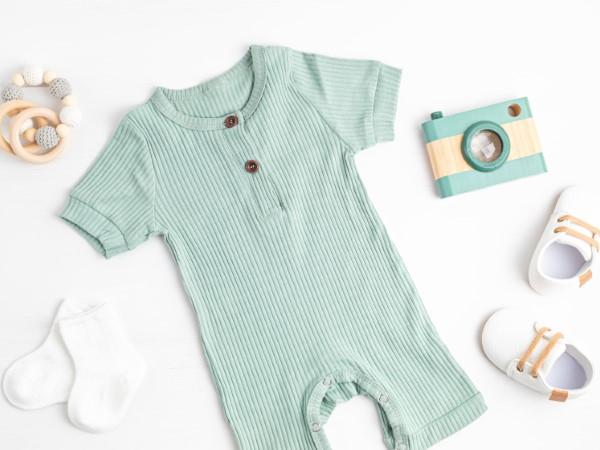
Not all fabrics are tested equally. The standard is divided into four distinct product classes based on how the textile will be used. The closer the fabric is to human skin, the stricter the chemical limits become.
| Product Class | Application | Typical Products | Requirement Level |
|---|---|---|---|
| Class I | Babies and toddlers up to 36 months | Baby clothing, bedding, sleepwear, soft toys | Strictest |
| Class II | Direct skin contact | Shirts, underwear, bedding, workwear linings | Very strict |
| Class III | Little or no direct skin contact | Jackets, outerwear, some technical textiles | Moderate |
| Class IV | Furnishing and decorative materials | Curtains, upholstery fabrics, table linen, carpets | Application-based |
When you buy a fabric, the product class must match your final application. Most commercial flame retardant curtains fall into Class IV. However, items like FR workwear linings or patient gowns must meet Class II standards.
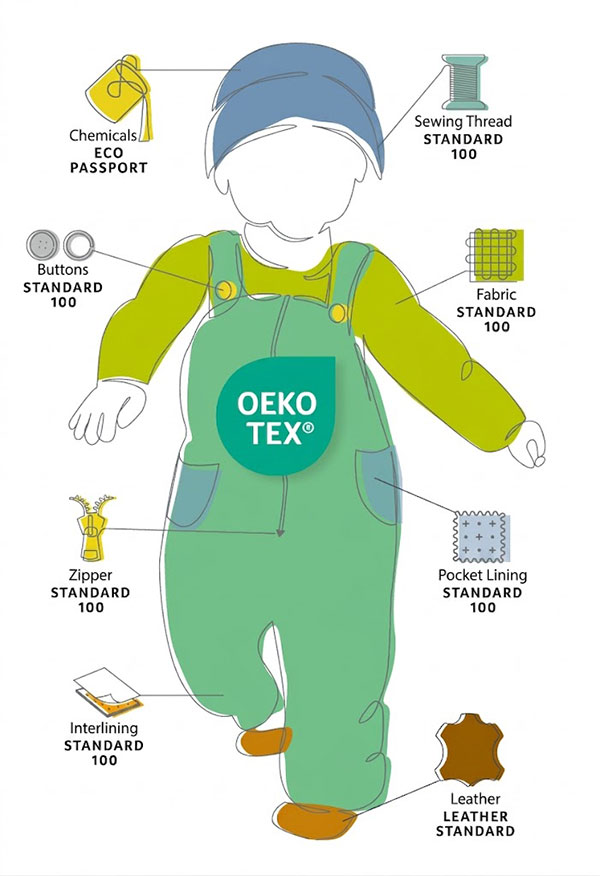
The standard applies to the entire textile value chain. It is not just for the final shirt or curtain. The following items can all carry the certification: raw fibers, woven and knitted greige fabrics, dyed fabrics, flame retardant treated textiles, finished garments, and accessories like zippers, buttons, and sewing threads.
This is a critical rule for B2B buyers. If you want to sell a certified finished curtain or jacket, every single component must be certified.
If the main fabric, the lining, the thread, the buttons, and the chemical coatings do not all individually pass the test, the final product cannot earn the STANDARD 100 label. The weakest link dictates the safety of the whole product.
STANDARD 100 focuses solely on testing the product itself for harmful chemicals. MADE IN GREEN goes two steps further. A MADE IN GREEN product must be tested for harmful substances, but it also guarantees that the product was manufactured in environmentally friendly facilities under safe working conditions and offers supply chain traceability.
STANDARD 100 certifies the physical fabric or garment you can touch. STeP certifies the factory facility where it was made. STeP audits dyeing mills and finishing plants for their environmental performance.
While STANDARD 100 tests the finished fabric, ECO PASSPORT tests the actual liquid chemicals. It is a certification for chemical suppliers to prove their liquid dyes are safe.
Historically, the only goal of a flame retardant fabric was to stop a fire from spreading. But in the modern commercial market, passing a burn test is simply not enough. Today, buyers must ask if the flame retardant chemical will release toxic fumes during normal daily use, or if it will irritate the skin of a hotel guest.
Functional textiles are heavily processed. Because so many different chemical agents are applied (flame retardants, waterproof coatings, antibacterial finishes), the risk of harmful residue is much higher than in standard cotton. Having an independent test report for chemical limits is vital for high-performance textiles.
At BEGOODTEX, we specialize in inherent flame retardant fabrics. This means the flame resistance is built directly into the molecular structure of the polyester fiber itself, rather than being sprayed onto the surface later. Because the FR property is permanent and internal, there is a much lower risk of topical chemicals rubbing off onto the skin. When the core raw materials are inherently safe, passing strict OEKO-TEX chemical limits becomes a much more reliable and controlled process.
Items like flame retardant bedding fabric, residential curtains, and mattress covers have prolonged contact with consumers. Buyers focus heavily on skin safety and controlling formaldehyde levels.
Hotels, resorts, and cruise ships require huge volumes of fabric for drapes. If you are sourcing hotel curtains, the fabric must survive constant commercial washing while maintaining both fire resistance and chemical safety.
Children are highly sensitive to toxic chemicals. Products like baby bedding and pajamas must pass the strictest Class I or Class II tests. If you are dealing with children’s sleepwear flammability standards, combining a high-performance FR rating with a Class I ecological safety rating is essential.
Industrial workers wear protective uniforms for hours a day. The workwear fabric is constantly rubbing against their skin, often mixed with sweat, so it must be completely free of skin irritants.
Products like hospital bedding or a medical mesh fabric used in cubicle curtains must be strictly free of harmful substances while being flame retardant and durable against harsh disinfectants.
This is a critical distinction. The STANDARD 100 label only proves that the fabric is chemically safe for humans. It says absolutely nothing about how the fabric reacts to fire. If you need a fireproof curtain, you must look for specific fire test standards like NFPA 701 in the US, EN 13501-1 in Europe, or BS 5867 in the UK.
The label means the product has no harmful chemicals left in it, but it does not mean the raw material was organically farmed.
While universally respected, it does not legally replace local government laws. Certain industries have their own strict legal testing mandates. The certification acts as a powerful supporting document.
A certificate is valid for exactly 12 months. An important rule to remember is that the renewal date is fixed. Whether you renew seamlessly before expiration or after a delay, the new expiration date is always exactly one year from the original expiration date. Additionally, in November 2022, OEKO-TEX upgraded its brand. New certificates now feature a green water drop logo representing sustainability, with the certificate owner’s details in the center, product scope in the bottom left, and a unique QR code and certificate number in the bottom right.
You should always verify the certificate number using the official OEKO-TEX Label Check tool online. You will get one of four results: Valid, Number Not Found (indicating a potential fake), Expired, or Under Review (meaning it is currently being renewed).
Achieving the certification is not the end of the process. OEKO-TEX enforces a strict withdrawal mechanism. Every year, testing institutes conduct quality control audits on at least 25 percent of certified companies. They also purchase certified products randomly from retail stores for re-testing and send independent auditors for unannounced factory inspections. Any misuse of the label can lead to immediate certificate withdrawal.
Confirm the product scope matches your specific purchase order (e.g., does it cover the flame retardant coating?). Also, confirm the product class matches your end use. A Class IV certificate for decorative materials is not suitable for baby blankets.
Global sourcing is risky. By requiring this certification from your suppliers, you instantly reduce the chance of expensive customs rejections, product recalls due to toxic off-gassing, and damage to your brand reputation.
Modern consumers and corporate buyers are very aware of greenwashing. Having a third-party independent label allows your brand to make strong, verified claims about offering safer textiles.
At BEGOODTEX, we believe true fabric quality requires a dual approach. Our fabrics must pass the most brutal fire tests, but they must also be physically durable and chemically pure. We engineer our permanent inherent FR fabrics so that the safety is spun into the yarn. This eliminates the need for unstable chemical spray-ons, resulting in fabrics that are safer for the skin.
If you want to determine if a fabric is flame retardant and totally safe, we recommend asking your supplier for a complete technical package, including the specific fire test report, the OEKO-TEX STANDARD 100 certificate, a washing durability report, and the fabric technical data sheet.
When dealing with commercial textiles, passing a fire test is only half the battle. The OEKO-TEX STANDARD 100 provides the missing half of the equation by guaranteeing that the fabric is totally free from harmful chemical substances. By choosing fabrics that offer both inherent flame retardancy and verified chemical safety, buyers protect their businesses from legal risk, improve the health of end-users, and ensure long-term product durability. BEGOODTEX remains committed to delivering these dual-compliant solutions worldwide.
No, it is not a universal legal requirement. However, major global brands, hospital networks, and hotel groups often make it a mandatory purchasing requirement to protect themselves from liability and ensure product quality.
Yes. Flame retardant fabrics can be certified, provided that all the fibers, dyes, and flame retardant chemicals used pass the strict human ecological limits.
It means the final product is harmless to humans. If you want to prove the factory production was eco-friendly and socially responsible, you need to look for STeP or the MADE IN GREEN labels.
They are different. REACH is an EU chemical law that applies to all chemicals imported into Europe. OEKO-TEX is an independent textile certification. OEKO-TEX limits are often updated faster and are sometimes stricter than standard REACH requirements, making them highly complementary.
Always take the certificate number provided by your supplier and enter it into the official Label Check tool on the OEKO-TEX website to ensure it is fully valid and covers your specific product.