Enter your details and we will send the requested document to your inbox.





Many buyers ask the same question:
“Can we start with just 100 meters?”
For sampling or early development, this is easy to understand. But flame-retardant fabric is not the same as ordinary fabric.
If the fabric is in stock, small quantities may be possible. But once the order involves custom color, special weight, water and oil repellency, antistatic function, or a specific test standard, the MOQ often becomes higher.
The reason is simple: dyeing, finishing, machine setup, and testing all have fixed costs.
MOQ is not only about quantity. It is also about production efficiency and batch stability.
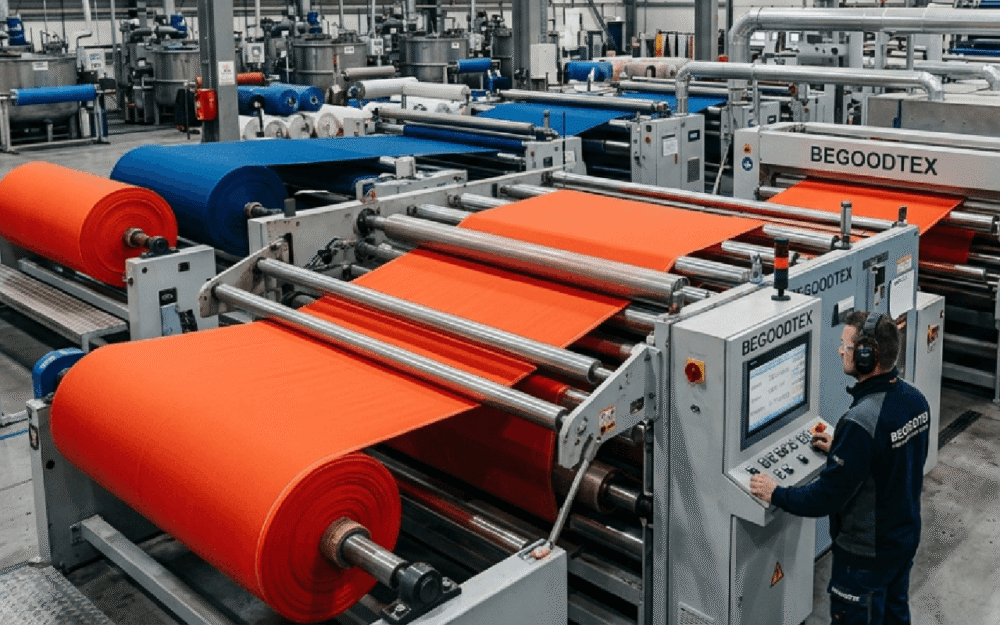
MOQ means Minimum Order Quantity. It is the smallest quantity a factory is willing to arrange as a separate production order.
In flame-retardant fabric sourcing, MOQ is not only about how many meters you want. It also depends on the fabric type, yarn stock, loom arrangement, dyeing method, flame-retardant treatment, testing requirements, and whether the fabric needs customization.
From the buyer’s side, the request may sound simple:
“I only need 200 meters.”
But from the factory’s side, many things may need to happen:
Does the loom need to be reset?
Does the warp need to be prepared again?
Does the dye bath need to be mixed?
Does the machine need cleaning?
Does the fabric need finishing?
Does it need a new test?
These steps do not disappear just because the order is small.
Producing 200 meters and 2,000 meters may require similar preparation. The difference is how many meters share that setup cost.
So MOQ is not usually set to make things difficult for buyers. It is mainly about production efficiency, material loss, and cost sharing.
Small orders of flame-retardant fabric often cost more, not because the fabric itself is always expensive, but because the preparation cost is high.
The loom needs adjustment.
The dyeing machine needs to run.
The flame-retardant finishing bath needs to be prepared.
Workers need to follow the order.
Quality control needs to check the fabric.
Some projects also require lab testing.
These steps still exist even for a small order.
For example, the same fabric may need machine setup whether the order is 500 meters or 5,000 meters.
If you only produce 500 meters, the setup cost is shared by 500 meters.
If you produce 5,000 meters, the cost per meter becomes much lower.
That is why buyers often see two types of pricing:
Stock fabric can be ordered in smaller quantities, but the price may be higher and the lead time is faster.
Custom bulk production has a better unit price, but it comes with MOQ and longer lead time.
Neither option is always better. It depends on the stage of the project.
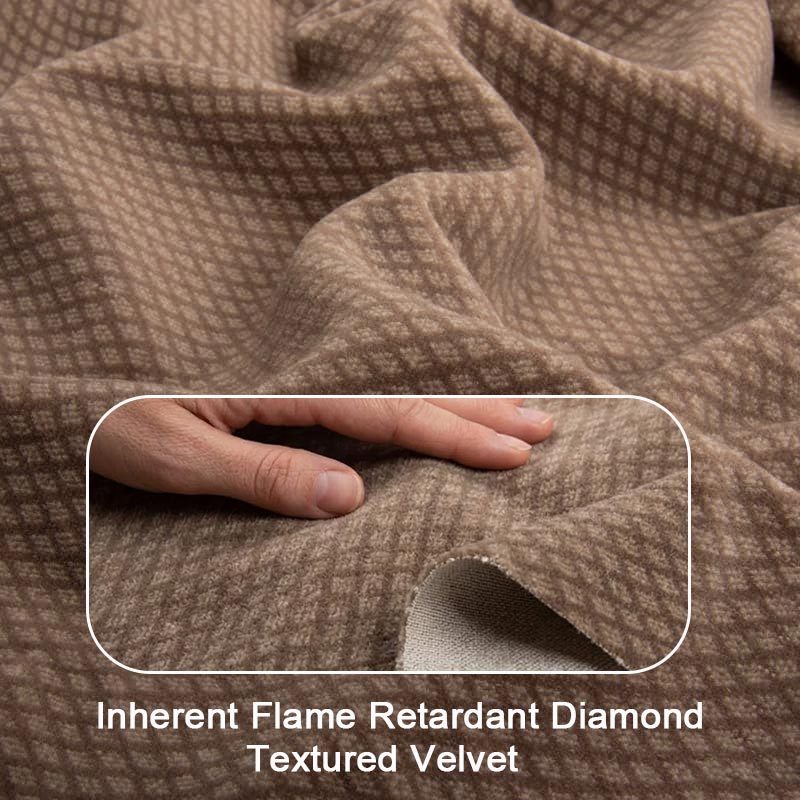
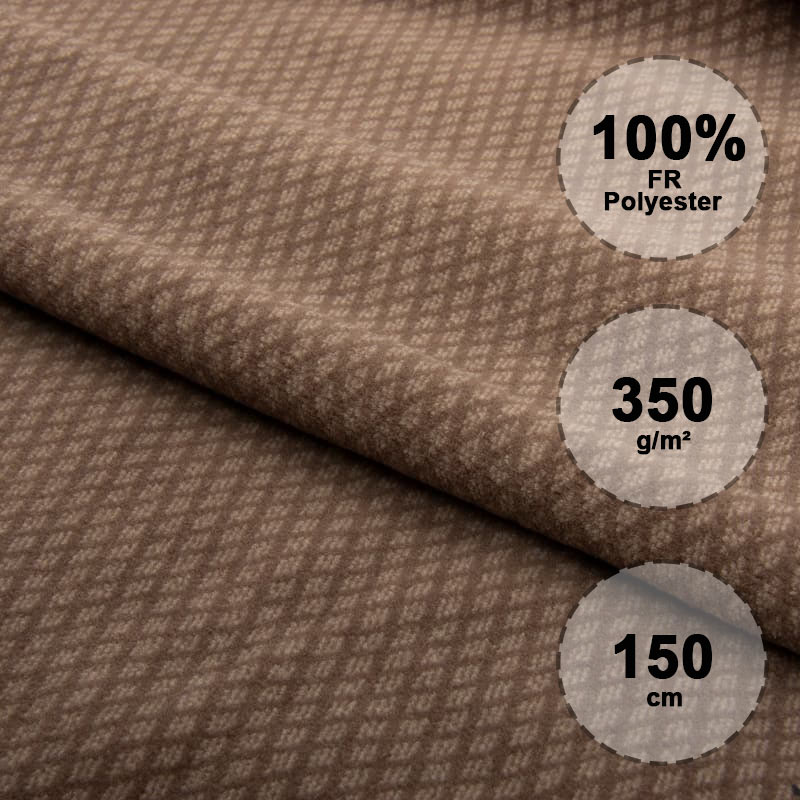
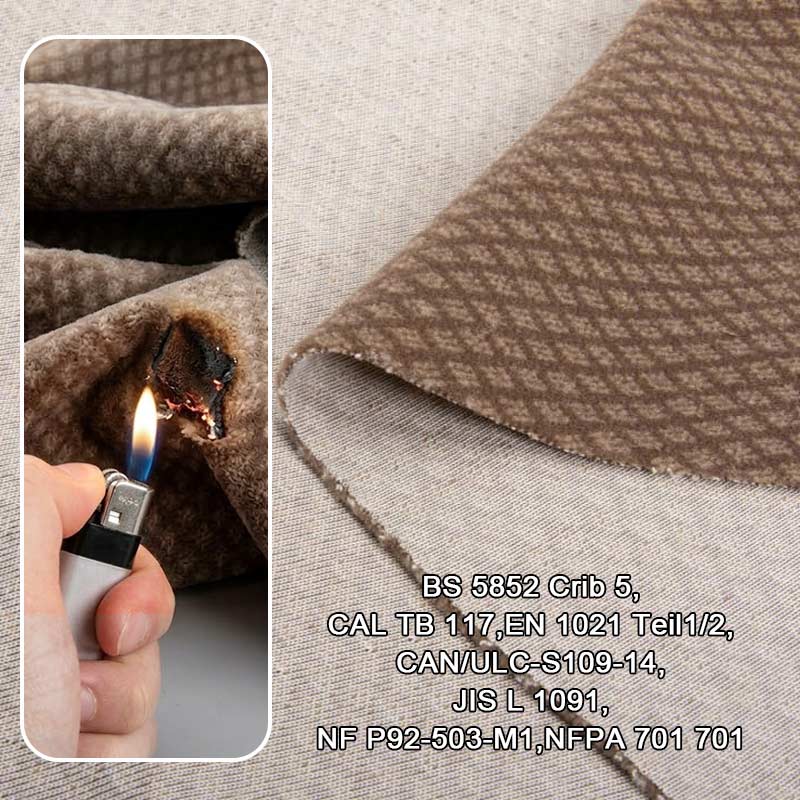
 Acoustic Inherent Flame Retardant Polyester Fabric with Blackout Performance for Interior Seating Textiles | 350 g/m² | 150 cm
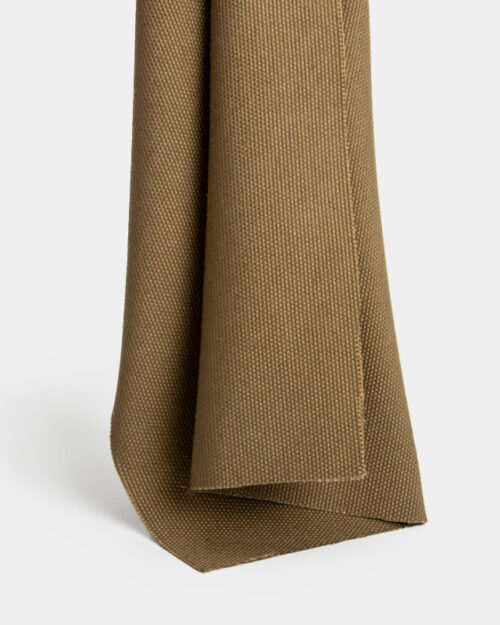 Waterproof Flame Retardant Oxford Polyester Fabric for Outdoor Bags and Camping Gear Wholesale with Bulk Order Support | 275 g/m² | 140 cm
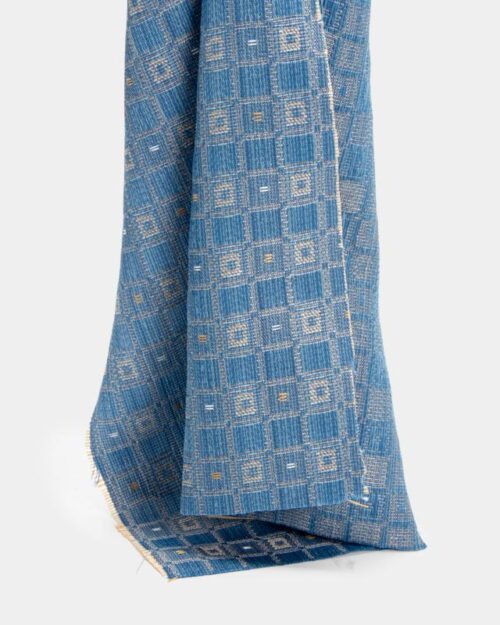 Antibacterial Flame Retardant Jacquard Polyester Privacy Drapery for Custom Medical Cubicles | 220 g/m² | 280 cm | BS 5867 Type C
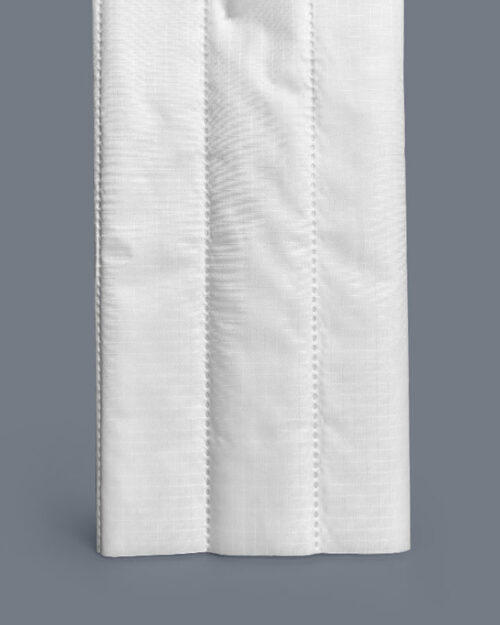 Flame Retardant Thermal Tent Liner Cotton-Polyester Fabric for Bulk Insulation Projects from a China Textile Manufacturer
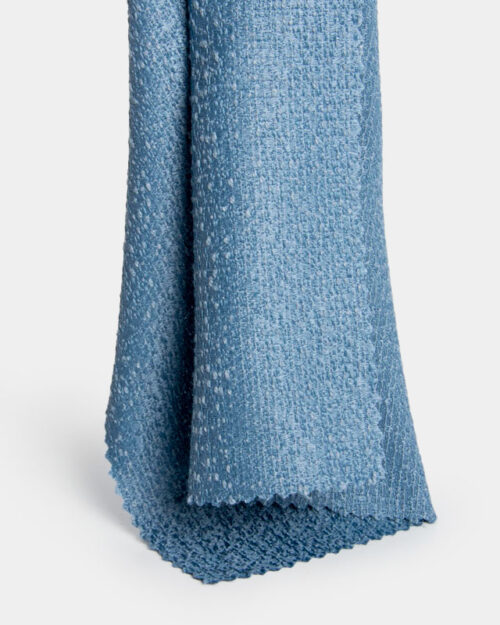 Flame Retardant Jacquard Curtain Fabric 245 g/m² NFPA 701 Certified Wholesale Manufacturer-Custom curtain solutions
Many MOQ problems happen because buyers do not first separate one thing:
Is this stock fabric or custom production?
Stock fabric is usually easier to arrange. If the factory already has common colors such as navy, orange, or hi-vis yellow in stock, one roll may be possible. This is suitable for sampling, small workwear orders, or trial production.
Custom fabric is different.
A custom color needs lab dips.
A custom weight may need weaving adjustment.
A custom texture may need a new loom setup.
Waterproof, oil-repellent, antistatic, or other functions need extra finishing.
This is not the same as taking one roll from the warehouse.
So if the project is still in the sample, photo, or early testing stage, stock fabric is usually the more realistic choice.
Once the color, standard, quantity, and long-term demand are clear, custom production becomes much easier to plan.
Custom color sounds simple.
Many buyers think that if they provide a Pantone number, the factory can dye it directly.
In real production, it does not work that way.
The factory usually needs to make a lab dip first. After the buyer approves the color, bulk dyeing can begin.
Bulk dyeing also needs a certain machine loading quantity. If the fabric quantity is too small, the water, dye, auxiliaries, temperature, and processing time become harder to control. This can lead to uneven color, shade variation, or batch difference.
For flame-retardant fabric, there is one more layer to check.
The factory cannot only check whether the color is correct. It also needs to check flame retardancy, hand feel, shrinkage, weight, and finishing stability.
So custom color MOQ is not just about selling more fabric.
In many cases, it is there to keep bulk color and fabric performance more stable.
Many buyers ask:
“If you can make 1,000 meters, why can’t you just make 100 meters?”
The answer is usually the equipment.
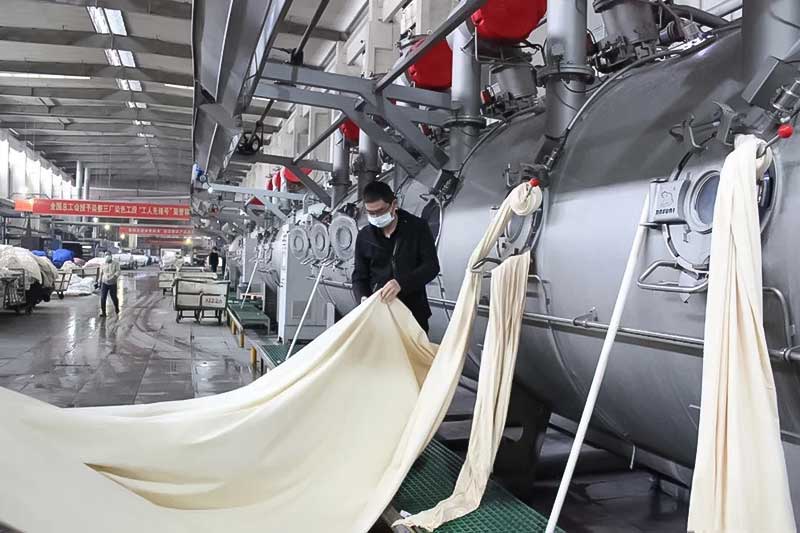
Industrial dyeing machines are not small pots. You cannot just put in a tiny amount of fabric and expect the same result. When the loading quantity is too low, the ratio of water, dye, and auxiliaries becomes harder to control. Color can become uneven, and batch difference becomes more likely.
Looms have the same issue.
Every time a loom is set up, yarn needs to be prepared, tension needs to be adjusted, and trial weaving is needed. There will also be starting and ending losses.
Functional finishing also has minimum processing requirements. Antistatic, UV, water and oil repellent, and similar treatments usually need a certain fabric quantity so the chemistry can be applied more evenly.
So when flame-retardant fabric factories talk about MOQ, it is not only because they want to sell more.
In many cases, it is decided by machine operation, loss control, and quality stability.
IFR polyester means inherently flame-retardant polyester. It is different from post-finished flame-retardant fabric.
Post-finished FR fabric is woven first, then treated with flame-retardant finishing.
IFR polyester gets its flame-retardant performance from the fiber itself. The flame-retardant property is already built into the yarn.
The advantage is better flame-retardant stability. It is less likely to weaken after washing.
But in production, IFR polyester needs more planning. It requires special flame-retardant yarn. When machines switch from regular polyester to IFR polyester, equipment may also need cleaning to avoid mixing or contamination.
These steps add preparation time and cost.
So regular stock IFR polyester may be available in small quantities.
But if the buyer needs a custom color, texture, weight, or special finishing, the MOQ is usually higher.
In simple words, IFR polyester is not ordinary fabric with one flame-retardant finish added at the end. It is a special flame-retardant system starting from the yarn.
Flame-retardant fabric is rarely only flame-retardant.
Many projects also require other functions, such as antistatic performance, water repellency, oil repellency, antibacterial treatment, UV resistance, fluorescent color, special texture, special weight, or custom width.
The more functions involved, the more complicated production becomes. MOQ is also more likely to increase.
Custom color needs lab dips, bulk dyeing, and shade control.
Custom weight needs yarn and weaving density adjustment.
Antistatic fabric may need conductive fiber or a special finishing process.
Water and oil repellency needs stable chemical finishing. If the quantity is too small, the finish may not be applied evenly.
Ripstop, twill, and other special textures may need loom resetting, which brings more starting loss.
All these functions can be made, but they need enough quantity to support stable production.
If the quantity is too small, the factory may still be able to do it, but the unit price will be high and stability may not be as good as regular bulk production.
For buyers, that may not be worth it.
Small orders are not impossible. The key is not to make the requirements too fixed at the very beginning.
If the project is still in development, use stock fabric first.
For example, choose regular colors, regular weights, and regular widths for sample garments, testing, or customer approval. After the project moves toward bulk production, then consider custom color or extra functions.
Another way is to combine orders.
If the yearly demand is around 2,000 meters, buying 500 meters four times will usually lead to higher unit price and freight cost. Producing a larger quantity at once can often bring a better price.
Buyers can also tell the supplier their estimated future demand early.
Sometimes the factory is already producing a similar fabric. If the color, weight, and function are close, there may be a chance to combine production and reduce separate machine setup cost.
The earlier the buyer explains the project plan, the easier it is for the supplier to coordinate.
If everything is left until “we need shipment next week,” the choices become much fewer.
Some small orders try to save cost by skipping test reports.
For ordinary decorative fabric, this may sometimes happen. But for flame-retardant fabric, it is not recommended.
Whether you buy 100 meters or 10,000 meters, the safety requirement should not be lowered.
The important point is that not every flame-retardant report fits your project.
For industrial flash fire protection, buyers may need NFPA 2112.
For heat and flame protection, EN ISO 11612 may be needed.
For arc flash risk, ASTM F1506 may be required.
For skin contact and chemical safety, OEKO-TEX may also be requested.
So do not only ask:
“Do you have a certificate?”
Ask instead:
Which standard does the report follow?
Which fabric does it cover?
What color and weight were tested?
Which batch was tested?
Does it match the actual product I want to buy?
When discussing MOQ and price, buyers should not only focus on the price per meter.
Flame-retardant fabric also needs to be judged by long-term use cost.
A cheap post-finished FR fabric may lose performance after several washes and need replacement sooner.
A low-cost small custom color order may create shade difference. If the customer rejects it, the rework cost can be much higher.
A fabric without the right test report may fail project approval. In that case, the money saved at the beginning does not mean much.
Inherently flame-retardant fabrics such as IFR polyester may not always have the lowest MOQ or the cheapest unit price. But their flame-retardant performance is more stable, which can make long-term use easier to manage.
So when buying flame-retardant fabric, look at the full picture:
Stock or custom production.
Small-order surcharge.
Test reports.
After-wash durability.
Color difference risk.
Repeat order possibility.
Project approval requirements.
Looking only at the meter price can easily lead to the wrong decision.
When Begoodtex handles flame-retardant fabric inquiries, we first look at the project stage.
If the buyer only needs samples, trial production, or small sample garments, we usually check stock options first. Stock IFR polyester, regular colors, and regular weights are often better for quick development.
If the buyer has already confirmed the bulk color, application, standard, and functional requirements, then the MOQ needs to be evaluated as custom production.
Yarn, weaving, dyeing, flame-retardant finishing, antistatic function, water and oil repellency, UV treatment, and third-party testing can all affect the MOQ.
If the customer has long-term demand, we also suggest discussing the estimated quantity early. This helps the factory arrange production batches more efficiently, and it also makes price, lead time, and repeat orders easier to control.
MOQ is not meant to keep buyers out.
Its real purpose is to keep price, quality, lead time, and test results more stable.
MOQ for flame-retardant fabric may look like a simple order quantity, but it is connected to many production steps.
Loom arrangement, dyeing machine loading, functional finishing, testing, and production loss can all affect MOQ.
Small orders are possible, but stock fabric is usually the best place to start.
If the buyer needs custom color, special weight, antistatic performance, water and oil repellency, or special texture, the MOQ will usually increase.
For projects with long-term demand, early purchasing planning is more cost-effective. Combining orders or telling the supplier the expected future quantity is usually better than splitting everything into many urgent small orders.
For flame-retardant fabric, MOQ is not the only thing that matters.
No matter whether the order is large or small, the fabric still needs the right test report and stable batch performance.
A cheap fabric that cannot meet the standard is not really saving money.
MOQ means Minimum Order Quantity. It is the smallest quantity a factory is willing to arrange as a separate production order. For FR fabric, MOQ is usually related to weaving, dyeing, flame-retardant finishing, functional treatment, and testing requirements.
Custom colors need lab dips, bulk dyeing, and machine cleaning. Dyeing machines have minimum loading requirements. If the quantity is too small, the cost becomes high and color stability is harder to control.
Yes. The most practical way is to choose stock colors and regular specifications. Some inventory fabrics can be ordered by the roll, which is suitable for sampling, sample garments, and small trial production.
IFR polyester gets its flame-retardant performance from inside the fiber. It requires special yarn and production arrangement. Machine switching and cleaning also add cost, so custom IFR polyester usually has a higher MOQ than ordinary post-finished fabric.
Yes. These functions often need extra weaving design or chemical finishing. To keep finishing even and reduce waste, the MOQ usually becomes higher.
Yes. Flame-retardant fabric should not lower its safety requirement just because the order is small. Buyers should check whether the relevant NFPA, EN ISO, ASTM, or OEKO-TEX reports match the final use.