Enter your details and we will send the requested document to your inbox.





Featured snippet: Velour is a knit pile fabric with a soft, fuzzy surface that looks similar to velvet but is usually made on knitting machines, giving it more stretch. Ordinary velour is not inherently flame retardant — whether it burns easily depends on the fiber, fabric weight, pile, and any flame-retardant (FR) treatment. For public spaces such as theatres, hotels, and cinemas, buyers should choose inherently flame-retardant (IFR) velour and request a valid test report.
Velour shows up everywhere from theatre curtains to sofa covers, yet buyers often confuse it with velvet or assume “soft fabric = safe fabric.” This guide explains what velour is, how it behaves in a fire, where it works best, and what to check before you order.
Velour is a pile fabric with a soft, fuzzy surface. Its plush feel comes from small loops on the fabric surface, which are cut to create a more even pile.
At first glance, velour looks quite similar to velvet. But the inner structure is different.
Modern velour is usually a pile knit fabric. In most cases, it is made on circular or flat-bed knitting machines, not traditional looms. Because of this knitted loop structure, velour normally has more stretch and flexibility than woven velvet.
So, is velour flame-retardant or flammable?
Ordinary velour is not automatically flame-retardant. Whether it burns easily depends on the fiber, fabric weight, pile structure, and flame-retardant treatment. For public projects, buyers should not judge velour only by softness or color. The test report matters too.
Some customers may receive velour fabric from the same batch and feel that the color looks different.
In many cases, this is not a dyeing problem. It comes from the pile direction.
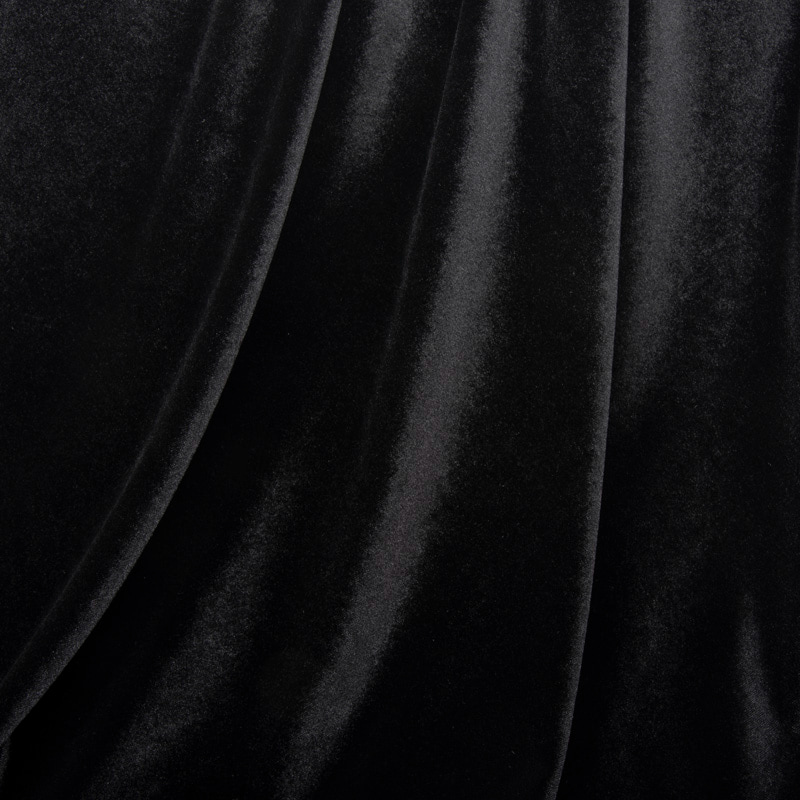
Velour has a clear nap direction on the surface.
This is why cutting direction is important. For curtains, sofas, garments, or large-area soft furnishings, all panels should follow the same pile direction. If two pieces are cut in opposite directions and sewn together, they may look like two different shades. This is especially easy to notice on dark colors, wide curtains, and large stage drapes.
Velour has a relatively thick pile surface, so it can absorb part of the sound reflection in a room. That is why theatre curtains and cinemas often use velour for stage drapes or wall soft furnishings.
Is it soundproof? Not really. But it can help reduce echo and make the space sound more comfortable.
Heavy velour has good light-blocking performance. It works well for stages, cinemas, hotel rooms, and high-end blackout curtain projects. Dark-colored velour absorbs light more clearly, which can make a stage look deeper and more controlled.
Velour is thicker than ordinary flat fabric. It feels soft, and it gives the fabric a richer look. This is why it is often used for pet beds, sofa covers and upholstery fabric, cushions, and performance costumes.
Many velour fabrics are knitted, so they have better stretch than velvet. For sportswear, dancewear, or seating fabrics, that extra flexibility can improve comfort and fit.
Polyester velour is easier to produce in bulk. Compared with silk velvet or more complex woven pile fabrics, polyester velour is also easier to control in cost, color, and supply stability. For theatres, hotels, stadiums, and cinemas that need large quantities, this can make procurement easier.

Velour is useful, but a few details should be checked before use.
Velour production usually starts with fiber selection based on the final use.
If the project needs permanent flame resistance, inherently flame-retardant polyester is often used. If the customer wants a cotton-like, soft, matte look, cotton fiber may be selected first, followed by post-treated flame-retardant finishing.
After that, knitting machines form the base fabric and pile loops. The loops are then cut to create an even pile surface. Next comes brushing, heat setting, and dyeing — steps that affect pile direction, hand feel, shrinkage, and color stability. For FR projects, the fabric also needs the right flame-retardant treatment or testing according to its type and application.
Based on Begoodtex’s project experience with theatres and similar applications, buyers should pay attention to a few practical points.
 Inherent Flame Retardant Stretch Velour Polyester-Spandex Fabric for Event Decor | 150/260 g/m² | 150 cm | BS 5867 Type C
 Flame Retardant Beige Crushed Velour Polyester Blackout Curtain Fabric with a Single-Sided Gloss | 315 g/m² | 150 cm | EN 13773 Class 1
 Flame Retardant Polyester Yarn-Dyed Weft-Knitted Standing Pile Velour in Beige for Stage and Theatre Drapery | 430 g/m² | 150 cm
Velour can be used for theatre curtains, hotel curtains, upholstery, soft wall covering, and decorative fabrics. But different applications have different requirements. A theatre curtain may need a specific FR standard, heavier weight, better drape, and long-term durability. A garment fabric may not meet the same requirements.
For long-term flame-retardant projects, inherent flame-retardant velour for stage curtains is usually a better choice. The FR performance comes from the fiber itself, so it stays stable through long-term use and cleaning.
If the customer prefers a cotton-like, softer, matte effect, FR cotton fabric can also be selected, followed by post-treated FR finishing. The choice should depend on the project use, not only on the sample hand feel.
Velour has a clear pile direction. With the pile direction, the color looks brighter and glossier; against it, the color looks deeper and more matte. When checking samples and bulk goods, keep the pile direction consistent to avoid visible shade difference after cutting, sewing, or installation. This is especially important for curtains, stage drapes, sofas, and other large-area products.
Before confirming an order, check the acceptable shade tolerance for bulk goods, the FR standard required (such as NFPA 701, BS 5867, or EN 13773), fabric weight, width, and abrasion rating. These details help reduce the gap between approved samples and bulk production.
Velour is a practical pile fabric. It feels soft, looks rich, and can offer sound absorption and light blocking. For garments, cushions, or small home items, buyers may mainly focus on hand feel, color, and durability.
But for stages, theatres, hotels, cinemas, schools, or large event venues, appearance is not enough. When buying this type of fabric, confirm three things first:
For public projects, it is safer to choose velour with a clear flame-retardant rating from the flame-retardant fabric range and a suitable test report verified by an authority such as NFPA. This makes project approval, installation, and later use easier to manage.
Pile structures increase the contact area between fibers and air. If the fabric is not treated, the flame may spread quickly along the surface pile first. Cotton velour, in particular, needs more attention to flame-retardant treatment.
IFR means inherently flame-retardant. The FR performance comes from the fiber itself. It is more suitable for long-term public installations such as theatres, cinemas, hotels, schools, and large event venues, and it stays stable during later cleaning and use.
Velvet is mostly woven. It looks more formal and has a finer hand feel but usually less stretch. Velour is mostly knitted. It is softer and more elastic, making it useful for stage curtains, sportswear, and commercial soft furnishings.
Yes. Velour works well for theatre curtains, cinema curtains, hotel room curtains, and high-end blackout curtain projects. Heavy velour has better light-blocking and sound-absorbing performance. For public-space use, the flame-retardant test report should be checked before ordering.
Not exactly. Velour can absorb part of the sound reflection and reduce echo, so it is often used in theatres, cinemas, and music halls. But it is not a soundproof material and cannot fully block sound between rooms.
Ordinary velour is not very suitable for long-term outdoor use. Sunlight, moisture, and rain may affect the pile surface, color, and fiber strength. For outdoor projects, choose fabrics specially designed for outdoor use.
Ask the supplier for a test report against the standard your project requires — commonly NFPA 701 (US curtains), BS 5867 (UK curtains), or EN 13773 (EU). IFR velour keeps its rating through washing, while DFR (durable/post-treated) may lose performance over time and repeated cleaning.
