Enter your details and we will send the requested document to your inbox.





Inherently flame retardant interior fabrics designed to combine permanent fire performance with fine-particle barrier functionality for curtains, window treatments, homes, offices, and other indoor environments.
Showing all 11 resultsSorted by latest


PM2.5 refers to fine airborne particles with diameters generally 2.5 micrometers or smaller.
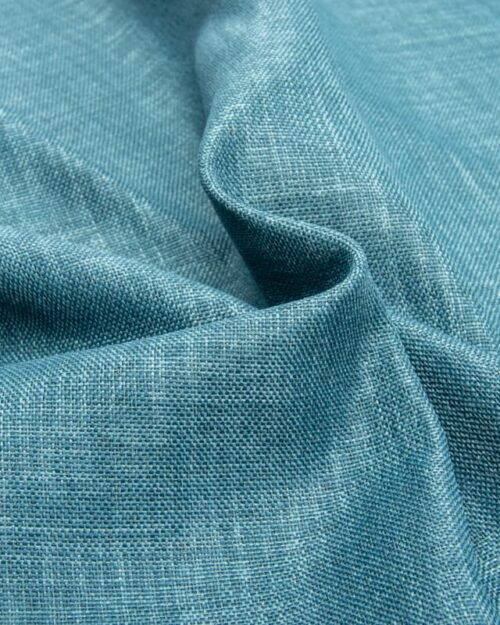
IFR + PM2.5 Protection Fabric combines inherent flame retardancy with a textile structure designed to help reduce the penetration or movement of fine airborne particles. BEGOODTEX's current range mainly includes flame retardant curtain fabrics such as sheer, voile, faux-linen, and dimout constructions.
Particle-control performance can depend on fabric density, pore structure, surface properties, electrostatic effects, and additional functional treatment.
BEGOODTEX currently describes its PM2.5 range as using high-density textile structures together with electrostatic or composite surface technologies to help reduce dust, pollen, and fine-particle penetration.
Actual performance should be confirmed on the finished fabric because different sheer, voile, and dimout constructions have very different levels of openness and airflow.
PM2.5 performance and flame retardancy should be evaluated separately.
A flame test such as NFPA 701 proves fire-related performance under its specified test conditions; it does not prove particle filtration or PM2.5 barrier efficiency.
BEGOODTEX's current PM2.5 category page does not publish one universal particle-filtration efficiency or one common PM2.5 test standard for all products. Buyers should therefore request product-specific particle penetration, capture, or filtration test data when PM2.5 performance is a key purchasing requirement.
The applicable flame standards depend on the selected curtain fabric.
For example, BG-A187-801 currently supports NFPA 701, CA Title 19, CAN/ULC-S109-14, and JIS L 1091.
Other PM2.5-tagged wide-width curtain fabrics, such as selected Faux Linen Dimout constructions, support additional standards including BS 5867 Type C, DIN 4102-B1, EN 13501 B-s1,d0, EN 13773 Class 1, NF P92-503 M1, and GOST R 50810-95.
The flame-retardant report and PM2.5 functional test should be confirmed separately for the exact SKU.
Focused on flame retardant textile development since 2013.
Supports fabric development, sample testing and internal performance checks.
Product-specific test reports available for different markets and applications.
Samples, customization, confirmed specifications and bulk production support.
