Enter your details and we will send the requested document to your inbox.





BEGOODTEX has officially secured a flame-retardant fabric registration issued by the Office of the State Fire Marshal (OSFM), part of the CAL FIRE system.
For a company focused on developing and supplying flame-retardant textiles for international projects, this marks an important step forward. It reflects our successful experience with California’s state-level process, bringing together fabric performance, laboratory coordination, technical documentation, and regulatory communication.
California has its own well-established requirements for flame-retardant materials. Curtains, draperies, decorative fabrics, and certain fabric enclosures used in hotels, theaters, schools, exhibition spaces, and other public occupancies may need to meet specific fire-safety and documentation requirements before a project can move ahead.
Behind this registration is our ability to control fabric composition, construction, finishing, and batch consistency throughout production. It shows international buyers that BEGOODTEX can deliver reliable flame-retardant fabrics while supporting testing and compliance requirements.

Sourcing a flame-retardant fabric rarely ends with choosing a color, weight, and hand feel. Once the material enters a hotel, theater, school, or public building project, it may also be reviewed against design specifications, fire-safety requirements, third-party test reports, and approval documents.
Some of the most disruptive issues appear late in the process. A sample may already have been approved, only for the project team to discover that the available test report does not fully match the local requirement. Avoiding that situation requires more than a capable fabric. It requires a supplier that can connect material performance, supporting documents, and the intended application from the beginning.
Completing the CAL FIRE / OSFM registration process calls for an understanding of California’s system, careful preparation of the required information, and close coordination between technical, production, and external testing teams.
For BEGOODTEX, this is a meaningful business milestone. It shows that our work extends beyond manufacturing flame-retardant textiles to supporting the compliance and documentation needs of California projects.
The experience can now support future projects. When a buyer brings us a new application, specification, or documentation request, we can identify earlier what needs to be prepared, what should be confirmed before sampling, and how testing and delivery timelines should be planned. Addressing those questions at the start is far more efficient than resolving them after a material has already been selected.
CAL FIRE is the California Department of Forestry and Fire Protection. Its Office of the State Fire Marshal (OSFM) oversees a range of fire-prevention, engineering, licensing, and enforcement programs.
Within the field of flame-retardant chemicals and fabrics, OSFM administers the relevant registration program. According to the official OSFM guidance, approved and registered materials must first undergo laboratory testing and satisfactorily demonstrate their flame-retardant capabilities. OSFM also has authority over decorative materials and fabrics used in certain public-assembly, school, and dining occupancies.
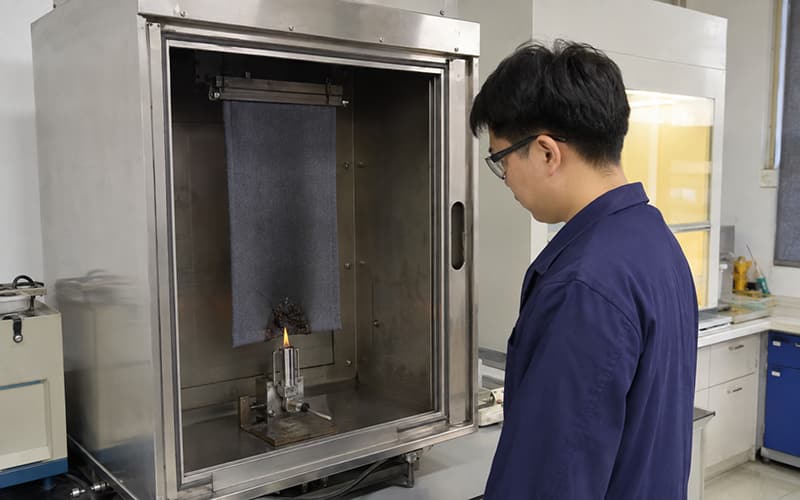
One distinction is worth making. CAL FIRE / OSFM is not a commercial testing laboratory. A laboratory performs the required test, while OSFM administers the registration and review process around it. So what the industry often calls “CAL FIRE certification” represents more than a standalone burn-test report; it reflects completion of a formal state-level process.Controlled Flame Testing in Our Laboratory
Laboratory performance is an essential starting point, but project approval also depends on clear and consistent product information. The fabric name, composition, construction, weight, finish, intended use, and supporting documents must align. When the tested sample and the commercial product are described differently, even a capable material can become harder to review.
Completing the CAL FIRE / OSFM registration process has given BEGOODTEX practical insight into how these elements fit together. From preparing technical information and test samples to coordinating external testing and organizing documentation, the work involves close cooperation across technical, quality, and project teams.
That is the larger message behind this company news: BEGOODTEX is continuing to develop from a flame-retardant fabric manufacturer into a project-focused textile partner capable of supporting material selection, compliance review, and reliable bulk delivery.
Buyers working on US textile projects often encounter both CAL FIRE and NFPA 701. Each is relevant to fire safety, but they serve different purposes.
NFPA 701 is a test standard used to evaluate flame propagation in textiles and films. A laboratory tests a specimen using the applicable method and issues a report. CAL FIRE / OSFM registration belongs to California’s state-level system and involves testing evidence, application documents, and administrative review.
| Comparison | CAL FIRE / OSFM Registration | NFPA 701 |
|---|---|---|
| Type | California state-level registration program for flame-retardant materials | Flame-propagation test standard for textiles and films |
| Main purpose | Completes the required application, review, and registration process | Evaluates the fire performance of the submitted specimen |
| Typical document | Registration certificate or official registration record | Laboratory test report |
| Project use | Reviewed against the California project and intended application | Reviewed against the specification, test method, and specimen details |
Neither should be treated as automatically “better” than the other. The right starting point is to confirm where the project is located, how the fabric will be used, and which documents are requested by the specification or the authority having jurisdiction.
If your specification names NFPA 701, see our NFPA 701 flame test standard guide. For more information on California test requirements, read our overview of CA Title 19 fire safety standards.
In practice, buyers need more than a certificate. They need fabric that can be delivered on schedule, supported with the right documentation, and produced with consistent quality after sample approval. A supplier’s familiarity with the compliance process can influence how accurately requirements are understood, how many sampling rounds are needed, and whether the documents are ready when the project reaches review.
With hands-on CAL FIRE / OSFM registration experience, BEGOODTEX can discuss the end use, applicable requirements, and document plan at the beginning of a project rather than addressing compliance only after color and hand feel have been approved. This helps reduce unnecessary resampling and testing while keeping purchasing, design, installation, and approval teams aligned around the same product information.
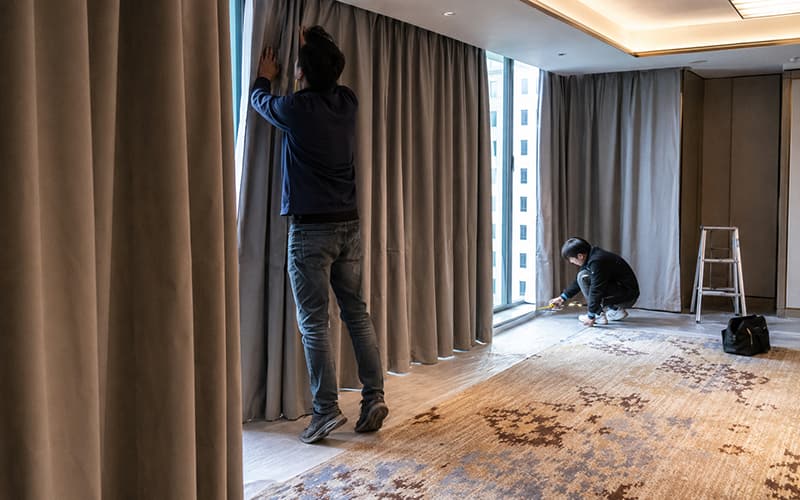
For hotel curtains, theater draperies, school interiors, and decorative textiles used in public spaces, we can support the project from fabric selection through sample preparation, testing coordination, custom development, quality control, documentation, and bulk shipment.Final Curtain Inspection Before Project Handover
Every project has its own application, performance targets, and delivery schedule. Before recommending a fabric, we prefer to understand the project itself and then determine the most suitable material and compliance route.
For a broader view of our documentation capabilities, visit the BEGOODTEX certifications and test reports page. Standards for different markets and applications are also organized in our global flame-retardant textile standards center.
Send us the project location, end application, specified standard, estimated quantity, required width and weight, color direction, delivery schedule, and documentation needs. The more complete the information, the more accurately we can review the compliance route and recommend a fabric before sampling begins.
The term commonly refers to the flame-retardant chemicals and fabrics registration program administered by OSFM within the CAL FIRE system. Relevant materials undergo laboratory testing and the required documentation and review process. The exact documents needed for a project should be confirmed against the intended application and local requirements.
No. NFPA 701 is a test standard used to assess flame propagation in textiles and films. CAL FIRE / OSFM registration is part of California’s state-level administrative system. A project may refer to one or both, so the specification should always be reviewed before a material is selected.
It shows that the supplier has practical experience coordinating testing, preparing technical documents, and completing California’s flame-retardant fabric registration process. That experience can help identify compliance requirements and potential timing issues earlier in the project.
Yes. Based on the project location, end use, and technical specification, we can support fabric selection, review available documents, prepare samples, coordinate testing, and assist with additional registration work where required.
Please provide the project location, application, specified standard, estimated quantity, required width and weight, color direction, delivery schedule, and documentation requirements. This information allows us to recommend a more suitable fabric and reduce unnecessary back-and-forth later.