When evaluating flame-retardant fabric suppliers in 2026, procurement teams should look beyond price, fabric weight, and certificates. Three questions matter equally: Is the flame-retardant technology route suitable for the project? Does the testing basis match the target market? And can the supplier consistently reproduce the approved sample in bulk production?
This analysis was originally prepared mainly for internal procurement discussions at BEGOODTEX and communication on collaborative projects. As standards, purchasing requirements, and supplier evaluation practices continue to evolve across markets, we have decided to make the parts of this framework with broader reference value publicly available.
As of 2026, EU supply-chain due-diligence and sustainable-product policies continue to advance. CSDDD has entered the implementation-preparation stage following revisions, while ESPR has established the Digital Product Passport (DPP) framework, with textiles and apparel included among priority product groups. For B2B procurement, this means material information, test documentation, batch records, and supply-chain data are increasingly becoming part of supplier evaluation. Selecting flame-retardant fabric is therefore no longer a matter of cost control alone, but a combined assessment of technical fit, compliance, and delivery capability.
Three Core Dimensions for Evaluating Flame-Retardant Fabric Suppliers
Whether the project involves hotels and public buildings, furniture and public seating, industrial protective wear, or technical textiles, supplier evaluation can begin with three questions: Is the technology route suitable for the intended service life? Do the test reports genuinely correspond to the destination market and final application? Can the specifications approved at sample stage be reproduced consistently in bulk production?
Flame-Retardant Technology Route: Start with the Project, Then Choose IFR or Post-Treated FR
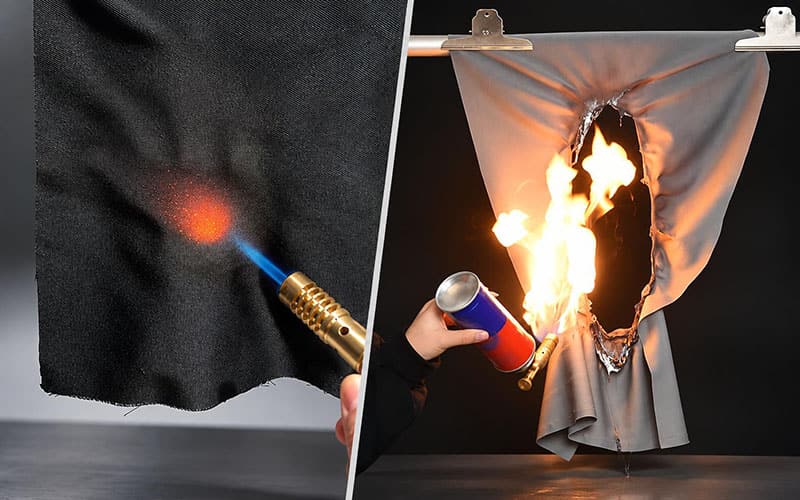
Comparison of inherent and post-treated flame retardancy. Actual performance depends on the specific material, preconditioning, and test report
Service Life & FR Durability:Inherent flame retardancy is typically built in during polymer modification or fiber formation, while post-treated flame retardancy is imparted or enhanced through finishing processes such as padding or coating. Projects involving long service lives or frequent laundering generally place greater emphasis on FR durability, but this should not be simplified into “IFR is always better” or “post-treated FR fails after one wash.”
Overall Burning Performance: Afterflame time, damaged length, melt dripping, smoke behavior, and related performance should be assessed according to the specific material, preconditioning conditions, and applicable test method. Procurement teams should verify the test report rather than judging final safety performance only from terms such as “permanent flame retardant” or “self-extinguishing.”
Chemical & Product Compliance: If a project involves REACH, restricted substances, OEKO-TEX® Standard 100, or similar requirements, these should be checked separately against the destination market and customer specifications. Chemical or product-safety requirements of this kind do not replace the need for specific flame-retardant testing.
Global Safety Standards & Third-Party Testing: Confirm Market and End Use First
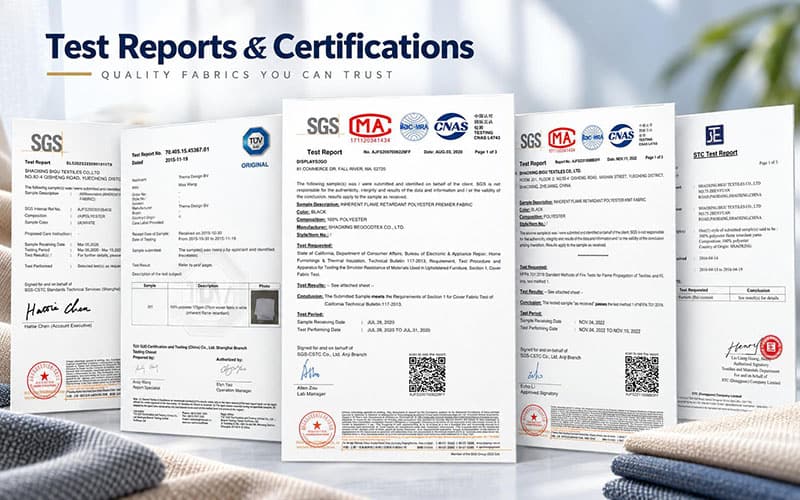
Third-party testing and quality documentation (illustrative). Actual procurement should verify original report numbers, sample specifications, and the scope of testing
A mature B2B flame-retardant fabric supplier should be able to explain which product, test method, classification, and scope each existing report covers, and provide verifiable third-party test documentation when required by the project. The procurement priority is not “the more reports, the better,” but whether the reports correspond to the actual product being purchased, the destination market, and the final application.
Europe & the UK:EN 13773 and BS 5867-2 are commonly referenced for curtains and interior furnishing projects; furniture and seating may involve BS 5852; protective-clothing projects may involve ISO 11612 and ISO 14116.
North America: NFPA 701 is commonly referenced for architectural textiles and curtains; industrial flash-fire protection may involve NFPA 2112; children’s sleepwear is primarily subject to requirements such as 16 CFR Part 1615 / 1616.
Asia & Other Markets: Different countries also use their own testing systems, such as China’s GB 8965 series and Japan’s JIS L 1091. Specific projects should still be evaluated according to customer specifications, product application, and destination market.
Quality Management Systems: System certifications such as ISO 9001 can serve as one reference point when auditing a supplier’s quality-management process, but they do not replace product-level flame-retardant testing, sample approval, or batch quality control. What procurement teams need to verify is whether the supplier has repeatable processes for specification confirmation, inspection, and nonconformance handling.
Traceability & Supply Chain Data: For long-term orders or projects spanning multiple years, assess whether the supplier can retain sample, specification, production, and batch records, and whether it provides change notification and necessary re-evaluation when raw materials, fabric construction, or finishing changes materially. If the project also includes recycled-material or ESG targets, the corresponding material sources and documentation should be checked as well.
From a procurement-risk perspective, one of the most overlooked issues is consistency from approved sample to bulk production: sample approval → specification freeze → bulk production → quality inspection → third-party verification where required → shipment and batch records. Passing a test at sample stage is only the starting point. The supplier’s ability to reproduce the approved sample consistently is what ultimately determines delivery stability.
Supplier Evaluation Priorities Vary by Application
Flame-retardant curtain application in a hotel and commercial interior setting
1. Commercial Real Estate, Premium Hotels & Public Spaces (Hospitality & Commercial Decor)
Curtains & Window Treatments: In addition to flame-retardant standards, confirm blackout performance, fabric width, drape, colorfastness, dimensional stability, and care requirements. For extra-wide or blackout products, also assess whether the fabric construction and downstream processing are suitable for the project dimensions and installation method.
Furniture & Public Seating: Beyond flame performance, also consider abrasion resistance, tear strength, colorfastness, and the testing boundaries when the fabric is combined with foam, interlinings, or other components. A high Martindale abrasion rating does not equal the flame performance of the complete seating system.
Protective Workwear: Start with the specific hazard, such as short-duration flame, radiant heat, or electric arc, and then determine what requirements apply at the material level and at the finished-garment level. In procurement, it is especially important to distinguish the scope of “fabric testing” from certification of the final protective garment.
Technical Textiles & Composites: For arc-resistant, light-and-heat shielding, high-temperature contact, or coated composite projects, first define the target performance, test object, and service environment before determining the material structure. Avoid judging overall suitability from a single “flame-retardant” metric.
How BEGOODTEX Supports Project-Based Flame-Retardant Fabric Procurement
Technology Route & Product Matching: BEGOODTEX has long focused on flame-retardant fabric R&D, manufacturing, and B2B project supply. Based on the application, target market, expected service life, and specification requirements, we can screen existing fabrics or evaluate suitable directions for custom development.
Laboratory & Test Documentation Support: The company operates on a quality-management foundation that includes ISO 9001:2015 and maintains an in-house flame-retardant laboratory for product development and sample pre-testing. Third-party test documentation required for a project should be verified item by item against the specific product, report scope, and customer requirements.
Specification Confirmation & Bulk Production Coordination: We support project discussions covering fabric weight, width, color, construction, and functional requirements, and confirm the approved sample, key specifications, and bulk-production conditions to reduce information gaps between sampling and mass production.
Before placing your next bulk order, we recommend that your procurement team verify the following five items with the supplier:
The application, destination market, and customer/project specifications are clearly defined
The required flame-retardant standard, version, and any Method / Type / Class / Source / Grade have been confirmed
The sample specification in the test report corresponds to the actual product being purchased, and the approved sample and key specifications have been frozen
The supplier has clear QC, batch-record, and change-management processes, and can arrange necessary re-evaluation when key conditions change
MOQ, sampling lead time, bulk-production lead time, capacity, packing, and shipment requirements have been confirmed
Buyer Matching & Project Kickoff Support
B2B project swatches and technical documentation (illustrative). Specific sample policies, freight charges, and available reports are subject to project discussion
For projects with 2026/2027 purchasing plans, we recommend providing as much information as possible at the inquiry stage, including the application, destination market, target flame-retardant standard, other functional requirements, target width/GSM, and estimated quantity. BEGOODTEX can use this information to narrow down candidate fabrics and determine whether an existing product, available test documentation, or custom development is more suitable for the project.
Project Matching: Narrow the candidate fabric range based on application, market, and target standard;
Samples & Documents: Provide available samples, swatches, and corresponding test-document support according to project needs. Specific policies, costs, and lead times are subject to project discussion;
Project Assessment: If the customer specification involves a particular standard, classification, or composite structure, the test object and key specifications can be confirmed before sampling and quotation.
If the project is still at an early evaluation stage, you can begin with the application, destination market, and target standard. Rather than first looking for a report that merely “appears compliant,” placing the product, standard, sample, and bulk-production conditions within the same verification chain is more effective in reducing downstream procurement risk.
Frequently Asked Questions
Can one flame-retardant test report cover every color, coating, or backing of the same fabric?
Not automatically. A test report applies to the sample and construction identified in that report. Changes in color formulation, coating, backing, lamination, fabric weight, structure, or finishing route may affect flame behavior or fall outside the original report scope. Before treating a new variant as covered, buyers should compare the actual production specification with the tested sample and confirm whether additional evaluation is required.
Should flame-retardant performance be checked after laundering or professional cleaning?
For reusable textiles that will be washed, dry-cleaned, or repeatedly maintained during service, durability should be considered as part of the test plan. The relevant preconditioning or cleaning cycles depend on the end use, customer specification, and applicable test method. An initial result on an unwashed fabric does not by itself describe how the material will perform after repeated care.
Can added functions such as blackout, water repellency, antimicrobial treatment, or lamination affect flame performance?
Yes. A fabric that meets a flame-retardant requirement in its base form may behave differently after additional coatings, backings, films, laminations, printing, or other functional finishing. For multifunctional projects, buyers should evaluate the final construction that will actually be supplied rather than relying only on a test result from the untreated base fabric.
What should be included in an approved “golden sample” for bulk production?
A useful golden sample should be linked to a clearly defined specification, not kept as a visual reference only. The record can include the sample or article number, fiber composition, fabric construction, target weight and width, color, relevant coating or finishing details, target flame-retardant requirement, agreed tolerances, and the related test-document reference. This gives both buyer and supplier a clearer basis for later bulk-production comparison.
References & Update Notes
Primary references: European Commission (CSDDD, ESPR, and the DPP framework); BSI (BS 5867-2, BS 5852); ISO (ISO 11612, ISO 14116); U.S. CPSC (16 CFR Part 1615 / 1616); NFPA (NFPA 701, NFPA 2112). Specific projects should follow the latest valid versions of the standards applicable to the destination market and customer specifications.







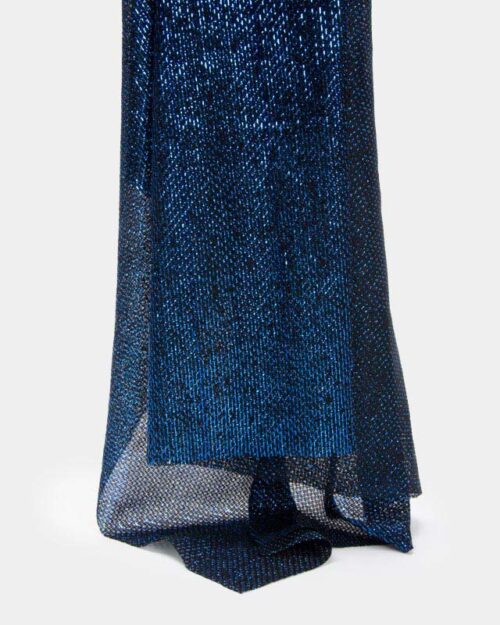 Flame Retardant Metallic Fabric 75 g/m² for Stage Curtains OEKO-TEX Certified Wholesale Supply
 Inherent Flame Retardant Wear-Resistant Transit Bus Seat Cover Textile for Project Sourcing | 600 g/m² | 150 cm | CAL TB 117
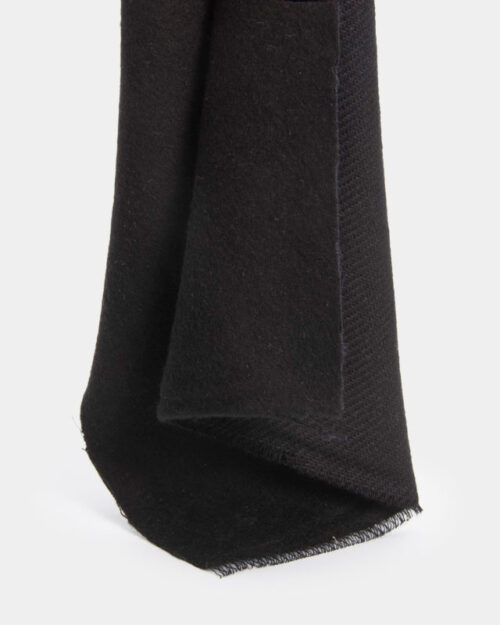 Black Polyester Velvet Curtain Fabric with Blackout and Inherent Flame Retardancy for Stage Use | 320 g/m² | 300 cm | EN 13773 Class 1