Enter your details and we will send the requested document to your inbox.





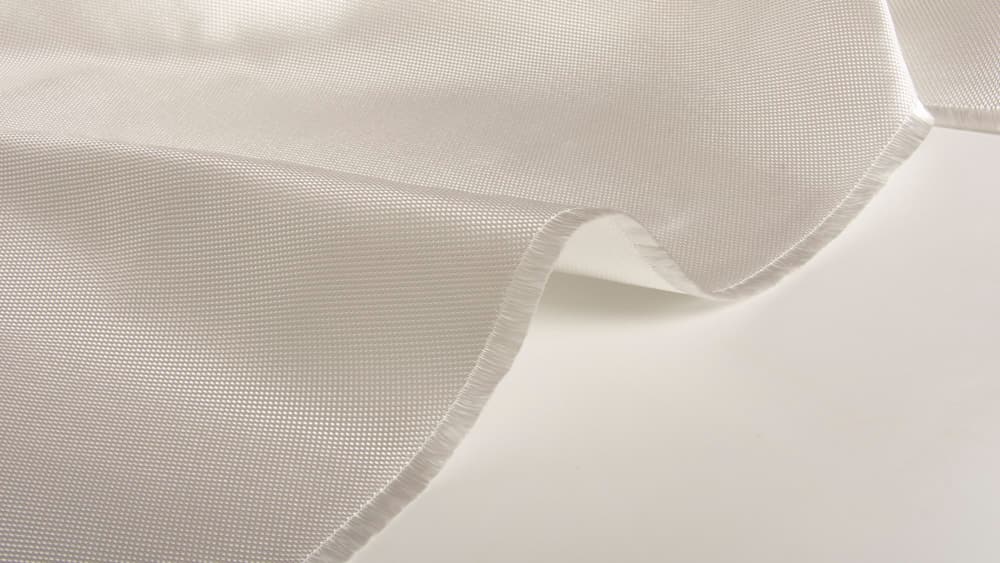
A fiberglass fire blanket is a high-temperature-resistant material woven from fine glass fibers.
Unlike ordinary cotton or polyester fabric, fiberglass does not burn easily. It also does not melt and drip under heat the way some synthetic fibers may do.
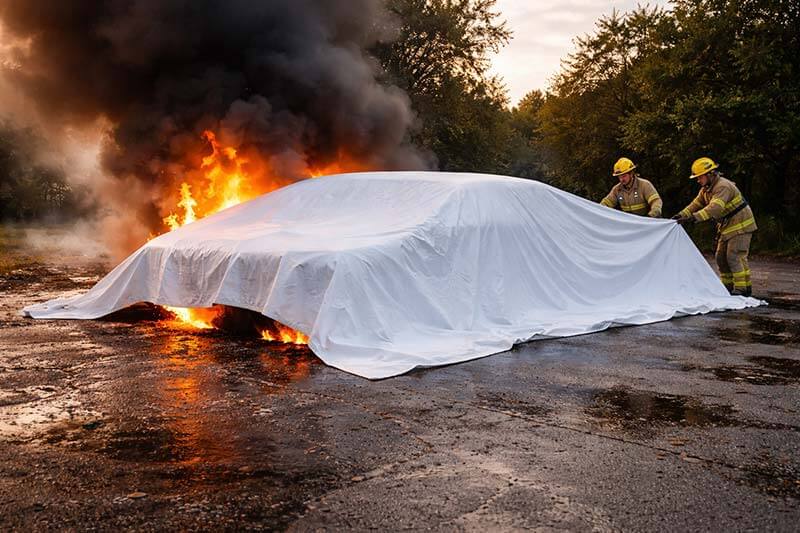
In workshops, fiberglass fire blankets are often used during welding, grinding, cutting, and similar hot-work operations. They help block sparks, isolate spatter, and protect nearby equipment, cables, floors, and flammable materials. In some cases, they are also used to wrap hot metal parts and help them cool down more slowly.
Its value is not only “fire resistance.”
More importantly, it creates a protective barrier between sparks, heat, and surrounding objects. This can help reduce the risk of accidents in daily workshop work.


Different workshops face different risks. So buyers should not only look at the words “fiberglass blanket.”
Light grinding, regular welding, heavy cutting, and molten metal spatter are not the same situation. The blanket requirements can be very different.
| Type | Suitable Applications | What to Check When Buying |
|---|---|---|
| Basic E-glass fiberglass fire blanket | Light welding, grinding, general spark protection | Lower cost, but the hand feel may be stiff. Bare fiberglass may irritate the skin. |
| Silicone-coated fiberglass fire blanket | Workshops with frequent handling, oil contamination, or better operability requirements | The coating can reduce fiberglass irritation and make cleaning easier. |
| High-silica fiberglass fire blanket | High-temperature welding, heavy cutting, molten metal spatter | Higher temperature resistance, suitable for harsher heat environments. |
Many suppliers highlight numbers such as “550°C resistant” or “1000°C resistant.”
Are these numbers important? Yes.
But are they enough? Not really.
The real performance also depends on how the blanket is used.
Will the blanket be placed on the floor to catch welding slag? Will it be hung vertically to block sparks? Are the sparks only touching the surface for a short time, or will hot metal stay on the blanket for longer? Is there oil, moisture, chemicals, or frequent friction in the workshop?
The same fire blanket may perform differently in different working conditions.
If it is laid flat on the ground, buyers should focus on whether it can handle falling sparks and hot particles.
If it is used as a vertical curtain, softness, drape, and installation method become more important.
If the workshop has oil contamination, a coated fiberglass blanket is often a better choice. It is easier to wipe clean and less likely to absorb dirt.
| Application | Main Function | Selection Advice |
|---|---|---|
| Welding stations | Blocks sparks, welding slag, and hot spatter | Choose standard fiberglass, coated fiberglass, or high-silica material according to welding intensity. |
| Grinding areas | Prevents sparks from entering painting, packaging, or flammable areas | Can be used as a temporary movable barrier. |
| Equipment maintenance | Covers nearby equipment, cables, and floors | Choose a material that is flexible, easy to spread, and not easy to tear. |
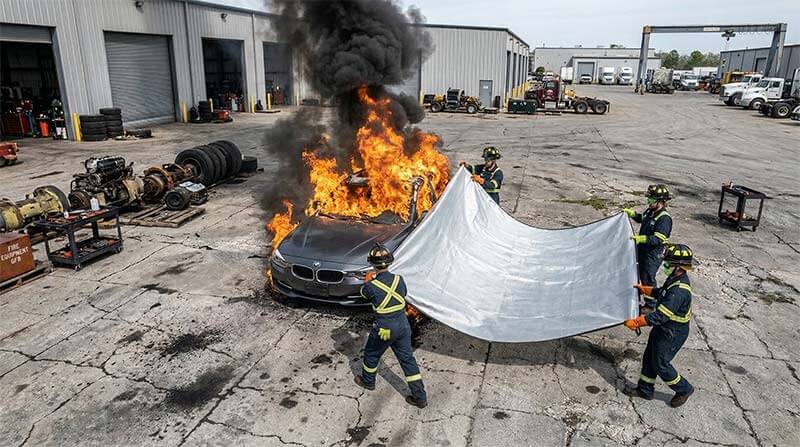
| Cooling hot parts | Wraps hot metal parts and helps slow down cooling | Check temperature rating and material stability. |
| Temporary workshop heat protection | Used as local insulation, protective curtain, or temporary cover | Consider installation method and reusable life. |
Here is a practical way to judge the right option.
If sparks only appear occasionally, focus on basic protection and cost.
If the blanket is used every day, focus more on abrasion resistance, coating, hand feel, and service life.
If the work involves molten metal or high-temperature cutting, pay more attention to material grade and test documents.
Before choosing a fiberglass fire blanket, ask three questions first.
First, what is the main heat source in the workshop?
Is it regular welding sparks, grinding spatter, welding slag, hot parts, or molten metal?
Second, how will the blanket be used?
Will it be laid on the floor to catch sparks, hung as a protective curtain, or used to wrap equipment and hot components?
Third, is the working environment complicated?
Is there oil, moisture, chemicals, frequent friction, or regular handling by workers?
Once these points are clear, the selection becomes much easier.
For fiberglass fire blanket projects, Begoodtex first looks at the actual working condition, not only the temperature number.
For example, will the blanket be used for welding protection, equipment insulation, or high-temperature cutting? Will it be used only occasionally, or every day in a busy workshop?
Different working conditions need different materials.
If the customer cares more about hand feel, cleaning, and daily handling, silicone-coated fiberglass is often a better option.
If the workshop faces higher temperatures, heavy welding slag, or harsher hot-work conditions, high-silica fiberglass is usually the safer choice.
If the need is only basic spark protection, a standard fiberglass solution may already be enough.
The right fire blanket is not always the one with the highest temperature rating.
It is the one that best matches the workshop risk and the way it will actually be used.
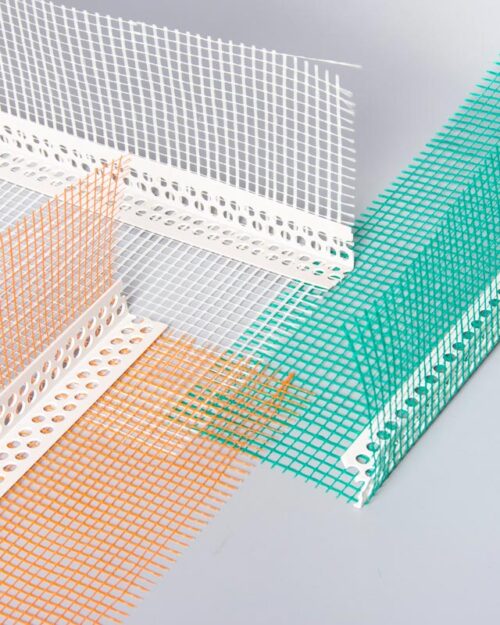 Fireproof High Temperature Fiberglass Mesh Fabric for Wholesale Equipment Cover Projects from a China Textile Mill | 60 g/m² | 150 cm
 Acoustic Inherent Flame Retardant Woven Fiberglass Fabric Black for Commercial Equipment Cover Projects | 435 g/m² | 100 cm
 Acoustic Inherent Flame Retardant Woven Fiberglass Fabric for Insulation with OEM Production Support | 315 g/m² | 100 cm
 Inherent Flame Retardant High Silica Fiberglass Fabric for Contract Insulation Projects | 600 g/m² | 100 cm | EN ISO 14116
Untreated fiberglass fire blankets may cause slight itching because there are fine glass fibers on the surface.
If workers need to touch or move the blanket often, a silicone-coated or other coated version is usually a better choice. It feels smoother and is easier to handle.
Yes, they can be reused.
But they should be checked after each use.
If there are burn-through marks, holes, brittleness, coating peeling, or obvious damage, the blanket should be replaced in time.
No, they are not the same.
Welding blankets are mainly used to block sparks, welding slag, and hot spatter.
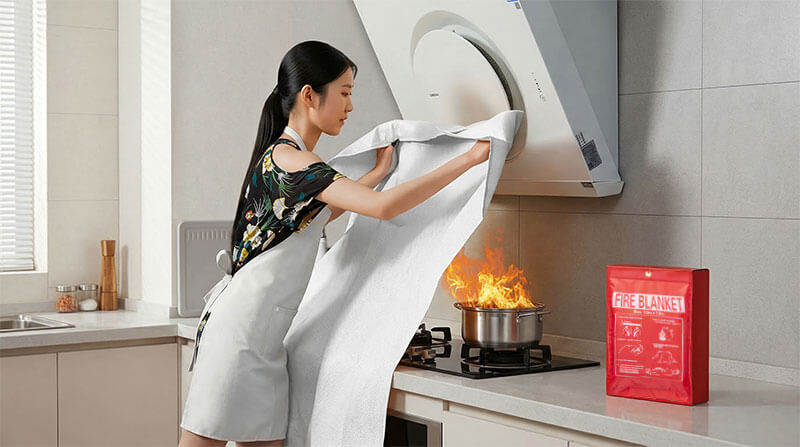
Kitchen fire blankets are mainly used to cover small early-stage oil fires or clothing fires.
The standards and test focus are different, so they should not be used as direct replacements for each other.
Basic fiberglass blankets are usually not recommended for frequent washing.
Dust on the surface can be removed by gentle shaking, vacuuming, or wiping.
Coated fiberglass blankets are easier to clean. Surface oil or dirt can often be wiped with a damp cloth.
Not always.
A thicker blanket usually offers stronger protection, but it can also be heavier and stiffer. That may make it harder to move, hang, or use in daily work.
When choosing a blanket, the working scene matters most. If the blanket needs to be moved often or hung as a curtain, softness and handling are also important.

