Enter your details and we will send the requested document to your inbox.





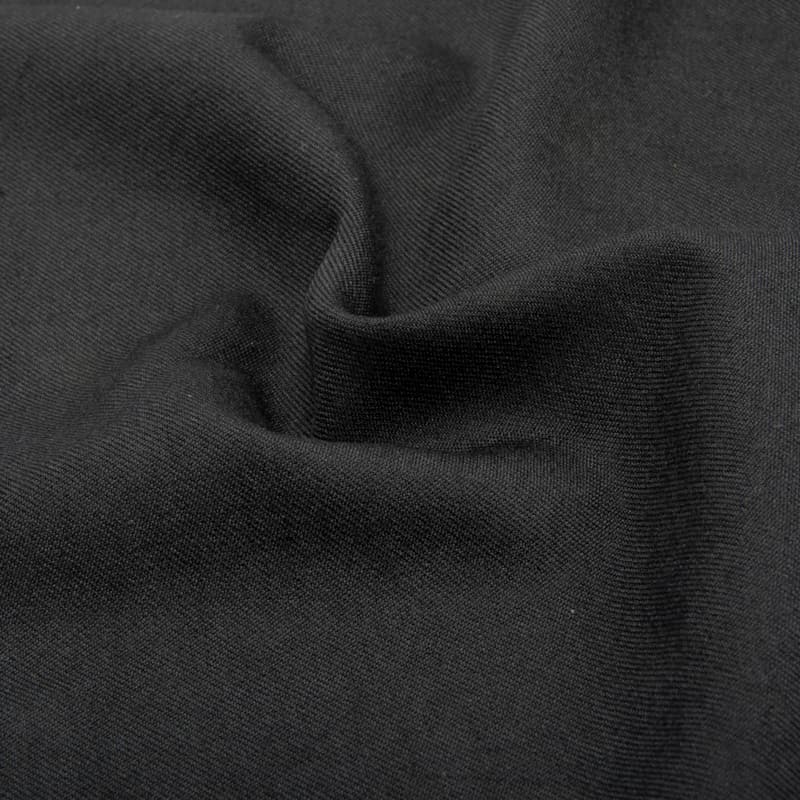
Oxidized polyacrylonitrile fiber fabric is often called Oxidized PAN, OPF, or Pre-oxidized PAN fiber.
It is not the same as regular flame-retardant polyester. It is also different from fiberglass.
What makes it useful?
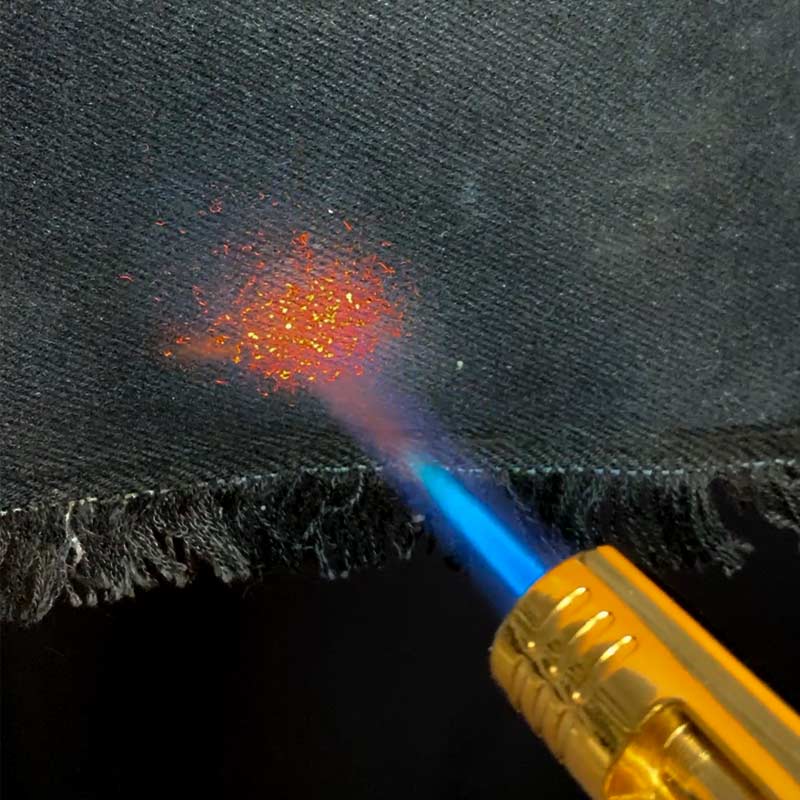
When exposed to flame, Oxidized PAN is not easy to burn. It does not melt or drip, and it can form a carbonized protective layer on the surface.
Because of this, Oxidized PAN is often used in projects where heat, flame, thermal radiation, or insulation performance matters. Common uses include fire barriers, insulation layers, welding protection materials, and inner layers for protective clothing.
Its value is not only about “fire resistance.”
In many high-temperature applications, the real value is that it can help slow down heat transfer and provide a more stable protective layer.

No, they are not the same.
Oxidized PAN is an earlier stage in the carbon fiber production process.
PAN fiber is first pre-oxidized and becomes Oxidized PAN. If it continues to be processed at a higher temperature in an oxygen-free environment, it can then become carbon fiber.
In real applications, the difference is easy to see.
| Material | Main Features | More Suitable Uses |
|---|---|---|
| Oxidized PAN / OPF | Soft, insulating, non-melting, no dripping, strong flame resistance | Fire insulation layers, welding blankets, protective clothing linings, battery thermal barriers |
| Carbon fiber | High strength, strong rigidity, more obvious electrical conductivity | Structural parts, composite materials, lightweight components |
So, Oxidized PAN is closer to a high-temperature textile material.
Carbon fiber is more often used for structural reinforcement and composite materials.
If a project needs a material that is soft, insulating, sewable, and suitable for fabric structures, Oxidized PAN is usually more suitable than carbon fiber.
The biggest value of Oxidized PAN is not one single number. It is its stable performance in high-temperature conditions.
It has several practical advantages.
Oxidized PAN usually has a high limiting oxygen index, also called LOI.
Most flame-retardant fabrics may have an LOI of around 28 to 30. Oxidized PAN often reaches a much higher range, commonly around 45 to 60, depending on the material and test condition.
What does this mean in practice?
It means Oxidized PAN is much harder to ignite in normal air compared with many common textile fibers.
This is especially important for protective clothing and near-body protection materials.
Many synthetic fibers may melt under high heat. Some may even drip or stick to the skin.
Oxidized PAN behaves differently. It tends to carbonize rather than melt and drip.
For protective applications, this can make a big difference.
Oxidized PAN is often used in protective clothing linings, battery insulation layers, welding protection, and fire barriers.
Why?
Because it can help slow down heat transfer.
In many projects, the goal is not only to stop flame contact. It is also to delay heat reaching the protected object or the human body.
Fiberglass is useful in many high-temperature applications, but it can feel stiff and may irritate the skin.
Oxidized PAN is usually softer and easier to handle.
For products that need body contact, sewing, folding, or repeated handling, Oxidized PAN can be more comfortable than fiberglass.
Oxidized PAN performs well in fire resistance and thermal insulation. But it is not a universal material.
Its strength and abrasion resistance are not its strongest points.
Compared with aramid, PBI, or carbon fiber, Oxidized PAN is better for insulation than for long-term pulling, heavy abrasion, or high mechanical stress.
That is why in protective clothing, gloves, hoods, or industrial protection products, Oxidized PAN is often not used alone.
It may be combined with aramid, FR viscose, fiberglass, or other materials to balance insulation, strength, comfort, and durability.
In simple terms:
Oxidized PAN is more suitable for insulation layers, fire barriers, lining materials, or short-term high-temperature protection structures.
It is strong in fire resistance and heat insulation, but not as strong in mechanical performance.
In electric vehicle batteries, Oxidized PAN can be made into nonwoven felt, thermal insulation felt, or composite materials.
It can be used inside battery packs to help slow down heat transfer from one area to nearby cells.
For these projects, fire resistance is only one part of the evaluation.
Buyers also need to check thickness, compressibility, insulation time, and the overall structure of the battery pack.
In protective clothing, firefighting equipment, hoods, and gloves, Oxidized PAN is often used as a lining or insulation layer.
Its job is to help reduce heat transfer toward the body.
For this type of product, comfort also matters. A material may perform well in heat resistance, but if it is too stiff or difficult to sew, it may not work well in the final garment.
In welding blankets, fire curtains, and insulation pads, Oxidized PAN is softer than fiberglass and less likely to cause obvious itching.
This makes it suitable for products that need frequent moving, folding, or handling.
But if the application involves strong molten metal impact, buyers should still check the specific test result.
Do not judge only by the material name.
Oxidized PAN can be made into many forms, such as nonwoven felt, woven fabric, knitted fabric, or blended yarns and fabrics.
If the material form is not suitable, the final performance may still be poor, even if the fiber itself has good properties.
| Material Form | Common Uses | What Buyers Should Check |
|---|---|---|
| Nonwoven felt | Battery insulation, fire barriers, sandwich insulation layers | Thickness, weight, compressibility, insulation time |
| Woven fabric | Welding blankets, fire curtains, industrial protective fabrics | Weight, strength, abrasion resistance, surface stability |
| Knitted fabric | Protective clothing linings, hoods, gloves | Stretch, softness, fit |
| Blended yarns / blended fabrics | Protective products that need both strength and insulation | Blend ratio, strength, flame-retardant stability |
Before buying, buyers should first confirm the material form and final use.
Is it for battery insulation or welding protection?
Will it be used as a protective clothing lining or a fire barrier?
Does it need washing, abrasion resistance, sewing, or later lamination?
These questions are more useful than only asking for the highest temperature number.
For Oxidized PAN projects, the first step is to understand where the material will be used.
Battery insulation needs attention to thickness, compressibility, and insulation time.
Welding blankets and fire curtains need to be checked for weight, softness, and spark resistance.
Protective clothing linings need more focus on comfort, sewability, and stability after washing.
Some projects are better suited for nonwoven felt. Some need woven fabric. Others may need blends with aramid or FR viscose.
The right solution is not always the one with the highest parameter.
It is the one where the material form, fabric structure, and test requirements all match the final application.
 Inherent Flame Retardant Heavy Duty Oxidized PAN Fabric for Occupational Protective Apparel | 480 g/m² | 160 cm | EN ISO 11612
 Fireproof 1800°C Oxidized PAN Woven Fabric for Bulk Protective Workwear Production from a China Textile Mill | 350 g/m² | 160 cm | EN ISO 11612
 Fireproof 1800°C Oxidized PAN Woven Fabric LOI 45+ for Industrial Protective with Bulk Order Support | 280 g/m² | 160 cm | EN ISO 11612
 Fireproof 1800°C Oxidized PAN Knitted Fabric for Flame-Resistant Garment Projects with Bulk Order Support | 200 g/m² | 160 cm | EN ISO 11612
 Fireproof Oxidized PAN Fabric for Commercial Safety Garment Production from a China Textile Mill | 160 g/m² | 160 cm | EN ISO 11612
It depends on the test condition.
In general, Oxidized PAN is suitable for short-term high heat, fire insulation, and flame exposure applications.
For long-term continuous use temperature, buyers should check the specific product structure and test report. Do not rely only on the highest temperature number in a product description.
Many Oxidized PAN fabrics can be washed because their flame-retardant performance comes from the fiber structure itself, not from a normal surface finish.
But whether a specific fabric is suitable for washing still depends on its structure, blend content, finishing process, and final use.
Before ordering, buyers should confirm the test data after washing.
Generally, it is softer than fiberglass and less likely to cause obvious itching.
That is why it is often used for gloves, hoods, and protective clothing linings that may touch the body.
For close-to-skin use, buyers should still check hand feel, linting, color fastness, and relevant safety tests.
No.
Oxidized PAN is a precursor material for carbon fiber. It still keeps many textile fiber characteristics. It is soft, weaveable, and suitable for insulation layers.
Carbon fiber is more of a high-strength structural material, with stronger rigidity and more obvious electrical conductivity.
Common applications include battery thermal insulation materials, fire barriers, welding blankets, fire curtains, protective clothing linings, gloves, hoods, industrial insulation layers, and aerospace insulation materials.
Whether to choose nonwoven felt, woven fabric, or knitted fabric depends on the final application.