Enter your details and we will send the requested document to your inbox.





Dope-dyed fabric is made from fibers that are colored before the spinning process begins. In this method, color pigments are added directly to the molten polymer before the fibers are extruded, allowing the color to become an integral part of the fiber itself. In simple terms, conventional dyeing applies color to the surface of the fiber, whereas dope dyeing embeds the color within the fiber from the very beginning.
One of the biggest advantages of dope-dyed fabrics is superior color stability. Because the pigments are locked inside the fiber structure, the fabric is much more resistant to fading, color loss, and shade variation, even after prolonged exposure to sunlight, high-temperature washing, industrial cleaning, or long-term use. This makes dope-dyed textiles particularly valuable for curtains, outdoor fabrics, public-space textiles, hospitality furnishings, and industrial applications where long-lasting color performance is essential.
In addition, dope dyeing is considered a more sustainable coloring process. Traditional dyeing typically requires large amounts of water, heat, chemicals, and post-treatment processes. By contrast, dope dyeing introduces color during fiber production and largely eliminates the need for water-intensive dye baths. As a result, it can significantly reduce water consumption, wastewater discharge, and energy usage.
For projects that demand long-term durability, color consistency, and sustainable sourcing, dope-dyed fabrics offer more than just a color option—they provide a stable, low-maintenance, and environmentally responsible textile solution.
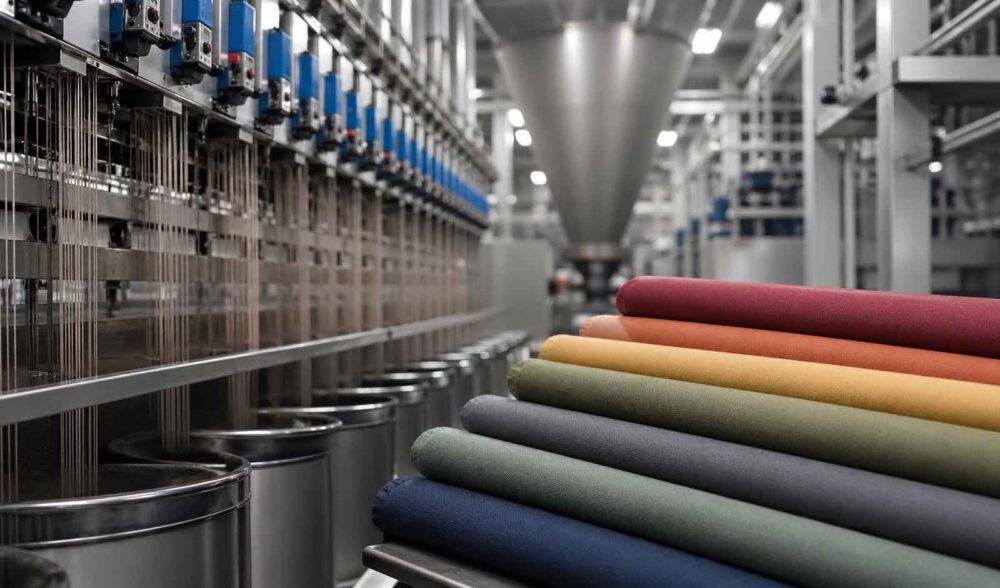
When you compare dyeing to dope dyeing it is really easy to see the difference.
Traditional dyeing is like painting something that’s white.
The outside looks nice. After it has been in the sun for a long time or washed a lot or rubbed a lot the color starts to fade away.
Dope dyeing is like using special colored plastic.
The color is already inside the dope dyeing material.
It is not put on the outside later.
When they make dope dyeing material they first melt some polyester or other plastic things.
Then they add some color to the melted plastic. Mix it really well.
After that the colored plastic goes through a tool that makes it into long thin strings.
These strings are then cooled down. Stretched and made into fabric.
The dope dyeing material has color from the start.
The fabric does not need to be dyed in a lot of water after it is made.
This is the thing about dope dyeing: it colors the material when it is still being made into strings.
The color is part of the dope dyeing material, from the beginning.
Traditional dyeing depends heavily on water.
A large amount of water needs to be heated so that dye can enter the fiber. After dyeing, the fabric still needs washing, soaping, fixation, wastewater discharge, and wastewater treatment.
For the textile industry, dyeing and finishing are among the biggest sources of water use, energy use, and wastewater pressure.
Dope dyeing avoids much of this process.
The color is already inside the fiber. The fabric does not need to be dyed and rinsed a lot in big vats later. This really helps to save water it reduces the water that is left over and it also saves the energy that is used to heat things up when we are coloring the fabric. The color is a part of this and because it is already, inside the fiber we do not have to waste a lot of water and energy on the coloring stage with the color.This matters to both brands and factories.
Dope-dyed fabric has an advantage. The color stays the same for a long time.
When you read this on a product page it sounds like something a manufacturer would say.
People who use these products know what it really means.
Dope-dyed fabric is used outside a lot so it is in the sun for a time.
If fabric is dyed the way the color can fade or become uneven.
Things like hotel curtains and the fabric in cars and buses are washed times.
The fabric, in office chairs and work clothes is washed a lot too.
When the color stays the same the product looks good even after you have used it for a while.
Dope-dyed fabric makes a difference because the color does not change, so dope-dyed fabric stays looking good.
Projects such as hotel chains, aviation, railway systems, military uniforms, and police uniforms may also need repeat orders over several years. If the dark grey made this year looks very different from the dark grey ordered next year, the difference will be obvious on site.
With dope dyeing, the color is inside the fiber. It is less likely to be quickly removed by surface rubbing, washing, or UV exposure.
This is very important for large projects.
A sample looking good today only proves that it looks good today.
Looking good after years of use, and still being close in color during repeat orders, is where the real project value appears.
Dope dyeing and flame-retardant fabrics go well together.
Inherently retardant fabric is special because it has flame-retardant performance that comes from inside the fiber.
It does not get its flame retardancy from a finish on the surface.
Dope dyeing is similar. It means the color is inside the fiber.
The color is not added later with dye.
When you combine these two things the color and the flame retardancy are part of the fiber from the start.
This is good because it reduces the risk of something going wrong during processing.
It also helps the fabric stay stable for a time.
For example with flame-retardant polyester fabric you can add flame-retardant components when you make the polymer.
You can also add pigment masterbatch at this stage.
After you spin the fiber, the color and the flame-retardant system are fixed inside the fiber.
This type of fabric is great for projects that need to last a time.
Hotel flame-retardant curtains need to have color and flame retardancy that will not change.
Transport interiors need to be able to resist light, abrasion and flames that produce little smoke.
They also need to be consistent from one batch to the next.
Industrial uniforms need to look good and be safe even after they have been washed times.
Public space textiles need to have color be safe from fire and not be too expensive to maintain.
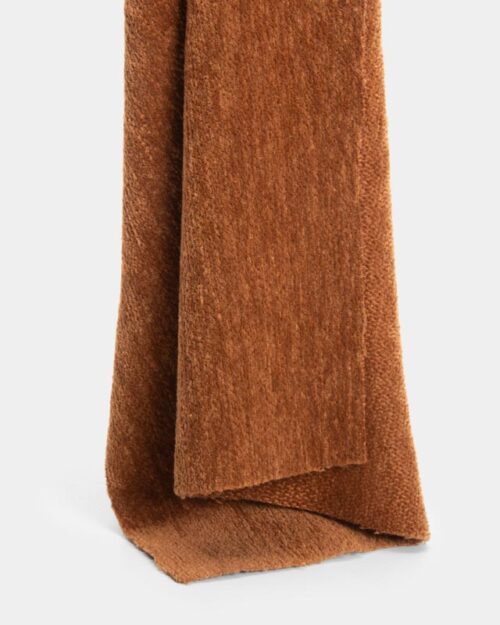 Inherent Flame Retardant Dope-Dyed Chenille Polyester Fabric for Contract Seating with Bulk Order Support | 480 g/m² | 150 cm | BS 5852 Crib 5
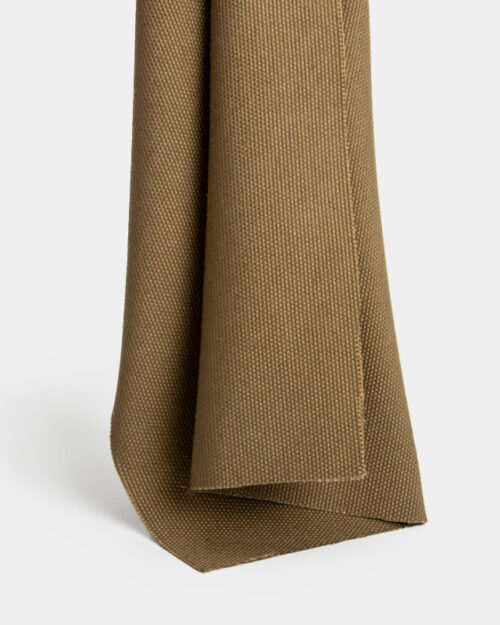 Waterproof Flame Retardant Oxford Polyester Fabric for Outdoor Bags and Camping Gear Wholesale with Bulk Order Support | 275 g/m² | 140 cm
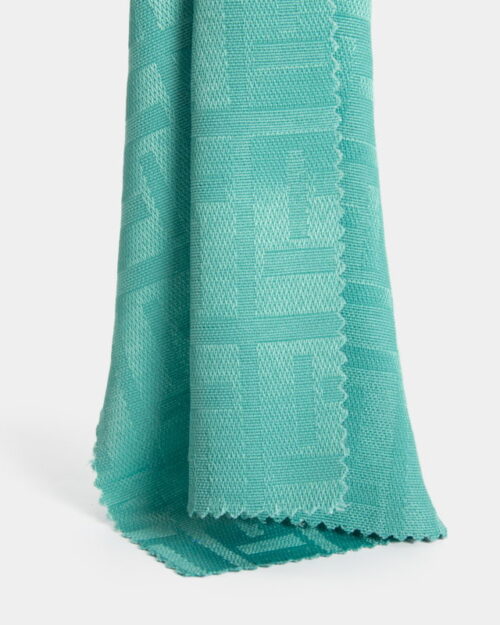 Antibacterial Inherent Flame Retardant Jacquard Polyester Medical Drapery for Hospital Interiors | 240 g/m² | 280 cm | BS 5867 Type C
Here is a simple comparison:
| Item | Traditional Dyeing | Dope Dyeing |
|---|---|---|
| When color is added | After the fiber or fabric is formed | Before spinning, by adding pigment into the polymer |
| Water use | Requires large amounts of water for dyeing, washing, and wastewater treatment | Almost no water is needed during the coloring stage |
| Where the color sits | Mostly on or near the fiber surface | Distributed inside the fiber |
| Color fastness | More affected by washing, rubbing, and sunlight | More stable against sunlight, washing, and rubbing |
| Batch stability | More affected by dyeing conditions | Easier to reproduce once the formula is stable |
This does not mean traditional dyeing has no value.
Traditional dyeing is still flexible. It is useful for small orders, many color options, and fast color development.
But if a project cares about lower water use, lower carbon impact, UV resistance, wash durability, and long-term repeat order stability, dope dyeing becomes much more competitive.
Dope dyeing is useful, but it is not the best choice for every project.
The main challenges are MOQ and color development.
Traditional dyeing is more flexible for small batches, frequent color changes, and quick lab dips. If a customer wants to change to a light beige today, the dyeing mill can adjust the color through sampling.
Dope dyeing needs pigment masterbatch matching first, then fiber spinning. Once the color is confirmed, later stability is strong. But the early development cost and MOQ are usually higher.
So for small fashion orders, frequent color changes, or projects with many small color batches, traditional dyeing may still be more practical.
For long-term large-volume projects such as hotel curtains, transport interiors, uniforms, outdoor shade fabrics, and flame-retardant decorative fabrics, the advantages of dope dyeing are much clearer.
It is made for long-term planning, not last-minute color changes.
Many brands are now looking at recycled polyester.
But if recycled polyester still goes through a high-water dyeing process later, part of its environmental value is weakened.
Dope dyeing can be combined with recycled polyester. Recycled polyester chips are used first, and pigment is added during the spinning stage. This avoids later water-bath dyeing.
Dope-dyed fabrics are particularly well suited for projects that can be defined by three key requirements: long-term performance, large-scale production, and high consistency.
If a project focuses solely on the lowest initial cost, dope-dyed fabrics may not always be the least expensive option. However, when factors such as water consumption, energy usage, colorfastness, maintenance costs, replacement frequency, and batch consistency are taken into account, the long-term value of dope-dyed textiles becomes much more apparent.
Ordinary dyeing colors the fiber or fabric after it has already been made. Dope dyeing adds pigment into the polymer before spinning, so the color becomes part of the fiber itself.
It avoids the traditional water-bath dyeing process, helping reduce large amounts of water use, heating energy, and wastewater discharge during the coloring stage.
Any fabric can change under extreme conditions. But because the color is inside the fiber, dope-dyed fabric usually has better resistance to sunlight, washing, and rubbing.
Usually, it is not ideal for small orders with frequent color changes. It is better for long-term, large-volume projects that need stable color.
If the formula is designed properly at the polymer stage, pigment and inherent flame-retardant components can both become part of the fiber structure. The final result should still be checked through the correct test reports.
Hotel flame-retardant curtains, transport seat fabrics, public space soft furnishings, industrial uniforms, outdoor shade fabrics, tents, and other functional textiles that need long-term color stability are all suitable applications.
